Download FREE Sample


Drug delivery in cancer refers to the various technologies, systems, and methods that are used to direct the delivery of therapeutic agents directly to either cancer cells or tumors with minimal exposure or toxicity to healthy tissues. Drug delivery methods have been developed to provide increased efficacy of treatment, improve bioavailability of the drug, and to reduce toxicity across the body and optimize the doses given. Drug delivery incorporates a variety of platform technologies to accomplish this; for example, nanoparticles, liposomes, antibody-drug conjugates (ADCs), and polymeric carriers among others. Advanced drug delivery systems provide support for administration of chemotherapy, targeted therapy, immunotherapy, gene therapy, and RNA therapy among others. In modern oncology, advanced drug delivery systems are crucial in providing oncologists and healthcare professionals with options to deliver precise and individualized cancer treatment.
Rising global cancer burden to propel market demand
Astheglobal incidence of cancer,including breast, lung, colorectal, prostateandliver cancer, continues to rise,thegrowth in cancer drug deliverymarkets, isfueledbytheneedformore effective and targeted treatment options for cancer. According to the WHO In 2022, there were an estimated 20 million new cancer cases and 9.7 million deaths, and the cancer cases are expected to increase significantly due to aging populations, lifestyle changes, and environmental factors.Therefore,with the number of cancer casesincreasing,health careproviders and pharmaceutical companies are now developing advanceddrug delivery systems, as ameans ofimprovingthe therapeutic benefits of these medications, with minimal side effects to thepatient.
Conventional Chemotherapy, affects both healthy and cancerous cells inevitably and leading to significant kidney, le Nanoparticles, Liposomes, Antibody-Drug Conjugates (ADCs) and Controlled Release formulations, which improve drug localization and tumor targeting. Theincreased need to provideformore cancer patientsandto improve their therapeutic outcomes is further drivinginvestment, research,and commercialization effortsinthe cancer "aligncenter wp-image-13138 size-full" title="Drug Delivery in Cancer Market" src="https://meditechinsights.com/wp-content/uploads/2026/06/Drug-Delivery-in-Cancer-Market-scaled.png" alt="Drug Delivery in Cancer Market" width="2560" height="1565" />
To learn more about this report, download the PDF brochure
Growing adoption of targeted therapies are fueling the demand for drug delivery in cancer systems
The increasing use of target-specific treatment options in oncology has created an increase in the need for sophisticated and efficient delivery systems within the cancer drug delivery market and is driving demand for delivery systems that are accurate. Targeted chemotherapy targets specific molecular pathways, genetic alterations and/or proteins associated with tumor growth and as result precise drug delivery systems are required to achieve the full potential of these therapies to transport the drug to the tumor site and minimize those drugs from being directed at normal tissue. This has accelerated the development and adoption of nanoparticles, liposomes, antibody-drug conjugates (ADCs), polymeric carriers, and ligand-targeted delivery systems.
The growing adoption of precision medicine and biomarker-driven treatment strategies also have created the need for cancer drug delivery platforms with improved stability and bioavailability, as well as targeted accumulation to tumors. Pharmaceutical and biotech companies are investing into targeted oncology development pipelines; thus, they can help stimulate innovation in the field of drug delivery. As targeted therapies become more widely developed as well as approved and accepted clinically, increased demand will follow for the development of innovative cancer drug delivery approaches.
To learn more about this report, download the PDF brochure
Route of Administration Segment Outlook
Among the routes of administration, intravenous (IV) delivery accounts for the largest share of the drug delivery in cancer market, as it remains the standard method for providing chemotherapy, monoclonal antibodies, immunotherapy, antibody-drug conjugates, and many other targeted cancer drugs. Intravenous injections have the ability to distribute quickly throughout the body, accurately control the amount given, and provide complex biologics that would not be able to be taken orally due to poor absorption in the intestinal tract. Hospital and cancer center usage of IV infusions only strengthens IV-s position as the leading route of administration, in terms of total dollar value and number of IV infused patients.
The subcutaneous drug delivery method is expected to experience the highest growth in the next five years. The high demand for easy-to-take medications, shorter time for the patient to use their medication, and less use of healthcare resources are all contributing to the rapid increase in use of subcutaneous drug delivery systems. Pharmaceutical companies are now focusing their research efforts on developing subcutaneous versions of biological and immunotherapeutic cancer drugs, as a means of m more convenient for patients and improving their ability to comply with their treatment regimen. In addition, improvements in drug formulation technology and the development of wearable drug delivery systems will continue to open opportunities for using subcutaneous drug delivery systems in the treatment of cancer.
Regional Outlook: Growing investments in biologics and vaccine manufacturing are supporting North American market expansion
North America held the largest share of the drug delivery in cancer market. The region has many growth drivers including a high cancer rate, large amount of money spent per capita on health care, availability of multiple advanced oncology treatments, and presence of leading pharmaceutical and biotechnology companies in North America. There is also significant amount of money being spent on cancer research, an established clinical trials ecosystem, reimbursement policies associated with Cancer treatment, and the rapid introduction of new drug delivery technologies like nanoparticles, antibody-drug conjugates, and RNA based therapeutic products. Canada and the US combined represent most of the revenue generated from North America as they have very strong oncology portfolios and established healthcare systems.
Asia Pacific region is projected to be the fastest growing regional market over the forecast period. The increased burden of cancer, growing healthcare infrastructure, increasing healthcare spending, and improving access to advanced cancer therapies are all contributing to the Asia Pacific region's rapid growth. Countries such as China, India, Japan and South Korea are investing heavily in oncology research, biopharmaceutical manufacturing, and precision medicine, ultimately driving the introduction of advanced drug delivery technologies for the treatment of cancer.--------
Competitive Landscape Analysis
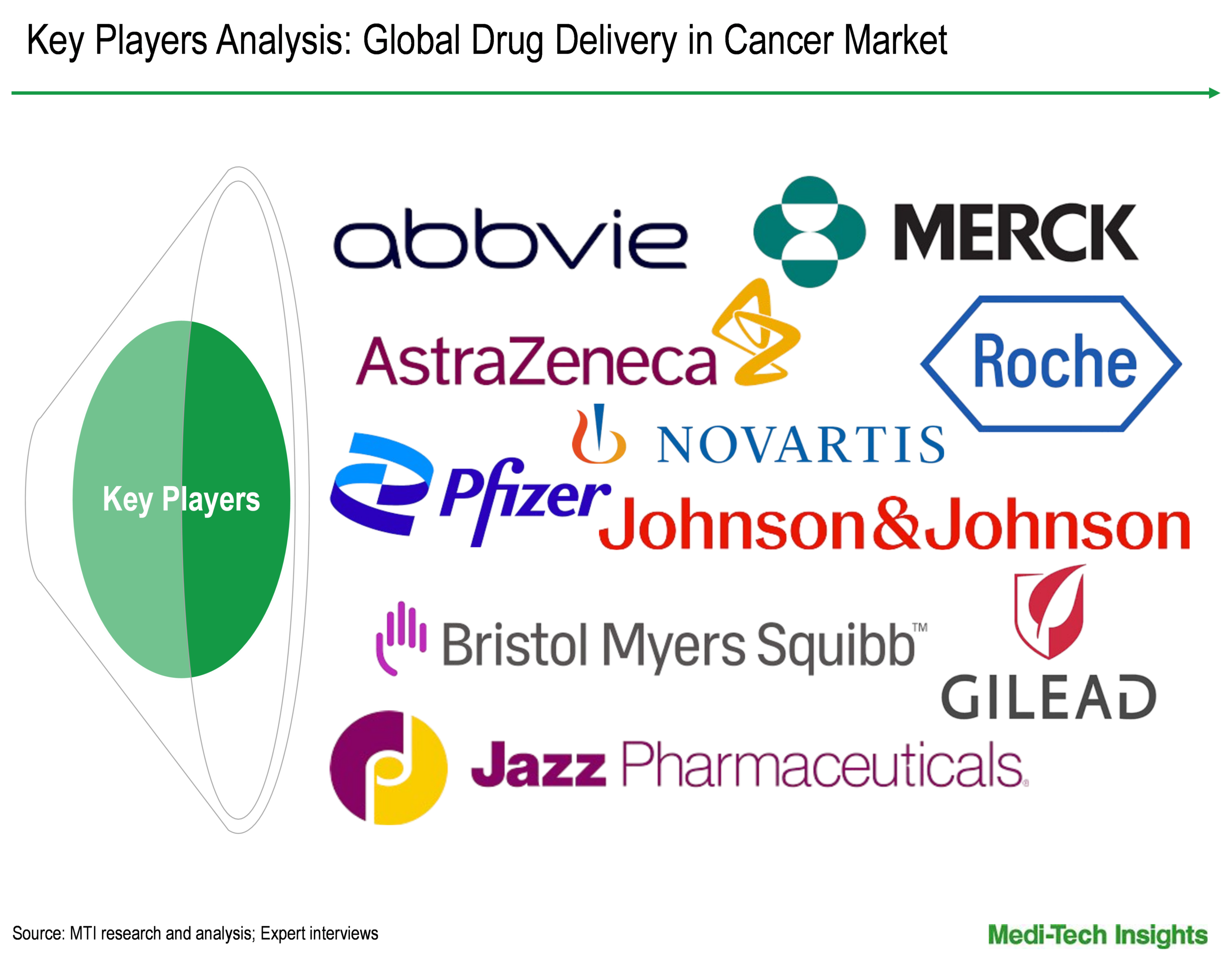
The global drug d and emerging market players such as-
- Johnson & Johnson (US)
- Pfizer Inc. (US)
- Hoffmann-La Roche Ltd. (Switzerland)
- Merck & Co., Inc. (US)
- AstraZeneca PLC (UK)
- Novartis AG (Switzerland)
- AbbVie Inc. (US)
- Gilead Sciences, Inc. (US)
- Bristol Myers Squibb (US)
- Jazz Pharmaceuticals plc (Ireland)
Get a sample report for competitive landscape analysis
Growth strategies adopted by players to establish their foothold in the drug delivery in cancer market
Players operating in this market are adopting various growth strategies such as new product launches and approvals; acquisitions; expansions; and strategic partnerships, agreements, and collaborations, to garner market share. For instance,
- In May 2026, Pfizer and Innovent Biologics entered a global strategic collaboration to develop 12 innovative oncology programs, including antibody-drug conjugates (ADCs) and multispecific antibodies, combining Innovent-s discovery capabilities with Pfizer-s global development and commercialization expertise. The agreement strengthens innovation in targeted cancer drug delivery by advancing next-generation ADCs and biologics
- In May 2026, Gilead Sciences completed the acquisition of Tubulis for up to $5 billion, gaining aion antibody-drug conjugate (ADC) technologies and oncology candidates including TUB-040 and TUB-030. The acquisition strengthens Gilead-s position in targeted cancer drug delivery by expanding its ADC portfolio with advanced technologies designed to improve tumor-specific payload delivery, enhance therapeutic efficacy, and reduce damage to healthy tissues
- In September 2025, Merck received FDA approval for KEYTRUDA QLEX (pembrolizumab and berahyaluronidase alfa-pmph), the first subcutaneous immune checkpoint inhibitor approved across most solid tumor indications of KEYTRUDA, enabling administration in as little as one minute. The approval expands cancer drug delivery options by offering a faster and more convenient alternative to intravenous infusion while maintaining comparable efficacy and safety, supporting broader adoption of subcutaneous oncology therapies.
Report Scope
|
Details |
|
|
Base Year Considered |
2025 |
|
Historical Data |
2024 - 2025 |
|
2026 - 2031 |
|
|
14% |
|
|
Segment Scope |
Technology, Route of Administration, Cancer Type, and End User |
|
Regional Scope |
|
|
Market Drivers |
|
|
Attractive Opportunities |
|
|
Key Companies Mapped |
Johnson & Johnson (US); Pfizer Inc. (US); F. Hoffmann-La Roche Ltd. (Switzerland); Merck & Co., Inc. (US); AstraZeneca PLC (UK); Novartis AG (Switzerland); AbbVie Inc. (US); Gilead Sciences, Inc. (US); Bristol Myers Squibb (US); and Jazz Pharmaceuticals plc (Ireland), among others |
|
Report Highlights |
Market Size & Forecast, Growth Drivers & Restraints, Trends, Competitive Analysis |
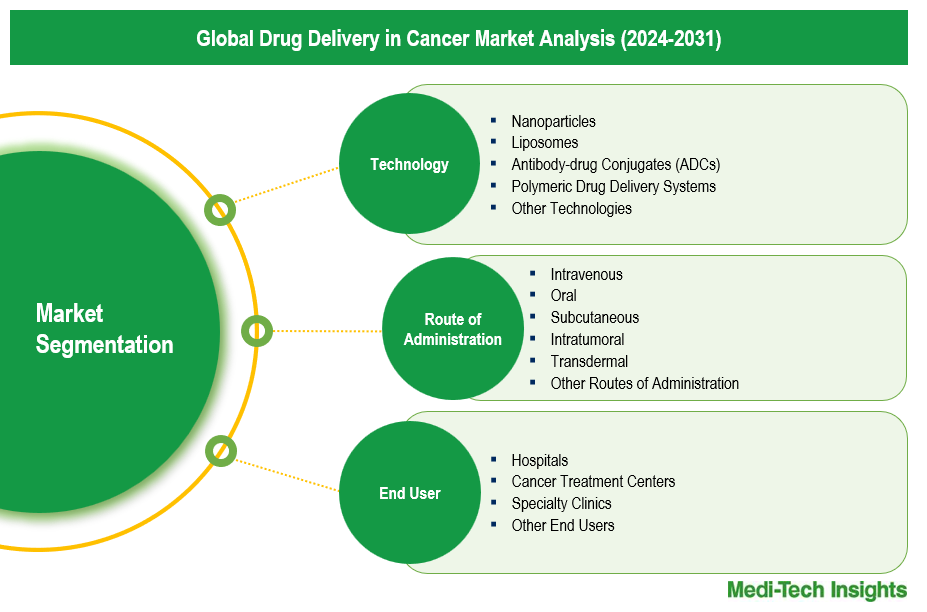
Global Drug Delivery in Cancer Market Segmentation
This report by Medi-Tech Insights provides thesize of the global drug delivery in cancer market at theregional and country-level from 2024 to 2031. The report further segments the market by technology, route of administration, cancer type, and end user.
Market Size & Forecast (2024-2031), By Technology, USD Billion
- Nanoparticles
- Liposomes
- Antibody-drug Conjugates (ADCs)
- Polymeric Drug Delivery Systems
- Other Technologies
Market Size & Forecast (2024-2031), By Route of Administration, USD Billion
- Intravenous
- Oral
- Subcutaneous
- Intratumoral
- Transdermal
- Other Routes of Administration
Market Size &a024-2031), By Cancer Type, USD Billion
- Breast Cancer
- Lung Cancer
- Colorectal Cancer
- Prostate Cancer
- Liver Cancer
- Ovarian Cancer
- Pancreatic Cancer
- Other Cancer Types
Market Size & Forecast (2024-2031), By End User, USD Billion
- Pharmaceutical and Biotechnology Companies
- Research and Academic Institutes
- Hospitals and Clinics
- Other End Users
Market Size & Forecast (2024-2031), By Region, USD Billion
- North America
- US
- Canada
- Europe
- UK
- Germany
- France
- Italy
- Spain
- Rest of Europe
- Asia Pacific
- China
- India
- Japan
- Rest of Asia Pacific
- Latin America
- Middle East & Africa
Frequently Asked Questions About This Report
What is the growth rate of the drug delivery in cancer market?
The drug delivery in cancer market is set to witness a growth rate of 14% during the forecast period from 2026 to 2031
What are the key trends defining the market?
Nanomedicine becoming a mainstream oncology platform, rapid growth of antibody-drug conjugates (ADCs), increasing integration of artificial intelligence (AI), and development of stimuli-responsive delivery systems are major trends in the drug delivery in cancer market
What are the major factors impacting the market growth?
Rising global cancer burden, growing adoption of targeted therapies, expansion of biologics and nucleic acid therapeutics, increasing investment in oncology R&D, and demand for improved patient outcomes and quality of life are some of the key factors driving the drug delivery in cancer market
What are the opportunities prevailing in the market?
Growth of precision medicine, expansion of nanoparticle-based drug delivery, rising development of antibody-drug conjugates, increasing adoption of RNA-based therapeutics, and emerging markets and healthcare expansion offer numerous growth opportunities for companies operating in the drug delivery in cancer market
Who are the major players operating in the market?
Some of the major players operating in the drug delivery in cancer market include as Johnson & Johnson (US); Pfizer Inc. (US); F. Hoffmann-La Roche Ltd. (Switzerland); Merck & Co., Inc. (US); AstraZeneca PLC (UK); Novartis AG (Switzerland); AbbVie Inc. (US); Gilead Sciences, Inc. (US); Bristol Myers Squibb (US); and Jazz Pharmaceuticals plc (Ireland)
Need a More Tailored Analysis?
- Discuss the market sizing methodology and forecast assumptions with our healthcare analysts.
- Expand the scope with additional countries, market segments, technologies, or competitor profiling.
- Use the insights to support strategic planning, market entry, commercial due diligence, and long-term revenue growth initiatives.