Download FREE Sample


Report Overview
Large molecule drugs, commonly referred to as biopharmaceuticals, biologicals, or biologics, are intricate, high molecular weight compounds that originate from living organisms or are manufactured using recombinant DNA technology. This category encompasses proteins, antibodies, nucleic acids, and vaccines. Biologics are produced from a range of sources and methods, including non-engineered biological materials, blood, and its derivatives, or through genetic engineering techniques in recombinant technology. This broad array of products includes vaccines, therapeutic antibodies, allergens, and gene therapies. Because of their size and complexity, biologics are generally administered via injection or infusion.
To learn more about the research report, download a sample report.
Growing demand for large molecule injectable drugs in the treatment of chronic diseases drives market growth
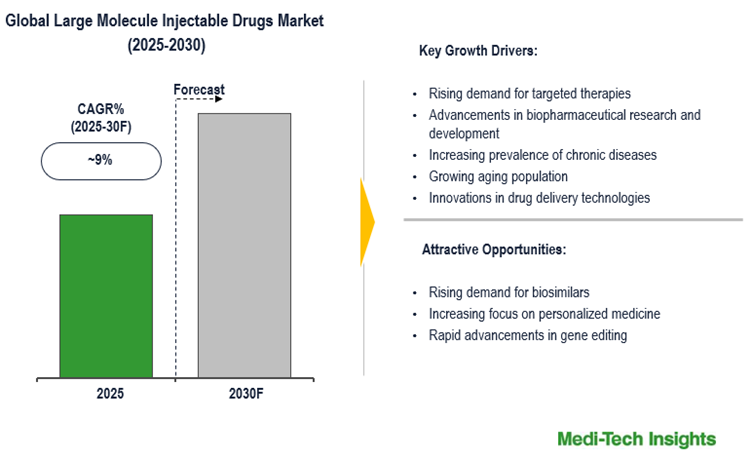
Chronic diseases such as diabetes, cancer, autoimmune disorders, and cardiovascular diseases are becoming increasingly common worldwide due to factors such as aging populations, lifestyle changes, and environmental influences. This growing prevalence of chronic illnesses has spurred the need for effective treatments, particularly biologics. Large molecule injectables have demonstrated greater efficacy in managing these conditions compared to many traditional pharmaceuticals. For instance, biologics can target specific molecular pathways associated with diseases such as rheumatoid arthritis and multiple sclerosis, resulting in better patient outcomes. Their capability to modulate immune responses or directly inhibit proteins that cause disease has made them essential in managing chronic illnesses.
Innovations in drug delivery technologies, including pre-filled syringes and auto-injectors, have also enhanced the ease and convenience of administering large-molecule injectable drugs. These advancements provide significant benefits in terms of disease management and symptom relief, leading to heightened interest from healthcare providers and patients alike. As research progresses, large molecules of injectable drugs will likely play an increasingly prominent role in the treatment of chronic diseases in the future.
To learn more about the research report, download a sample report.
Innovation in drug development driving large molecule injectable drugs market growth
Innovation in drug development is significantly advancing the utilization of large-molecule injectable drugs. This progression is marked by several important factors that enhance the effectiveness, safety, and accessibility of these therapies for various chronic and complex diseases.
- Advanced Biologics Design: Innovations in monoclonal antibody technology have led to the development of highly specific drugs capable of targeting particular proteins or cells involved in disease processes. This level of precision enables the creation of tailored therapies that can effectively address diseases such as cancer and autoimmune disorders.
- Innovative Drug Delivery Systems: The application of nanocarriers enhances the delivery of large molecule injectable drugs, allowing for more efficient targeting and minimizing side effects. Nanoparticles can be engineered to release drugs at precise locations within the body, thus improving the therapeutic effect. Additionally, advancements such as smart auto-injectors and wearable devices have made it easier for patients to self-administer biologics, thereby improving adherence to treatment plans.
- Regenerative Medicine and Gene Therapies:
- Cell and Gene Therapy: Significant strides in gene editing technologies like CRISPR and the development of gene therapies are transforming the treatment landscape for genetic disorders. These approaches often utilize large molecules, such as viral vectors or engineered nucleotides, to correct genetic defects at a molecular level.
- Stem Cell Therapies: Innovations related to stem cell applications in regenerative medicine are creating new opportunities for biologics that can facilitate tiregeneration and repair in conditions like heart failure or spinal cord injuries.
Competitive Landscape Analysis
The global large molecule injectable drugs market is marked by the presence of established and emerging market players such as AbbVie Inc.; Amgen Inc.; AstraZeneca Plc; Baxter International Inc.; Biogen Inc.; Boehringer Ingelheim International GmbH; Bristol Myers Squibb Co.; Eli Lilly and Co.; F. Hoffmann La Roche Ltd.; Gilead Sciences Inc.; GlaxoSmithKline Plc; Johnson and Johnson Services Inc.; Medtronic Plc; Merck and Co. Inc.; Novartis AG; Novo Nordisk AS; Pfizer Inc.; Sanofi SA; Sun Pharmaceutical Industries Ltd.; and Takeda Pharmaceutical Co. Ltd. among others. Some of the key strategies adopted by market players include new product development, strategic partnerships and collaborations, and investments.
Report Scope
|
Report Scope |
Details |
|
Base Year Considered |
2024 |
|
Historical Data |
2023 - 2024 |
|
Forecast Period |
2025 - 2030 |
|
Growth Rate |
~9% |
|
Market Drivers |
|
|
Attractive Opportunities |
|
|
Segment Scope |
Injection Type, Application, and Distribution Channel |
|
Regional Scope |
|
|
Key Companies Mapped |
AbbVie Inc.; Amgen Inc.; AstraZeneca Plc; Baxter International Inc.; Biogen Inc.; Boehringer Ingelheim International GmbH; Bristol Myers Squibb Co.; Eli Lilly and Co.; F. Hoffmann La Roche Ltd.; Gilead Sciences Inc.; GlaxoSmithKline Plc; Johnson and Johnson Services Inc.; Medtronic Plc; Merck and Co. Inc.; Novartis AG; Novo Nordisk AS; Pfizer Inc.; Sanofi SA; Sun Pharmaceutical Industries Ltd.; and Takeda Pharmaceutical Co. Ltd. |
|
Report Highlights |
Market Size & Forecast, Growth Drivers & Restraints, Trends, Competitive Analysis |
Market Segmentation
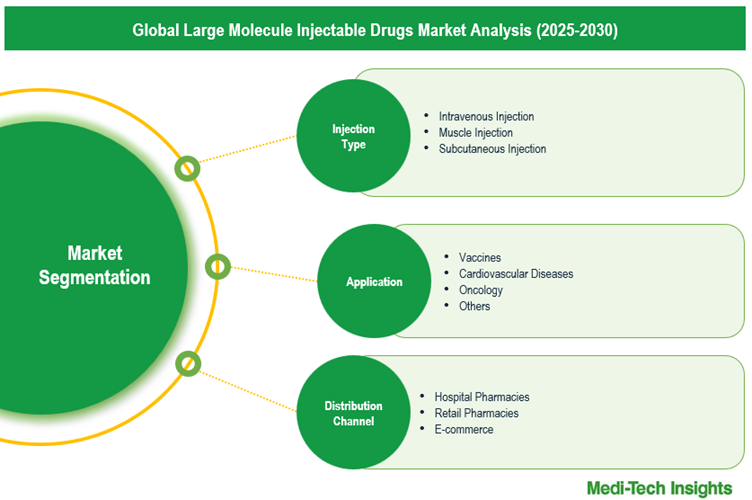
This report by Medi-Tech Insights provides thesize of the global large molecule injectable drugs market at theregional- and country-level from 2023 to 2030. The report further segments the market based on injection type, application, and distribution channel.
- Market Size & Forecast (2023-2030), By Injection Type, USD Million
- Intravenous Injection
- Muscle Injection
- Subcutaneous Injection
- Market Size & Forecast (2023-2030), By Application, USD Million
- Vaccines
- Cardiovascular Diseases
- Oncology
- Other
- Market Size & Forecast (2023-2030), By Distribution Channel, USD Million
- Hospital pharmacies
- Retail pharmacies
- E-commerce
- Market Size & Forecast (2023-2030), By Region, USD Million
- North America
- US
- Canada
- Europe
- UK
- Germany
- Italy
- Spain
- Rest of Europe
- Asia Pacific
- China
- India
- Japan
- Rest of Asia Pacific
- Latin America
- Middle East & Africa
- North America
Frequently Asked Questions About This Report
What is the market size & forecast of the large molecule injectable drugs market?
What are the historical, present, and forecasted market shares and growth rates of various segments and sub-segments of the large molecule injectable drugs market?
What are the key trends defining the market?
What are the major factors impacting the market?
What are the opportunities prevailing in the market?
Need a More Tailored Analysis?
- Discuss the market sizing methodology and forecast assumptions with our healthcare analysts.
- Expand the scope with additional countries, market segments, technologies, or competitor profiling.
- Use the insights to support strategic planning, market entry, commercial due diligence, and long-term revenue growth initiatives.