Download FREE Sample


Telemedicine refers to the remote diagnosis, treatment, and monitoring of patients through telecommunications technology. It enables healthcare providers to consult with patients via video calls, mobile apps, or web-based platforms, delivering care efficiently and conveniently. With the rise in demand for virtual healthcare, telemedicine is now seen as a viable solution for improving access to medical services, especially in rural and underserved regions. As the global healthcare system shifts toward more patient-centric models, telemedicine offers an effective way to enhance care delivery while reducing healthcare costs.
To learn more about this report, download the PDF brochure
Need for accessible healthcare services is driving the demand in telemedicine market
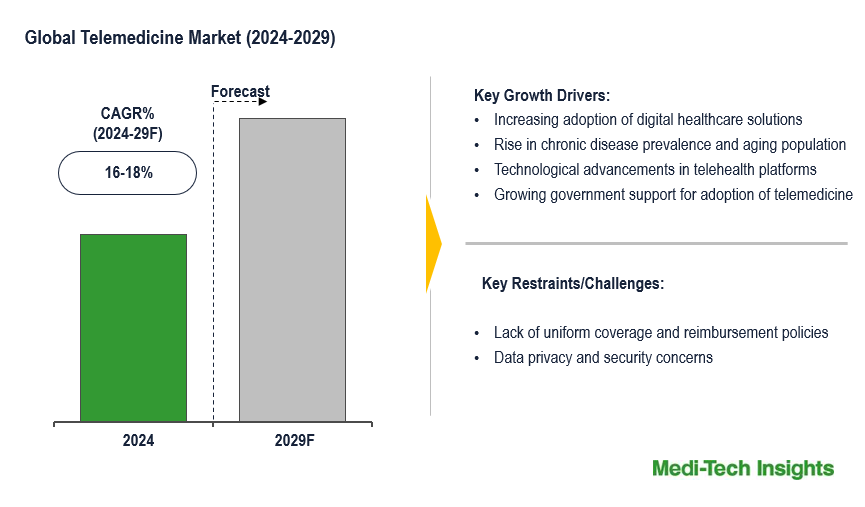
The telemedicine market is primarily driven by the need for accessible healthcare services, particularly for population in remote areas and those with chronic illnesses. The COVID-19 pandemic played a pivotal role in accelerating the adoption of virtual care solutions, and the trend has continued post-pandemic as patients and providers realize the benefits of telemedicine in reducing in-person visits. Furthermore, healthcare providers are increasingly using telehealth for follow-up care, mental health services, and management of chronic conditions, creating long-term demand for telemedicine platforms.
Lack of uniform coverage and reimbursement policies pose a challenge for the market growth
The lack of uniform coverage and reimbursement policies for telemedicine arises because different regions and insurers have varying rules on which services are covered, how much is reimbursed, and who qualifies. For example, in the U.S., Medicare may cover telehealth only for specific conditions or rural areas, while private insurers might have broader or more restrictive policies. Similarly, some states mandate telehealth coverage, but reimbursement rates vary. This inconsistency leads to disparities in access to care, as patients in different locations or under different plans face unequal benefits.
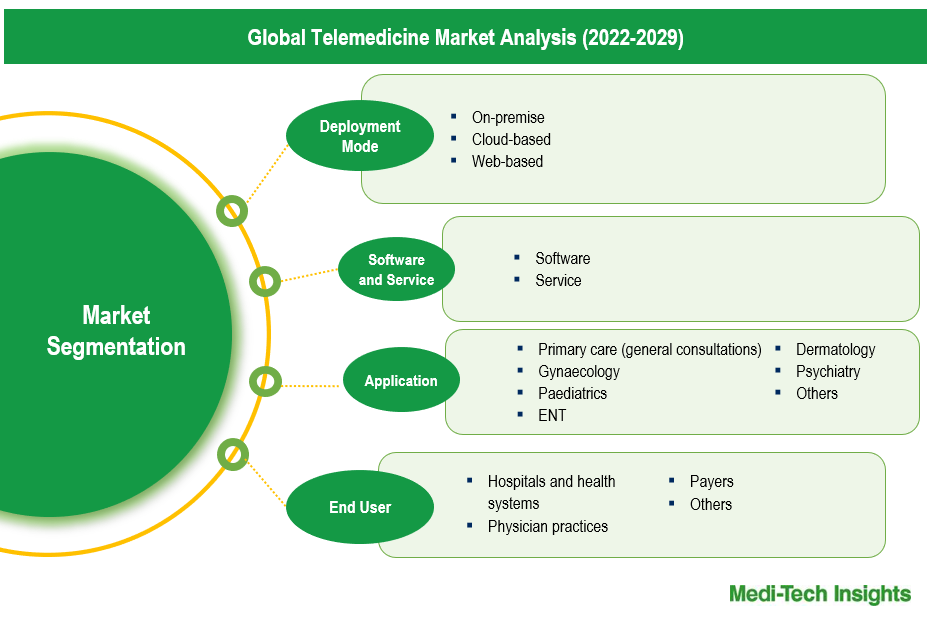
To learn more about this report, download the PDF brochure
Competitive Landscape Analysis
The global nurse call systems market is marked by the presence of established and emerging market players such as American Well Corporation, Twilio Inc., SOC Telemed, Teladoc Health, Inc., Doctor On Demand, Inc. (Included Health), MDlive, Inc. (Evernorth), Zoom Video Communications, Inc., Inc., NXGN Management, LLC, Plantronics, Inc., Doctolib, and Practo; among others. Some of the key strategies adopted by market players include product innovation and development, strategic partnerships and collaborations, and geographic expansion.
Telemedicine Market Scope
|
Report Scope |
Details |
|
Base Year Considered |
2023 |
|
Historical Data |
2022 - 2023 |
|
Forecast Period |
2024 - 2029 |
|
Growth Rate |
CAGR 16-18% |
|
Segment Scope |
Software and Service, Deployment Mode, Application, End User |
|
Regional Scope |
|
|
Key Companies Mapped |
American Well Corporation, Twilio Inc., SOC Telemed, Teladoc Health, Inc., Doctor On Demand, Inc. (Included Health), MDlive, Inc. (Evernorth), Zoom Video Communications, Inc., Inc., NXGN Management, LLC, Plantronics, Inc., Doctolib, and Practo; among others |
|
Report Highlights |
Market Size & Forecast, Growth Drivers & Restraints, Trends, Competitive Analysis |
Frequently Asked Questions About This Report
What is the market size & forecast of the telemedicine market?
What are the historical, present, and forecasted market shares and growth rates of various segments and sub-segments of the telemedicine market?
What are the key trends defining the market?
What are the opportunities prevailing in the market?
Which region holds the highest market share?
Need a More Tailored Analysis?
- Discuss the market sizing methodology and forecast assumptions with our healthcare analysts.
- Expand the scope with additional countries, market segments, technologies, or competitor profiling.
- Use the insights to support strategic planning, market entry, commercial due diligence, and long-term revenue growth initiatives.