Download FREE Sample


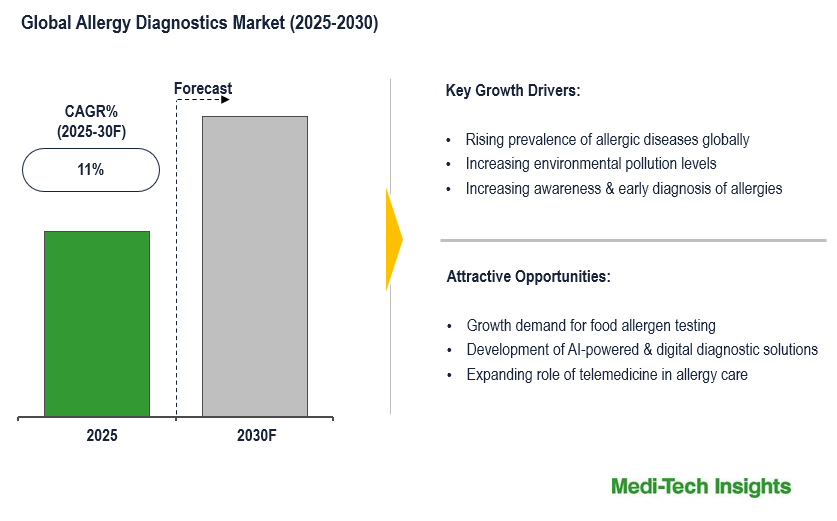
The global allergy diagnostics market is set to witness a healthy growth rate of 11% in the next 5 years. Growing cases of allergic diseases (asthma, allergic rhinitis, atopic dermatitis, and food allergy), rising environmental pollution levels, high volume consumption of processed food and beverages, the advent of mHealth in allergy diagnosis & care and growing awareness about allergic diseases are some of the key factors driving the market.
Allergies are the body's reaction to a substance it considers a harmful invader. Substances that cause these reactions are called allergens. An individual can be allergic to a wide variety of substances including pollen, food and drug, animal dander, mould's, insect venom, latex, and dust mites, among others. Allergic diseases are a global health problem that affects approximately 20-30% of the population in industrialized countries. The prevalence of allergic diseases globally has continued to grow in the industrialized world for more than 50 years. Allergic diseases such as allergic asthma, allergic rhinitis, atopic dermatitis, anaphylaxis, and food and drug allergies are complex and cause a broad spectrum of symptoms ranging from mild to severe and potentially life-threatening anaphylactic reactions.
According to The Asthma and Allergy Foundation of America (AAFA), allergies are the 6th leading cause of chronic illness in the U.S. and each year more than 50 milliocans experience various types of allergies. Continuously rising cases of allergic diseases and other related medical conditions has fueled the global allergy diagnostics market.
To learn more about this report, download the PDF brochure
High Volume Consumption of Processed Food and Beverages Set to Spur the Food Allergen Testing Market
Food allergens continue to prevail as high-risk factors for the food production industry. The food allergen testing industry has garnered considerable traction globally because of high daily consumption of processed food and beverages. Allergens are a significant cause for concern in the global food processing industry. Food allergies which include abnormal reactions or hypersensitivity produced by the bodys immune system are considered a major food safety challenge. The food allergen testing market is anticipated to witness considerable momentum in the coming years due to the growth of the dairy, processed food and confectionary segments. Allergen detection tests are a key feature of allergen management systems in food processing plants and are executed at nearly every step of the process. These tests are carri out on work surfaces and products to detect any cross contamination or allergen presence and to test the effectiveness of a food processing units cleaning measures.
Growing Prominence of mHealth in Allergy Diagnosis & Allergy Care
The widespread availability of technology-based interventions such as mobile health in the clinical setting has enabled patients to play an active role in their medical care. Mobile health (mHealth) utilizes mobile communication devices such as computers, tablets and smartphones to improve patient education & self-management of diseases, help in remote surveillance of patient health, the flow of data and information and disease management from first diagnosis to an optimized treatment.
The advent of patient-facing mHealth technologies (such as apps) is expected to favourably impact clinical, economic and process outcomes. Features such as medication reminders, educational content, games-based self-nagement, symptom diaries, electronic sensors, patient self-tracking dashboards, voice recognition, wearable technology, pollen sensors, and virtual reality offered by apps not only improve patient knowledge but also improve medication adherence, asthma and allergic conditions control, quality of life and results in fewer unscheduled office visits.
mHealth offers allergists and patients a new mode of communication via the phone camera, sound recording system, motion sensors, texting, and by using diagnostic devices and diagnostic algorithms incorporated in the smartphone itself.
To learn more about this report, download the PDF brochure
Competitive Landscape Analysis
The global allergy diagnostics market is marked by the presence of established and emerging market players such as Thermo Fisher Scientific; Siemens Healthineers; Danaher Corporation; Omega Diagnostics Group PLC; NEOGEN Corporation; Canon Inc.; Eurofins Scientific; bioMrieux SA; Stallergenes Greer; and EUROIMMUN Medizinische Labordiagnostika AG among others. Some of the key strategies adopted by market players include new product development, strategic partnerships and collaborations, and geographic expansion.
Report Scope
| Report Scope | Details |
| Base Year Considered | 2024 |
| Historical Data | 2023 - 2024 |
| Forecast Period | 2025 2030 |
| Growth Rate | 11% |
| Market Drivers |
|
| Attractive Opportunities |
|
| Segment Scope | Product and Service, Allergen Type, Test Type and End-user |
| Regional Scope |
|
| Key Companies Mapped | Thermo Fisher Scientific; Siemens Healthineers; Danaher Corporation; Omega Diagnostics Group PLC; NEOGEN Corporation; Canon Inc.; Eurofins Scientific; bioMrieux SA; Stallergenes Greer; and EUROIMMUN Medizinische Labordiagnostika AG among others |
| Report Highlights | Market Size & Forecast, Growth Drivers & Restraints, Trends, Competitive Analysis |
Global Allergy Diagnostics Market Segmentation
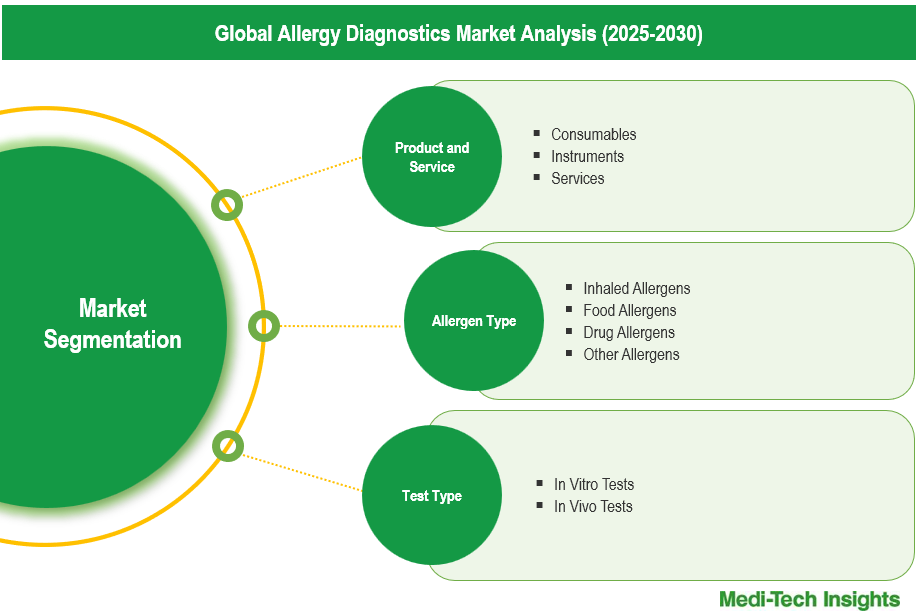
This report by Medi-Tech Insights provides thesize of the global allergy diagnostics market at theregional- and country-level from 2023 to 2030. The report further segments the market based on product and service, allergen type, test type and end-user.
Market Size & Forecast (2023-2030), By Product and Service, USD Million
- Consumables
- Instruments
- Services
Market Size & Forecast (2023-2030), By Allergen Type, USD Million
- Inhaled Allergens
- Food Allergens
- Drug Allergens
- Other Allergens
Market Size & Forecast (2023-2030), By Test Type, USD Million
- In Vitro Tests
- In Vivo Tests
Market Size & Forecast (2023-2030), By End-user, USD Million
- i>Hospitals Laboratories
- Diagnostic Laboratories
- Academic & Research Institutions
- Others
Market Size & Forecast (2023-2030), By Region, USD Million
- North America
- US
- Canada
- Europe
- UK
- Germany
- France
- Italy
- Spain
- Rest of Europe
- Asia Pacific
- China
- India
- Japan
- Rest of Asia Pacific
- Latin America
- Middle East & Africa
Key Strategic Questions Addressed
- What is the market size & forecast of the allergy diagnostics market?
- What are historical, present, and forecasted market shares and growth rates of various segments and sub-segments of the allergy diagnostics market?
- What are the key trends defining the market?
- What are the major factors impacting the market?
- What are the opportunities prevailing in the market?
- Which region has the highest share in the global market? Which region is expected to witness the highest growth rate in the next 5 years?
- Who are the major players operating in the market?
- What are the key strategies adopted by players?
Need a More Tailored Analysis?
- Discuss the market sizing methodology and forecast assumptions with our healthcare analysts.
- Expand the scope with additional countries, market segments, technologies, or competitor profiling.
- Use the insights to support strategic planning, market entry, commercial due diligence, and long-term revenue growth initiatives.