Download FREE Sample


The global hemophilia market size is set to grow at a CAGR of 7% over the next 5 years. Key drivers include the rapid adoption of extended half-life (EHL) recombinant factor products; a global shift toward prophylactic treatment over on-demand episodic therapy; growing awareness through patient advocacy and global initiatives; increasing prevalence of hemophilia and sustained clinical demand; and integration of digital health tools improving treatment adherence. However, factors such as high R&D and treatment cost; shortage of skilled healthcare professionals; and fragmented and inadequate reimbursement models for gene therapy negatively impact the market growth.
Hemophilia is a rare, inherited bleeding disorder that arises when the body lacks sufficient levels of certain clotting proteins, Factor VIII in the case of hemophilia A, and Factor IX in hemophilia B. This deficiency impairs the blood's ability to clot normally, resulting in extended bleeding after injury and, in more severe cases, unprompted bleeding within joints and muscle tissue. The hemophilia market spans the diagnostic, therapeutic, and patient-care solutions built to manage this condition, encompassing clotting factor concentrates, non-factor replacement options, bypassing agents for patients who develop inhibitors, gene-based therapies still emerging in the field, and diagnostic tools used to confirm diagnosis, gauge severity, and track patients over time. Together, these solutions address mild, moderate, and severe cases through hospitals, specialty centers, and diagnostic labs, supporting bleed prevention, prophylactic care, emergency response, and better long-term quality of life.
Growing clinical preference for extended half-life (EHL) recombinant factor concentrates is reshaping treatment approaches across the global hemophilia market. Through modifications such as Fc-fusion, PEGylation, and albumin-fusion technologies, these therapies remain active in circulation for longer durations, lowering the frequency of infusions needed to maintain effective prophylactic coverage. This reduced treatment burden helps overcome a long-standing barrier in hemophilia care: inconsistent patient adherence to frequent factor replacement schedules.
As clinicians increasingly transition from conventional half-life therapies toward extended half-life (EHL) alternatives, patients are reporting stronger joint preservation and enhanced daily functioning, fueling broader acceptance among both physicians and patients. This pattern is especially pronounced in pediatric and young adult populations, who gain more adaptable dosing schedules that integrate seamlessly with school, work, and lifestyle demands.
Furthermore, strengthened collaboration between pharmaceutical developers and regulatory authorities has shortened approval timelines for newer EHL products, boosting industry confidence and investment. As clinical evidence increasingly demonstrates the superior efficacy and convenience of EHL therapies compared to conventional options, their adoption continues to expand, positioning them as a central driver propelling growth in the global hemophilia treatment market.
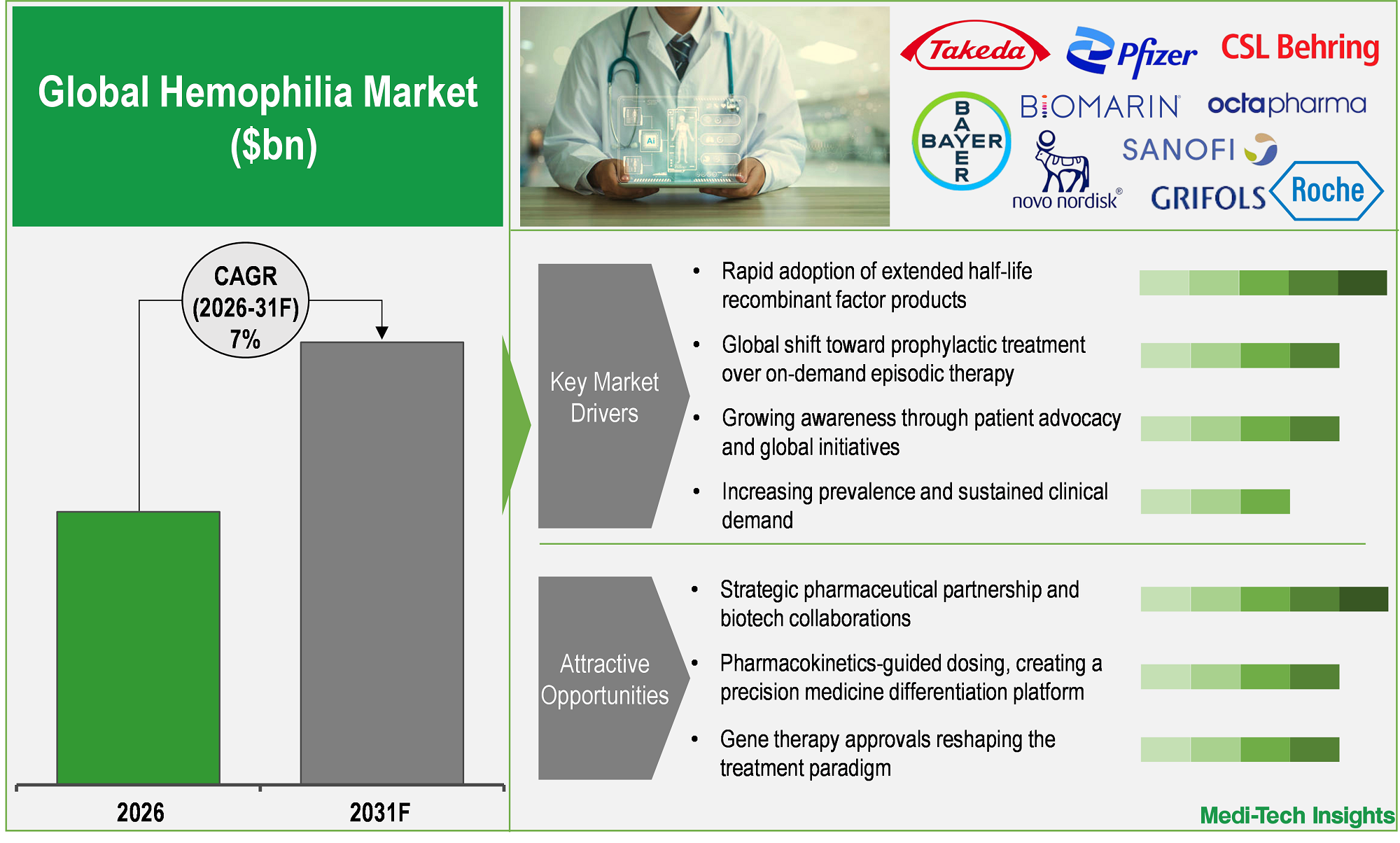 Strategic pharmaceutical partnership and biotech
collaborations create opportunities for market growth
Partnerships between pharmaceutical companies and
biotechnology firms are changing how new hemophilia treatments reach patients.
Large drug makers contribute manufacturing scale, regulatory know-how, and
established distribution networks, while smaller biotech firms bring
specialized expertise in gene therapy, recombinant protein design, and non-factor treatment
approaches. Combined, these strengths shorten development timelines and smooth
the path through regulatory approval across different markets.
Such alliances also help share the financial risk of
expensive clinical trials, allowing companies to pursue a wider range of
experimental therapies than they could fund individually. Pooled research
infrastructure further supports progress on persistent challenges, including
inhibitor development in patients, unequal access across regions, and open
questions about how long newer therapies remain effective.
This kind of collaboration reaches beyond deals between individual companies. After the WHO adopted its 2026 resolution on health equity for bleeding disorders, CSL Behring adjusted its access initiatives to align with the new policy direction, while Roche's ongoing partnership with the World Federation of Hemophilia has already delivered prophylactic treatment to more than 940 patients across 30 underserved countries. As curative and long-acting therapies continue to advance, this layered model of collaboration is likely to stay central to reducing costs and improving outcomes for patients globally.
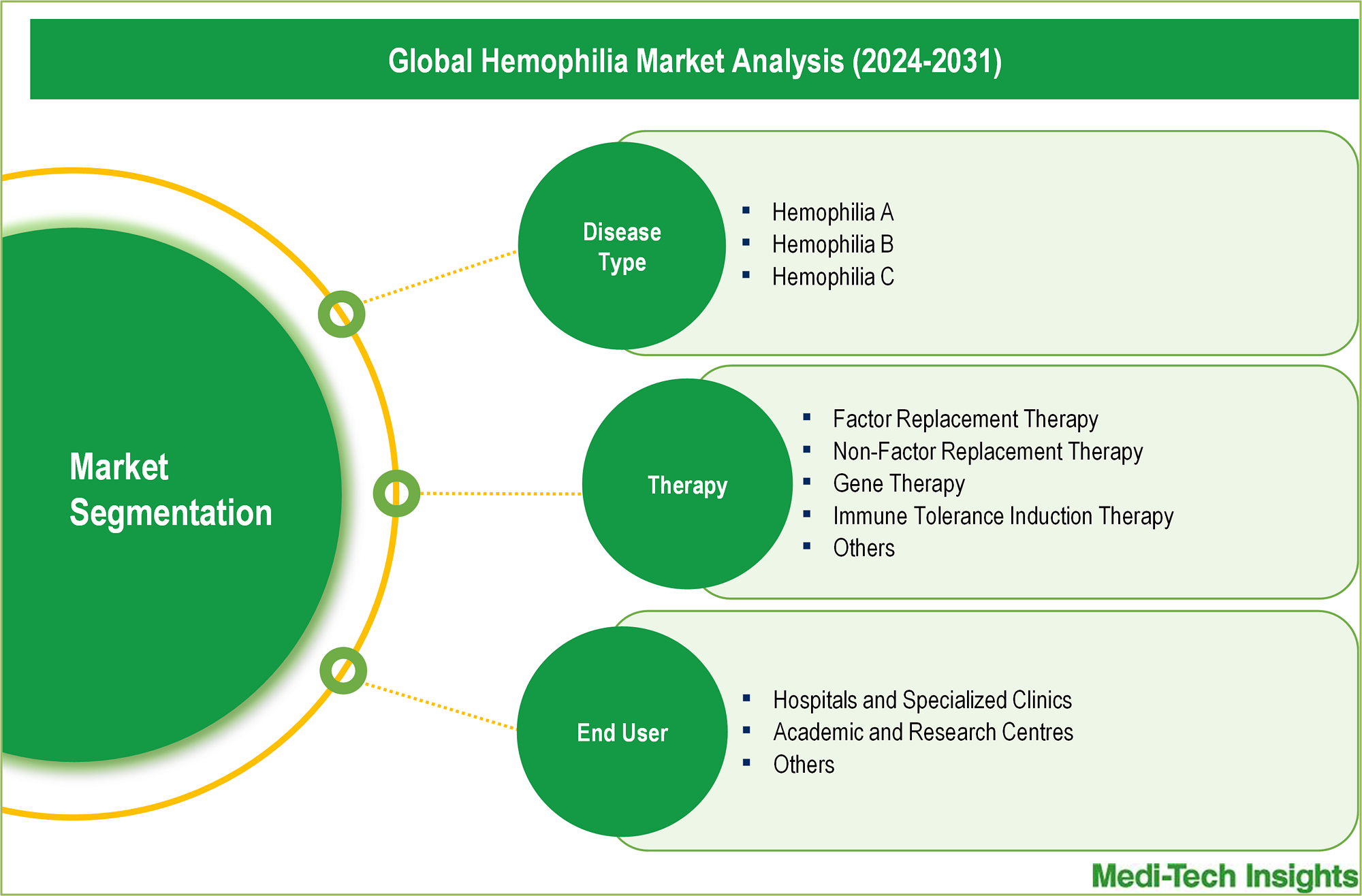
Therapy Segment Outlook
By
therapy, the hemophilia market is segmented into factor replacement therapy,
non-factor replacement therapy, gene therapy, and immune tolerance induction
(ITI) therapy, among others. The factor replacement therapy segment holds the
largest share of the global market, owing to its established role as the
standard of care for hemophilia A and hemophilia B. The segment growth is further
supported by widespread availability of recombinant and plasma-derived factor
concentrates, alongside rising diagnosis rates and expanding access to
prophylactic treatment.
Non-factor replacement therapy is the fastest-growing segment, driven by its extended dosing intervals, subcutaneous administration, and effectiveness in patients with inhibitors to traditional factor therapies. Growing physician preference for these convenient, non-intravenous options is further accelerating adoption. Gene therapy is also gaining momentum as a potentially curative approach, offering possible long-term factor expression after a single administration. Meanwhile, immune tolerance induction therapy remains critical in managing inhibitor development, particularly among patients with severe hemophilia, supporting sustained treatment efficacy and improved long-term clinical outcomes.
Regional Outlook: North America maintains its leading position in the hemophilia market
North
America maintains its leading position in the hemophilia market through the coexistence
of factor concentrates and non-factor therapies. The region benefits from a
well-established healthcare infrastructure and continued reliance on factor
replacement products for acute and on-demand treatment, alongside growing
adoption of non-factor therapies for convenient, less frequent prophylactic
administration.
Europe follows closely, with growth driven by increasing diagnosis rates and rising adoption of both conventional and advanced hemophilia therapies. Additionally, strong research and development activity and favorable regulatory support for innovative treatment options are further supporting market growth across the region. Asia Pacific is expected to witness the fastest growth, driven by its large patient population, improving diagnostic infrastructure, and expanding access to hemophilia treatment. Moreover, rising healthcare investment and growing awareness of bleeding disorders are further contributing to market expansion across the region.
Competitive Landscape Analysis
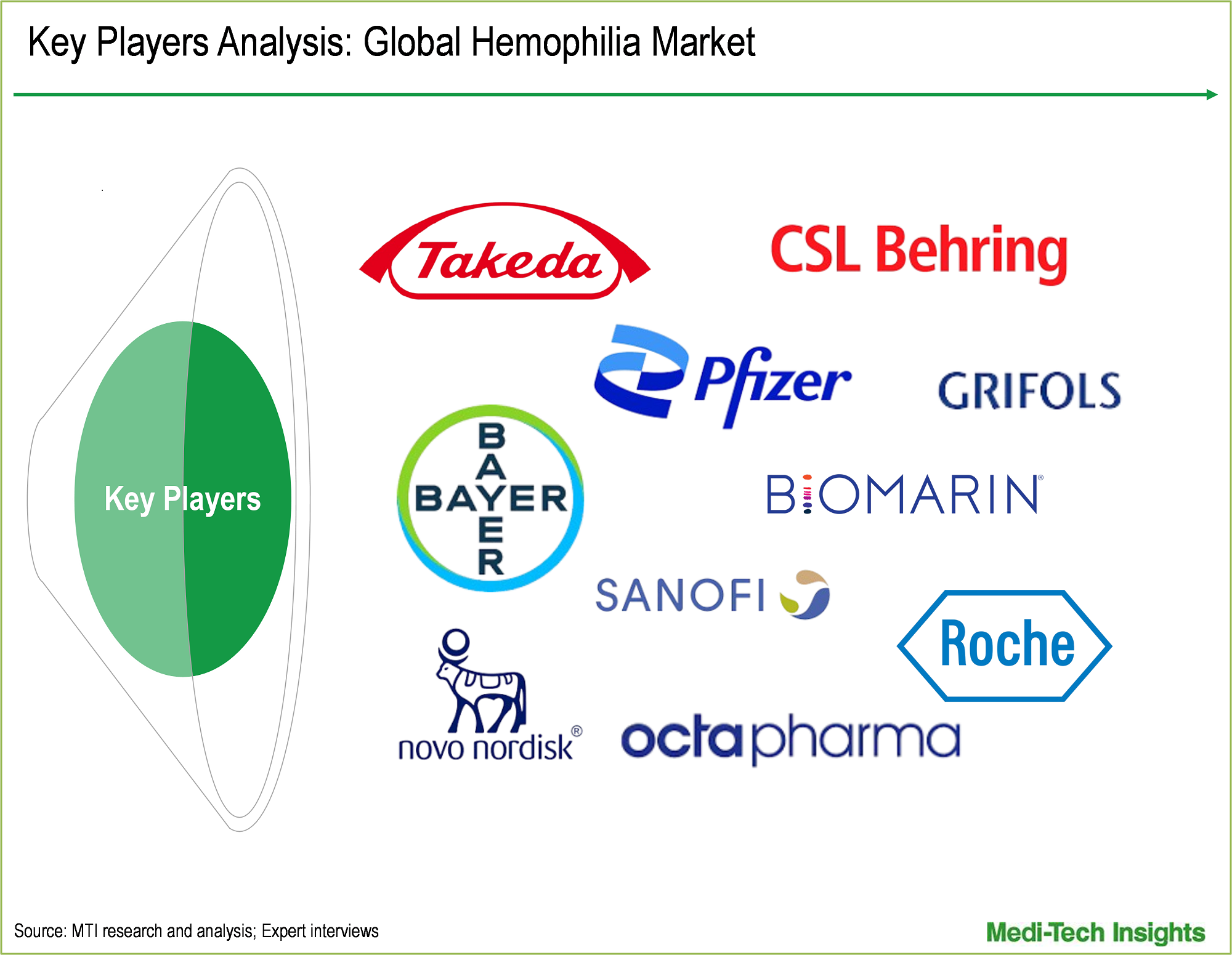
The global hemophilia market is marked by
the presence of established and emerging market players such as-
·
Takeda Pharmaceuticals
Company Limited (Japan)
·
CSL Behring (US)
• Pfizer, Inc. (US)
• Bayer AG (Germany)
• BioMarin Pharmaceutical Inc. (US)
• Grifols (Spain)
• Sanofi (France)
• F. Hoffmann-La Roche Ltd. (Switzerland)
• Novo Nordisk A/S (Denmark)
• Octapharma AG (Switzerland
Growth
strategies adopted by players to establish their foothold in the hemophilia market
Players operating in this market are adopting various growth strategies such as new product launches and approvals, acquisitions, expansions, and strategic partnerships, agreements, and collaborations, to garner market share. For instance,
- In June 2026, Pfizer Inc. announced that the US FDA approved Pfizer’s HYMPAVZI for the treatment of two additional hemophilia A or B patient populations with significant medical need, seeking to expand its approved use to patients aged 6 years and older along with pediatric patients aged 6 to 11 years without inhibitors
- In March 2026, Belief BioMed (BBM) entered into an exclusive collaboration agreement with Grand Life Sciences Group Co., Ltd., granting commercialization rights for its investigational gene therapy BBM-H803 across Mainland China, Hong Kong, Macau, and Taiwan, aimed at accelerating access to innovative hemophilia A treatments in the region
- In March 2025, the US FDA approved Sanofi's Qfitlia (fitusiran), the first antithrombin-lowering siRNA therapy for routine prophylaxis in adult and pediatric patients aged 12 years and older with hemophilia A or B, with or without factor VIII or IX inhibitors
|
Report
Metric |
Details |
|
Base
Year Considered |
2025 |
|
Historical
Data |
2024
– 2025 |
|
Forecast
Period |
2026
– 2031 |
|
Growth
Rate |
7% |
|
Segment
Scope |
Disease Type, Treatment Type, and Sales
Channel |
|
Regional
Scope |
|
|
Market
Drivers |
|
|
Attractive
Opportunities |
|
|
Key
Companies Mapped |
Takeda
Pharmaceuticals Company Limited (Japan); CSL Behring (US); Pfizer, Inc. (US);
Bayer AG (Germany); BioMarin Pharmaceutical Inc. (US); Grifols (Spain);
Sanofi (France); F. Hoffmann-La Roche Ltd. (Switzerland); Novo Nordisk A/S
(Denmark); Octapharma AG (Switzerland); and others |
|
Report
Highlights |
Market
Size & Forecast, Growth Drivers & Restraints, Trends, Competitive
Analysis |
Global Hemophilia Market Segmentation
This report by Medi-Tech Insights provides the size of the global hemophilia market at the regional and country-level from 2024 to 2031. The report further segments the market by disease type, therapy, and end user.
Market Size & Forecast (2024-2031), By Disease Type, USD Billion
o Hemophilia A
o Hemophilia B
o Hemophilia C
· Market Size & Forecast (2024-2031), By Therapy, USD Billion
o Factor Replacement Therapy
o Non-Factor Replacement Therapy
o Gene Therapy
o Immune Tolerance Induction Therapy
o Others
Market Size & Forecast (2024-2031), By End User, USD Billion
o Hospitals and Specialized Clinics
o Academic and Research Centres
o Other End Users
· Market Size & Forecast (2024-2031), By Region, USD Billion
o North America
§ US
§ Canada
o Europe
§ UK
§ Germany
§ France
§ Italy
§ Spain
§ Rest of Europe
o Asia Pacific
§ China
§ India
§ Japan
§ Rest of Asia Pacific
o Latin America
o Middle East & Africa
Related reports for reference-
Need a More Tailored Analysis?
- Discuss the market sizing methodology and forecast assumptions with our healthcare analysts.
- Expand the scope with additional countries, market segments, technologies, or competitor profiling.
- Use the insights to support strategic planning, market entry, commercial due diligence, and long-term revenue growth initiatives.