Download FREE Sample


Allogeneic cell therapy involves administering cells from a healthy donor to a patient to treat various medical conditions. Unlike autologous therapies, which use patient's own cells, allogeneic treatments utilize donor cells, enabling the creation of off-the-shelf products that can be readily available for multiple patients. This approach is particularly beneficial in treating diseases such as leukemia, lymphoma, and other blood disorders, where the donor's healthy cells can replace the patient's damaged or diseased cells, promoting recovery and restoring normal function.
To learn more about this report, download the PDF brochure
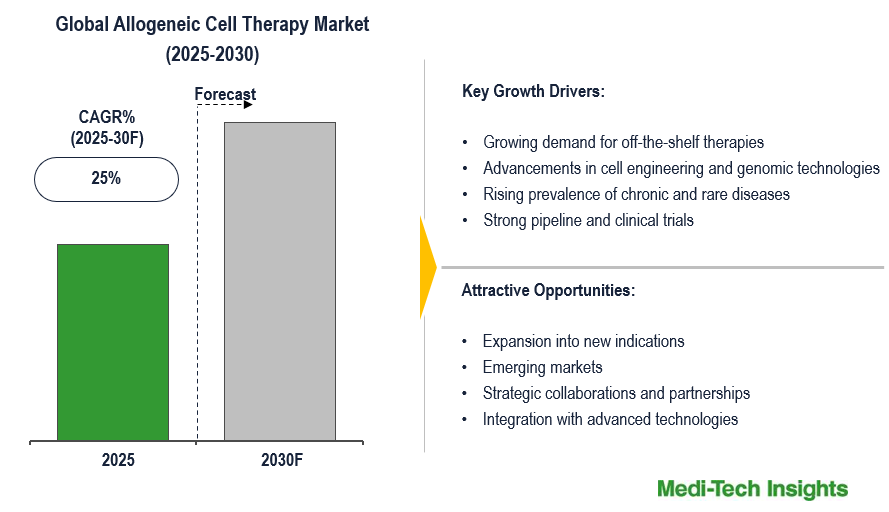
Growing demand for off-the-shelf therapies to propel market demand
The growing demand for off-the-shelf therapies is a significant driver in the allogeneic cell therapy market. Unlike autologous therapies, which require cells to be sourced and processed from each individual patient, allogeneic cell therapies utilize cells from a single donor to treat multiple patients. This approach reduces production time, lowers costs, and simplifies logistics, making treatments more accessible and scalable. Additionally, the rise in chronic diseases and the need for rapid, cost-effective therapeutic solutions are further boosting the adoption of off-the-shelf therapies, positioning allogeneic cell therapies as a promising and efficient option for addressing unmet medical needs.
Advancements in cell engineering and genomic technologies is driving the market growth
Advancements in cell engineering and genomic technologies are propelling the allogeneic cell therapy market by enabling the development of safer, more effective therapies. Cutting-edge techniques like CRISPR and TALEN allow precise genetic modifications, reducing the risk of immune rejection and enhancing cell functionality. These technologies also improve the scalability and consistency of cell production, ensuring high-quality, off-the-shelf therapies. Furthermore, breakthroughs in immune evasion strategies and enhanced cell viability boost therapeutic potential in various diseases. As a result, innovations in cell and genomic engineering are accelerating clinical development and expanding the application scope of allogeneic cell therapies, driving market growth.
To learn more about this report, download the PDF brochure
Competitive Landscape Analysis
The global allogeneic cell therapy market is marked by the presence of established and emerging market players such as Athersys, Inc., Mesoblast Ltd, BioRestorative Therapies, Inc., Poseida Therapeutics, Inc., Vertex Pharmaceuticals Incorporated, Fate Therapeutics, Allogene Therapeutics, Artiva Biotherapeutics, Inc., Atara Biotherapeutics, Inc., and CRISPR Therapeutics; among others. Some of the key strategies adopted by market players include new product development, strategic partnerships and collaborations, and geographic expansion.
Report Scope
| Report Metric | Details |
| Base Year Considered | 2024 |
| Historical Data | 2023 - 2024 |
|
Forecast Year |
2025 - 2030 |
|
Growth Rate |
25% |
| Market Drivers |
|
| Attractive Opportunities |
|
| Segment Scope | Source, Application |
| Regional Scope |
|
| Key Companies Mapped | Athersys, Inc., Mesoblast Ltd, BioRestorative Therapies, Inc., Poseida Therapeutics, Inc., Vertex Pharmaceuticals Incorporated, Fate Therapeutics, Allogene Therapeutics, Artiva Biotherapeutics, Inc., Atara Biotherapeutics, Inc., and CRISPR Therapeutics among others |
| Report Highlights | Market Size & Forecast, Growth Drivers & Restraints, Trends, Competitive Analysis |
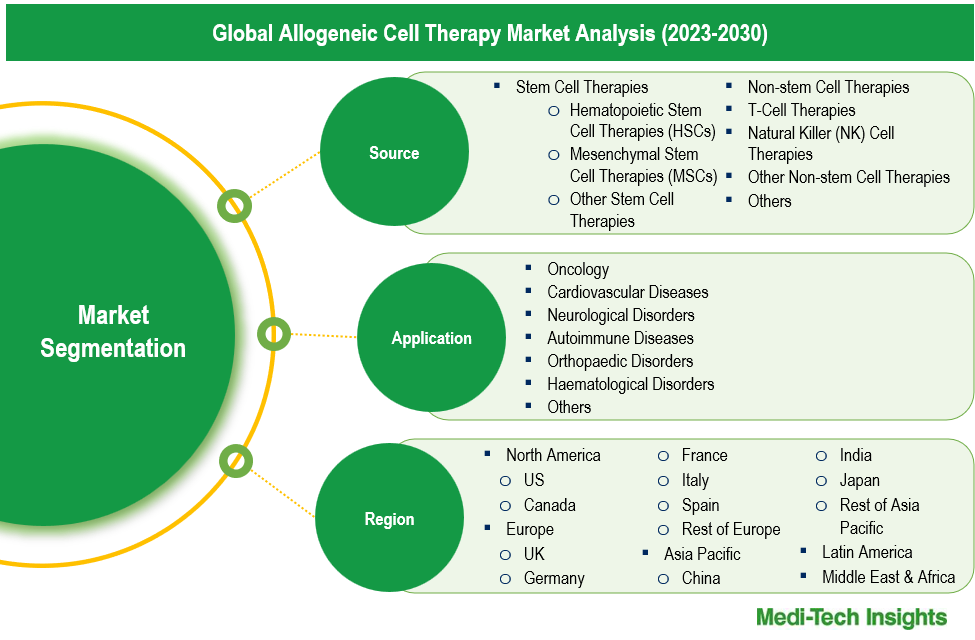
Global Allogeneic Cell Therapy Market Segmentation
This report by Medi-Tech Insights provides thesize of the global allogeneic cell therapy market at theregional- and country-level from 2023 to 2030. The report further segments the market based on source, and application.
Market Size & Forecast (2023-2030), By Source, USD Million
- Stem Cell Therapies
- Hematopoietic Stem Cell Therapies (HSCs)
- Mesenchymal Stem Cell Therapies (MSCs)
- Other Stem Cell Therapies
- Non-stem Cell Therapies
- T-Cell Therapies
- Natural Killer (NK) Cell Therapies
- Other Non-stem Cell Therapies
- Others
Market Size & Forecast (2023-2030), By Application, USD Million
- Oncology
- Cardiovascular Diseases
- Neurolog/li>
- Autoimmune Diseases
- Orthopaedic Disorders
- Haematological Disorders
- Others
Market Size & Forecast (2023-2030), By Region, USD Million
- North America
- US
- Canada
- Europe
- UK
- Germany
- France
- Italy
- Spain
- Rest of Europe
- Asia Pacific
- China
- India
- Japan
- Rest of Asia Pacific
- Latin America
- Middle East & Africa
Key Strategic Questions Addressed
- What is the market size & forecast of the allogeneic cell therapy market?
- What are historical, present, and forecasted market shares and growth rates of various segments and sub-segments of the allogeneic cell therapy market?
- What are the key trends defining the market?
- What are the major factors impacting the market?
- What are the opportunities prevailing in the market?
- Which region has the highest share in the global market? Which region is expected to witness the highest growth rate in the next 5 years?
- Who are the major players operating in the market?
- What are the key strategies adopted by players?
Need a More Tailored Analysis?
- Discuss the market sizing methodology and forecast assumptions with our healthcare analysts.
- Expand the scope with additional countries, market segments, technologies, or competitor profiling.
- Use the insights to support strategic planning, market entry, commercial due diligence, and long-term revenue growth initiatives.