Download FREE Sample


Biomaterials are substances engineered to interact with biological systems for medical purposes, including therapeutic and diagnostic applications. They can be derived from natural sources or synthesized and are utilized to replace, repair, or augment bodily functions. Common examples include implants, prosthetics, and drug delivery systems among others. Key properties of biomaterials include biocompatibility, mechanical strength, and the ability to promote tissue regeneration. Their primary goal is to enhance the quality of life by supporting the healing and functioning of tissues and organs within the body.

To learn more about this report, download the PDF brochure
Growing demand for medical implants to propel market demand
The rising demand for medical implants is significantly driving the market for biomaterials. As people age and chronic diseases become more prevalent, the need for implants to replace damaged or diseased tissues increases. Biomaterials, engineered to interact with biological systems, are essential components of these implants. They are used in various applications, including orthopedic, cardiovascular, dental, and tissue engineering. The growing demand for medical implants directly translates to a higher demand for biomaterials, propelling market growth and innovation in the healthcare sector.
Innovations in materials science driving the market growth
Innovations in materials science, including the development of smart biomaterials, bioresorbable materials, and 3D-printed biomaterials, are accelerating market growth. Breakthroughs in nanotechnology, smart materials, and biocompatible polymers enhance the performance and functionality of biomaterials in applications like tissue engineering, drug delivery, and implants. These advancements allow for the creation of materials that mimic natural tissues, improve integration with the body, and enhance healing processes. Furthermore, the development of biodegradable and bioactive materials aligns with growing sustainability trends in healthcare, driving increased adoption and investment in biomaterials across various medical fields.
To learn more about this report, download the PDF brochure
Competitive Landscape Analysis
The global biomaterials market is marked by the presence of established and emerging market players such as BASF SE, Carpenter Technology Corporation, Celanese Corporation, CeramTec GmbH, Corbion NV, Covestro AG, DSM, Evonik Industries AG, Mitsubishi Chemical Group Corporation, and Victrex Plc; among others. Some of the key strategies adopted by market players include product innovation and development, strategic partnerships and collaborations, and geographic expansion.
Biomaterials Market Scope
|
Report Scope |
Details |
|
Base Year Considered |
2023 |
|
Historical Data |
2022 - 2023 |
|
Forecast Period |
2024 - 2029 |
|
Growth Rate |
CAGR 13-15% |
|
Segment Scope |
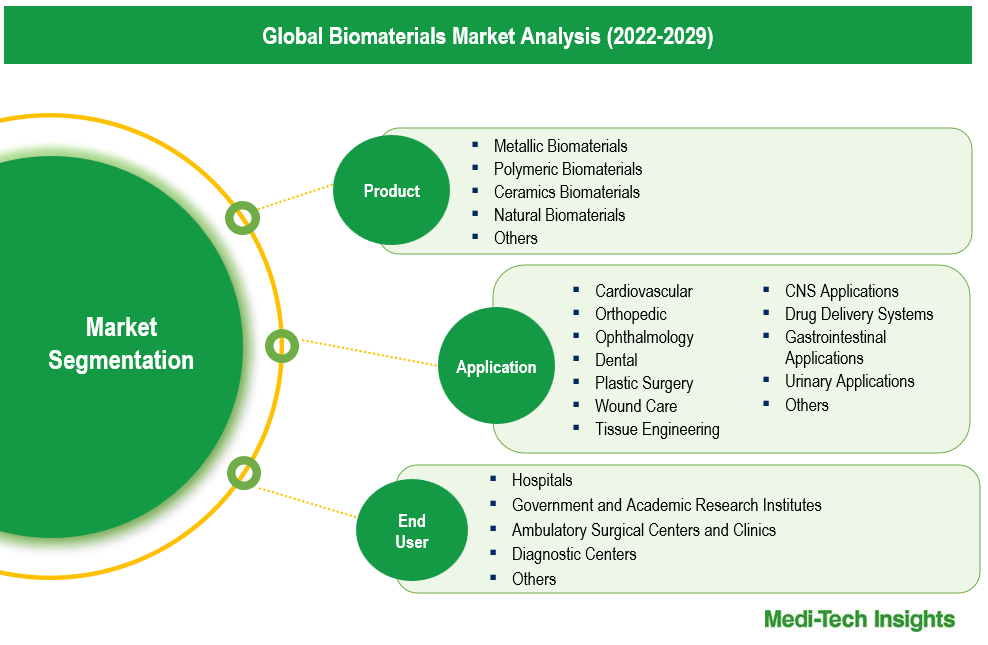
Product, Application, End User |
|
Regional Scope |
|
|
Key Companies Mapped |
BASF SE, Carpenter Technology Corporation, Celanese Corporation, CeramTec GmbH, Corbion NV, Covestro AG, DSM, Evonik Industries AG, Mitsubishi Chemical Group Corporation, and Victrex Plc; among others |
|
Report Highlights |
Market Size & Forecast, Growth Drivers & Restraints, Trends, Competitive Analysis |
Frequently Asked Questions About This Report
What is the market size & forecast of the biomaterials market?
What are historical, present, and forecasted market shares and growth rates of various segments and sub-segments of the biomaterials market?
What are the key trends defining the market?
What are the major factors impacting the market?
What are the opportunities prevailing in the market?
Need a More Tailored Analysis?
- Discuss the market sizing methodology and forecast assumptions with our healthcare analysts.
- Expand the scope with additional countries, market segments, technologies, or competitor profiling.
- Use the insights to support strategic planning, market entry, commercial due diligence, and long-term revenue growth initiatives.