Download FREE Sample


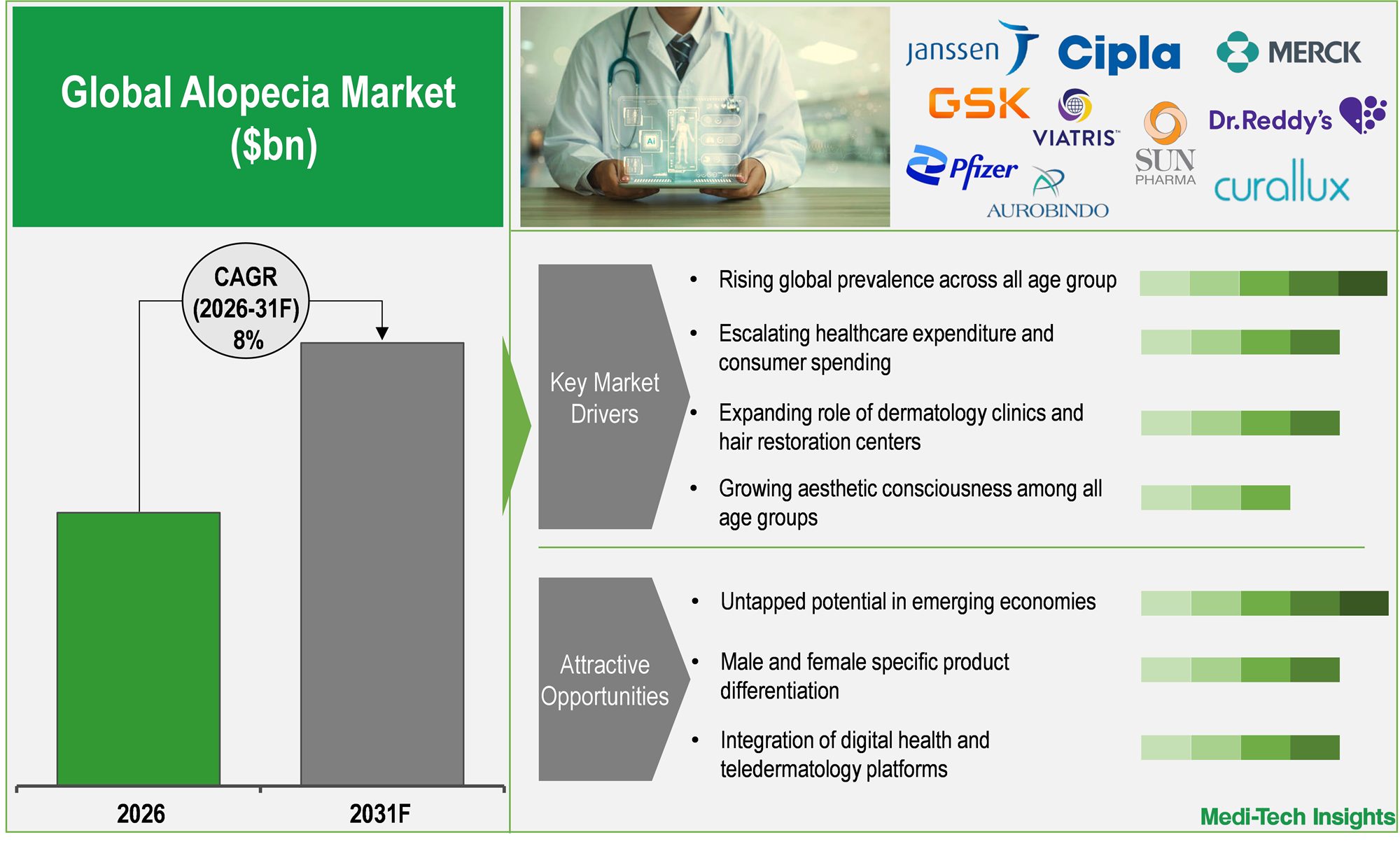
The global alopecia market size is set to grow at a CAGR of 8% over the next 5 years. Key drivers include the rising global prevalence across all age groups; escalating healthcare expenditure & consumer spending; expanding role of dermatology clinics and hair restoration centers; growing aesthetics consciousness in the young population; and lifestyle & environmental factors broadening the patient base. However, high cost of novel targeted therapies, safety concerns and adverse reactions, and low long-term treatment adherence and patient retention are expected to impact the market’s growth.
The alopecia market encompasses a broad spectrum of pharmaceutical products, medical devices, and therapeutic solutions designed to diagnose, treat, and manage various forms of hair loss conditions across diverse patient populations. Alopecia refers to partial or complete loss of hair from the scalp or other areas of the body, manifesting in multiple forms, including androgenetic alopecia, alopecia areata, cicatricial alopecia, and traction alopecia, among others. Treatment modalities available within this market range from topical and oral medications to laser-based devices and surgical hair restoration procedures. The market caters to a wide patient demographic comprising both male and female individuals across all age groups, including adolescents and adults, seeking clinically effective and aesthetically driven solutions for hair loss management delivered through dermatology clinics, hospitals, and retail channels.
Aesthetic concern among younger demographics driving alopecia market growth
Growing concern with personal appearance among younger demographics is emerging as a significant driver for the alopecia market globally. Today's younger generation is increasingly conscious of personal appearance and grooming standards, driven largely by the pervasive influence of social media platforms, celebrity culture, and digital content consumption. Hair is widely regarded as a defining element of personal identity and self-expression, making hair loss a deeply distressing concern even among adolescents and adults. According to the World Health Organization (WHO), psychological well-being is intrinsically linked to physical appearance, and conditions such as alopecia are increasingly recognized as contributors to anxiety, depression, and reduced quality of life among younger populations.
This growing aesthetic consciousness has consequently accelerated demand for diverse alopecia treatment solutions, spanning topical formulations, oral medications, laser-based devices, and advanced regenerative therapies, with manufacturers increasingly tailoring offerings toward younger, aesthetically driven consumers, positioning hair restoration as an integral component of holistic personal wellness and modern lifestyle management.
To learn more about this report, download the PDF brochure
Surge in PRP and regenerative therapy adoption to drive demand
Platelet-Rich Plasma (PRP) therapy has witnessed substantial traction within the alopecia treatment landscape, emerging as a minimally invasive, biologically driven alternative to conventional pharmacological interventions. PRP therapy involves concentrating a patient's own platelets and injecting them into the scalp to stimulate dormant hair follicles and accelerate tissue regeneration. According to the American Academy of Dermatology (AAD), PRP has demonstrated clinically measurable improvements in hair density and follicular health, particularly among patients with androgenetic alopecia and alopecia areata, positioning it as an increasingly preferred choice among dermatologists and patients seeking non-surgical solutions.
Advancements in regenerative medicine, including stem cell therapy and exosome-based treatments, are progressively complementing PRP protocols, offering more targeted and biologically sustainable therapeutic outcomes. These innovations are collectively transforming alopecia care from symptomatic management toward genuine follicular restoration. This growing clinical validation, combined with rising patient preference for autologous and natural treatment approaches, is significantly expanding the regenerative therapy segment, attracting considerable investment from pharmaceutical companies and specialized dermatology clinics globally.
Integration of digital health & teledermatology platforms creates growth opportunities in the alopecia market
The integration of digital health and teledermatology platforms presents significant opportunities for the alopecia market by improving access to diagnosis, treatment, and long-term disease management. Alopecia, particularly androgenetic alopecia and alopecia areata, often requires ongoing monitoring and treatment adjustments. Teledermatology enables patients to consult dermatologists remotely, reducing geographical barriers and improving access to specialists, particularly in underserved and rural areas. This can encourage earlier consultations and increase treatment uptake among patients who may otherwise delay seeking professional care.
Digital platforms also support remote monitoring through standardized scalp photographs, patient-reported outcomes, and treatment adherence tracking. These capabilities allow healthcare professionals to assess changes in hair density, identify potential treatment responses, and modify treatment plans when necessary. Artificial intelligence-enabled image analysis may further support preliminary assessment and progress monitoring, although clinical diagnosis and treatment decisions should remain under appropriate medical supervision.
In addition, digital health platforms can facilitate electronic prescriptions, medication delivery, follow-up reminders, and personalized treatment recommendations, improving convenience and continuity of care. Partnerships among pharmaceutical companies, dermatology providers, digital health platforms, and online pharmacies could create integrated treatment pathways and expand patient reach. As consumer acceptance of virtual healthcare increases, these solutions may support greater adoption of prescription therapies, including topical treatments, oral medications, and emerging targeted therapies, creating additional commercial opportunities for alopecia treatment providers.
To learn more about this report, download the PDF brochure
Disease Type Segment Outlook
By disease type, the global alopecia market is categorized into androgenetic alopecia, alopecia areata, traction alopecia, and cicatricial alopecia, among others. Androgenetic alopecia accounts for the largest share in the global market, widely prevalent across both male and female populations and strongly supported by the widespread availability of established treatment options, including minoxidil and others. The segment growth is further reinforced by increasing aesthetic consciousness and early treatment-seeking behavior among younger demographics globally.
Alopecia areata represents the fastest-growing segment, driven by recent FDA approvals of JAK inhibitors, alongside a robust clinical pipeline addressing both moderate and severe disease presentations across adult and adolescent populations. Traction alopecia is gaining increasing clinical recognition, particularly among individuals with culturally specific hair styling practices, driving demand for both preventive education and therapeutic interventions.
Regional Outlook: North America maintains its leading position in the alopecia market
North America holds the largest share of the global alopecia market, driven by the high prevalence of various hair loss conditions, advanced dermatological healthcare infrastructure, and widespread adoption of recently FDA-approved JAK inhibitor therapies. The region further benefits from significant pharmaceutical R&D investment and the presence of leading market players actively expanding their alopecia treatment portfolios. Europe follows closely, with growth supported by increasing patient awareness, favorable regulatory pathways for novel alopecia therapeutics, and rising adoption of both pharmaceutical and device-based hair restoration solutions across key markets, including Germany, France, and the UK.
Asia-Pacific is anticipated to register the fastest growth, supported by the region’s large population, rising awareness of hair-loss conditions, and growing interest in hair and scalp health. Increasing access to dermatologists, expanding healthcare infrastructure, and greater availability of topical and oral treatments are supporting market development. China, Japan, South Korea, and India represent important markets, while rising disposable incomes and the expansion of online pharmacies and specialized hair clinics are improving access to treatment.
Competitive Landscape Analysis
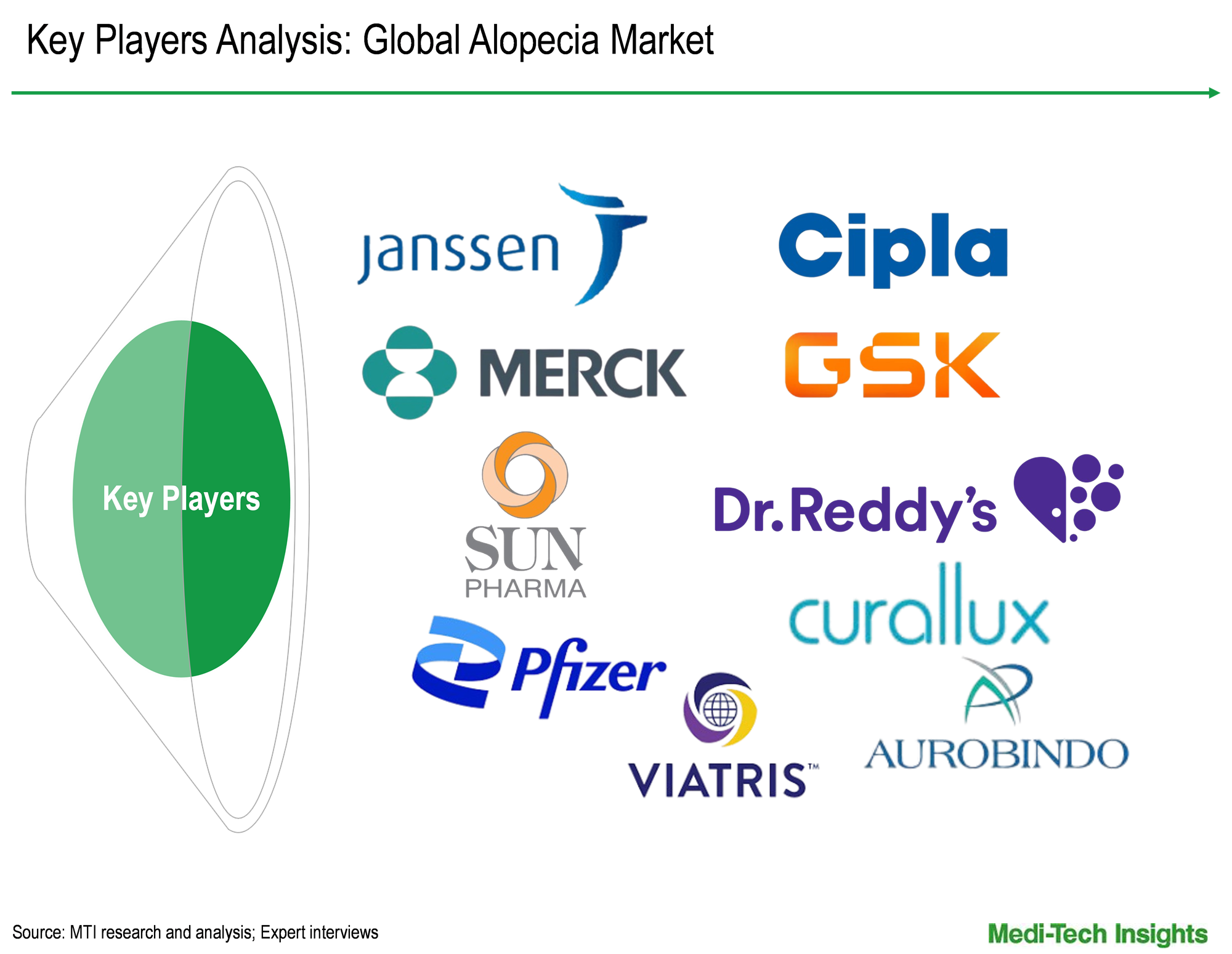
The global alopecia market is marked by the presence of established and emerging market players such as-
- Janssen Global Services Inc. (US)
- Cipla Limited (India)
- Merck & Co. Inc. (US)
- GlaxoSmithKline plc (UK)
- Sun Pharmaceutical Industries Ltd (India)
- Reddy's Laboratories Ltd (India)
- Aurobindo Pharma (India)
- Viatris Inc. (US)
- Pfizer Inc. (US)
- Curallux, LLC (US)
Get a sample report for competitive landscape analysis
Growth strategies adopted by players to establish their foothold in the alopecia market
Players operating in this market are adopting various growth strategies such as new product launches and approvals, acquisitions, expansions, and strategic partnerships, agreements, and collaborations, to garner market share. For instance,
- In September 2026, the US FDA approved Eli Lilly’s Olumiant (baricitinib) for patients aged 12 years and older with severe alopecia areata. The approval expands treatment access to adolescents, supported by Phase III clinical trial results
- In July 2026, The European Commission approved AbbVie’s Rinvoq (upadacitinib) for adults and adolescents with severe alopecia areata. The approval expands the treatment’s potential use in autoimmune hair loss and strengthens AbbVie’s immunology portfolio
- In July 2025, Sun Pharmaceutical Industries Ltd announced the US commercial launch of Leqselvi (deuruxolitinib), an oral JAK inhibitor approved for treating severe alopecia areata in adults
- In July 2025, the US FDA granted Fast Track designation to Nektar Therapeutics’ investigational biologic rezpegaldesleukin for severe-to-very-severe alopecia areata. The therapy aims to modulate immune regulation, supporting clinical development of a potential new treatment approach
- In June 2023, the US FDA approved Pfizer’s Litfulo (ritlecitinib), an oral kinase inhibitor, for adults and adolescents aged 12 years and older with severe alopecia areata. The approval expanded prescription treatment options for patients experiencing substantial hair loss
Report Scope
Report Metric | Details |
Base Year Considered | 2025 |
Historical Data | 2024 – 2025 |
Forecast Period | 2026 – 2031 |
Growth Rate | 8% |
Segment Scope | Disease Type, Treatment Type, and Sales Channel |
Regional Scope |
|
Market Drivers |
|
Attractive Opportunities |
|
Key Companies Mapped | Janssen Global Services Inc. (US); Cipla Limited (India); Merck & Co. Inc. (US); GlaxoSmithKline plc (UK); Sun Pharmaceutical Industries Ltd (India); Dr. Reddy's Laboratories Ltd (India); Aurobindo Pharma (India); Viatris Inc. (US); Pfizer Inc. (US); Curallux, LLC (US), among others |
Report Highlights | Market Size & Forecast, Growth Drivers & Restraints, Trends, Competitive Analysis |
Global Alopecia Market Segmentation
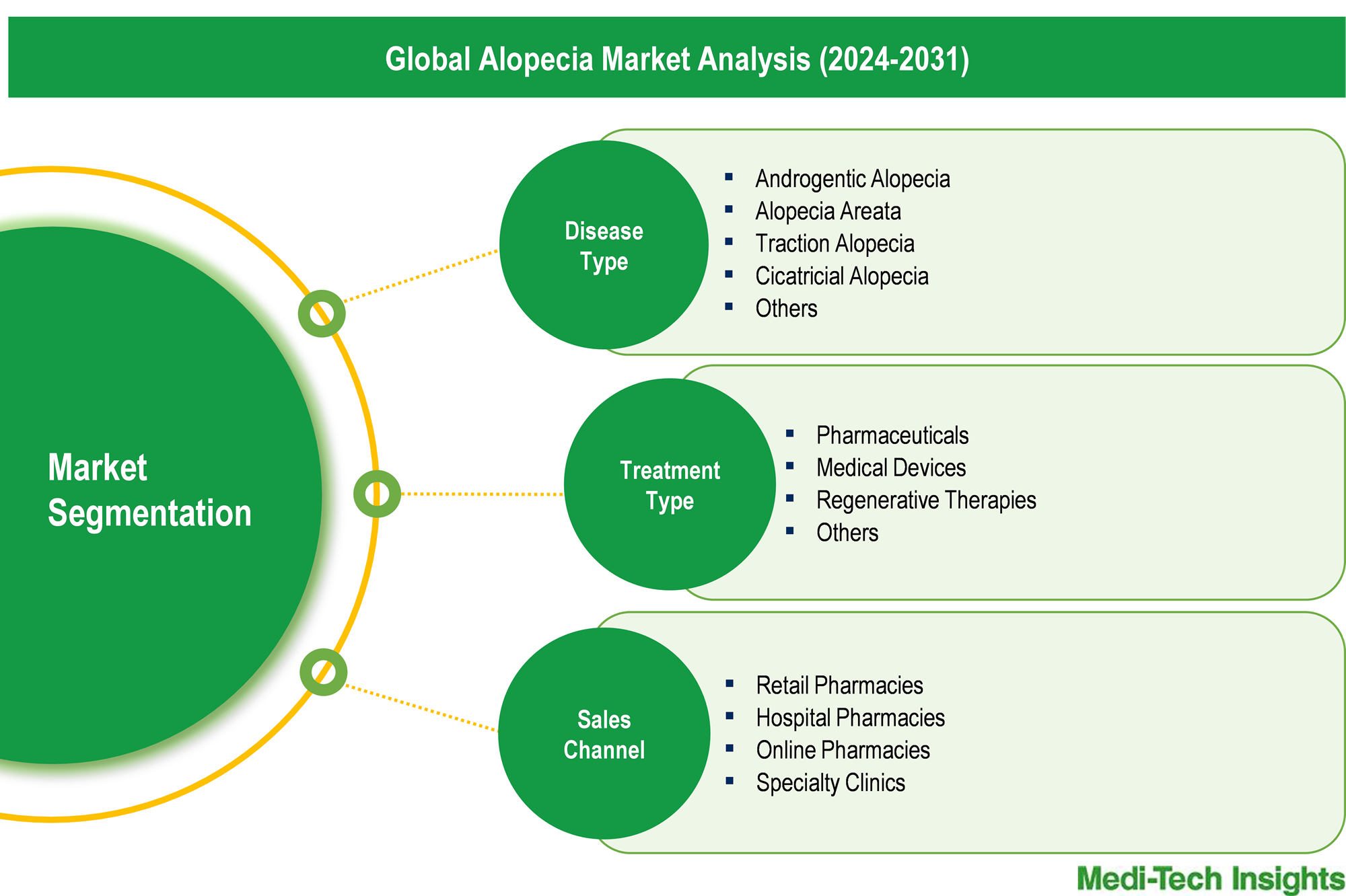
This report by Medi-Tech Insights provides the size of the global alopecia market at the regional and country-level from 2024 to 2031. The report further segments the market by disease type, treatment type, and sales channel.
Market Size & Forecast (2024-2031), By Disease Type, USD Billion
- Androgenetic Alopecia
- Alopecia Areata
- Traction Alopecia
- Cicatricial Alopecia
- Others
Market Size & Forecast (2024-2031), By Treatment Type, USD Billion
- Pharmaceuticals
- Devices
- Regenerative Therapies
- Others
Market Size & Forecast (2024-2031), By Sales Channel, USD Billion
- Retail Pharmacies
- Hospital Pharmacies
- Online Pharmacies
- Specialty Clinics
Market Size & Forecast (2024-2031), By Region, USD Billion
- North America
- US
- Canada
- Europe
- UK
- Germany
- France
- Italy
- Spain
- Rest of Europe
- Asia Pacific
- China
- India
- Japan
- Rest of Asia Pacific
- Latin America
- Middle East & Africa
Related Reports:
Frequently Asked Questions About This Report
What is the growth rate of the alopecia market?
The alopecia market is set to witness a growth rate of 8% during the forecast period from 2026 to 2031
What are the key trends defining the market?
JAK inhibitor therapies redefining the treatment framework and surge in PRP and regenerative therapy adoption are major trends in the alopecia market
What are the major factors impacting the market growth?
Rising global prevalence across all age groups, escalating healthcare expenditure and consumer spending, expanding role of dermatology clinics and hair restoration centers, growing aesthetics consciousness in the young population, and lifestyle and environmental factors broadening patient base are some of the key factors driving the alopecia market
What are the opportunities prevailing in the market?
Untapped potential in emerging economies, male and female-specific product differentiation, integration of digital health and teledermatology platforms, and the rise of botanical-based alopecia therapeutics offer numerous growth opportunities for companies operating in the alopecia market
Who are the major players operating in the market?
Some of the major players operating in the alopecia market include Janssen Global Services Inc. (US); Cipla Limited (India); Merck & Co. Inc. (US); GlaxoSmithKline plc (UK); Sun Pharmaceutical Industries Ltd (India); Dr. Reddy's Laboratories Ltd (India); Aurobindo Pharma (India); Viatris Inc. (US); Pfizer Inc. (US); Curallux, LLC (US) and among others
What are the key strategies adopted by players?
Key players in the alopecia market are adopting strategies such as new product launch/approval, acquisitions, collaborations, and strategic alliances to expand their market presence
Need a More Tailored Analysis?
- Discuss the market sizing methodology and forecast assumptions with our healthcare analysts.
- Expand the scope with additional countries, market segments, technologies, or competitor profiling.
- Use the insights to support strategic planning, market entry, commercial due diligence, and long-term revenue growth initiatives.