Download FREE Sample


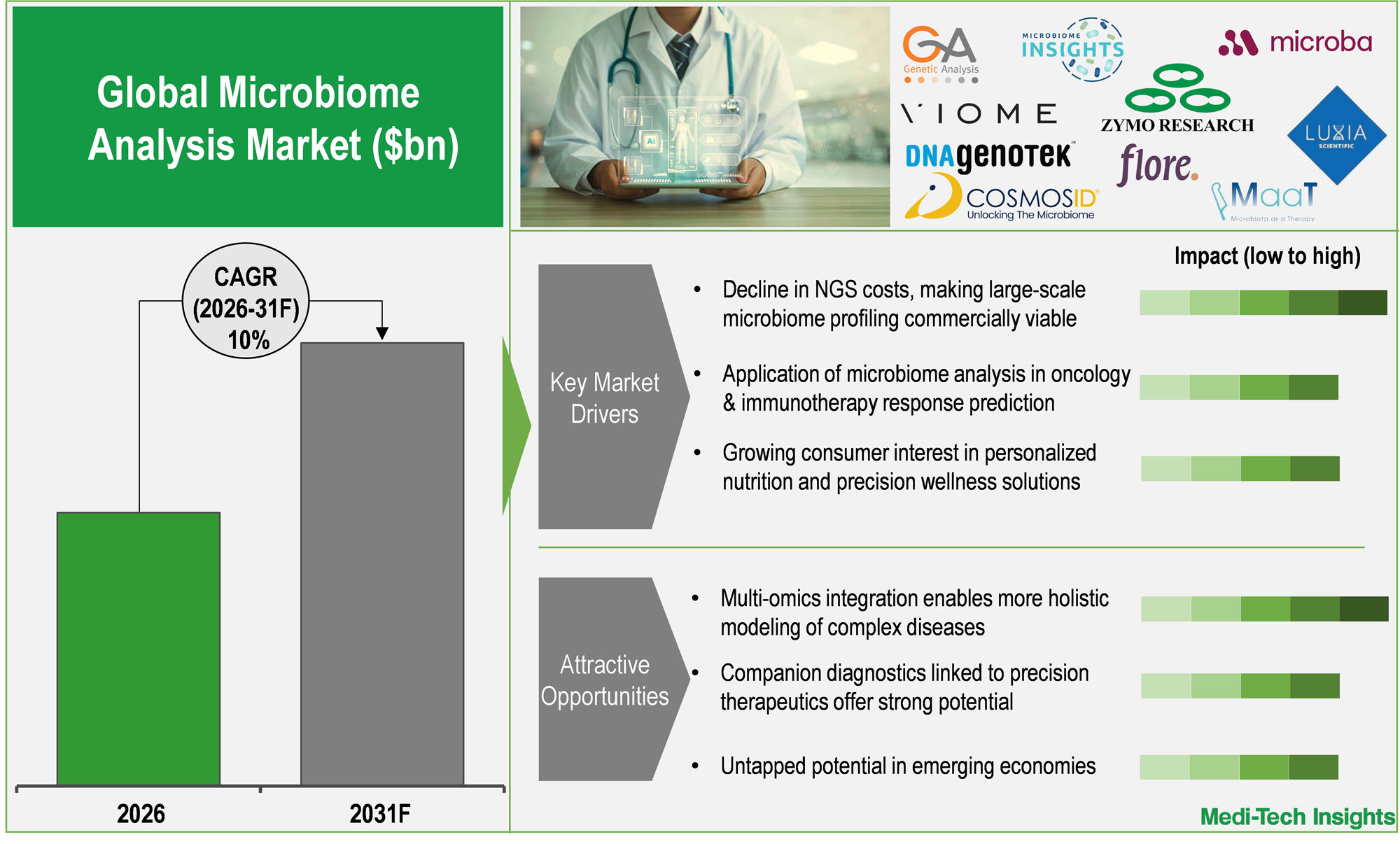
The global microbiome analysis market size is set to grow at 10% CAGR over the next 5 years. Rapid decline in next-generation sequencing (NGS) costs- making large-scale microbiome profiling commercially viable, expanding application of microbiome analysis in oncology and immunotherapy response prediction, increasing R&D investment by pharmaceutical and biotechnology companies in microbiome science, rising global prevalence of gastrointestinal disorders such as IBD, IBS, and Crohn's disease, and growing consumer interest in personalized nutrition and precision wellness solutions are some of the key factors driving the growth of the global market. However, shortage of skilled bioinformaticians and microbiome data scientists; high cost of advanced sequencing instruments and consumables; and lack of standardized protocols across sample collection, sequencing, and bioinformatic analysis are expected to impact the market’s growth.
The microbiome analysis market refers to the range of technologies, instruments, and services applied to examine the microbial populations inhabiting the human body, including those found in the gut, oral cavity, skin, and urogenital regions. It encompasses sequencing platforms, computational tools, and analytical workflows designed to detect and characterize bacteria, fungi, viruses, and other microorganisms based on their genetic material and metabolic functions. These solutions assist scientists, medical practitioners, and testing laboratories in exploring how microbial communities influence digestion, immune response, hormonal balance, and susceptibility to various disorders. Offerings span from simple at-home sample collection kits to sophisticated next-generation sequencing (NGS) systems paired with machine-learning-driven interpretation.
Expanding application of microbiome analysis in oncology and immunotherapy response prediction to drive market growth
Growing scientific evidence linking gut and tumor-associated microbial communities to cancer progression is significantly expanding the role of microbiome analysis within oncology. Researchers are increasingly examining how specific bacterial populations influence the efficacy of immune checkpoint inhibitors, chemotherapy, and other cancer therapies, positioning microbiome profiling as a valuable tool for predicting patient response and guiding personalized treatment strategies. Findings published in oncology and immunology journals have shown that certain gut bacteria can modulate systemic immune activity, thereby affecting how tumors respond to immunotherapy, which has accelerated interest in microbiome-based biomarkers for clinical decision-making.
The World Health Organization's continued emphasis on precision medicine and early cancer detection has further encouraged research institutions and diagnostic companies to integrate microbiome analysis into broader oncology screening and monitoring efforts. This momentum is reinforced by growing collaborations between pharmaceutical companies and genomic research centers focused on developing microbiome-modulating therapies, including live biotherapeutic products and dietary interventions designed to enhance treatment outcomes. As ongoing clinical trials continue validating the predictive value of microbial signatures in cancer care, healthcare providers are gradually adopting microbiome testing as a complementary diagnostic tool, strengthening its expanding application across oncology and immunotherapy response prediction.
To learn more about this report, download the PDF brochure
Multi-omics integration enables more holistic modeling of complex diseases to fuel market growth
The convergence of multiple omics disciplines represents a promising growth avenue for the microbiome analysis market, allowing scientists to progress from isolated genomic snapshots toward a richer, systems-level view of disease complexity. When metagenomic, metabolomic, transcriptomic, and proteomic datasets are analyzed together, researchers gain insight not just into microbial identity but also into how these organisms actively influence host physiology and molecular pathways. Such integrative analysis reveals connections between microbial dynamics and conditions like inflammatory bowel disorders, metabolic dysfunction, and specific cancer types associations that often remain undetected through single-omics approaches alone.
The growing use of computational modeling and AI-driven analytics has made it feasible to manage and interpret these large, multi-layered datasets, leading to sharper disease characterization and faster biomarker identification. Consequently, biopharmaceutical and diagnostics companies are channeling investment into multi-omics-based microbiome technologies to advance precision medicine efforts, ranging from customized therapeutic strategies to earlier disease screening. This integration is reshaping microbiome research from a purely observational field into a predictive, mechanism-driven discipline, broadening its relevance across therapeutic development, diagnostic innovation, and preventive health strategies for the years ahead.
To learn more about this report, download the PDF brochure
Application Segment Outlook
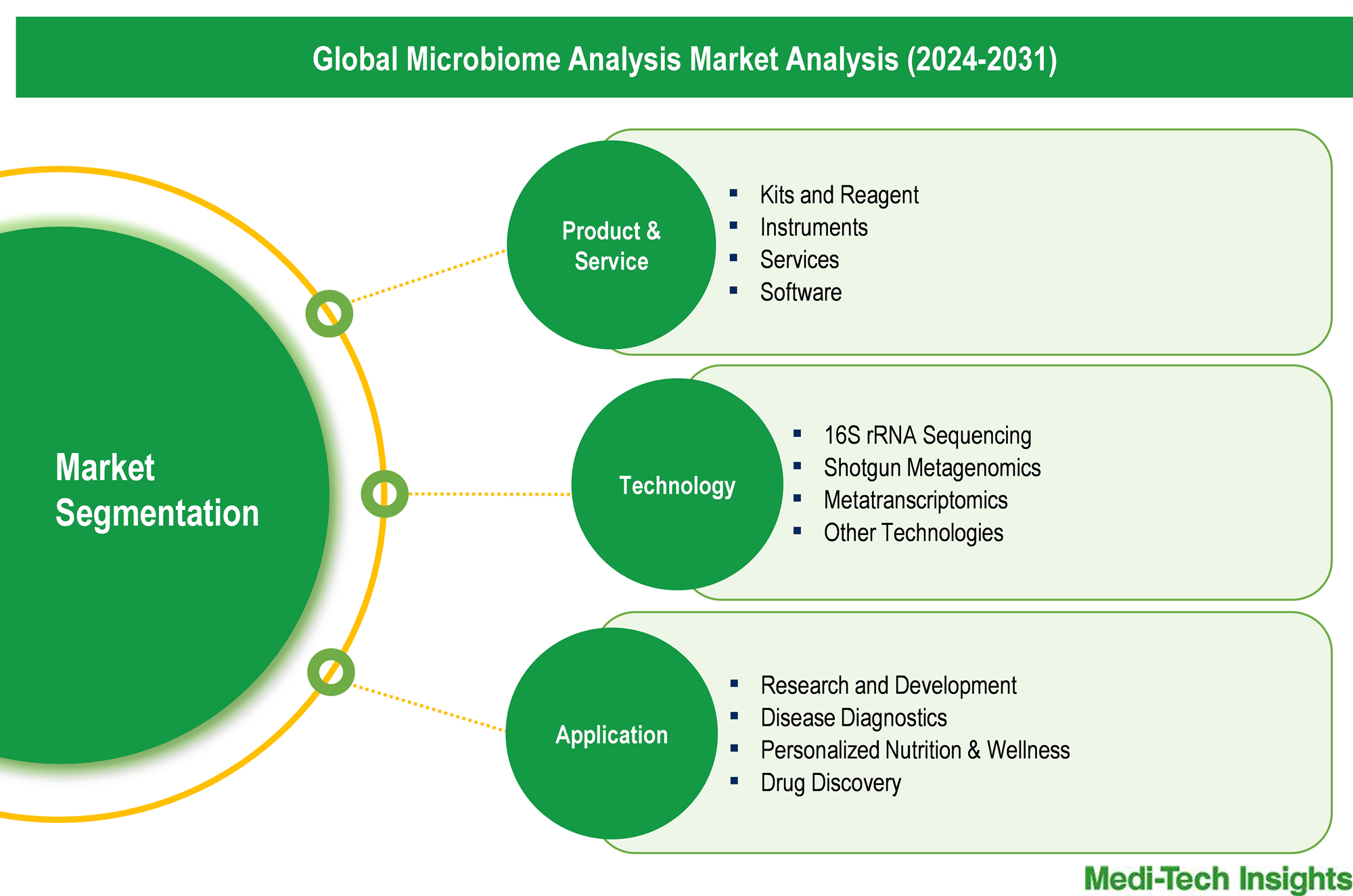
By application, the microbiome analysis market is segmented into research and development, disease diagnostics, personalized nutrition and wellness, and drug discovery. The research and development segment holds a substantial share, driven by extensive academic and industrial efforts to understand microbial ecosystems and their influence on human health. The disease diagnostics segment is witnessing rapid growth as microbiome profiling becomes integral to identifying gastrointestinal disorders, metabolic conditions, and immune-related diseases, supported by rising clinical validation of microbial biomarkers. Personalized nutrition and wellness applications are expanding as consumers increasingly seek microbiome-based dietary recommendations tailored to their unique gut composition, promoting improved digestion, weight management, and overall well-being through targeted lifestyle interventions.
Regional Outlook: North America maintains its leading position in the microbiome analysis market
North America continues to account for the largest share of the microbiome analysis market, particularly in AI and machine learning-enabled predictive analytics. This leadership is supported by robust digital health infrastructure, strong research funding, and the presence of established biotechnology and diagnostics companies actively developing advanced sequencing and computational platforms. Rising healthcare expenditure and growing adoption of precision medicine further reinforce the region's position. Europe follows closely, benefiting from increasing government support for genomic research, expanding clinical adoption of microbiome-based diagnostics, and favorable regulatory frameworks encouraging innovation in personalized healthcare.
Asia-Pacific is projected to witness the fastest growth, fueled by its large patient population, rising healthcare investments, and improving access to advanced diagnostic technologies. Additionally, growing government initiatives supporting genomics research and increasing collaborations between academic institutions and biotech firms are accelerating regional market expansion, positioning Asia-Pacific as a key growth hub for microbiome analysis technologies globally.
Competitive Landscape Analysis
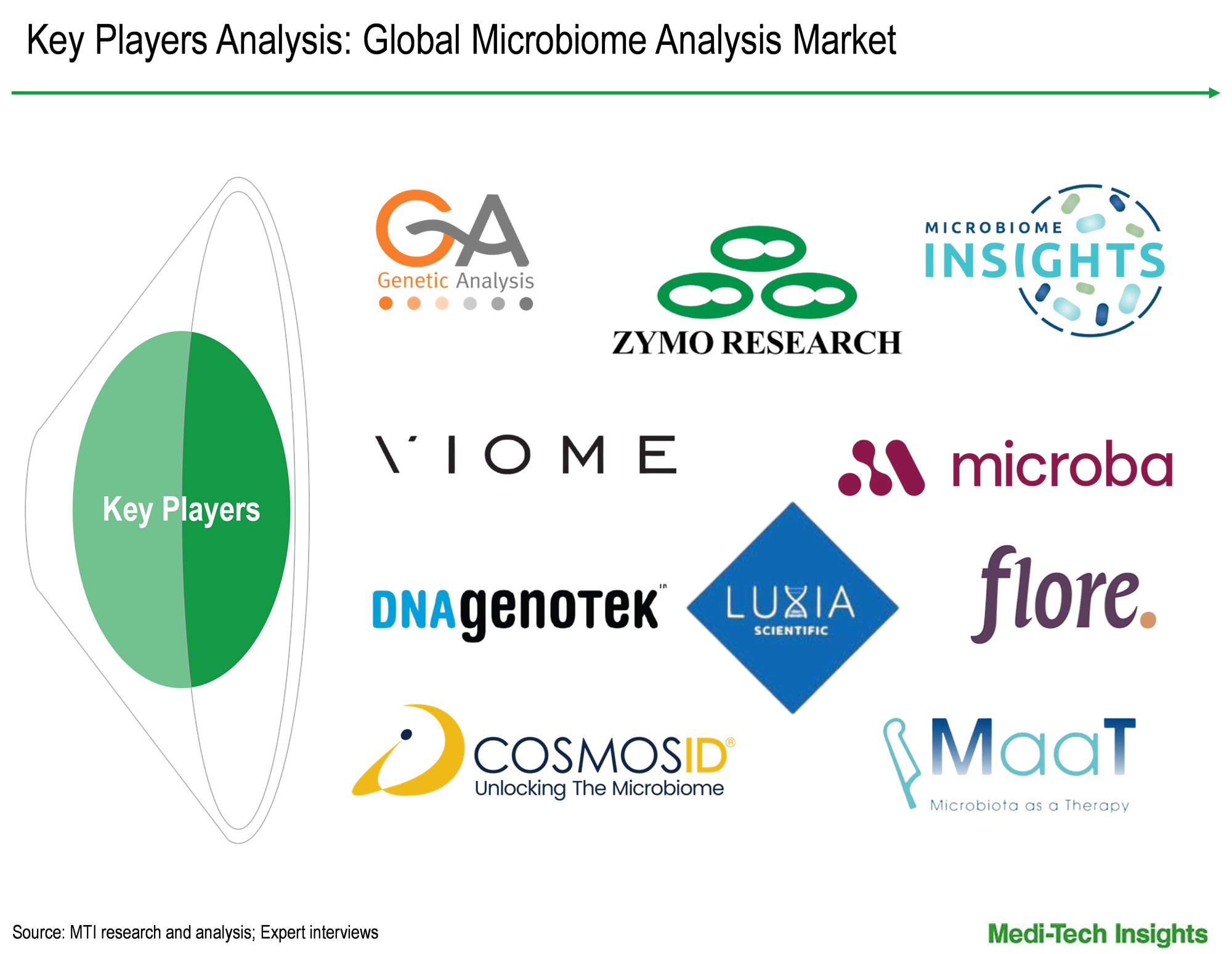
The global microbiome analysis market is marked by the presence of established and emerging market players such as-
- Genetic Analysis AS (Norway)
- Zymo Research Corporation (US)
- Microbiome Insights (Canada)
- Viome Life Sciences, Inc. (US)
- Microba Life Science (Australia)
- Luxia Scientific (France)
- DNA Genotek (Canada)
- Flore (US)
- CosmosID (US)
- MaaT Pharma (France)
Get a sample report for competitive landscape analysis
Growth strategies adopted by players to establish their foothold in the microbiome analysis market
Players operating in this market are adopting various growth strategies such as new product launches and approvals, acquisitions, expansions, and strategic partnerships, agreements, and collaborations, to garner market share. For instance,
- In March 2025, Leucine Rich Bio partnered with Medsol Diagnostics to introduce its BugSpeaks gut microbiome testing service in the UAE. The collaboration expands access to microbiome profiling and personalized gut-health insights, supporting the international commercialization of microbiome-based diagnostic and wellness services
- In October 2024, Zymo Research partnered with BluMaiden Biosciences to provide end-to-end microbiome analytics for clinical trials. Combining sample preparation, next-generation sequencing and bioinformatics, the service aims to support patient stratification, treatment-response prediction and clinical development decisions across pharmaceutical research.
- In March 2024, AbbVie entered a strategic collaboration with Seres Therapeutics to develop microbiome-based treatments for inflammatory bowel disease
Report Scope
| Report Metric | Details |
| Base Year Considered | 2025 |
| Historical Data | 2024 – 2025 |
| Forecast Period | 2026 – 2031 |
| Growth Rate | 10% |
| Segment Scope | Product & Service, Technology, Application, and End User |
| Regional Scope |
|
| Market Drivers |
|
| Attractive Opportunities |
|
| Key Companies Mapped | Genetic Analysis AS (Norway); Zymo Research Corporation (US); Microbiome Insights (Canada); Viome Life Sciences, Inc. (US); Microba Life Science (Australia); Luxia Scientific (France); DNA Genotek (Canada); Flore (US); CosmosID (US); MaaT Pharma (France); among others |
| Report Highlights | Market Size & Forecast, Growth Drivers & Restraints, Trends, Competitive Analysis |
Global Microbiome Analysis Market Segmentation
This report by Medi-Tech Insights provides the size of the global microbiome analysis market at the regional and country-level from 2024 to 2031. The report further segments the market by product & service, technology, application, and end user.
Market Size & Forecast (2024-2031), By Product & Service, USD Billion
- Kits & Reagent
- Instruments
- Services
- Software
Market Size & Forecast (2024-2031), By Technology, USD Billion
- 16S rRNA Sequencing
- Shotgun Metagenomics
- Metatranscriptomics
- Other Technologies
Market Size & Forecast (2024-2031), By Application, USD Billion
- Research and Development
- Disease Diagnostics
- Personalized Nutrition & Wellness
- Drug Discovery
Market Size & Forecast (2024-2031), By End User, USD Billion
- Biopharmaceutical & Pharmaceutical Companies
- CROs & CMOs
- Academic & Research Institutes
- Other End Users
Market Size & Forecast (2024-2031), By Region, USD Billion
- North America
- US
- Canada
- Europe
- UK
- Germany
- France
- Italy
- Spain
- Rest of Europe
- Asia Pacific
- China
- India
- Japan
- Rest of Asia Pacific
- Latin America
- Middle East & Africa
Related Reports:
Frequently Asked Questions About This Report
What is the growth rate of the microbiome analysis market?
The microbiome analysis market is set to witness a growth rate of 10% during the forecast period from 2026 to 2031
What are the key trends defining the market?
AI and machine learning enable predictive microbiome analytics, and a shift toward strain-level, functional microbial characterization is a major trend in the microbiome analysis market
What are the major factors impacting the market growth?
Rapid decline in next-generation sequencing (NGS) costs, making large-scale microbiome profiling commercially viable, expanding application of microbiome analysis in oncology and immunotherapy response prediction, increasing R&D investment by pharmaceutical and biotechnology companies in microbiome science, rising global prevalence of gastrointestinal disorders such as IBD, IBS, and Crohn's disease, and growing consumer interest in personalized nutrition and precision wellness solutions are some of the key factors driving the microbiome analysis market
What are the opportunities prevailing in the market?
Multi-omics integration enables more holistic modeling of complex diseases; companion diagnostics linked to precision therapeutics offer strong potential; untapped potential in emerging economies; and personalized nutrition trends create rising demand for dietary interventions offer numerous growth opportunities for companies operating in the microbiome analysis market
Who are the major players operating in the market?
Some of the major players operating in the microbiome analysis market include Genetic Analysis AS (Norway); Zymo Research Corporation (US); Microbiome Insights (Canada); Viome Life Sciences, Inc. (US); Microba Life Science (Australia); Luxia Scientific (France); DNA Genotek (Canada); Flore (US); CosmosID (US); MaaT Pharma (France); among others
What are the key strategies adopted by players?
Key players in the microbiome analysis market are adopting strategies such as new product launch; acquisitions; expansions; and strategic partnerships, agreements, and collaborations to expand their market presence
Need a More Tailored Analysis?
- Discuss the market sizing methodology and forecast assumptions with our healthcare analysts.
- Expand the scope with additional countries, market segments, technologies, or competitor profiling.
- Use the insights to support strategic planning, market entry, commercial due diligence, and long-term revenue growth initiatives.