Download FREE Sample


Report Overview
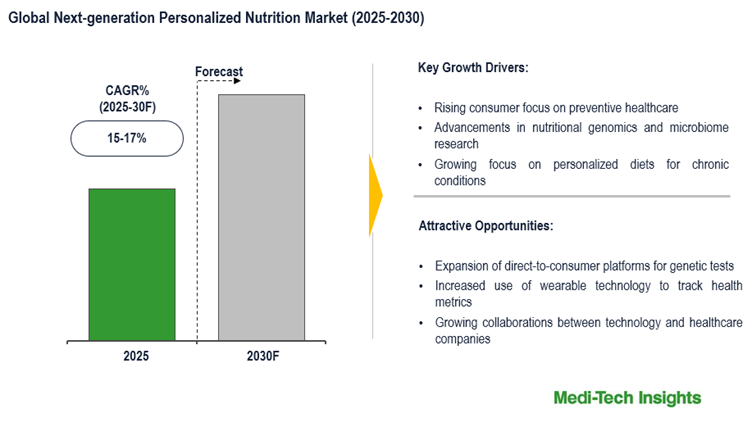
Next-generation personalized nutrition refers to tailored dietary recommendations and solutions that leverage advanced technologies, such as genomics, microbiome analysis, and AI-driven insights, to optimize individual health outcomes. This approach considers genetic makeup, metabolic profiles, lifestyle factors, and specific health goals to design unique nutrition plans. Unlike traditional dietary approaches, it focuses on individual variability rather than a one-size-fits-all model. Such innovations aim to enhance health, prevent disease, and boost well-being by addressing unique nutritional needs.
To learn more about the research report, download a sample report.
Consumer Awareness Driving the Market Demand
The growing awareness about health and wellness is the primary driver of the market. Modern consumers are increasingly prioritizing preventive healthcare, spurring demand for personalized nutrition solutions. Chronic conditions like obesity, diabetes, and cardiovascular diseases, coupled with the aging population, have fueled interest in nutrition-based interventions. Digital health platforms and wearable devices now provide individuals with real-time data about their bodies, making personalized dietary adjustments easier than ever. Moreover, governments and organizations are actively promoting nutrition literacy, enabling more people to adopt tailored health approaches. This surge in informed consumer behaviour has created a fertile ground for the adoption of next-generation solutions. Personalized nutrition bridges the gap between health goals and daily food intake, catering to a growing segment of health-conscious individuals who seek sustainable and scientifically backed results.
To learn more about the research report, download a sample report.
AI-Driven Insights Enhancing the Market
The integration of AI is significantly advancing the field of personalized nutrition. AI-powered platforms analyze vast datasets from genetic tests, microbiome studies, and lifestyle metrics to generate precise dietary recommendations. These systems can continuously adapt plans based on real-time data from wearable devices, ensuring that nutrition remains aligned with an individual's changing health status and goals. For example, AI algorithms can detect subtle changes in metabolic patterns and suggest proactive adjustments. Furthermore, AI fosters accessibility by offering user-friendly interfaces and personalized coaching. This technology democratizes personalized nutrition, making it scalable and efficient for wider adoption. The ability of AI to transform complex health data into actionable insights is a game-changer, driving innovation and enhancing consumer engagement in the market.
Competitive Landscape Analysis
The global next-generation personalized nutrition market is marked by the presence of established and emerging market players such as BASF SE, DSM, Herbalife Nutrition, Amway, CircleDNA (DNAfit), Wellness Coaches, Noho Health Inc. (Care/of), Habit Food Personalized, LLC, Persona, Bactolac Pharmaceutical, Inc., Balchem Corporation, and Foodsmart among others. Some of the key strategies adopted by market players include new product development, strategic partnerships and collaborations, and geographic expansion.
Report Scope
|
Report Scope |
Details |
|
Base Year Considered |
2024 |
|
Historical Data |
2023 - 2024 |
|
Forecast Period |
2025 - 2030 |
|
Growth |
15-17% |
|
Market Drivers |
|
|
Attractive Opportunities |
|
|
Segment Scope |
Product Type, Providers, Dosage Forms, Application and End-User |
|
Regional Scope |
|
|
Key Companies Mapped |
BASF SE, DSM, Herbalife Nutrition, Amway, CircleDNA (DNAfit), Wellness Coaches, Noho Health Inc. (Care/of), Habit Food Personalized, LLC, Persona, Bactolac Pharmaceutical, Inc., Balchem Corporation, and Foodsmart among others |
|
Report Highlights |
Market Size & Forecast, Growth Drivers & Restraints, Trends, Competitive Analysis |
Market Segmentation
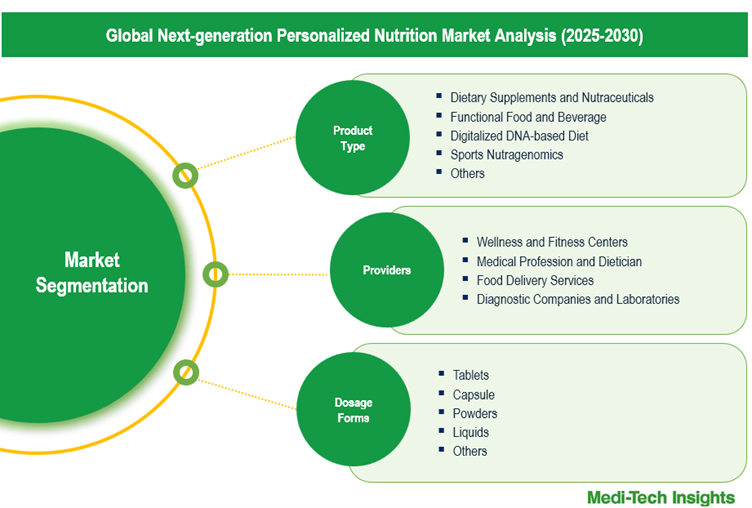
This report by Medi-Tech Insights provides thesize of the global next-generation personalized nutrition market at theregional- and country-level from 2023 to 2030. The report further segments the market based on product type, providers, dosage forms, application and end-user.
- Market Size & Forecast (2023-2030), By Product Type, USD Million
- Dietary Supplementsand Nutraceuticals
- Functional Food and Beverage
- Digitalized DNA-based Diet
- Sports Nutragenomics
- Others
- Market Size & Forecast (2023-2030), By Providers, USD Million
- Wellness and Fitness Centers
- Medical Profession and Dietician
- Food Delivery Services
- Diagnostic Companies and Laboratories
- Market Size & Forecast (2023-2030), By Dosage Forms, USD Million
- Tablets
- Capsule
- Powders <
- Others
- Market Size & Forecast (2023-2030), By Application, USD Million
- Standard Supplements
- Disease-Based
- Others
- Market Size & Forecast (2023-2030), By End-user, USD Million
- Hospitals
- Clinics
- Home Care
- Wellness and Fitness Centers
- Ambulatory Care
- Others
- Market Size & Forecast (2023-2030), By Region, USD Million
- North America
- US
- Canada
- Europe
- UK
- Germany
- France
- Italy
- Spain
- Rest of Europe
- Asia Pacific
- China
- India
- Japan
- Rest of Asia Pacific
- Latin America
- Middle East & Africa
- North America
Key Strategic Questions Addressed
- What is the market size & forecast of the next-generation personalized nutrition market?
- What are historical, present, and forecasted market shares and growth rates of various segments and sub-segments of the next-generation personalized nutrition market?
- What are the key trends defining the market?
- What are the major factors impacting the market?
- What are the opportunities prevailing in the market?
- Which region has the highest share in the global market? Which region is expected to witness the highest growth rate in the next 5 years?
- Who are the major players operating in the market?
- What are the key strategies adopted by players?
Need a More Tailored Analysis?
- Discuss the market sizing methodology and forecast assumptions with our healthcare analysts.
- Expand the scope with additional countries, market segments, technologies, or competitor profiling.
- Use the insights to support strategic planning, market entry, commercial due diligence, and long-term revenue growth initiatives.