Download FREE Sample


Precision medicine is a state-of-the-art approach for tailoring individual disease treatment based on personal data, statistical analysis, and comparison of larger cohorts. It considers individual genetic and molecular makeup, environment, and lifestyle to more precisely predict which treatments are more likely to work for a patient. Instead of treating patients based on their symptoms, precision medicine is focused on providing treatments that target the underlying causes of illness. This helps in better outcomes at potentially lower costs as there is less drug wastage, fewer side effects, and reduced length of hospital stays. Some of the notable FDA-approved precision medicine drugs include Imatinib (Gleevec), Trastuzumab (Herceptin), Tisagenlecleucel (Kymriah), and Nivolumab (Opdivo).
To learn more about this report, download the PDF brochure
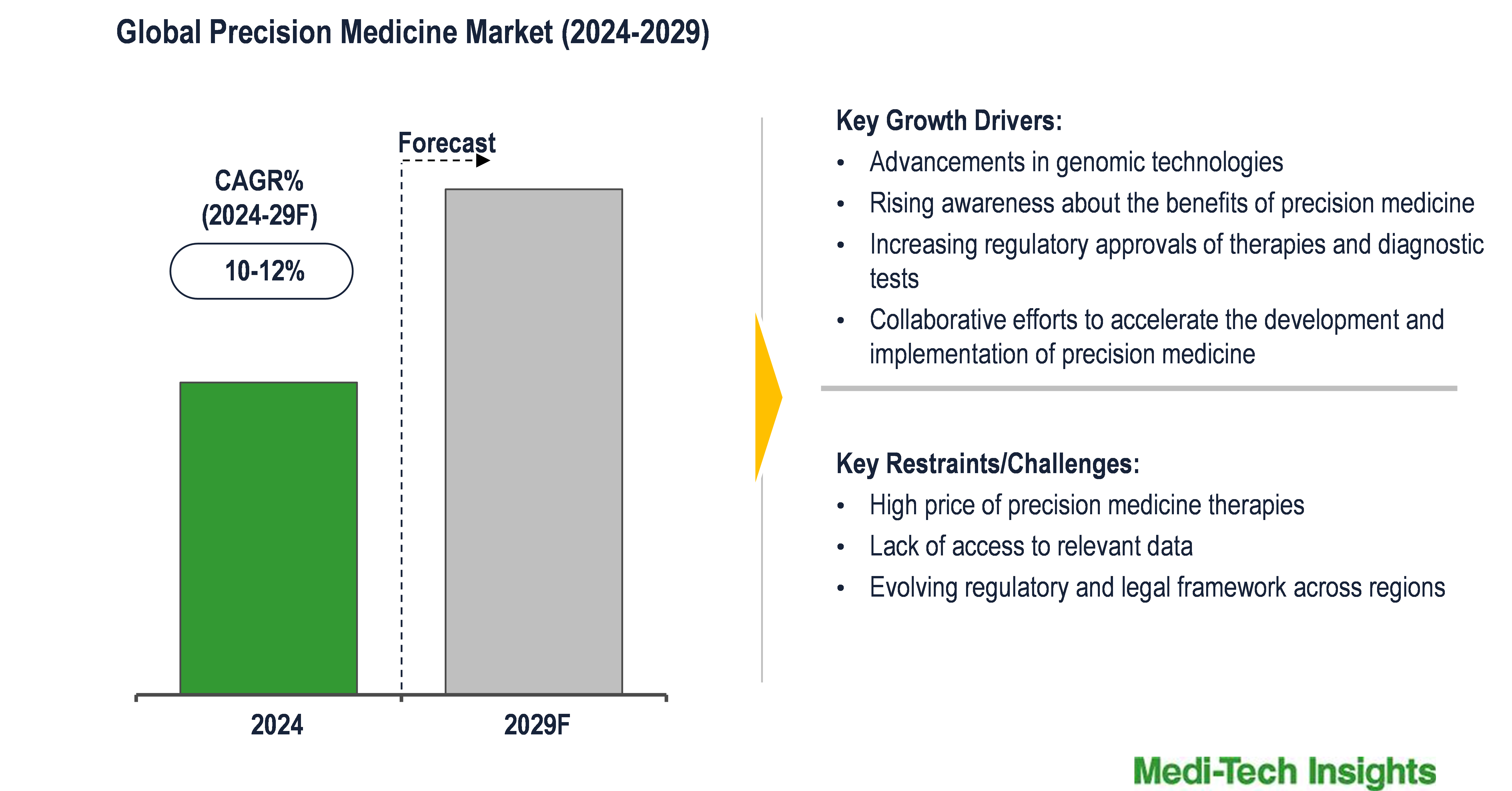
Growing awareness about the benefits of precision medicine to propel market growth
Precision medicine is gaining significant traction due to its potential to revolutionize healthcare. One of the most important advantages is personalized treatment which ensures patients receive the most effective therapies with fewer side effects. Moreover, healthcare providers get a better understanding of the disease occurrence and progress which helps in more precise diagnosis and targeted treatments. Apart from providing targeted therapies, precision medicine can be a game changer in preventive care enabling early interventions and preventive measures. Further, by eliminating trial-and-error treatment approach and focusing on what works best for each patient, precision medicine can help reduce overall healthcare costs. Several stakeholders including pharma & biotech companies, healthcare providers, regulatory agencies, healthcare payers, and patients are increasingly recognizing the benefits offered by precision medicine thereby propelling its demand.
Collaborative efforts to accelerate the development and implementation of precision medicine driving the market growth
Pharma and biotech companies are increasingly collaborating to accelerate R&D and adoption of precision medicine by leveraging each other-s strengths. For instance, in Sep 2024, Bristol Myers Squibb entered into a strategic research collaboration with Prime Medicine, Inc. for the development, manufacturing, and commercialization of the next-generation cell therapies. In Oct 2022, GSK plc and Tempus, a US-based precision medicine company, entered into a three-year collaboration agreement that provides GSK with access to Tempus- AI-enabled platform, including its library of de-identified patient data to improve clinical trial design, speed up enrolment and identify drug targets.Such partnerships help accelerf personalized therapies thereby boosting market growth.
To learn more about this report, download the PDF brochure
Competitive Landscape Analysis
The global precision medicine market is marked by the presence of established and emerging market players such as F. Hoffmann-La Roche AG, Gilead Sciences, Novartis AG, Bristol Myers Squibb (BMS), AstraZeneca, Sarepta Therapeutics, Abbvie, Abbott, Janssen Pharmaceuticals, Siemens Healthineers, and GSK; among others. Some of the key strategies adopted by market players include product innovation and development, strategic partnerships and collaborations, and geographic expansion.
Precision Medicine Market Scope
|
Report Scope |
Details |
|
Base Year Considered |
2023 |
|
Historical Data |
2022 - 2023 |
| Forecast Period |
2024 - 2029 |
| Growth Rate |
CAGR of 10-12% |
|
Segment Scope |
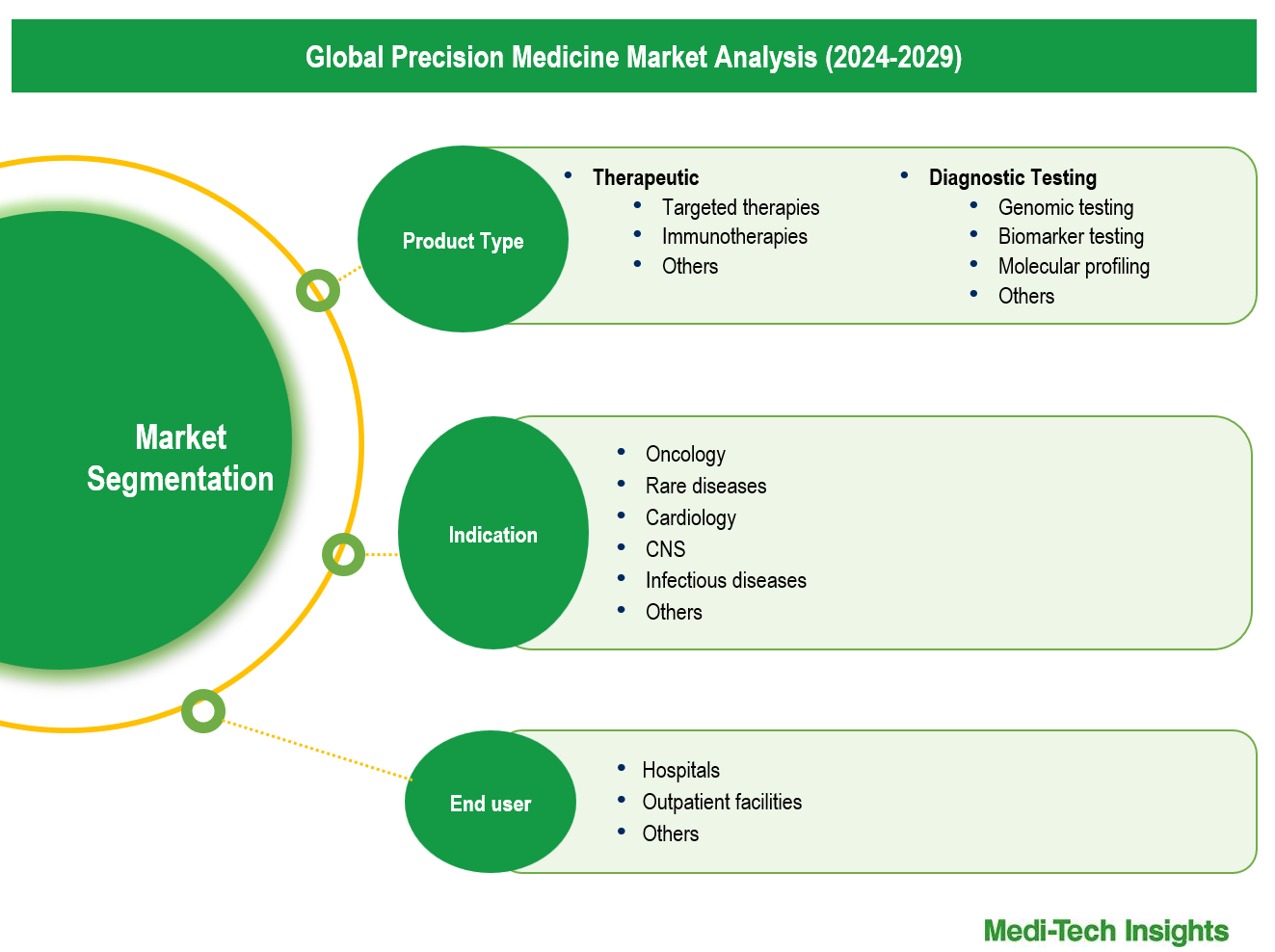
Product Type, Indication, End User |
|
Regional Scope |
|
|
Key Companies Mapped |
F. Hoffmann-La Roche AG, Gilead Sciences, Novartis AG, Bristol Myers Squibb (BMS), AstraZeneca, Sarepta Therapeutics, Abbvie, Abbott, Siemens Healthineers, Janssen Pharmaceuticals, and GSK; among others |
|
Report Highlights |
Market Size & Forecast, Growth Drivers & Restraints, Trends, Competitive Analysis |
Frequently Asked Questions About This Report
What is the market size & forecast of the precision medicine market?
What are the historical, present, and forecasted market shares and growth rates of various segments and sub-segments of the precision medicine market?
What are the key trends defining the market?
What are the major factors impacting the market?
What are the opportunities prevailing in the market?
Need a More Tailored Analysis?
- Discuss the market sizing methodology and forecast assumptions with our healthcare analysts.
- Expand the scope with additional countries, market segments, technologies, or competitor profiling.
- Use the insights to support strategic planning, market entry, commercial due diligence, and long-term revenue growth initiatives.