Download FREE Sample


Biopharmaceutical process analytical technology (PAT) refers to a framework of tools, systems, and methodologies that helps to design, analyze, monitor, and control the manufacturing of biopharmaceutical processes in real time. It involves measuring critical process parameters (CPPs) and critical quality attributes (CQAs) to ensure the safety, efficacy, and quality of the final product.
To learn more about this report, download the PDF brochure
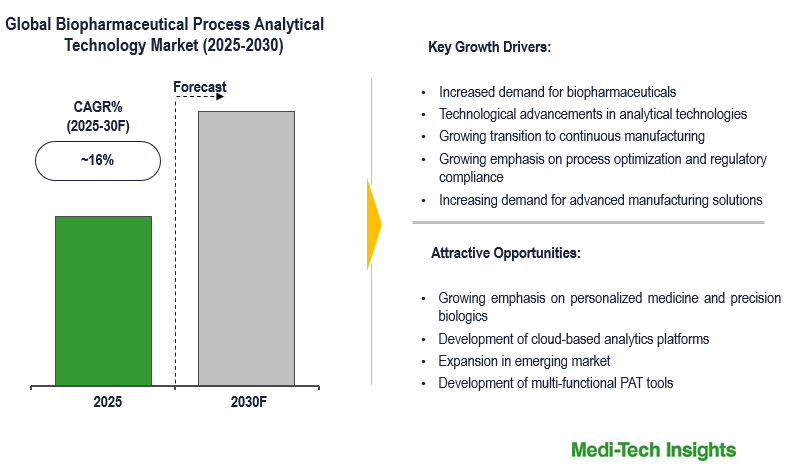
Enhancing efficiency and control in biopharmaceutical manufacturing through process analytical technology fuels its demand
As biopharma companies contend with rising demands for biologics and advanced therapies, the adoption of process analytical technology (PAT) systems has emerged as a vital factor in driving market expansion. PAT involves the integration of chromatographic, spectroscopic, and mass spectrometric sensors within both upstream and downstream operations. These technologies can be utilized in-line, online, or at-line, facilitating real-time monitoring and control of manufacturing processes. By offering immediate insights, these sensors allow for timely adjustments, process optimization, and interventions, which ultimately enhance understanding of the processes and improve product quality. Additionally, PAT systems gather extensive data throughout the manufacturing process, enabling the identification of bottlenecks and inefficiencies. This data-centric strategy aids in process optimization, thereby minimizing production timelines and resource consumption. Moreover, continuous manufacturing, bolstered by PAT, lowers operational costs, boosts throughput, and increases adaptability to fluctuating market demands. As these advantages drive its widespread implementation, the PAT market is positioned for significant growth, influencing the future landscape of the biopharma sector.
Increasing demand for biopharmaceuticals drives market growth
The demand for biopharmaceuticals has been growing rapidly, fuelled by various factors such as advancements in biotechnology, the rising prevalence of chronic diseases, and heightened awareness of personalized medicine. Key drivers of this trend include:
- Increasing prevalence of chronic diseases: Chronic conditions such as cancer, diabetes, autoimmune disorders, and cardiovascular diseases are becoming more common worldwide. These illnesses often require advanced therapies like monoclonal antibodies, recombinant proteins, and gene therapies, all of which rely on biopharmaceutical technologies
- Advancements in drug development: The development of highly targeted biologics, including monoclonal antibodies, fusion proteins, and CAR-T cell therapies, has expanded the range of treatable conditions. Additionally, innovations in bioprocessing, such as continuous manufacturing and single-use systems, have enhanced the efficiency and scalability of biopharmaceutical production
- Personalized medicine: Biopharmaceuticals play a pivotal role in personalized medicine, offering treatments tailored to an individual's genetic makeup. For instance, gene therapies and advanced biologics are increasingly utilized in oncology and the treatment of rare diseases, addressing specific patient needs
- Biosimilars as cost-effective solutions: Biosimilars are accelerating market growth by providing more affordable alternatives to expensive biologics, and improving patient access to life-saving treatments. Simplified regulatory pathways for biosimilars across various regions further support their adoption and market expansion
The surging demand for biopharmaceuticals is transforming global healthcare and manufacturing landscapes, driving innovation, regulatory evolution, and significant market growth.
To learn more about this report, download the PDF brochure
Competitive Landscape Analysis
The global biopharmaceutical process analytical technology market is marked by the presence of established and emerging market players such as Thermo Fisher Scientific, Inc.; Merck KGaA; Danaher Corporation; Agilent Technologies, Inc.; Sartorius AG; Shimadzu Corporation; Waters Corporation; Bruker Corporation; Emerson Electric Co.; ABB Ltd.; PerkinElmer, Inc.; Yokogawa Electric Corporation; Applied Materials; and Mettler-Toledo International Inc.; among others. Some of the key strategies adopted by market players include new product development, strategic partnerships and collaborations, and investments.
Report Scope
| Report Metric | Details |
| Base Year Considered | 2024 |
| Historical Data | 2023 - 2024 |
| Forecast Period | 2025 - 2030 |
| Growth Rate | 16% |
| Market Drivers |
|
| Attractive Opportunities |
|
| Segment Scope | Product Type, Application, and End User |
| Regional Scope |
|
| Key Companies Mapped | Thermo Fisher Scientific, Inc.; Merck KGaA; Danaher Corporation; Agilent Technologies, Inc.; Sartorius AG; Shimadzu Corporation; Waters Corporation; Bruker Corporation; Emerson Electric Co.; ABB Ltd.; PerkinElmer, Inc.; Yokogawa Electric Corporation; Applied Materials; and Mettler-Toledo International Inc. |
| Report Highlights | Market Size & Forecast, Growth Drivers & Restraints, Trends, Competitive Analysis |
Global Biopharmaceutical Process Analytical Technology Market Segmentation
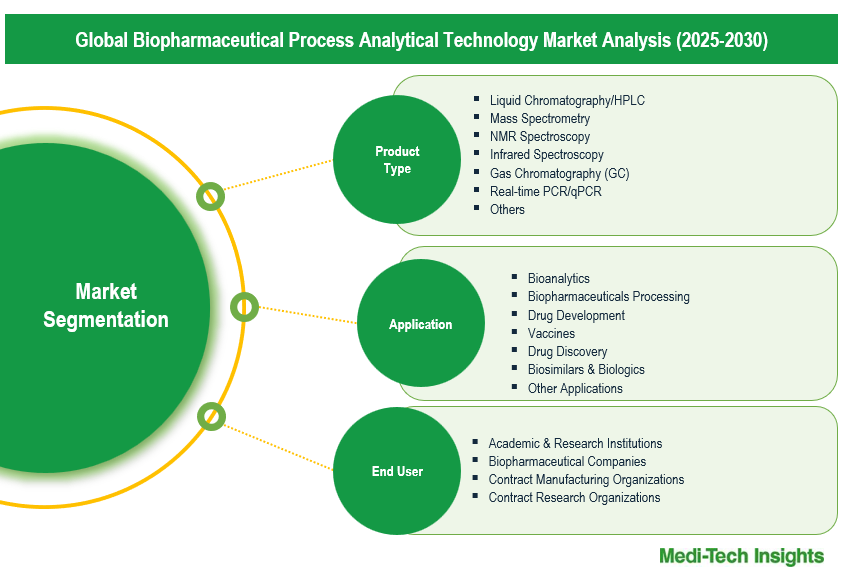
This report by Medi-Tech Insights provides the size of the global biopharmaceutical process analytical technology market at the regional- and country-level from 2023 to 2030. The report further segments the market based on product type, application, and end user.
Market Size & Forecast (2023-2030), By Product Type, USD Million
- Liquid Chromatography/HPLC
- Mass Spectrometry
- NMR Spectroscopy
- Infrared Spectroscopy
- Gas Chromatography (GC)
- Real-time PCR/qPCR
- Others
Market Size & Forecast (2023-2030), By Application, USD Million
- Bioanalytics
- Biopharmaceuticals Processing
- Drug Development
- Vaccines
- Biosimilars & Biologics
- Other Applications
Market Size & Forecast (2023-2030), By End User, USD Million
- Academic & Research Institutions
- Biopharmaceutical Companies
- Contract Manufacturing Organizations
- Contract Research Organizations
Market Size & Forecast (2023-2030), By Region, USD Million
- North America
- US
- Canada
- Europe
- UK
- Germany
- Italy
- Spain
- Rest of Europe
- Asia Pacific
- China
- India
- Japan
- Rest of Asia Pacific
- Latin America
- Middle East & Africa
Key Strategic Questions Addressed
- What is the market size & forecast of the biopharmaceutical process analytical technology market?
- What are the historical, present, and forecasted market shares and growth rates of various segments and sub-segments of the biopharmaceutical process analytical technology market?
- What are the key trends defining the market?
- What are the major factors impacting the market?
- What are the opportunities prevailing in the market?
- Which region has the highest share in the global market? Which region is expected to witness the highest growth rate in the next 5 years?
- Who are the major players operating in the market?
- What are the key strategies adopted by players?
Need a More Tailored Analysis?
- Discuss the market sizing methodology and forecast assumptions with our healthcare analysts.
- Expand the scope with additional countries, market segments, technologies, or competitor profiling.
- Use the insights to support strategic planning, market entry, commercial due diligence, and long-term revenue growth initiatives.