Download FREE Sample


Cardiovascular devices are medical devices and tools designed to diagnose, monitor, and treat diseases and conditions affecting the heart and blood vessels (cardiovascular system). These devices are used to manage various cardiovascular disorders, including heart disease, arrhythmias, heart failure, and vascular abnormalities. These devices play a crucial role in improving patient outcomes and quality of life by enabling early detection, effective treatment, and continuous care for cardiovascular conditions.
To learn more about this report, download the PDF brochure
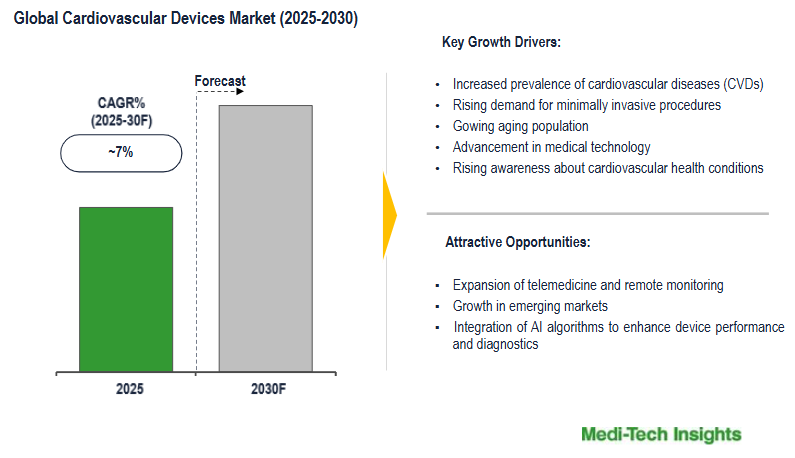
Growing demand for minimally invasive cardiac procedures drives market growth
Minimally invasive cardiac procedures have transformed heart surgery by providing patients with safer and less invasive alternatives to traditional open-heart surgery. The adoption of these techniques is rapidly increasing, driven by the goals of minimizing patient trauma, reducing recovery times, and lowering healthcare costs. Procedures such as cardiac catheterization and percutaneous coronary intervention are becoming more prevalent due to their significant advantages over conventional methods. These techniques rely on specialized cardiology devices, including catheters, stents, and guidewires, which are experiencing growing demand. Additionally, minimally invasive approaches are widely utilized in a variety of cardiac surgeries, such as mitral valve repair, coronary artery bypass grafting, and aortic valve replacement, further fueling the demand for cardiovascular devices in the market.
Advancements in digital health technologies fuel its demand in the market
The integration of digital health technologies is transforming cardiology, particularly in the diagnosis, treatment, and management of cardiovascular diseases (CVDs). Rapid advancements in wearable devices, artificial intelligence (AI), and telemedicine are enabling more precise, predictive, and personalized care strategies, reshaping the landscape of cardiovascular health. Wearable technologies, such as smartwatches with electrocardiogram (ECG) capabilities, have enhanced early detection of arrhythmias, including atrial fibrillation (AF), improving patient outcomes through timely interventions. Similarly, AI-driven diagnostic tools and machine learning (ML) models are achieving higher accuracy in interpreting ECGs and detecting complex arrhythmias, often surpassing traditional methods. Telehealth has also surged in popularity, especially during the COVID-19 pandemic, by enabling remote monitoring of chronic CVDs. Devices such as implantable pacemakers and defibrillators have further reduced mortality rates by delivering real-time data to healthcare providers, facilitating early and effective interventions.
To learn more about this report, download the PDF brochure
Competitive Landscape Analysis
The global cardiovascular devices market is marked by the presence of established and emerging market players such as Abbott Laboratories; GE HealthCare; Edwards Lifesciences Corporation; W. L. Gore & Associates, Inc.; Siemens Healthineers; BIOTRONIK SE & Co. KG; Terumo Corporation; Johnson & Johnson; Penumbra, Inc.; Philips Healthcare; Canon Medical Systems Asia Pte. Ltd.; B. Braun SE; LivaNova PLC; Cardinal Health; Medtronic; Boston Scientific Corporation among others. Some of the key strategies adopted by market players include new product development, strategic partnerships and collaborations, and investments.
Report Scope
| Report Metric | Details |
| Base Year Considered | 2024 |
| Historical Data | 2023 - 2024 |
| Forecast Period | 2025 - 2030 |
| Growth Rate | ~7% |
| Market Drivers |
|
| Attractive Opportunities |
|
| Segment Scope | Product Type and End User |
| Regional Scope |
|
| Key Companies Mapped | Abbott Laboratories; GE HealthCare; Edwards Lifesciences Corporation; W. L. Gore & Associates, Inc.; Siemens Healthineers; BIOTRONIK SE & Co. KG; Terumo Corporation; Johnson & Johnson; Penumbra, Inc.; Philips Healthcare; Canon Medical Systems Asia Pte. Ltd.; B. Braun SE; LivaNova PLC; Cardinal Health; Medtronic; Boston Scientific Corporation |
| Report Highlights | Market Size & Forecast, Growth Drivers & Restraints, Trends, Competitive Analysis |
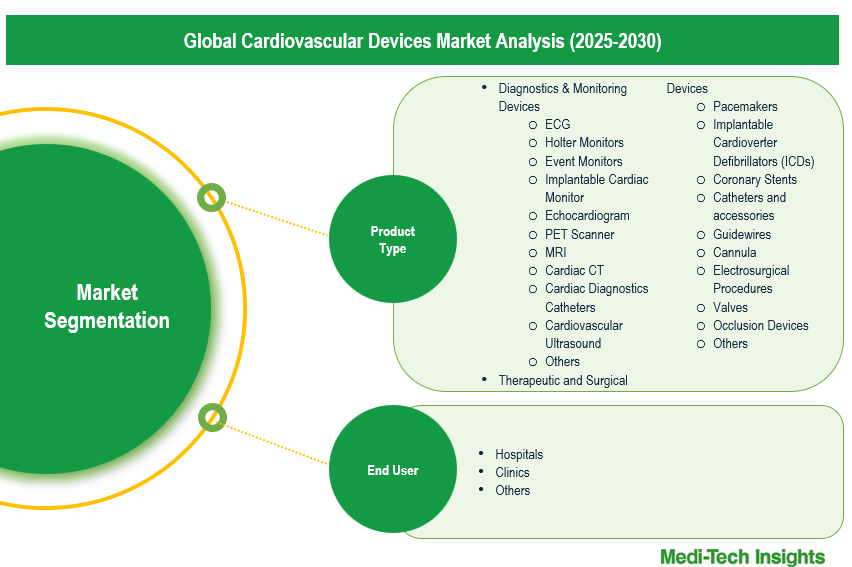
Global Cardiovascular Devices Market Segmentation
This report by Medi-Tech Insights provides thesize of the global cardiovascular devices market at theregional- and country-level from 2023 to 2030. The report further segments the market based on product type and end user.
Market Size & Forecast (2023-2030), By Product Type, USD Million
- Diagnostics & Monitoring Devices
- ECG
- Holter Monitors
- Event Monitors
- Implantable Cardiac Monitor
- Echocardiogram
- PET Scanner
- MRI
- Cardiac CT
- Cardiac Diagnostics Catheters
- Cardiovascular Ultrasound
- Others
- Therapeutic and Surgical Devices
- Pacemakers
- Implantable Cardioverter Defibrillators (ICDs)
- Coronary Stents
- ccessories
- Guidewires
- Cannula
- Electrosurgical Procedures
- Valves
- Occlusion Devices
- Others
Market Size & Forecast (2023-2030), By End User, USD Million
- Hospitals
- Clinics
- Others
Market Size & Forecast (2023-2030), By Region, USD Million
- North America
- US
- Canada
- Europe
- UK
- Germany
- Italy
- Spain
- Rest of Europe
- Asia Pacific
- China
- India
- Japan
- Rest of Asia Pacific
- Latin AmericaMiddle East & Africa
Frequently Asked Questions About This Report
What is the market size & forecast of the cardiovascular devices market?
What are the historical, present, and forecasted market shares and growth rates of various segments and sub-segments of the cardiovascular devices market?
What are the key trends defining the market?
What are the major factors impacting the market?
What are the opportunities prevailing in the market?
Need a More Tailored Analysis?
- Discuss the market sizing methodology and forecast assumptions with our healthcare analysts.
- Expand the scope with additional countries, market segments, technologies, or competitor profiling.
- Use the insights to support strategic planning, market entry, commercial due diligence, and long-term revenue growth initiatives.