Download FREE Sample


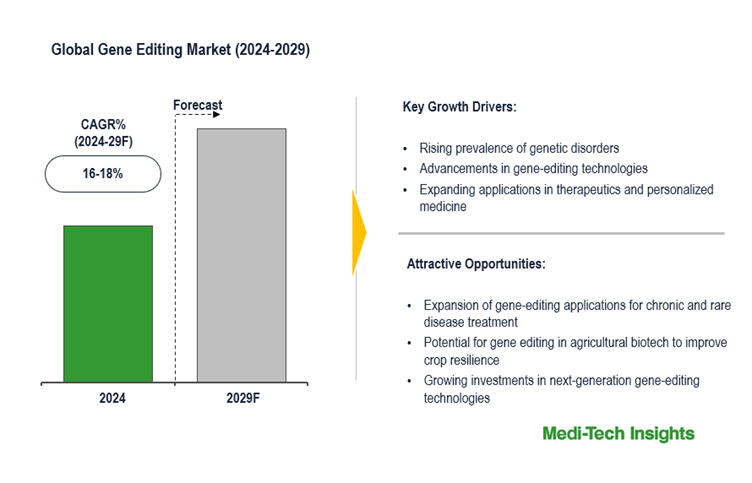
The gene editing market involves developing, selling, and applying technologies that allow for precise alterations in the DNA sequence of an organism's genome. Key techniques in this market, like CRISPR-Cas9, TALENs, and zinc finger nucleases, transform various sectors by allowing targeted genetic changes with remarkable precision. In healthcare, gene editing holds enormous potential for treating genetic diseases at their source by correcting the mutations responsible for conditions such as cystic fibrosis, muscular dystrophy, and certain cancers. This approach can offer patients lasting or even permanent relief by directly addressing the root cause of the disease. In agriculture, gene-editing technologies enhance crop resilience, improve yield, and increase nutritional value, supporting global food security initiatives.
To learn more about this report, download the PDF brochure
Rising Burden of Genetic Disorders Propels Gene Editing Market
The increasing global prevalence of genetic disorders is significantly amplifying the demand for gene-editing technologies. Conditions like cystic fibrosis, muscular dystrophy, and sickle cell anaemia, which stem from specific genetic mutations, affect millions worldwide and often lack effective, lasting treatments. Gene editing offers an innovative approach by targeting and correcting the underlying genetic errors, making it possible to provide curative rather than symptomatic therapies. This ability to directly address genetic causes positions technologies like CRISPR as highly sought-after solutions, offering new hope to patients and driving substantial growth in the market as healthcare stakeholders embrace the potential for personalized, gene-targeted treatments.
CRISPR Advancements Paving the Way for Clinical Applications
The rapid advancement of CRISPR technology is shaping the future of gene editing, transforming it from a research tool into a viable therapeutic option. Innovations in CRISPR-s precision and the development of innovative delivery mechanisms have reduced off-target effects, making the technology safer and more reliable for human therapeutic use. As a result, CRISPR-based therapies have moved from concept to reality, with clinical trials underway for various conditions including genetic disorders, certain cancers, and viral infections. This progression reflects not only the technological strides in CRISPR but also the increasing feasibility of in vivo editing, where gene modifications can be ectly within a patient-s body. The expansion of CRISPR applications into clinical settings is expected to further boost market growth, as it opens new avenues for treating previously untreatable conditions and paves the way for broader acceptance of gene-editing solutions in medicine.
To learn more about this report, download the PDF brochure
Competitive Landscape Analysis
The global gene editing market features both established and emerging players, including Merck KGaA; Cibus Inc.; Recombinetics; Sangamo Therapeutics; Editas Medicine; Precision BioSciences; CRISPR Therapeutics; Intellia Therapeutics Inc.; Caribou Biosciences, Inc; Cellectis S.A.; and AstraZeneca, among others. Leading companies are focusing on strategies such as product innovation and development, forging strategic partnerships and collaborations, and expanding their geographic footprint to enhance their market positions.
Report Scope
| Report Scope | Details |
| Base Year Considered | 2023 |
| Historical Data | 2022 - 2023 |
| Forecast Period | 2024 - 2029 |
| Growth Rate | CAGR of 16-18% |
| Market Drivers |
|
| Attractive Opportunities |
|
| Segment Scope | Technology, Product & Service, Application and End User |
| Regional Scope |
|
| Key Companies Mapped | Merck KGaA; Cibus Inc.; Recombinetics; Sangamo Therapeutics; Editas Medicine; Precision BioSciences; CRISPR Therapeutics; Intellia Therapeutics Inc.; Caribou Biosciences, Inc; Cellectis S.A.; and AstraZeneca among others |
| Report Highlights | Market Size & Forecast, Growth Drivers & Restraints, Trends, Competitive Analysis |
Market Segmentation
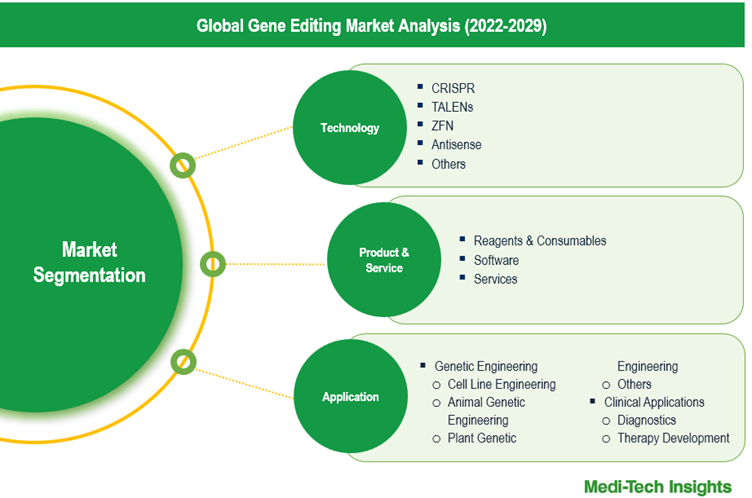
This report by Medi-Tech Insights provides size of the gene editing market at the regional- and country-level from 2022 to 2029. The report further segments the market on the basis of technology, product & service, application and end user.
- Market Size & Forecast (2022-2029), By Technology, USD Million
- CRISPR
- TALENs
- ZFN
- Antisense
- Others
- Market Size & Forecast (2022-2029), By Product & Service, USD Million
- Reagents & Consumables
- Software
- Services
- Market Size & Forecast (2022-2029), By Application, USD Million
- Genetic Engineering
- Cell Line Engineering
- Animal Genetic Engineering
- Plant Genetic Engineering
- Others
- Clinical Applications
- Diagnostics
- Therapy Development
- Genetic Engineering
- Market Size & Forecast (2022-2029), By End User, USD Million
- Biotechnology and Pharmaceutical Companies
- Academic & Research Institutes
- Others
- Market Size & Forecast (2022-2029), By Region, USD Million
- North America
- US
- Canada
- Europe
- UK
- Germany
- France
- Italy
- Spain
- Rest of Europe
- Asia Pacific
- China
- India
- Japan
- Rest of Asia Pacific
- Latin America
- Middle East & Africa
- North America
Frequently Asked Questions About This Report
What is the market size & forecast of the gene editing market?
What are historical, present, and forecasted market shares and growth rates of various segments and sub-segments of the gene editing market?
What are the key trends defining the market?
What are the major factors impacting the market?
What are the opportunities prevailing in the market?
Need a More Tailored Analysis?
- Discuss the market sizing methodology and forecast assumptions with our healthcare analysts.
- Expand the scope with additional countries, market segments, technologies, or competitor profiling.
- Use the insights to support strategic planning, market entry, commercial due diligence, and long-term revenue growth initiatives.