Download FREE Sample


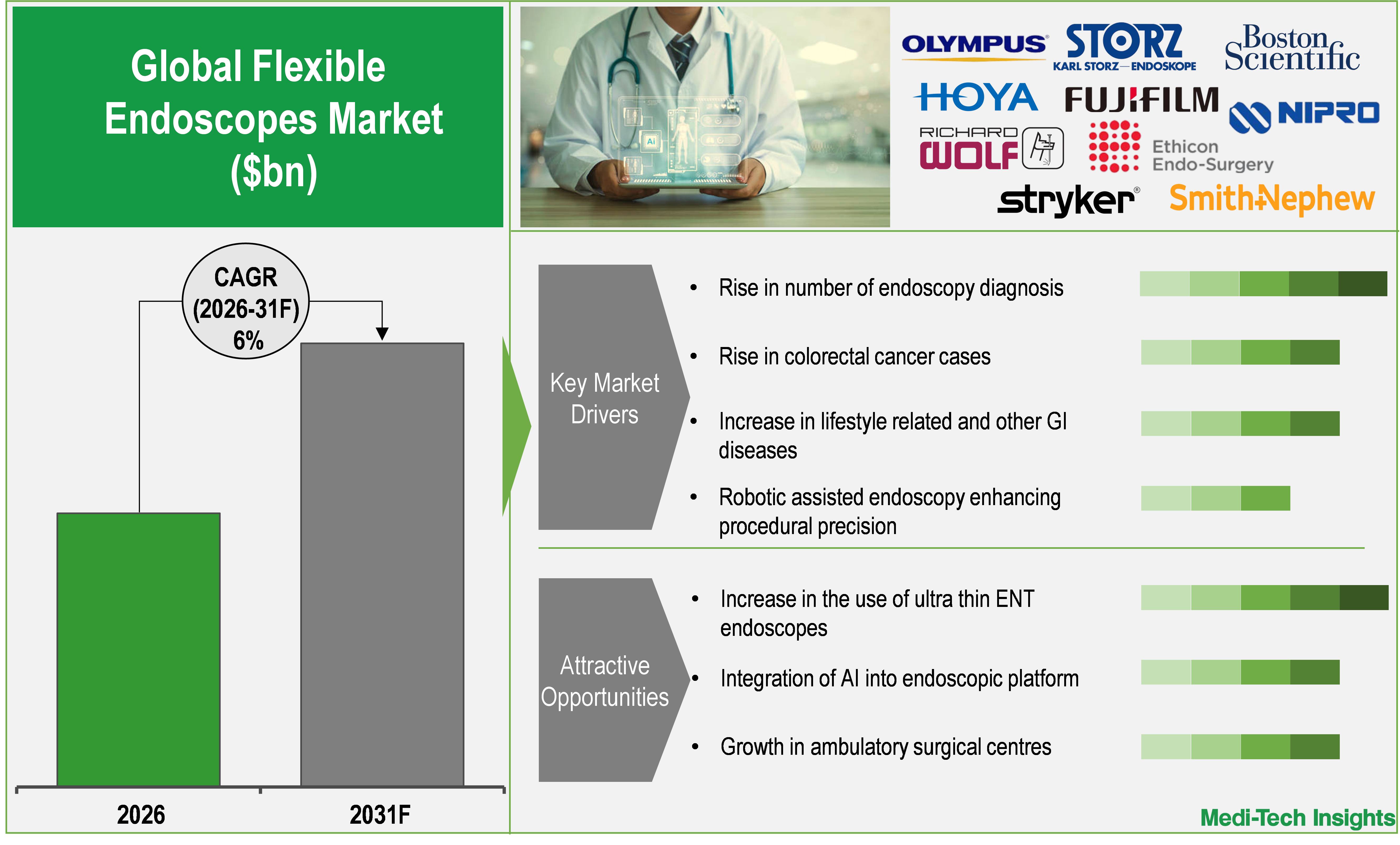
The global flexible endoscopes market size is set to grow at a CAGR of 6% over the next 5 years. Rise in the number of endoscopy diagnosis, increase in colorectal cancer cases, rise in preference for minimally invasive surgeries, increase in lifestyle-related and other GI diseases, and robotic-assisted endoscopy enhancing procedural precision are some of the key factors driving the growth of the global market. However, lack of trained professionals, reprocessing complexity and cross-contamination, and high operational and maintenance cost of endoscopes are expected to impact the market’s growth.
Flexible endoscopes are advanced minimally invasive medical imaging instruments designed to visualize, diagnose, and treat
conditions within hollow organs and internal body cavities. These devices are
typically accessed and operated by trained healthcare professionals and enable
real-time visualization of anatomical structures such as the gastrointestinal
tract, respiratory system, and urological pathways. Flexible endoscopes are
ergonomically designed and offer clinicians precise diagnostic capabilities,
allowing detailed examination of mucosal surfaces, tissue abnormalities, and
lesions. Additionally, advanced models extend beyond basic visualization to
incorporate therapeutic functionalities, including biopsy collection, polyp removal, hemostasis, and integration with digital
imaging systems for enhanced diagnostic accuracy.
Increase in colorectal cancer cases and lifestyle-related GI diseases to drive demand
According to the WHO, colorectal cancer (CRC)
is the third most common cancer worldwide, accounting for approximately 10% of
all cancer cases. A surging worldwide prevalence of CRC, alongside a concurrent
rise in lifestyle-driven gastrointestinal conditions, represents a fundamental demand accelerator for the
flexible endoscopes market. CRC has firmly established itself as one of the
most clinically significant and mortality-intensive malignancies across both
advanced and developing healthcare economies, with case volumes demonstrating
persistent upward trends. Changing lifestyle patterns encompassing physical
inactivity, processed food consumption, urban migration, increasing obesity
burden, and demographic aging have collectively amplified the epidemiological
weight of colorectal disease, placing considerable strain on global healthcare infrastructure
and expenditure.
Against this backdrop, national health authorities, ministries, and internationally recognized clinical bodies such as the US Preventive Services Task Force (USPSTF) have responded by formalizing comprehensive, population-level CRC screening mandates. Flexible colonoscopy, widely acknowledged as the definitive procedural standard for early identification and minimally invasive therapeutic management of colorectal abnormalities, has been systematically incorporated into reimbursable preventive healthcare pathways. These policy-driven directives have encouraged acute care hospitals and ambulatory surgical facilities to enhance endoscopy suite capacities while channeling procurement investments toward technologically advanced flexible endoscope systems.
To learn more about this report, download the PDF brochure
Robotic-assisted endoscopy enhancing procedural precision to propel market growth
The progressive incorporation of
robotic-assisted technologies into endoscopic procedures has fundamentally
redefined procedural standards within the flexible endoscopes market. Robotic
endoscopy systems offer clinicians enhanced navigational control, superior
flexibility through intricate anatomical structures, and heightened procedural
consistency, collectively addressing critical limitations inherent to
conventionally operated endoscope systems. The capacity to execute complex
diagnostic and therapeutic interventions with greater accuracy while minimizing
operator dependency has positioned robotic-assisted endoscopy as a clinically
significant advancement within contemporary gastrointestinal care delivery.
Leading manufacturers are directing substantial
research investments toward next-generation robotic platforms, embedding
artificial intelligence (AI)-driven image recognition, automated lesion
detection, and real-time procedural guidance capabilities. These advancements
enable improved visualization of gastrointestinal tissues, facilitate the
identification of subtle abnormalities, and support more consistent navigation
during complex procedures. Robotic platforms incorporating advanced control
mechanisms and high-definition imaging also enhance physicians' ability to
perform delicate interventions, including tissue biopsies, polyp removal, and
endoscopic resections.
Furthermore, integration with AI-powered decision-support tools can assist clinicians in identifying suspicious lesions and optimizing procedural workflows. Growing emphasis on minimizing operator fatigue, improving ergonomics, and reducing procedural variability is further encouraging healthcare providers to explore robotic-assisted systems. As technological capabilities expand and clinical adoption increases, robotic-assisted flexible endoscopy is expected to support broader applications across diagnostic and therapeutic procedures, thereby stimulating demand for technologically advanced flexible endoscopes and associated robotic platforms.
Increasing use of ultra-thin ENT endoscopes to create new growth opportunities
The increasing
adoption of ultra-thin endoscopes in ear, nose, and throat (ENT) procedures
presents significant growth opportunities in the flexible endoscopes market.
These devices feature smaller diameters, enhanced manoeuvrability, and improved
visualization, enabling clinicians to examine narrow and anatomically complex
structures, including the nasal cavity, sinuses, and larynx, with greater
patient comfort. Their minimally invasive design reduces procedural discomfort,
facilitates examinations in pediatric and sensitive patient populations, and
supports outpatient diagnostic procedures without requiring general anesthesia
in many cases.
Furthermore, technological advancements in high-definition imaging, distal-tip articulation, and enhanced illumination are expanding the diagnostic and therapeutic applications of ultra-thin ENT endoscopes. Growing prevalence of chronic sinusitis, voice disorders, and other upper respiratory conditions is increasing demand for precise and minimally invasive diagnostic solutions. Healthcare providers are also increasingly adopting portable and flexible endoscopic systems to improve examination efficiency and accessibility across outpatient clinics and ambulatory settings. Manufacturers can capitalize on this opportunity by developing cost-effective, high-resolution, and single-use ultra-thin endoscopes, supporting broader clinical adoption and expanding the application scope of flexible endoscopy in ENT care.
Product Segment Outlook
By product
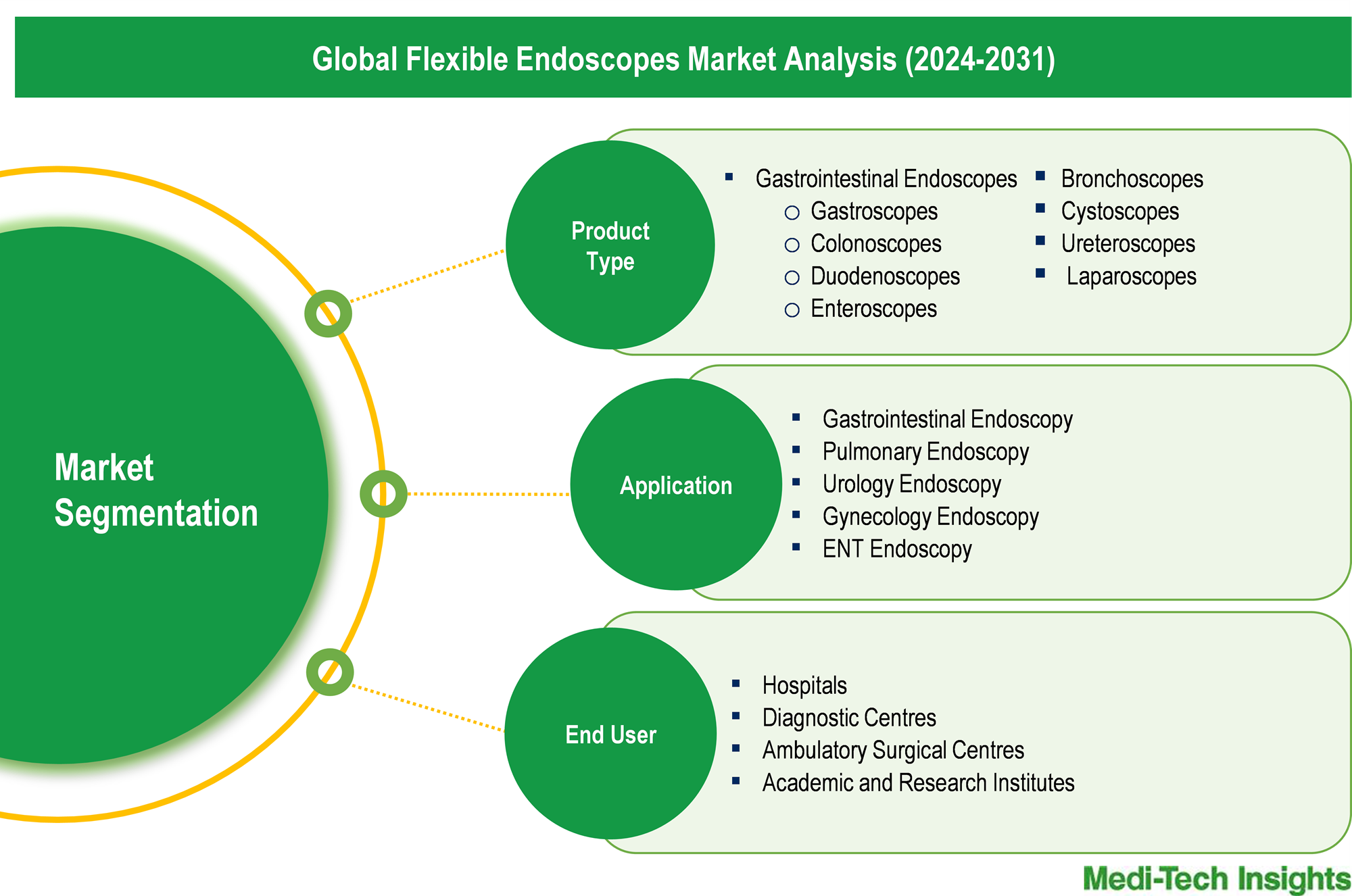
type, the endoscopy devices market is segmented into gastrointestinal
endoscopes, bronchoscopes, cystoscopes, ureteroscopes, hysteroscopes,
laparoscopes, and others. The gastrointestinal endoscopes segment holds the
largest market share, owing to the high global prevalence of colorectal cancer,
gastrointestinal bleeding, and inflammatory bowel diseases, combined with
widespread clinical adoption of minimally invasive diagnostic procedures.
Bronchoscopes are emerging as the fastest growing product category, a trend tied to the increasing burden of lung cancer and chronic obstructive pulmonary disease (COPD), as clinicians lean more heavily on bronchoscopy for both identifying and treating airway conditions. Cystoscopes and ureteroscopes are expanding at a steady pace, fueled by rising cases of urinary tract disorders, kidney stones, and bladder cancer, with continued innovation in flexible scope design helping sustain this momentum. Hysteroscopes and laparoscopes are also building momentum, with clinicians turning to them more often to address conditions such as fibroids, endometriosis, and infertility.
To learn more about this report, download the PDF brochure
Regional Outlook: North America maintains
its leading position in the flexible endoscopes market
through automated endoscope
reprocessing and 3D reconstruction & virtual chromoendoscopy adoption
North
America holds a major share of the flexible endoscopes market. The region's
growth is driven by widespread adoption of automated endoscope reprocessing
systems, advanced 3D reconstruction technologies, and virtual chromoendoscopy
integration. The region also benefits from the presence of leading market
players, robust healthcare infrastructure, and rising investment in minimally
invasive diagnostic technologies.
Europe
follows closely, with growth driven by growing healthcare awareness of
endoscopic innovations and a growing willingness to adopt advanced flexible
endoscopy across gastroenterology and pulmonology specialties. Additionally,
rising funding in medical device development and favorable regulatory
frameworks for digital and minimally invasive health technologies are further
supporting market growth across the region.
Asia Pacific is expected to register the fastest growth in the flexible endoscopes market, with hospital infrastructure modernization and expanding access to advanced endoscopy solutions emerging as key regional trends. A large patient population base, rising healthcare expenditure, and growing awareness of early disease diagnosis through endoscopic procedures are further shaping the region's growth trajectory.
Competitive Landscape Analysis
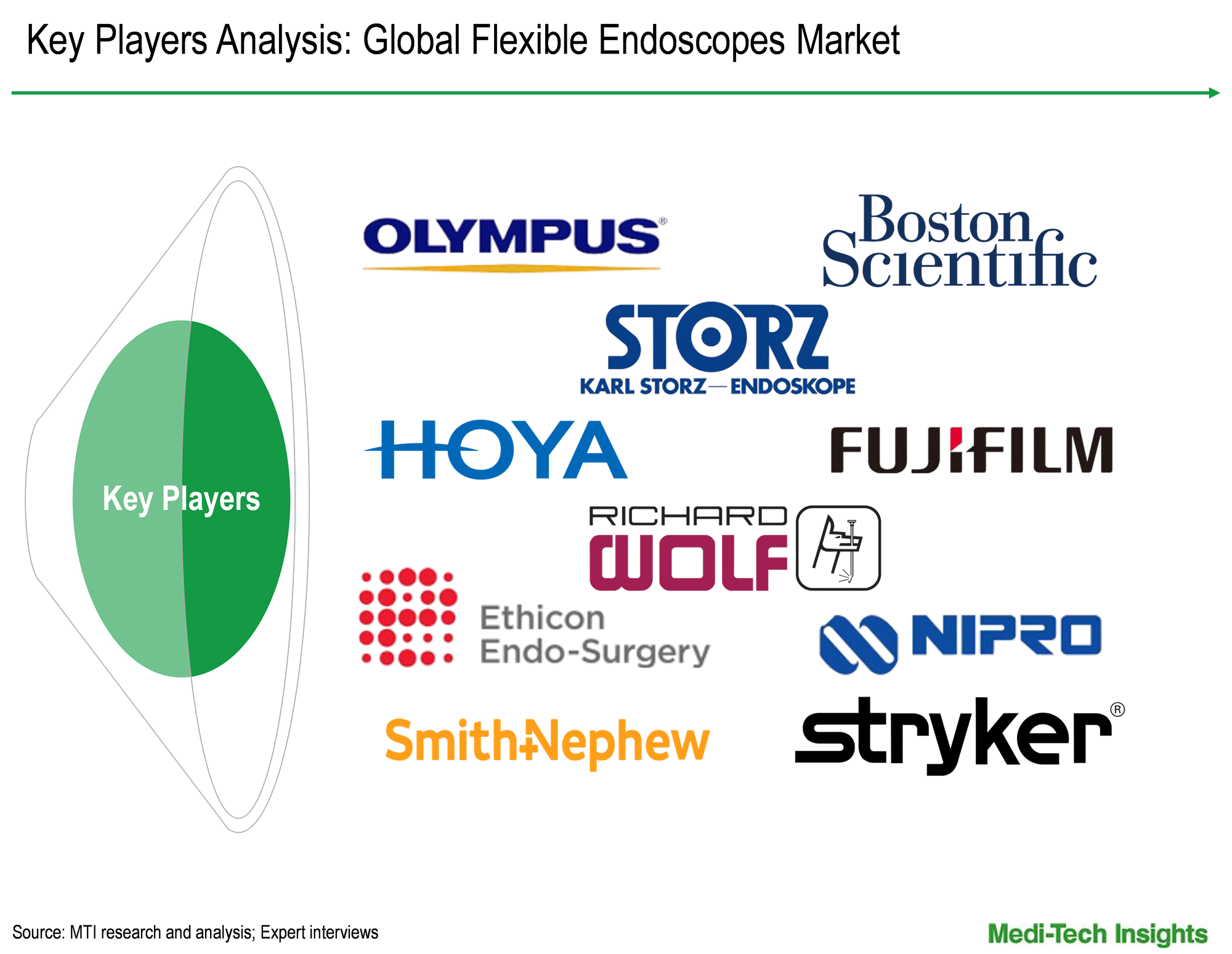
The global flexible endoscopes market is marked by
the presence of established and emerging market players such as
- Olympus Corporation (Japan)
- Karl Storz SE & Co.KG (Germany)
- Boston Scientific Corporation (US)
- Fujifilm Corporation (Japan)
- Hoya Corporation (Japan)
- Nipro (Japan)
- Ethicon Endo-Surgery, LLC (US)
- Stryker Corporation (US)
- Richard Wolf GmbH (Germany)
- Smith & Nephew Inc. (UK)
Get a sample report for competitive landscape analysis
Growth strategies adopted by players to establish their foothold in the flexible endoscopes market
Players
operating in this market are adopting various growth strategies such as new
product launches and approvals, acquisitions, expansions, and strategic
partnerships, agreements, and collaborations to garner market share. For
instance,
- In May 2025, Olympus received
FDA clearance for its EZ1500 series endoscopes, comprising the GIF-EZ1500
gastroscope and the CF-EZ1500DL/I colonoscope featuring Extended Depth of
Field technology as part of the EVIS X1 endoscopy system, enabling
physicians to keep entire lesions in sharp focus to aid in detection
during GI mucosal inspection
- In April 2025, Karl Storz
expanded its range of flexible endoscopes with new ultra-thin models
designed for pediatric and complex ENT procedures, offering improved
patient outcomes and enhanced clinical versatility
- In January 2024, Olympus Corporation acquired Taewoong Medical Co., Ltd., a Korea-based manufacturer of medical devices, strengthening its GI Endo Therapy product portfolio and contributing to improved patient outcomes through comprehensive endoscopic solutions
Report Scope
Report Scope | Details |
Base Year Considered | 2025 |
Historical Data | 2024 – 2025 |
Forecast Period | 2026 – 2031 |
Growth Rate | 6% |
Segment Scope | Product Type, Application, and End User |
Regional Scope |
|
Market Drivers |
|
Attractive Opportunities |
|
Key Companies Mapped | Olympus Corporation (Japan); Karl Storz SE & Co.KG (Germany); Boston Scientific Corporation (US); Fujifilm Corporation (Japan); Hoya Corporation (Japan); Nipro (Japan); Ethicon Endo-Surgery, LLC (US); Stryker Corporation (US); Richard Wolf GmbH (Germany); Smith & Nephew Inc. (UK); and others |
Report Highlights | Market Size & Forecast, Growth Drivers & Restraints, Trends, Competitive Analysis |
Global Flexible Endoscopes Market Segmentation
This report by Medi-Tech Insights provides the size of the global flexible endoscopes market at the regional and country-level from 2024 to 2031. The report further segments the market by product type, application, and end user.
Market Size & Forecast (2024-2031), By Product Type, USD Billion
- Gastrointestinal Endoscopes
- Gastroscopes
- Colonoscopes
- Duodenoscopes
- Enteroscopes
- Bronchoscopes
- Cystoscopes
- Ureteroscopes
- Hysteroscopes
- Laparoscopes
- Other Endoscopes
Market Size & Forecast (2024-2031), By Application, USD Billion
- Gastrointestinal Endoscopy
- Pulmonary Endoscopy
- Urology Endoscopy
- Gynecology Endoscopy
- ENT Endoscopy
- Other Applications
Market Size & Forecast (2024-2031), By End User, USD Billion
- Hospitals
- Diagnostic Centres
- Ambulatory Surgical Centres
- Academic and Research Institute
- Other End Users
Market Size & Forecast (2024-2031), By Region, USD Billion
- North America
- US
- Canada
- Europe
- UK
- Germany
- France
- Italy
- Spain
- Rest of Europe
- Asia Pacific
- China
- India
- Japan
- Rest of Asia Pacific
- Latin America
- Middle East & Africa
Related Reports:
Frequently Asked Questions About This Report
What is the growth rate of the flexible endoscopes market?
The flexible endoscopes market is set to witness a growth rate of 6% during the forecast period from 2026 to 2031
What are the key trends defining the market?
Automated endoscopes reprocessing replacing manual cleaning and 3D construction & virtual chromoendoscopy adoption are the major trends in the flexible endoscopes market
What are the major factors impacting the market growth?
Rise in the number of endoscopy diagnosis, increase in colorectal cancer cases, rise in preference for minimally invasive surgeries, increase in lifestyle-related and other GI diseases, and robotic-assisted endoscopy enhancing procedural precision are some of the key factors driving the flexible endoscopes market
What are the opportunities prevailing in the market?
Increasing use of ultra-thin ENT endoscopes, integration of AI into an endoscopic platform, improved healthcare services in emerging economies, and cloud endoscopy systems & hospital IT integration offer numerous growth opportunities for companies operating in the flexible endoscopes market
Which region has the highest share in the global market? Which region is expected to witness the highest growth rate in the next 5 years?
North America held the largest share of the global flexible endoscopes market in 2025, while Asia-Pacific is projected to grow at the highest CAGR during the forecast period
Who are the major players operating in the market?
Some of the major players operating in the flexible endoscopes market include Olympus Corporation (Japan); Karl Storz SE & Co.KG (Germany); Boston Scientific Corporation (US); Fujifilm Corporation (Japan); Hoya Corporation (Japan); Nipro (Japan); Ethicon Endo-Surgery, LLC (US); Stryker Corporation (US); Richard Wolf GmbH (Germany); Smith & Nephew Inc. (UK); and others
What are the key strategies adopted by players?
Key players in the flexible endoscopes market are adopting strategies such as new product launch, acquisitions, collaborations, and strategic alliances to expand their market presence
Need a More Tailored Analysis?
- Discuss the market sizing methodology and forecast assumptions with our healthcare analysts.
- Expand the scope with additional countries, market segments, technologies, or competitor profiling.
- Use the insights to support strategic planning, market entry, commercial due diligence, and long-term revenue growth initiatives.