Download FREE Sample


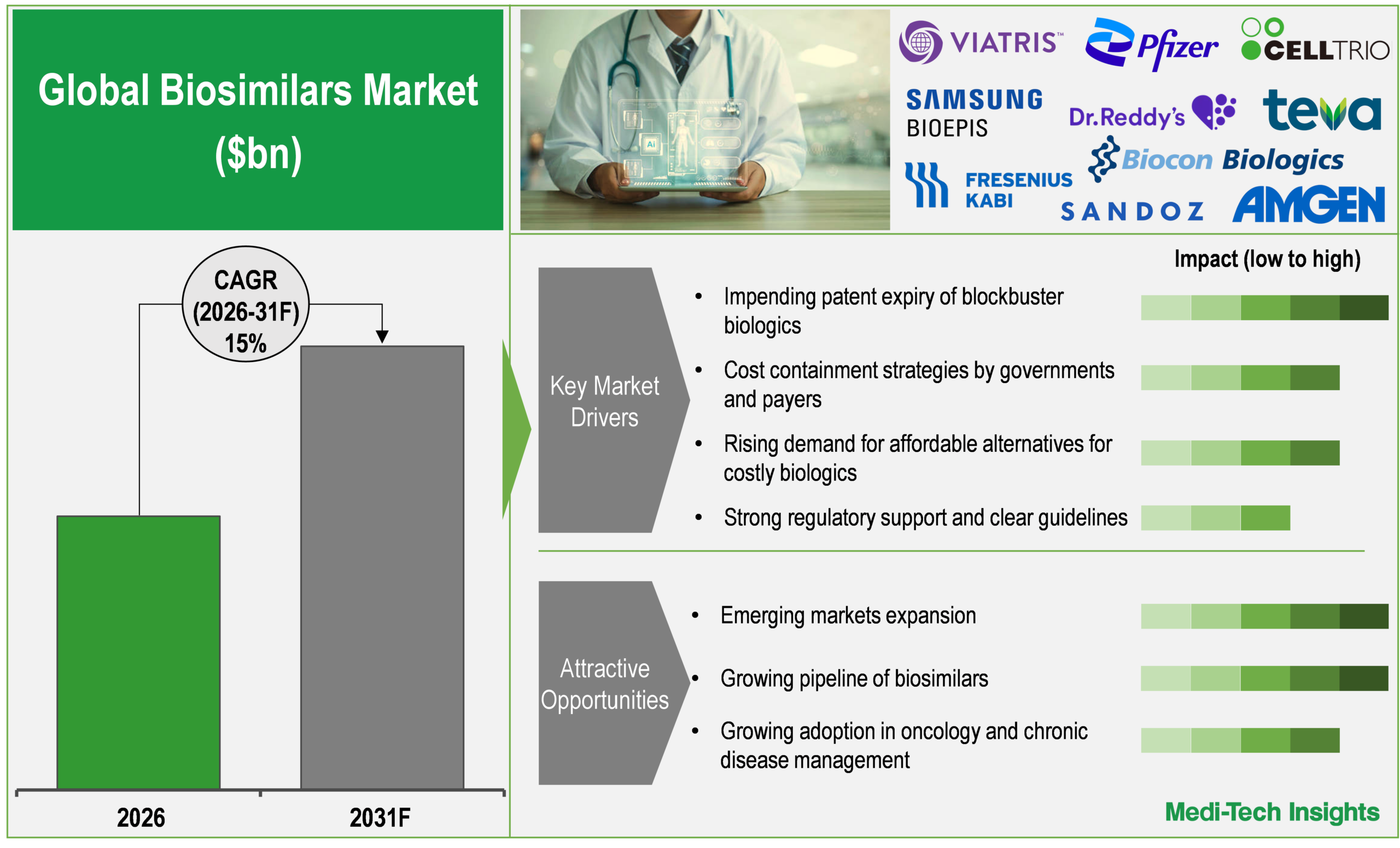
The global biosimilars market size is set to grow at 15% CAGR over the next 5 years. Impending patent expiry of blockbuster biologics, cost containment strategies by governments and payers, rising demand for affordable alternatives for costly biologics, strong regulatory support and clear guidelines, and increased physician and patient acceptance are some of the key factors driving the biosimilars market. However, the complexity of manufacturing and development and pricing & reimbursement pressures are expected to impact the market’s growth.
Biosimilars are biologic medical products that are highly similar to an already approved original biologic (reference product), with no clinically meaningful differences in safety, purity, and effectiveness. The development of biosimilars is complex because, like all biologics, it involves the use of living cells and complex manufacturing processes. Therefore, while biosimilars are similar to the reference biologic, they are not identical. The manufacturer must perform an extensive analytical, preclinical, and clinical evaluation to demonstrate similarity. Biosimilars are not just generic alternatives to expensive biologics; instead, they are a viable and reasonable cost alternative to the original biologic, particularly when the reference product's patent has expired. Biosimilars are widely used in the treatment and management of chronic and life-threatening diseases, such as cancer, diabetes, and autoimmune diseases. They help improve access to advanced therapies available globally for patients.
Impending patent expiry of blockbuster biologics to drive market growth
The impending patent expiry of blockbuster biologics is one of the most significant factors driving the growth of the global biosimilars market. Numerous high-revenue biologic therapies used to treat oncology, autoimmune diseases, diabetes, inflammatory disorders, and ophthalmic conditions are approaching or have recently reached the end of their patent protection and market exclusivity. As these exclusivity periods expire, biosimilar manufacturers gain opportunities to develop and commercialize lower-cost alternatives, increasing competition within the biopharmaceutical industry. This transition is expected to unlock substantial market potential, as several biologics with multi-billion-dollar annual revenues continue to present attractive opportunities for biosimilar developers.
The availability of biosimilars following patent expiration promotes competitive pricing, improves patient access to life-saving biologic therapies, and reduces the financial burden on healthcare systems. Governments, payers, and healthcare providers are increasingly encouraging biosimilar adoption to manage rising pharmaceutical expenditures while maintaining comparable clinical outcomes. In parallel, leading pharmaceutical and biotechnology companies are expanding their biosimilar pipelines and investing in advanced manufacturing capabilities to capitalize on upcoming patent cliffs. Regulatory agencies, including the US FDA and the European Medicines Agency (EMA), have also streamlined approval pathways and strengthened regulatory frameworks, enabling faster commercialization of high-quality biosimilars. As more blockbuster biologics lose exclusivity over the coming years, the resulting increase in biosimilar launches is expected to accelerate market competition, expand treatment accessibility, and drive sustained growth in the global biosimilars market throughout the forecast period.
To learn more about this report, download the PDF brochure
Strategic partnerships and market consolidation - A key market trend
Strategic partnerships and market consolidation have emerged as a key trend shaping the global biosimilars market, enabling companies to accelerate product development, reduce development costs, and share the financial and regulatory risks associated with biosimilar commercialization. Given the complexity of biosimilar development, manufacturers are increasingly collaborating with global pharmaceutical companies, regional partners, contract development and manufacturing organizations (CDMOs), and biotechnology firms to leverage complementary expertise in biologics manufacturing, clinical development, regulatory compliance, and commercial distribution. These collaborations also provide access to advanced manufacturing technologies, established distribution networks, and regional market knowledge, enabling faster product launches and broader geographic expansion.
Recent industry developments highlight this growing trend. In May 2025, Alvotech expanded its partnership with ADVANZ PHARMA by adding three new biosimilar candidates, strengthening their joint European biosimilars portfolio. Similarly, in July 2024, Evotec SE extended its long-term strategic partnership with Sandoz to enhance biosimilar development capabilities and manufacturing expertise. Alongside strategic alliances, mergers and acquisitions are reshaping the competitive landscape by enabling companies to strengthen their product pipelines, expand manufacturing capacity, and diversify therapeutic portfolios. As competition intensifies and regulatory requirements become increasingly complex, partnerships and market consolidation are expected to remain critical growth strategies, supporting global commercialization, improving operational efficiency, and enhancing patient access to affordable biosimilar therapies.
To learn more about this report, download the PDF brochure
Product Segment Outlook
The monoclonal antibodies (mAbs) segment is expected to account for the largest share of the global biosimilars market, driven by the high commercial value and widespread clinical use of biologic therapies for oncology, autoimmune diseases, and inflammatory disorders. The expiration of patents for blockbuster monoclonal antibodies has accelerated biosimilar development and commercialization, creating opportunities for cost savings and improved patient access. In addition, strong regulatory support, increasing physician confidence, and growing healthcare demand for affordable biologic therapies continue to reinforce the dominance of the mAbs segment.
The insulin segment is projected to witness the fastest growth during the forecast period, supported by the rising global prevalence of diabetes and increasing demand for cost-effective insulin therapies. Patent expirations of leading insulin biologics, favourable regulatory pathways, and broader reimbursement support are encouraging the launch and adoption of insulin biosimilars. Furthermore, growing healthcare expenditure in emerging markets and government initiatives to improve access to affordable diabetes treatment are expected to accelerate the growth of the insulin biosimilars segment.
Regional Outlook: North America accounted for the largest share in the biosimilars market
North America is expected to hold the largest share of the global biosimilars market, supported by the rapid commercialization of biosimilars following the loss of exclusivity of several blockbuster biologics. Increasing adoption across hospital systems and specialty pharmacies, strong payer initiatives to promote lower-cost biologic alternatives, and an expanding pipeline of FDA-approved biosimilars are driving market expansion. The region also benefits from advanced biologics manufacturing capabilities, favourable reimbursement frameworks, and growing physician confidence in biosimilar safety and efficacy, positioning North America as the leading revenue contributor to the global biosimilars market.
The Asia Pacific region is projected to register the fastest growth during the forecast period, driven by expanding biologics manufacturing capacity, increasing healthcare investments, and rising demand for affordable biologic therapies. Countries such as India, South Korea, and China are strengthening their position as global biosimilar development and manufacturing hubs through supportive regulatory reforms and significant R&D investments. In addition, improving healthcare access, increasing chronic disease burden, and the growing presence of domestic biosimilar manufacturers are expected to accelerate product launches and adoption across the region.
Competitive Landscape Analysis
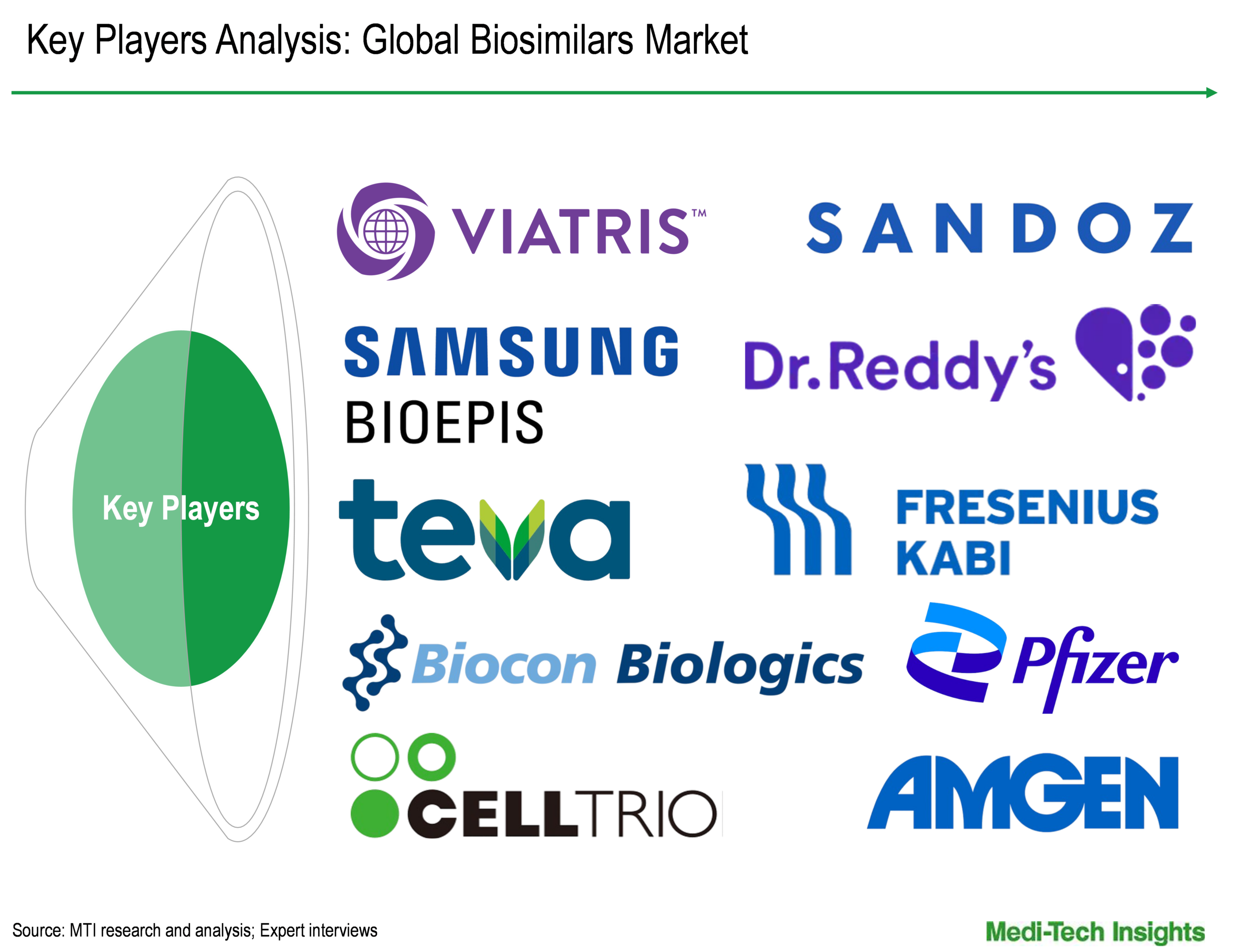
The global biosimilars market is marked by the presence of established and emerging market players such as-
- Sandoz Group AG
- Amgen Inc.
- Celltrion Inc.
- Samsung Bioepis
- Biocon Biologics
- Pfizer Inc.
- Fresenius Kabi
- Viatris Inc.
- Reddy's Laboratories
- Teva Pharmaceutical Industries
To learn more about this report, download the PDF brochure
Growth strategies adopted by players to establish their foothold in the biosimilars market
Players operating in this market are adopting various growth strategies such as new product launch/approval; acquisitions; expansions; and strategic partnerships, agreements, and collaborations, to garner market share. For instance,
- In July 2026, Formycon and OneSource Specialty Pharma entered a strategic manufacturing partnership to strengthen biosimilar production capabilities, leveraging OneSource's integrated manufacturing infrastructure to accelerate commercialization and improve global supply chain efficiency for multiple biosimilar candidates
- In July 2026, Teva and Polpharma Biologics entered a global licensing agreement to develop and commercialize a biosimilar candidate referencing Ocrevus (ocrelizumab), expanding Teva's biosimilars portfolio in multiple sclerosis and other autoimmune indications
- In June 2026, IQVIA and Kexing Biopharm expanded their strategic collaboration by integrating AI-enabled capabilities to accelerate global biosimilar development, optimizing clinical development, regulatory execution, and commercialization across multiple international markets
- In May 2026, the European Commission approved Sandoz's Bysumlog (insulin lispro) and Dazparda (insulin aspart), strengthening the company's diabetes biosimilars portfolio and expanding access to affordable insulin therapies across European markets
- In December 2025, Amneal received US FDA approval for Boncresa and Oziltus, denosumab biosimilars referencing Prolia and Xgeva, expanding its biosimilars portfolio and strengthening its long-term presence in oncology and bone health therapies
- In December 2025, Lupin received US FDA approval for Armlupeg (pegfilgrastim-pbbk), a biosimilar to Neulasta, strengthening its oncology portfolio and expanding access to affordable supportive care therapies for patients undergoing chemotherapy
- In July 2025, Lupin partnered with Viatris (formerly Mylan) to commercialize its etanercept biosimilar in select global markets, combining Lupin's development capabilities with Viatris' commercialization expertise to expand patient access to affordable biologic therapies
- In April 2025, Biocon Biologics received US FDA approval for Jobevne, a biosimilar to Avastin (bevacizumab), expanding its oncology biosimilars portfolio and reinforcing its commitment to improving global access to affordable cancer treatments
- In March 2024, Fresenius Kabi received US FDA approval for TYENNE, the first biosimilar to Actemra (tocilizumab) available in both intravenous and subcutaneous formulations, expanding treatment options for autoimmune and inflammatory diseases.
Report Scope
|
Report Metric |
Details |
|
Base Year Considered |
2025 |
|
Historical Data |
2024 2025 |
|
Forecast Period |
2026 2031 |
|
Growth Rate |
15% |
|
Segment Scope |
Product, Application, and Manufacturing Type |
|
Regional Scope |
|
|
Market Drivers |
|
|
Attractive Opportunities |
|
|
Key Companies Mapped |
Sandoz Group AG; Amgen Inc.; Celltrion Inc.; Samsung Bioepis; Biocon Biologics; Pfizer Inc.; Fresenius Kabi; Viatris Inc.; Dr. Reddy's Laboratories; and Teva Pharmaceutical Industries; among others |
|
Report Highlights |
Market Size & Forecast, Growth Drivers & Restraints, Trends, Competitive Analysis |
Global Biosimilars Market Segmentation
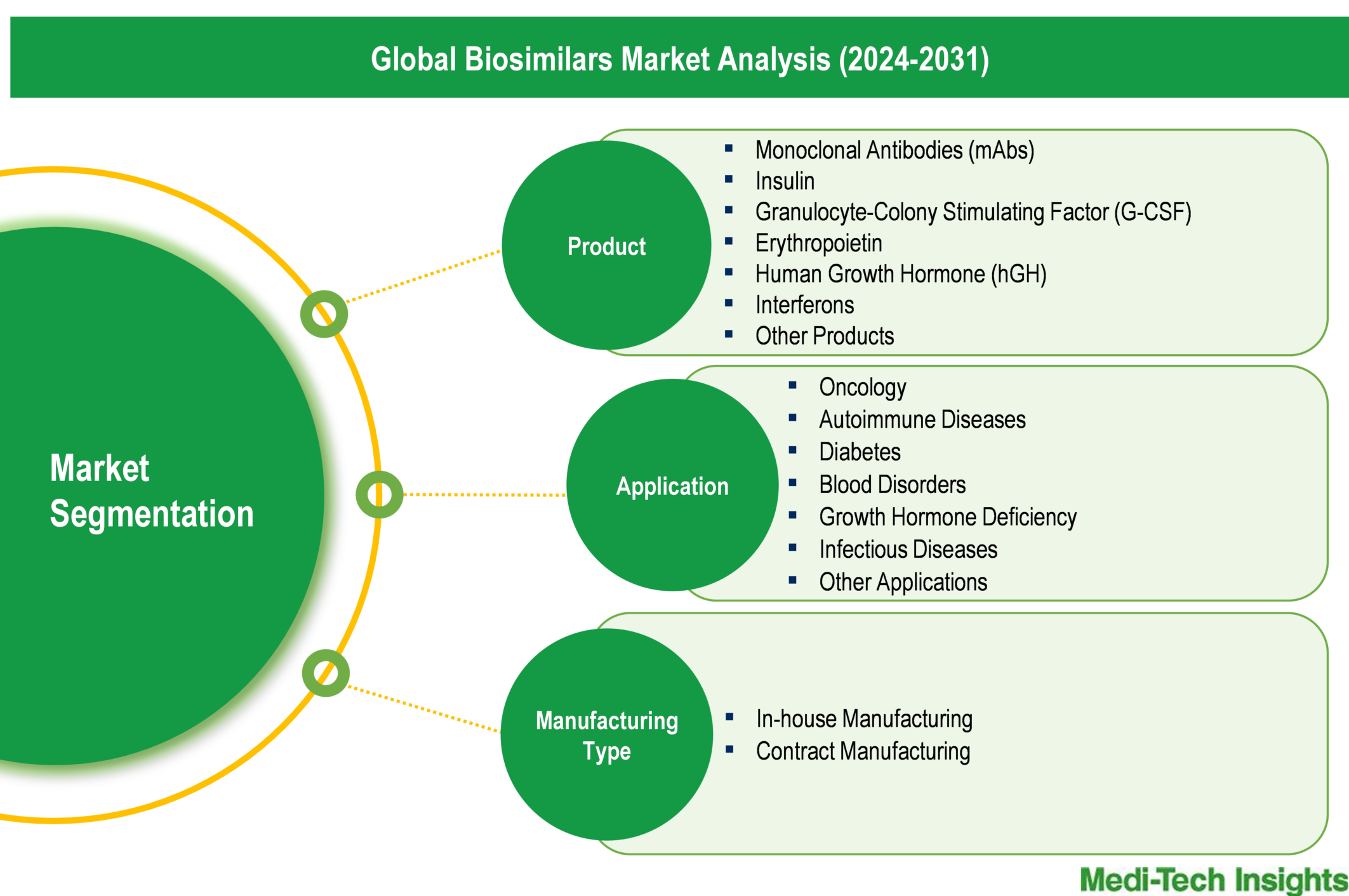
This report by Medi-Tech Insights provides the size of the global biosimilars market at the regional and country-level from 2024 to 2031. The report further segments the market by product, application, and manufacturing type.
Market Size & Forecast (2024-2031), By Product, USD Billion
- Monoclonal Antibodies (mAbs)
- Insulin
- Granulocyte-Colony Stimulating Factor (G-CSF)
- Erythropoietin
- Human Growth Hormone (hGH)
- Interferons
- Other Products
Market Size & Forecast (2024-2031), By Application, USD Billion
- Oncology
- Autoimmune Diseases
- Diabetes
- Blood Disorders
- Growth Hormone Deficiency
- Infectious Diseases
- Other Applications
Market Size & Forecast (2024-2031), By Manufacturing Type, USD Billion
- In-house Manufacturing
- Contract Manufacturing
Market Size & Forecast (2024-2031), By Region, USD Billion
- North America
- US
- Canada
- Europe
- UK
- Germany
- France
- Italy
- Spain
- Rest of Europe
- Asia Pacific
- China
- India
- Japan
- Rest of Asia Pacific
- Latin America
- Middle East & Africa
Need a More Tailored Analysis?
- Discuss the market sizing methodology and forecast assumptions with our healthcare analysts.
- Expand the scope with additional countries, market segments, technologies, or competitor profiling.
- Use the insights to support strategic planning, market entry, commercial due diligence, and long-term revenue growth initiatives.