Download FREE Sample


The human microbiome refers to the diverse community of microorganisms such as bacteria, viruses, fungi, archaea, eukaryotes, and other microbes that live in and on the human body. These microbes are found in various areas, including the gut, skin, mouth, respiratory system, and other mucosal surfaces, where they play a vital role in maintaining health and supporting essential bodily functions. Initially, it was believed that the microbiome contained approximately 100 times more genes than the human genome, but further research has adjusted this estimate to about ten times more. While these microbes are typically not harmful, they are crucial for our well-being. For example, they produce vitamins that our bodies cannot synthesize, help break down food to extract necessary nutrients, train our immune systems to identifyharmful pathogens, and even generate anti-inflammatory compounds that combat disease-causing microbes. 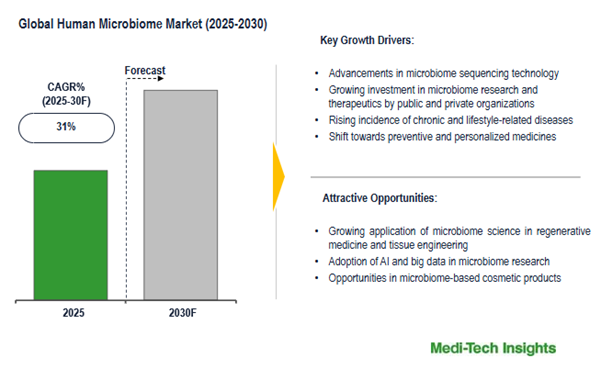
To learn more about the research report, download a sample report.
Advancements in microbiome research and technologies driving market growth
The rapid pace of scientific advancements in microbiome research is one of the most significant drivers of the human microbiome market. The increasing understanding of the microbiome's role in human health particularly its influence on immunity, metabolism, mental health, and disease is catalyzing innovation in microbiome-based therapies, diagnostics, and products. More than 100 trillion microorganisms live in the human body, and their interactions with host cells are complex. Ongoing research is revealing how the microbiome can influence disease onset, progression, and treatment outcomes, spurring the development of new therapeutic strategies, personalized medicine, and consumer products like probiotics and prebiotics. As technology improves and more studies are conducted, the potential for microbiome-based solutions to transform disease prevention, treatment, and overall well-being continues to grow.
To learn more about the research report, download a sample report.
Increasing investments in microbiome-based therapies and diagnostics by pharmaceutical companies and biotechnology firms propel market growth
Recent advancements in sequencing technologies and synthetic biology have confirmed the connection between the microbiome and various diseases, leading to a surge in research funding and investment in microbiome-related therapeutics, diagnostics, and products. Investments in microbiome-focused startups is expected to rise, as venture capitalists and pharma companies aim to capitalize on the promising potential of microbiome-based therapeutics and diagnostics. For example, venture capital investments in microbiome startups reached record levels, reflecting growing confidence in the sector's future. This influx of capital is driving the commercialization of microbiome-based therapeutics, including FMT, microbiome-modulating drugs, and innovative probiotics, while also expanding clinical trials on the microbiome's impact on various diseases. As per the article published by strategy& (part of PwC group) there were 43 VC-backed deals valued at $321 million in 2022. North America and Europe remain the leading regions for microbiome funding, though investment is also growing in the Asia-Pacific region.
Key Constraints/Challenges
The market is confronted with challenges such as scientific and regulatory barriers, as well as a lack of standardization due to the use of numerous microbial strains that are difficult to distinguish. Additionally, there is a limited public understanding and a need for education to highlight the broad health benefits offered by products containing these bacteria.
Competitive Landscape Analysis
The global human microbiome market is marked by the presence of established and emerging market players such as OpenBiome; Bayers AG; Danone; Nestle, Seres Therapeutics Inc.; Ferring Pharmaceuticals; Enterome SA; Finch Therapeutics Group, Inc.; Biomebank, Microbiotica; Seeds Health, Inc.; Synlogic; and Vedanta Bioscience, Inc. among others. Some of the key strategies adopted by market players include new product development, strategic partnerships and collaborations, and investments.
Report Scope
| Report Scope | Details |
| Base Year Considered | 2024 |
| Historical Data | 2023 - 2024 |
| Forecast Period | 2025 - 2030 |
| Growth Rate | 31% |
| Market Drivers |
|
| Attractive Opportunities |
|
| Segment Scope | Product, Disease, Type, and End-user |
| Regional Scope |
|
| Key Companies Mapped | OpenBiome; Bayers AG; Danone; Nestle; Seres Therapeutics Inc.; Ferring Pharmaceuticals; Enterome SA; Finch Therapeutics Group, Inc.; Biomebank; Microbiotica; Seeds Health, Inc.; Synlogic; and Vedanta Bioscience, Inc. |
| Report Highlights | Market Size & Forecast, Growth Drivers & Restraints, Trends, Competitive Analysis |
Market Segmentation
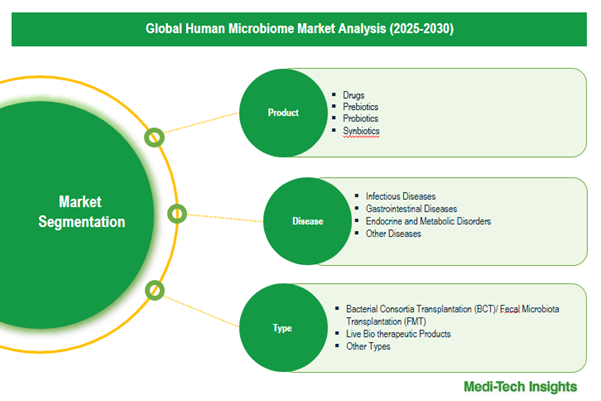
This report by Medi-Tech Insights provides the size of the global human microbiome market at the regional- and country-level from 2023 to 2030. The report further segments the market based on product, disease, type, and end-user.
- Market Size & Forecast (2023-2030), By Product, USD Million
- Drugs
- Prebiotics
- Probiotics
- Synbiotics
- Market Size & Forecast (2023-2030), By Disease, USD Million
- Infectious Diseases
- Gastrointestinal Diseases
- Endocrine and Metabolic Disorders
- Other Diseases
- Market Size & Forecast (2023-2030), By Type, USD Million
- Bacterial Consortia Transplantation (BCT)/ Fecal Microbiota Transplantation (FMT)
- Live Bio therapeutic Products
- Other Types
- Market Size & Forecast (2023-2nd-user, USD Million
- Hospitals & Clinics
- Long-Term Care Facilities
- Others
- Market Size & Forecast (2023-2030), By Region, USD Million
- North America
- US
- Canada
- Europe
- UK
- Germany
- Italy
- Spain
- Rest of Europe
- Asia Pacific
- China
- India
- Japan
- Rest of Asia Pacific
- Latin America
- Middle East & Africa
- North America
Frequently Asked Questions About This Report
What is the market size & forecast of the human microbiome market?
What are historical, present, and forecasted market shares and growth rates of various segments and sub-segments of the human microbiome market?
What are the key trends defining the market?
What are the major factors impacting the market?
What are the opportunities prevailing in the market?
Need a More Tailored Analysis?
- Discuss the market sizing methodology and forecast assumptions with our healthcare analysts.
- Expand the scope with additional countries, market segments, technologies, or competitor profiling.
- Use the insights to support strategic planning, market entry, commercial due diligence, and long-term revenue growth initiatives.