Download FREE Sample


Health education is an ongoing, dynamic, and strategic process aimed at enhancing a population-s overall health and well-being by fostering knowledge and healthy behaviors. It integrates insights from biology, environmental science, ecology, psychology, physical science, and medical science. The goal of health education is to positively impact the health behaviors of individuals and communities, as well as the living and working environments that shape their health. This education can take place at various levels, including individual, group, institutional, community, or systemic levels.
To learn more about this report, download the PDF brochure
Adoption of technology-enabled learning platforms propels market growth
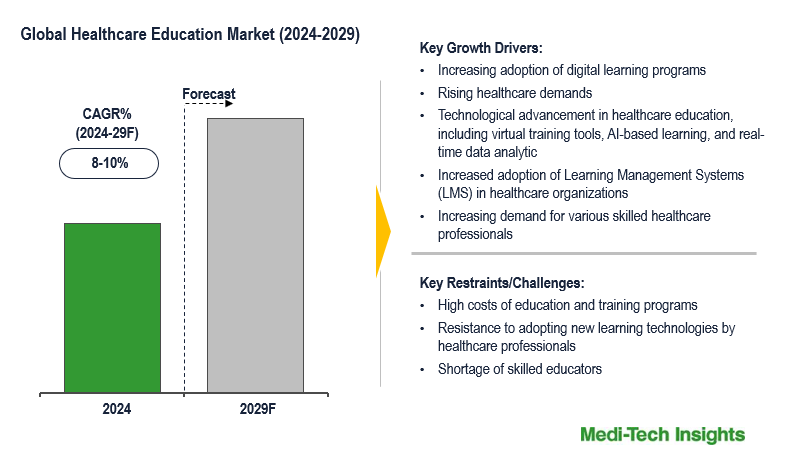
The adoption of technology-enabled learning across healthcare is accelerating the uptake of healthcare education technologies by enhancing accessibility, engagement, scalability, and efficiency. With digital innovations like AI, VR, and mobile access, healthcare professionals can keep their skills up to date, practice hands-on techniques, and benefit from flexible, high-quality training that supports lifelong learning in a rapidly advancing field. As consumer and investor communities are becoming more partial to other digital products, such as medical records, remote patient monitoring, and revenue cycle management systems, investors have increasingly turned to education solutions that promote healthcare-s shift to technology-based services. This shift enables healthcare education providers to benefit from lower operating costs and favorable margins. Furthermore, the scalable nature of digital platforms opens up a large, accessible market and fosters synergies with other health technology solutions.
The digital shift in healthcare education delivery services further drives market growth
The rapid onset of the COVID-19 pandemic and subsequent lockdowns pushed healthcare education providers to adopt online solutions faster than anticipated. This shift toward digital learning is creating new opportunities for scalable, accessible, and cost-effective training for healthcare professionals worldwide. E-learning platforms, mobile apps, and virtual classrooms now provide flexible, self-paced learning that fits the demanding schedules of healthcare wwith growing adoption especially in remote and underserved areas. Provider education is the latest healthcare sector to embrace digital practices, and education companies are benefiting from online classes, which allow for a larger audience reach and lower operational costs. Beyond efficiency, online learning platforms will soon enable companies to generate and leverage substantial amounts of internal data. Also, investor interest is rising, driven by reduced operating expenses, enhanced accessibility, and the potential to harness data-driven insight.
To learn more about this report, download the PDF brochure
Competitive Landscape Analysis
The global healthcare education market is marked by the presence of innovative and emerging market players such as GE Healthcare, Philips Healthcare, HealthStream, Wolters Kluwer Health, CAE Healthcare, Elsevier, Articulate, Coursera Inc., Intelvio, andPsychHub, among others. Some of the key strategies adopted by the market players include mergers and acquisitions, strategic partnerships, and collaborations.
Report Scope
| Report Metric | Details |
| Base Year Considered | 2023 |
| Historical Data | 2022 - 2023 |
| Forecast Period | 2024 - 2029 |
| Growth Rate | CAGR of 8-10% |
| Market Drivers |
|
| Key Market Trends |
|
| Segment Scope | Providers, Delivery Mode, Application, End User |
| Regional Scope |
|
| Key Companies Mapped | GE Healthcare, Philips Healthcare, HealthStream, Wolters Kluwer Health, CAE Healthcare, Elsevier, Articulate, Coursera Inc., Intelvio, andPsychHub, among others |
| Report Highlights | Market Size & Forecast, Growth Drivers & Restraints, Trends, Competitive Analysis |
Market Segmentation
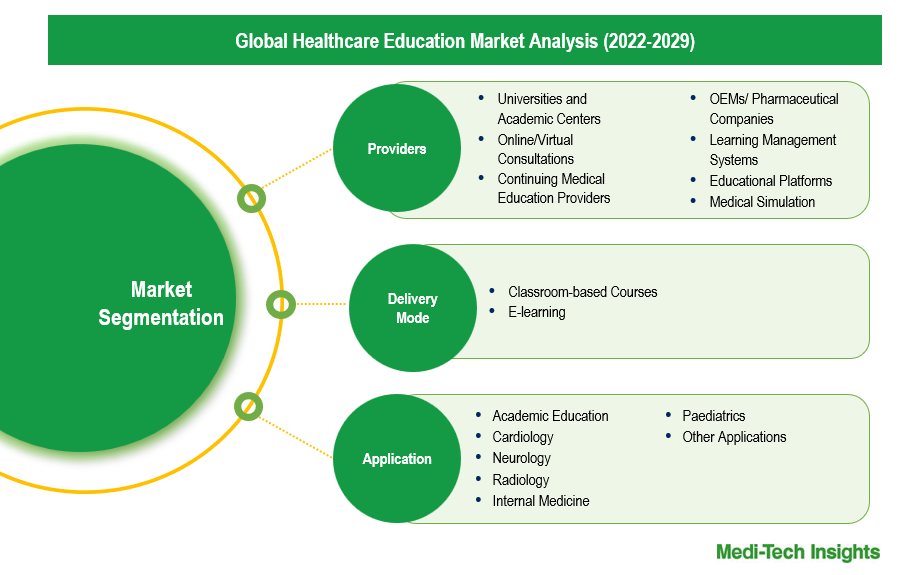
This report by Medi-Tech Insights provides thesize of the global healthcare education market at theregional- and country level from 2022 to 2029. The report further segments the market based on providers, delivery mode, applications, and end users.
- Market Size & Forecast (2022-2029), By Providers, USD Million
- Universities and Academic Centers
- Continuing Medical Education Providers
- OEMs/ Pharmaceutical Companies
- Learning Management Systems
- Educational Platforms
- Medical Simulation
- Market Size & Forecast (2022-2029), By Delivery Mode, USD Million
- Classroom-based Courses
- E-learning solutions
- Market Size & Forecast (2022-2029), By Application, USD Million
- Academic Education
- Cardiology
- Neurology
- Radiology
- Internal Medicii>Paediatrics
- Other Applications
- Market Size & Forecast (2022-2029), By End User, USD Million
- Students
- Physicians
- Non-Physicians
- Market Size & Forecast (2022-2029), By Region, USD Million
- North America
- US
- Canada
- Europe
- UK
- Germany
- France
- Italy
- Spain
- Rest of Europe
- Asia Pacific
- China
- India
- Japan
- Rest of Asia Pacific
- Latin America
- Middle East & Africa
- North America
Frequently Asked Questions About This Report
What is the market size & forecast of the healthcare education market?
What are the historical, present, and forecasted market shares and growth rates of various segments and sub-segments of the healthcare education market?
What are the key trends defining the market?
What are the major factors impacting the market?
What are the opportunities prevailing in the market?
Need a More Tailored Analysis?
- Discuss the market sizing methodology and forecast assumptions with our healthcare analysts.
- Expand the scope with additional countries, market segments, technologies, or competitor profiling.
- Use the insights to support strategic planning, market entry, commercial due diligence, and long-term revenue growth initiatives.