Download FREE Sample


Report Overview
Infection control is a methodical approach within healthcare and associated environments to avoid infection transmission, especially where pathogens like bacteria, viruses, and fungi are concerned. Infection control involves an array of processes such as sterilization, disinfection, hand washing, isolation practices, and environmental cleaning. The purpose of these practices is to reduce the risk of cross-contamination among patients, personnel, and equipment. Infection control is needed to ensure patient safety, lower healthcare expenditures, and uphold public health practices. 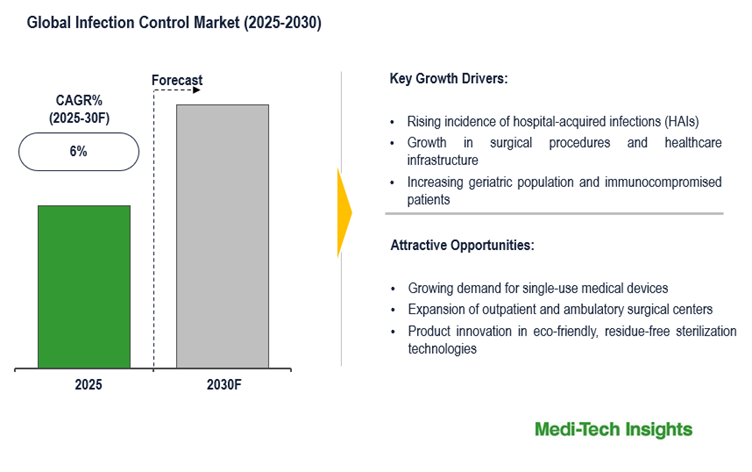
To learn more about the research report, download a sample report.
Escalating HAIs Accelerate Demand for Robust Infection Control Measures
The increase in hospital-acquired infections (HAIs) is the key factor behind the high growth rate of the infection control market. With the surge in number of patient admissions and surgical procedures, there is rising pressure on healthcare facilities to introduce efficient protocols to lower the risk of infection. HAIs not only extend lengths of stay but also increase the likelihood of complications and significantly drive treatment costs. Therefore, healthcare providers are increasingly investing in sterilization technologies, disinfectants, and compliance training for healthcare workers. Additionally, government agencies and international health organizations are enacting strict protocols that require stringent infection control measures, due to which hospitals and clinics are upgrading systems. This sense of urgency is particularly common in developing countries, where construction of new infrastructures to sustain international standards of care is currently in progress. The clear linkage between patient safety outcomes and infection control protocols is leading hospitals to consider these standards not only as compliance mechanisms but as integral aspects of healthcare quality assurance.
To learn more about the research report, download a sample report.
Low-Temperature Plasma Sterilization Revolutionizes Infection Control
One of the notable infection control innovations is the use of low-temperature hydrogen peroxide gas plasma sterilization. This method has been notably useful for the sterilization of heat-sensitive surgical equipment, including endoscopes and other sophisticated surgery equipment. Unlike steam sterilization, this method does not require high temperatures, making it a safer method for delicate equipment to be used while it effectively removes microbial residues. Its high speed of processing also ensures higher turnover of instruments, which is important in high-demand environments such as emergency rooms and operating rooms. Hydrogen peroxide gas plasma sterilization also does not leave toxic residues behind, thus being safer for patients and medical workers. The extensive application of this process is not only improving the levels of sterilization but also minimizing equipment downtime and optimizing overall hospital workflow efficiency. With health centers increasingly offering surgical procedures and using more complex devices, this invention is instrumental in keeping infections under control without threatening working speed or equipment lifespan.
Competitive Landscape Analysis
The global infection control market is marked by the presence of established and emerging market players such 3M; Getinge Group; Belimed AG; O&M Halyard; MATACHANA; Sterigenics (A Sotera Health Company); ASP; MMM Group; Cantel Medical Corp.; STERIS Corporation and W&H among others. Some of the key strategies adopted by market players include new product development, strategic partnerships and collaborations, and geographic expansion.
Report Scope
| Report Scope | Details |
| Base Year Considered | 2024 |
| Historical Data | 2023 - 2024 |
| Forecast Period | 2025 - 2030 |
| Growth rate | 6% |
| Market Drivers |
|
| Attractive Opportunities |
|
| Segment Scope | Type and End-user |
| Regional Scope |
|
| Key Companies Mapped | 3M; Getinge Group; Belimed AG; O&M Halyard; MATACHANA; Sterigenics (A Sotera Health Company); ASP; MMM Group; Cantel Medical Corp.; STERIS Corporation and W&H among others |
| Report Highlights | Market Size & Forecast, Growth Drivers & Restraints, Trends, Competitive Analysis |
Market Segmentation
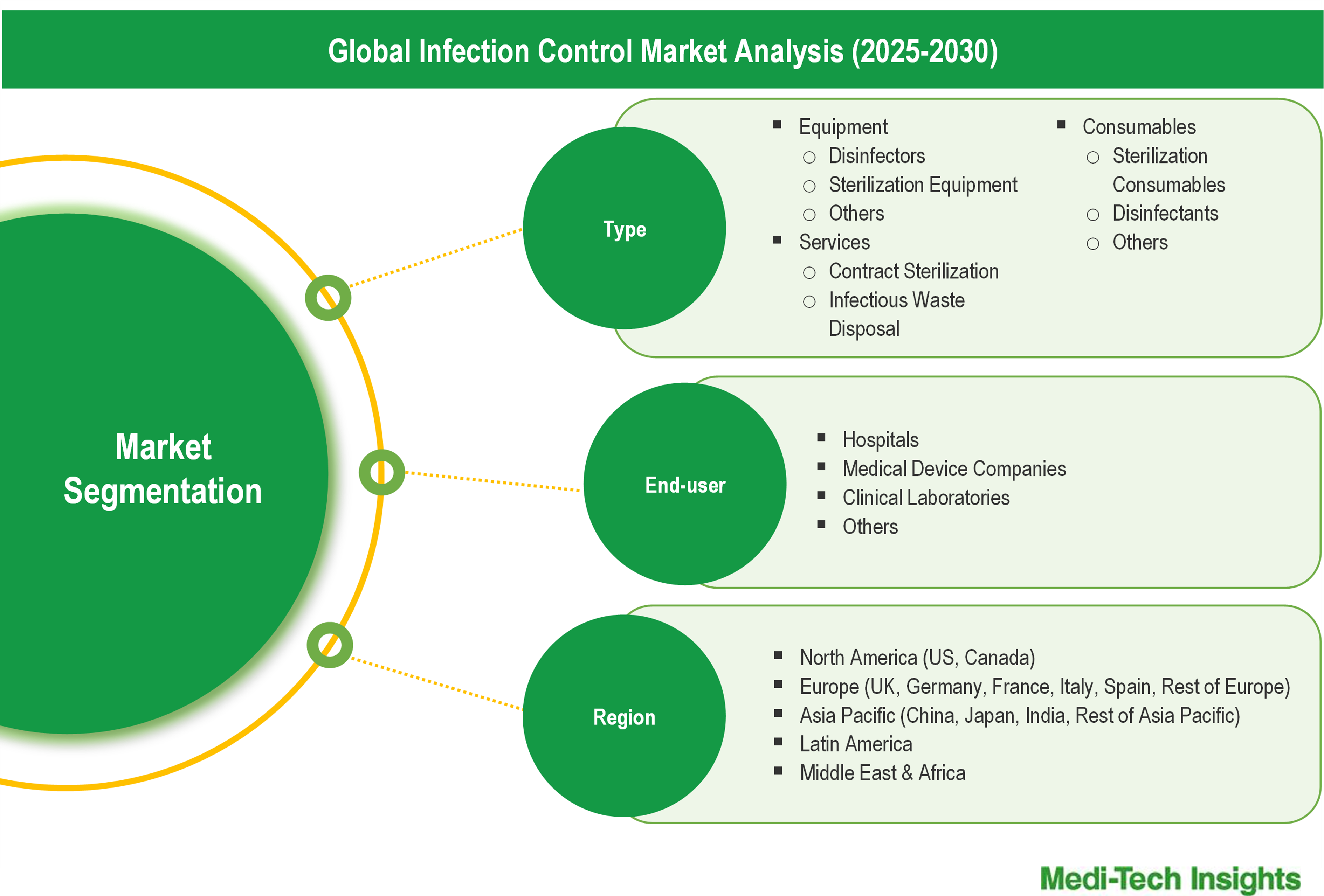
This report by Medi-Tech Insights provides thesize of the global infection control market at theregional- and country-level from 2023 to 2030. The report further segments the market based on type and end-user.
- Market Size & Forecast (2023-2030), By Type, USD Million
- Equipment
- Disinfectors
- Sterilization Equipment
- Others
- Services
- Contract Sterilization
- Infectious Waste Disposal
- Consumables
- Disinfectants
- Sterilization Consumables
- Personal Protective Equipment
- Others
- Equipment
- Market Size & Forecast (2023-2030), By End-user, USD Million
- Hospitals
- Medical Device Companies
- Clinical Laboratories
- Others
- Market Size & Forecast (2023-2030), By Region, USD Million
- North America
- Canada
- North America
- Europe
- UK
- Germany
- France
- Italy
- Spain
- Rest of Europe
- Asia Pacific
- China
- India
- Japan
- Rest of Asia Pacific
- Latin America
- Middle East & Africa
Need a More Tailored Analysis?
- Discuss the market sizing methodology and forecast assumptions with our healthcare analysts.
- Expand the scope with additional countries, market segments, technologies, or competitor profiling.
- Use the insights to support strategic planning, market entry, commercial due diligence, and long-term revenue growth initiatives.