Download FREE Sample


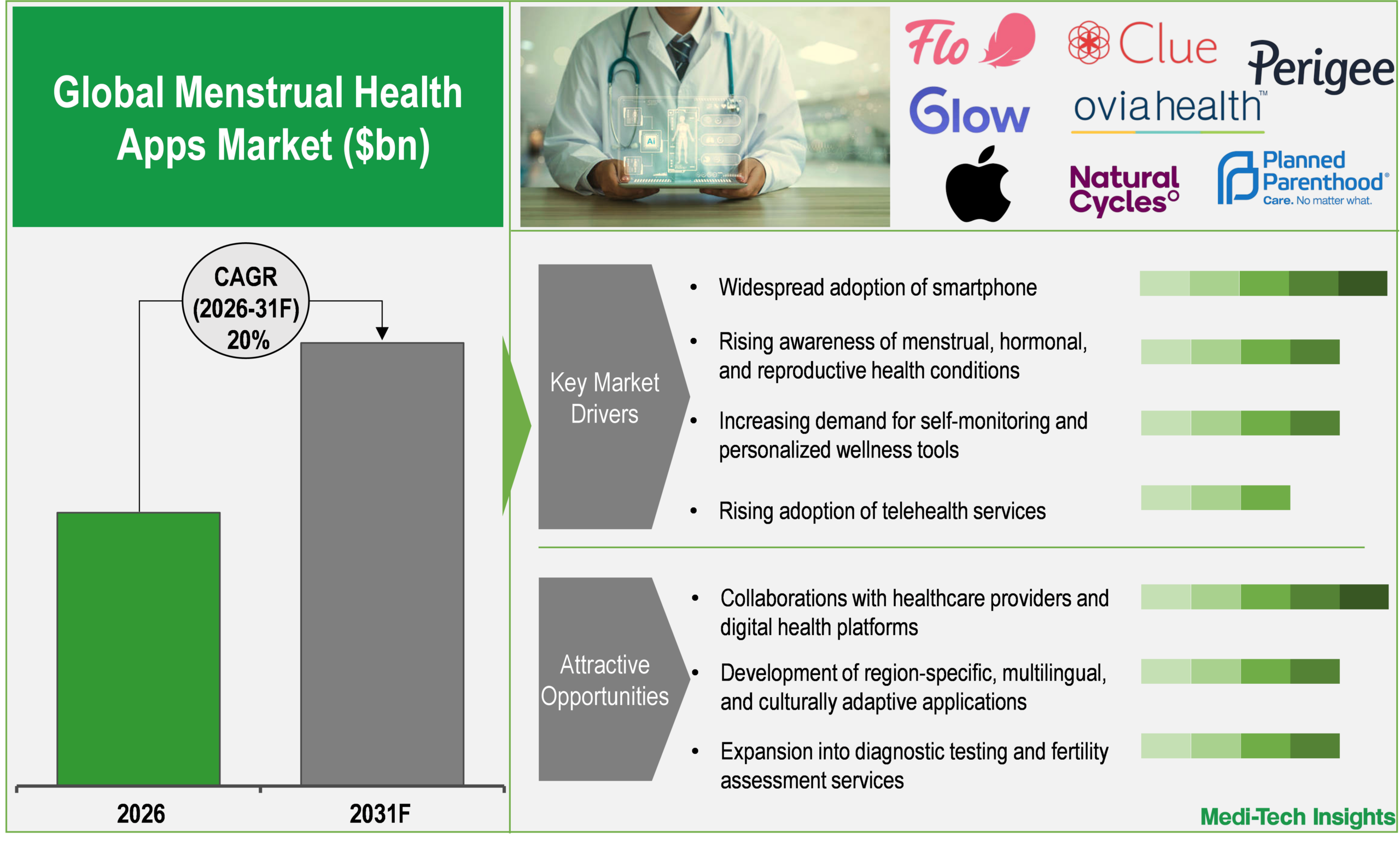
Menstrual health apps, also called menstruapps, are digital tools that can track menstrual cycles, fertility & ovulation windows, symptoms, and overall reproductive & menstrual health wellness. These applications are typically accessed via smartphones and allow users to log data such as cycle start/end dates, mood swings, symptoms (acne, cramps), and other lifestyle factors like nutrition and exercise. These apps are user-friendly and offer personalized tools for individuals to gain insights into their reproductive health and better manage their daily lives. Additionally, some apps offer advanced solutions that extend beyond basic tracking to include predictive analytics, personalized insights, along with teleconsultation features, and integration with wearable devices. The market's user base includes adolescents (tweens), reproductive-age individuals, and those with any hormonal or gynaecological conditions.
Rising awareness and digitization of reproductive health
Growing consumer awareness around menstrual and reproductive health well-being is contributing to the widespread adoption of digital tracking tools across different age groups. Educational initiatives, increasing social media discourse, and targeted public health campaigns have reduced stigma associated with open discussion on menstruation, thereby enabling broader engagement with menstrual health technologies globally.
Menstrual tracking applications are increasingly becoming part of the -new normal- in personal health management, particularly among younger consumers who prefer app-based tools for monitoring reproductive and wellness-related information. Moreover, with increasing consumer demand for advanced tools including AI-driven insights into hormonal cycles, irregularities, and specific symptom patterns, moving beyond basic calendar tracking. Furthermore, advancements in femtech are driving the market toward personalized care, where apps are becoming increasingly important for long-term preventive and proactive health management.
This shift is further fueled by the rapid digitization of the healthcare sector, where digital platforms offer a convenient and highly accessible way to monitor health without requiring immediate in-person clinical intervention, particularly in emerging regions where access to specialized gynecological care may be limited. Additionally, some of these apps are being utilized not only for basic period tracking but also for identifying potential underlying health concerns such as polycystic ovary syndrome (PCOS), endometriosis, and chronic hormonal imbalances, leading to more timely medical consultations. Furthermore, the increasing integration with wearable devices and telehealth services allows users to seamlessly share data with healthcare providers, thereby helping to optimize medical consultations and personal self-management.
To learn more about this report, download the PDF brochure
Integration of advanced analytics and personalization
Technological advancements, like the integration of artificial intelligence (AI) and machine learning (ML) algorithms, have transformed the functionality of menstrual health applications from simple tracking tools into sophisticated, predictive health platforms. These algorithms analyze large number of datasets of user-logged information, including flow intensity, mood swings, sleep cycle and other physical symptoms, to deliver highly personalized predictions regarding future cycles and fertility windows. These predictive capabilities improve over time, with the app becoming more adaptive to the individual's patterns, thereby significantly increasing user engagement and reliance on the platform for daily health management.
Furthermore, there is increasing integration of wearable devices, such as smartwatches and fitness trackers, to capture continuous physiological parameters, including basal body temperature, heart rate variability, and sleep quality. This multi-parameter tracking supports more precise ovulation prediction and fertility planning, moving beyond basic calendar methods. Therefore, by combining symptom logging, mood tracking, and physiological data, these apps create a comprehensive, holistic digital health profile. This evolution positions menstrual health apps as an essential, long-term wellness tool rather than single-purpose utilities, thereby offering users a complete 360-degree view of their reproductive and overall physical health.
To learn more about this report, download the PDF brochure
Application Segment Outlook
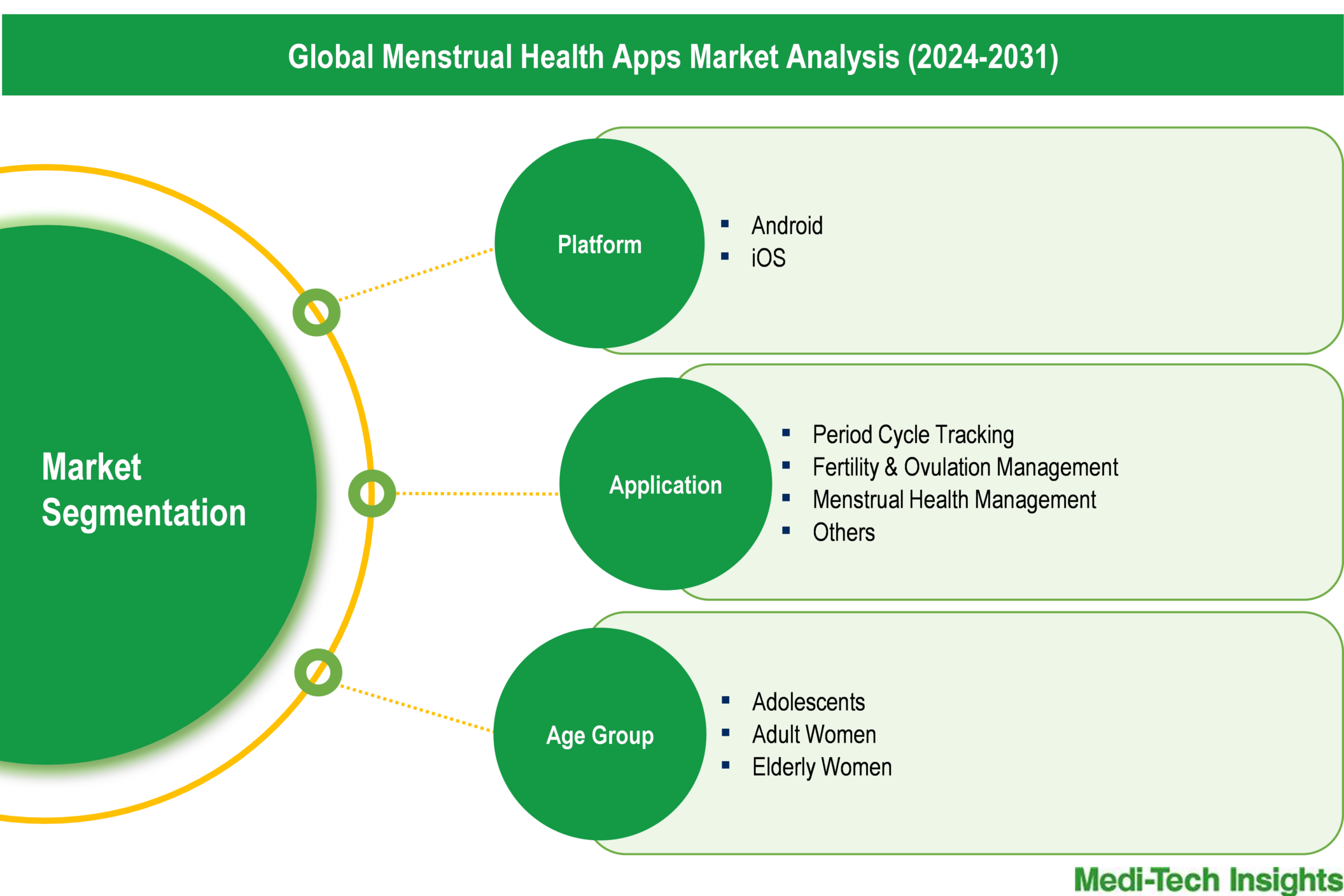
By application, the menstrual health apps market is categorized into period cycle tracking, fertility & ovulation management, and menstrual health management, among others. The period cycle-tracking segment accounts for the largest share in the global market, widely adopted for its simplicity and ease of use for symptom logging and cycle forecasting. The segment growth is further supported by increasing smartphone penetration and growing consumer awareness regarding reproductive and menstrual health.
Fertility and ovulation-tracking applications represent the fastest-growing segment, particularly among users planning pregnancies and seeking advanced tracking of hormone levels, ovulation windows, and body temperature. The segment growth is further driven by the demand for AI-driven, personalized reproductive health tools. Menstrual health management applications are also gaining traction as users seek deeper and tailored insights beyond basic tracking, for managing specific conditions like PCOS, endometriosis, or perimenopause. Moreover, the applications in this segment are increasingly incorporating AI to analyze symptoms and provide personalized health advice, for chronic symptom monitoring and menstrual health education.
Regional Outlook: North America maintains its leading position in the menstrual health apps market through growing adoption of digital self-care and reproductive health tracking solutions
North America holds a major share of the menstrual health apps market. The region-s growth is driven by high smartphone penetration, advanced digital health infrastructure, and increasing awareness of menstrual and reproductive health. The region also benefits from the presence of key players, increased healthcare spending, and rising investment in
Europe follows closely, with growth driven by increasing awareness of women-s health and an increasing willingness to openly discuss topics like menopause and fertility. Additionally, rising funding in femtech apps and favourable digital health policies are further supporting the market growth in the region. Asia-Pacific is expected to witness the fastest growth, driven by its large population base, rising smartphone usage, and improving awareness of menstrual health. Moreover, rapid digitization and expanding access to mobile health solutions are further contributing to market expansion across the region.
Competitive Landscape Analysis
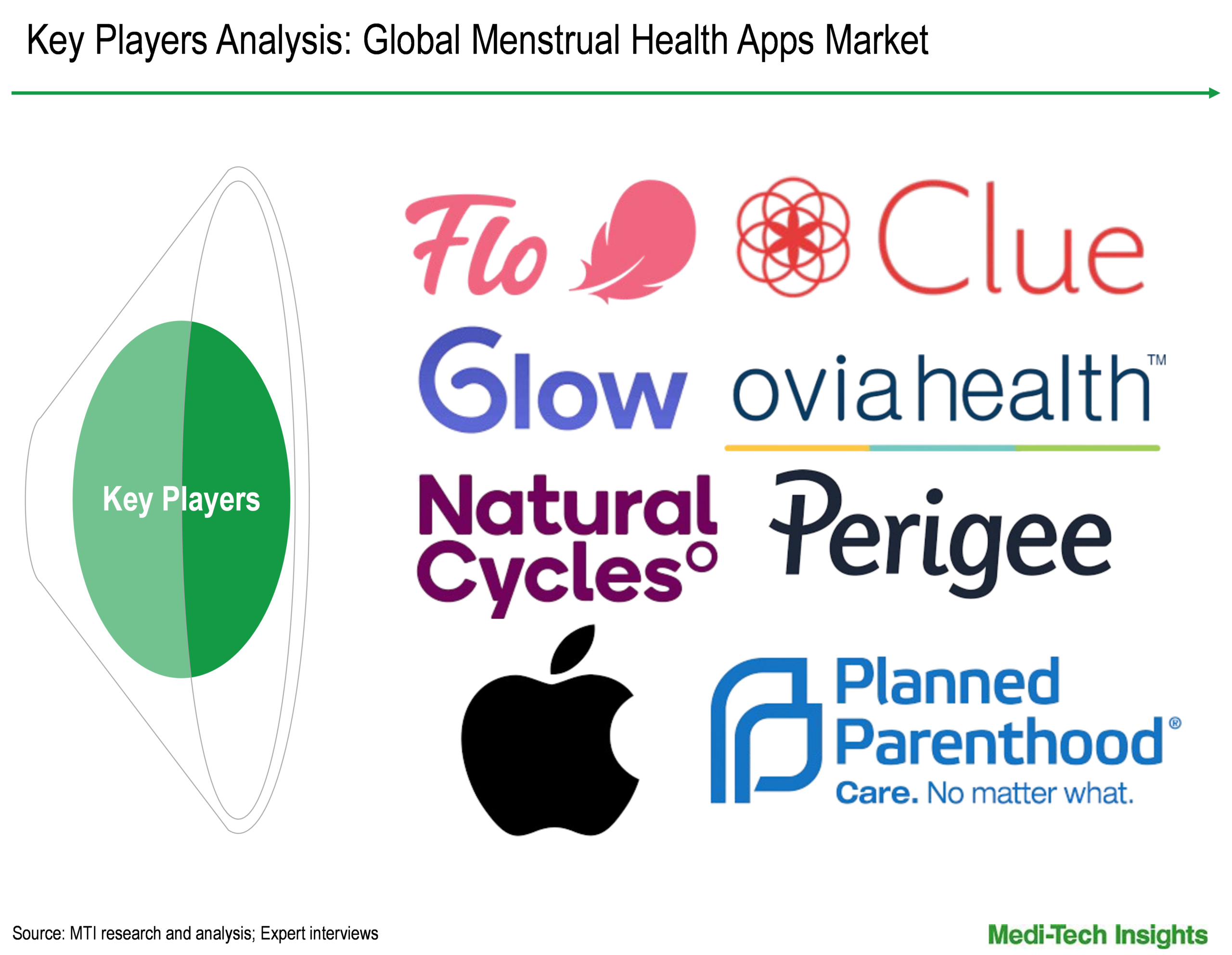
The global menstrual health apps market is marked by the presence of established and emerging market players such as Flo Health Inc. (UK); Glow, Inc. (US); Biowink GmbH (Ge"https://www.oviahealth.com/">Ovia Health (Labcorp subsidiary) (US); Natural Cycles (US); Perigee AB (Netherlands); Apple Inc. (US); Simple Design. Ltd (UK); and Planned Parenthood (US); among others.
Get a sample report for competitive landscape analysis
Growth strategies adopted by players to establish their foothold in the menstrual health apps market
Players operating in this market are adopting various growth strategies such as new product launches and approvals; acquisitions; expansions; and strategic partnerships, agreements, and collaborations, to garner market share. For instance,
- In January 2026, Natural Cycles introduced a smart wearable band designed to automatically measure overnight temperature data and integrate with the Natural Cycles app, supporting automated fertility and ovulation tracking without requiring manual temperature readings
- In August 2025, Ultrahuman acquired viO HealthTech and launched -Cycle & Ovulation Pro- for the Ultrahuman Ring AIR, integrating OvuSense technology to provide advanced cycle and ovulation tracking, including support for users with irregular cycetriosis, and thyroid disorders
- In July 2025, Flo Health launched -Flo for Perimenopause,- a dedicated in-app feature intended to support women experiencing perimenopause through personalized educational resources, symptom insights, and medically reviewed guidance
- In August 2024, Clue collaborated with Headspace to integrate mental wellness and mindfulness resources into the Clue platform, enabling users to access cycle-based mental health support and personalized mindfulness content alongside menstrual and reproductive health tracking
- In September 2024, Ovia Health expanded its women-s health platform through the launch of a comprehensive postpartum experience designed to provide personalized recovery tracking, symptom monitoring, and mental health support for users after childbirth
Report Scope
Report Metric
|
Details |
|
|
Base Year Considered |
2025 |
|
Historical Data |
2024 - 2025 |
|
Forecast Period |
2026 - 2031 |
|
Growth rate |
20% |
|
Segment Scope |
Platform, Application and Age Group |
|
Regional Scope |
|
|
Market Drivers |
|
|
Attractive Opportunities |
|
|
Key Companies Mapped |
Flo Health Inc. (UK); Glow, Inc. (US); Biowink GmbH (Germany); Ovia Health (Labcorp subsidiary) (US); Natural Cycles (US); Perigee AB (Netherlands); Apple Inc. (US); Simple Design. Ltd (UK); and Planned Parenthood (US); among others |
|
Report Highlights |
Market Size & Forecast, Growth Drivers & Restraints, Trends, Competitive Analysis |
Global Menstrual Health Apps Market Segmentation
This report by Medi-Tech Insights provides the size of the global menstrual health apps market at the regional and country-level from 2024 to 2031. The report further segments the market by platform, application, and age group.
Market Size & Forecast (2024-2031), By Platform, USD Billion
- Android
- iOS
Market Size & Forecast (2024-2031), By Application, USD Billion
- Period Cycle Tracking
- Fertility & Ovulation Management
- Menstrual Health Management
- Others
Market Size & Forecast (2024-2031), By Age Group, USD Billion
- Adolescents
- Adult Women
- Elderly Women
Market Size & Forecast (2024-2031), Billion
- North America
- US
- Canada
- Europe
- UK
- Germany
- France
- Italy
- Spain
- Rest of Europe
- Asia Pacific
- China
- India
- Japan
- Rest of Asia Pacific
- Latin America
- Middle East & Africa
Need a More Tailored Analysis?
- Discuss the market sizing methodology and forecast assumptions with our healthcare analysts.
- Expand the scope with additional countries, market segments, technologies, or competitor profiling.
- Use the insights to support strategic planning, market entry, commercial due diligence, and long-term revenue growth initiatives.