Download FREE Sample


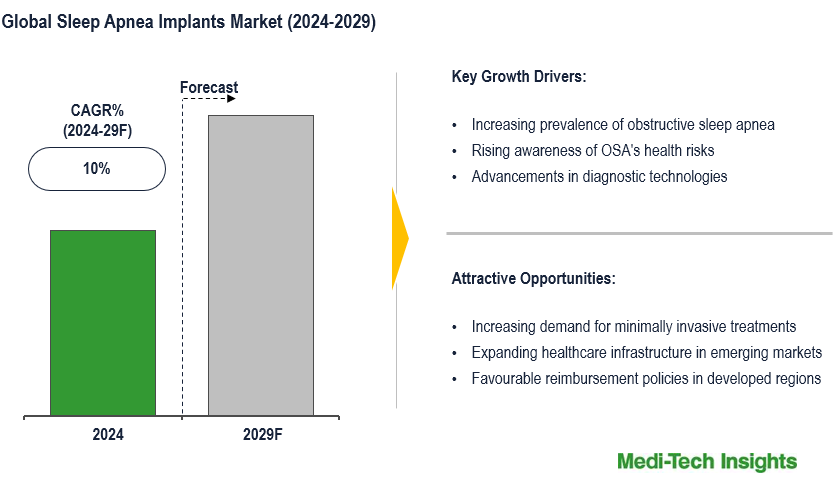
The global sleep apnea implants market is expected to grow at a CAGR of around 10% during the forecast period. This growth is driven by the rising prevalence of obstructive sleep apnea (OSA), an aging population, increasing awareness of the health risks associated with untreated sleep disorders, and higher rates of obesity. Additionally, improvements in healthcare infrastructure and favourable reimbursement policies in various regions are supporting market expansion. However, the high cost of treatment and limited awareness in some areas may hinder growth.
Sleep apnea implants are medical devices surgically implanted to treat obstructive sleep apnea; a condition characterized by the repetitive collapse of the upper airway during sleep. These devices work by stimulating the muscles or nerves that control breathing, helping to keep the airway open. Unlike continuous positive airway pressure (CPAP) machines, which are worn externally, implants offer a long-term internal solution for patients who do not respond well to traditional therapies. The primary goal of these implants is to reduce the frequency of apnea and improve the overall quality of sleep.
To learn more about this report, download the PDF brochure
Rising Awareness of OSA-Related Health Risks
A key factor fueling the demand for sleep apnea implants is the growing awareness of the severe health risks associated with untreated obstructive sleep apnea (OSA). As public health campaigns and healthcare providers emphasize the connection between OSA and serious conditions like hypertension, heart failure, and cognitive decline, more patients are seeking long-term, effective treatments. This increased awareness, combined with advancements in diagnostic technologies, is driving more individuals to explore implant-based solutions as an alternative to traditional therapies such as CPAP machines. Furthermore, as the global population ages, the demand for these implants continues to rise, given that older individuals are more prone to OSA due to anatomical changes and other age-related health factors.
Technological Innovations in Implantable Devices and Personalized Therapy
A major trend driving the growth of the sleep apnea implants market is the continuous technological innovation in implantable devices and the move toward personalized therapy. Recent advancements include the development of minimally invasive implant procedures and more sophisticated devices like hypoglossal nerve stimulation (HGNS) systems, which target the nerves controlling tongue muscles to prevent airway collapse. These devices are designed to offer customized stimulation levels, adapting to the individual needs of patients for more effective treatment outcomes. Furthermore, innovations in wireless monitoring and battery technology are enhancing the long-term performance and convenience of implants, allowing physicians to remotely monitor and adjust the device-s performance based on patient feedback. These advancements not only improve patient comfort but also reduce the risk of side effects, making implant therapy an increasingly attractive option in the treatobstructive sleep apnea.
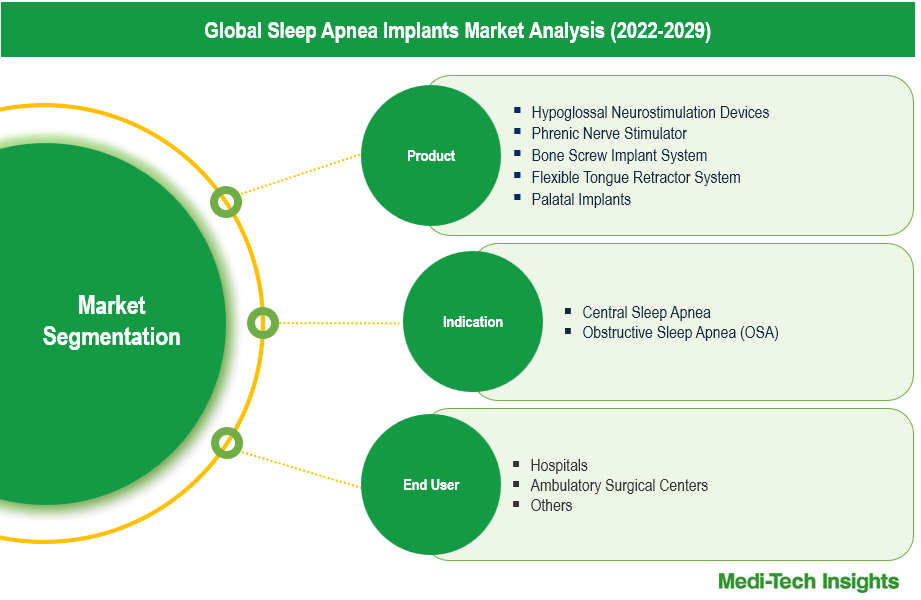
To learn more about this report, download the PDF brochure
Competitive Landscape Analysis
The global sleep apnea implants market is marked by the presence of established and emerging market players such as Inspire Medical Systems, Inc.; LinguaFlex; LivaNova PLC; ZOLL Medical Corporation; Medtronic Plc; Siesta Medical Inc.; Koninklijke Philips N.V.; Nihon Kohden Corporation; Nyxoah SA; Fisher & Paykel Healthcare Limited and SomnoMed among others. Some of the key strategies adopted by market players include product innovation and development, strategic partnerships and collaborations, and geographic expansion.
Sleep Apnea Implants Market Scope
|
Report Scope |
Details |
|
Base Year Considered |
2023 |
|
Historical Data |
2022 - 2023 |
|
Forecast Period |
2024 - 2029 |
|
Growth Rate |
CAGR 10% |
|
Segment Scope |
Product, Indication, End User |
|
Regional Scope |
|
|
Key Companies Mapped |
Inspire Medical Systems, Inc.; LinguaFlex; LivaNova PLC; ZOLL Medical Corporation; Medtronic Plc; Siesta Medical Inc.; Koninklijke Philips N.V.; Nihon Kohden Corporation; Nyxoah SA; Fisher & Paykel Healthcare Limited and SomnoMed among others |
|
Report Highlights |
Market Size & Forecast, Growth Drivers & Restraints, Trends, Competitive Analysis |
Frequently Asked Questions About This Report
What is the market size & forecast of the sleep apnea implants market?
What are historical, present, and forecasted market shares and growth rates of various segments and sub-segments of the sleep apnea implants market?
What are the key trends defining the market?
What are the major factors impacting the market?
What are the opportunities prevailing in the market?
Need a More Tailored Analysis?
- Discuss the market sizing methodology and forecast assumptions with our healthcare analysts.
- Expand the scope with additional countries, market segments, technologies, or competitor profiling.
- Use the insights to support strategic planning, market entry, commercial due diligence, and long-term revenue growth initiatives.