Download FREE Sample


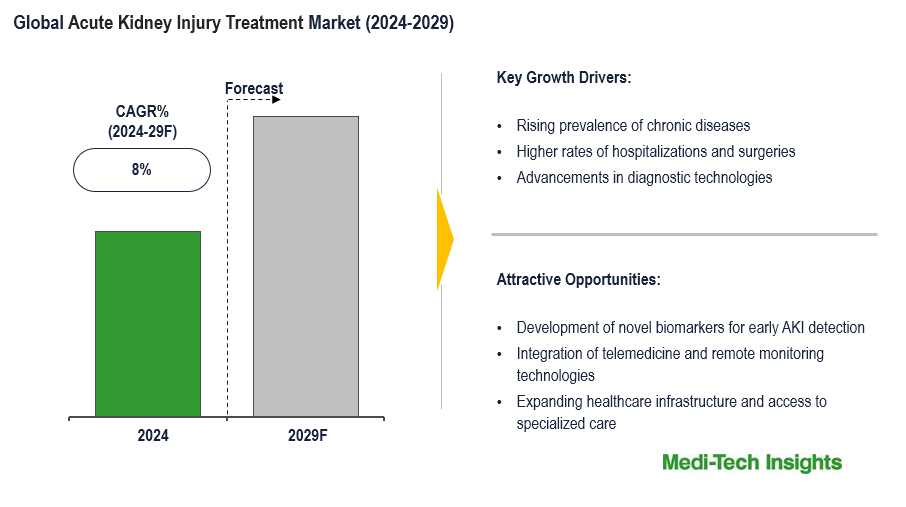
Acute kidney injury (AKI) refers to the sudden decline in kidney function, often caused by reduced blood flow, direct damage to the kidneys, or blockages. This condition causes a buildup of waste products in the blood and disrupts the balance of fluids, electrolytes, and acid-base levels in the body. Treatment for AKI generally involves addressing the underlying cause, managing symptoms, and supporting kidney recovery through interventions like dialysis or medication. Early detection and prompt treatment are critical to improving outcomes and preventing long-term damage.
To learn more about this report, download the PDF brochure
Significant Factor Driving Demand: Aging Population and Increased Hospitalizations
A crucial factor driving the demand in the acute kidney injury treatment market is the growing aging population. Older adults are more prone to developing AKI due to age-related declines in kidney function, as well as their higher susceptibility to chronic diseases such as cardiovascular conditions, diabetes, and hypertension. Additionally, this demographic group undergoes more frequent surgeries and hospitalizations, which are known risk factors for AKI, particularly when involving complex procedures like heart surgeries and organ transplants. According to the United Nations, the global aged population will nearly double by 2050, significantly raising the burden of chronic diseases and driving the demand for specialized treatment options. The healthcare industry is increasingly focused on early intervention and managing the heightened AKI risk among elderly patients, further boosting the need for effective therapies.
Emerging Trend: Biomarkers for Early Detection of AKI
An emerging trend enhancing the AKI treatment market is the development of biomarkers for early detection and diagnosis. Traditional diagnostic methods, such as serum creatinine levels, are often unreliable in identifying AKI at its onset, leading to delayed treatment and poorer patient outcomes. Biomarkers like Neutrophil Gelatinase-Associated Lipocalin (NGAL), Cystatin C, and Kidney Injury Molecule-1 (KIM-1) are gaining attention for their potential to detect AKI earlier and more accurately. While NGAL and Cystatin C are starting to see use in some clinical settings for early identification of AKI, KIM-1 is still primarily in research and clinical trial stages. The integration of these biomarkers into clinical practice is expected to enhance patient outcomes by allowing for timely interventions and more effective management of kidney health, reflecting a broader shift toward precision medicine and personalized healthcare in AKI treatment.
To learn more about this report, download the PDF brochure
Competitive Landscape Analysis
The global acute kidney injury treatment market is marked by the presence of established and emerging market players such as AM-Pharma; Astellas Pharma Inc.; Asahi Kasei Medical Co. Ltd.; Baxter Corporation; Novartis, Pfizer Inc.; Merck & Co.; NIPRO Medical; NIKKISO; Fresenius Medical Care AG & Co. KGaA; among others. Some of the key strategies adopted by market players include product innovation and development, strategic partnerships and collaborations, and geographic expansion.
Acute Kidney Injury Treatment Market Scope
|
Report Scope |
Details |
|
Base Year Considered |
2023 |
|
Historical Data |
2022 - 2023 |
|
Forecast Period |
2024 - 2029 |
|
Growth Rate |
CAGR 8% |
|
Segment Scope |
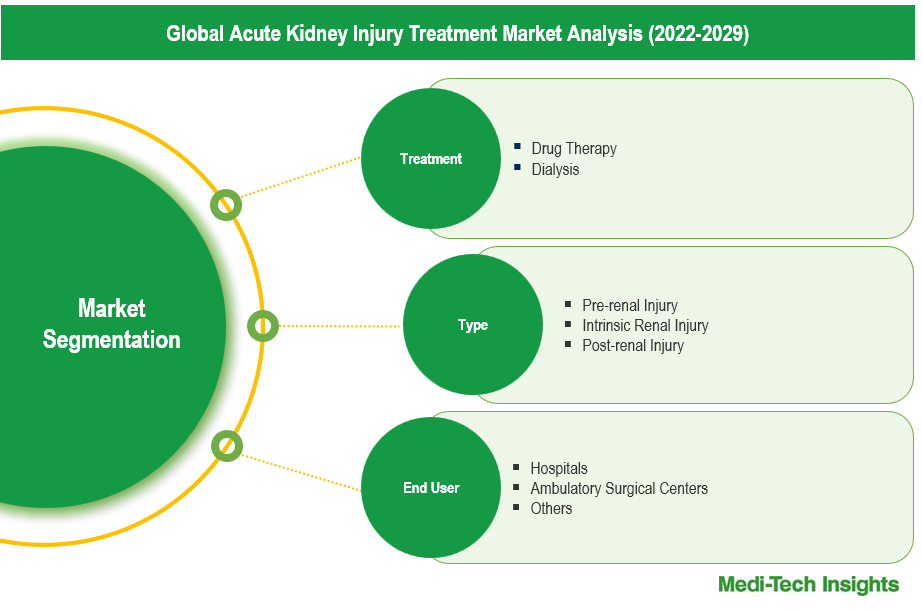
Treatment, Type and End User |
|
Regional Scope |
|
|
Key Companies Mapped |
AM-Pharma; Astellas Pharma Inc.; Asahi Kasei Medical Co. Ltd.; Baxter Corporation; Novartis, Pfizer Inc.; Merck & Co.; NIPRO Medical; NIKKISO; and Fresenius Medical Care AG & Co. KGaA among others |
|
Report Highlights |
Market Size & Forecast, Growth Drivers & Restraints, Trends, Competitive Analysis |
Frequently Asked Questions About This Report
What is the market size & forecast of the acute kidney injury treatment market?
What are historical, present, and forecasted market shares and growth rates of various segments and sub-segments of the acute kidney injury treatment market?
What are the key trends defining the market?
What are the major factors impacting the market?
What are the opportunities prevailing in the market?
Need a More Tailored Analysis?
- Discuss the market sizing methodology and forecast assumptions with our healthcare analysts.
- Expand the scope with additional countries, market segments, technologies, or competitor profiling.
- Use the insights to support strategic planning, market entry, commercial due diligence, and long-term revenue growth initiatives.