Download FREE Sample


AI in Medical Imaging refers to the integration of artificial intelligence technologies, including machine learning and deep learning, to enhance the analysis, interpretation, and diagnosis of medical images. It automates image processing, detects patterns, and assists radiologists in identifying diseases such as cancer, neurological disorders, and cardiovascular conditions with greater accuracy and efficiency. AI-powered imaging solutions improve workflow efficiency, reduce diagnostic errors, and enable early disease detection. These technologies integrate with Picture Archiving and Communication Systems (PACS) and cloud platforms, facilitating remote diagnostics. AI in medical imaging is revolutionizing healthcare by optimizing precision medicine, reducing workload, and enhancing patient outcomes.
Rising prevalence of chronic diseases and increasing imaging workload propel market demand
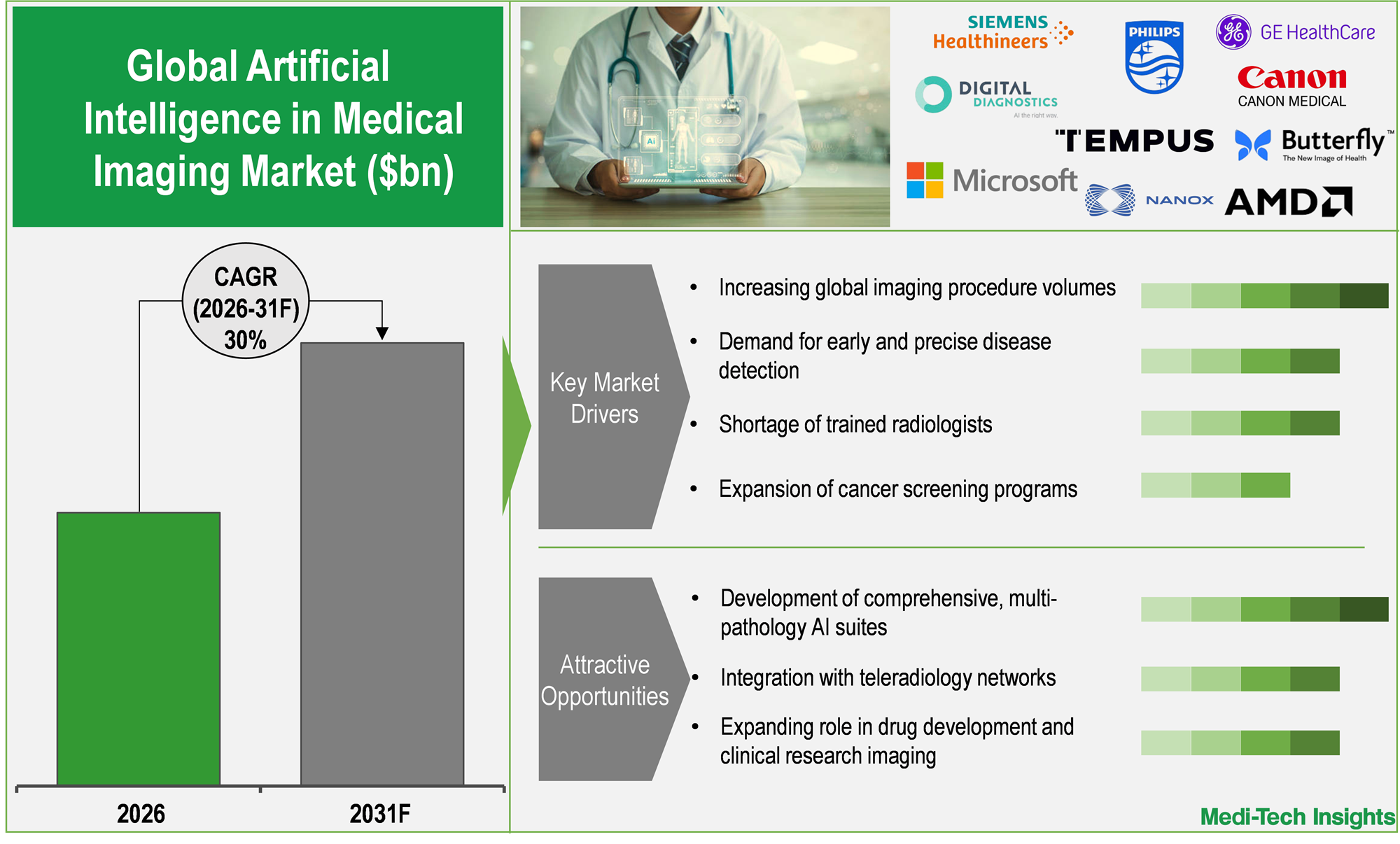
Chronic diseases, primarily CVDs, cancers, chronic respiratory diseases, and diabetes, are classified by the World Health Organization (WHO) as noncommunicable diseases (NCDs). These NCDs are the leading cause of death worldwide, accounting for 74% of all deaths annually, with 77% of these deaths occurring in low- and middle-income countries. The rising prevalence of chronic diseases has significantly increased the demand for medical imaging. This growing demand for imaging procedures has placed immense pressure on radiologists, resulting in increased workload and an elevated risk of diagnostic errors. In addition, aging populations are contributing to a higher volume of imaging procedures, as age-related conditions require ongoing monitoring and early diagnosis. Further, expanding screening programs, improved access to imaging technologies, and broader healthcare coverage have accelerated imaging volumes across both developed and emerging markets.
However, the growth in imaging studies has not been matched by a proportional increase in trained radiologists. In several countries, workforce shortages and uneven distribution of specialists have led to longer reporting turnaround times and a higher risk of diagnostic delays. AI-driven medical imaging solutions help address this challenge by automating image analysis, flagging urgent cases (such as intracranial hemorrhages or pulmonary embolisms), detecting abnormalities with high accuracy, and streamlining workflows. By reducing radiologists' burden and improving diagnostic efficiency, AI enhances early disease detection and treatment planning. As healthcare providers seek to optimize resources and improve patient outcomes, AI adoption in medical imaging will continue to expand, enhancing diagnostic speed, automating workflows, and enabling personalized treatment.
To learn more about this report, download the PDF brochure
Emphasis on early and quantitative disease detection
With the growing burden of chronic diseases globally, there has been an increasing focus on early disease identification and objective measurement of disease progression. Specialties such as oncology, cardiology, and neurology require precise quantification of lesions, organ volumes, and structural abnormalities over time to support accurate treatment planning. While traditional image interpretation relies on qualitative assessment, which may vary between observers, the advent of AI has enabled automated analysis of large imaging datasets.
AI-enabled imaging tools allow the detection of subtle patterns and the generation of consistent quantitative outputs, and automated segmentation of tumour, lung nodules, and brain volumetric analysis, which improves accuracy in long-term disease monitoring. By automating tasks like volumetric segmentation and vascular analysis, AI helps standardize measurements and reduce inter-observer variability. In addition, the growing use of imaging biomarkers in personalized medicine and research is reinforcing the need for reproducible and data-driven analysis. AI platforms can generate rapid, automated radiology reports, enabling tailored treatment plans that consider patient-specific anatomical and physiological variations. AI-enabled tools are supporting consistent clinical evaluation and contributing to the shift toward precision medicine.
To learn more about this report, download the PDF brochure
Component Segment Outlook
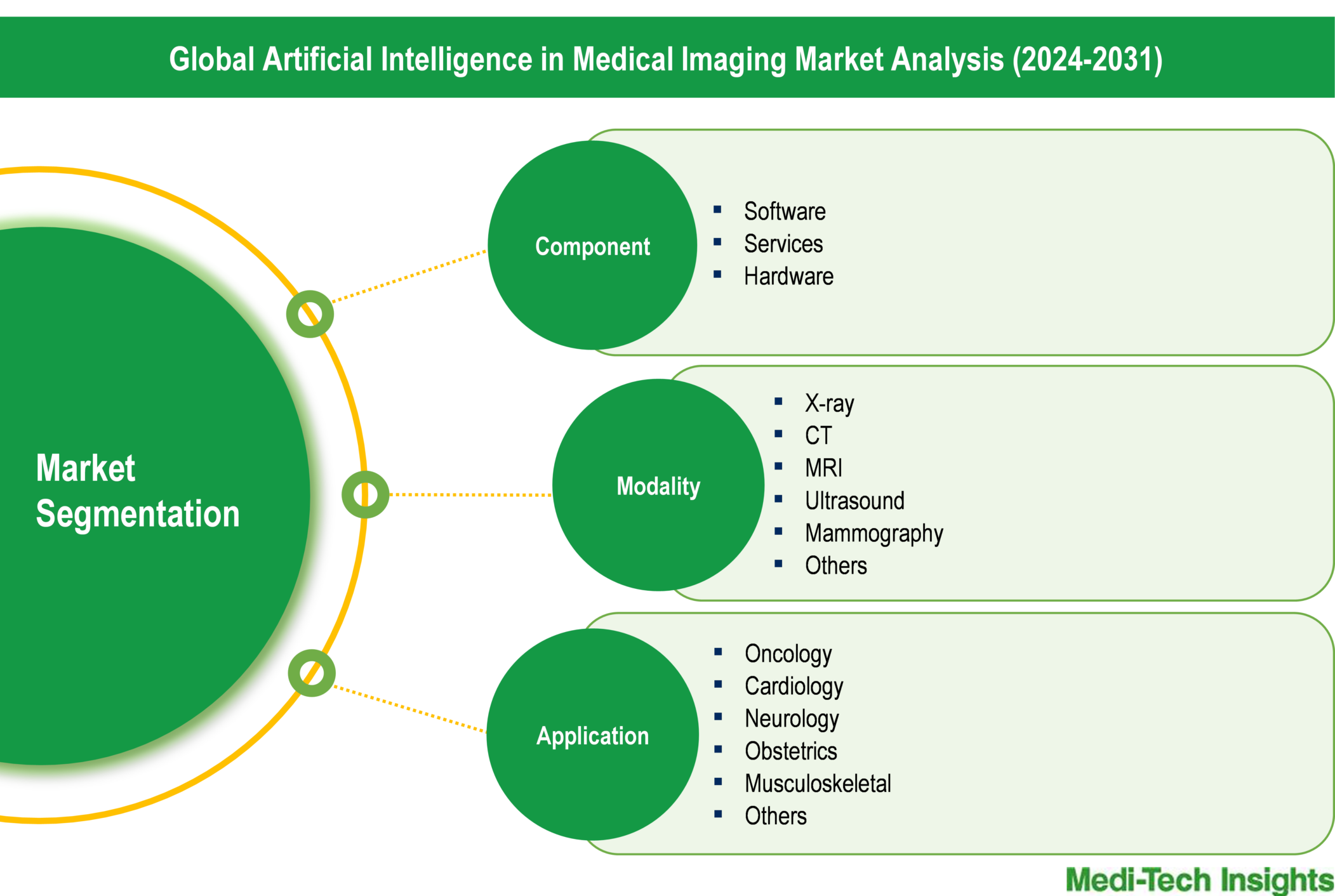
The component segment of the AI in medical imaging market is categorized into software, hardware, and services. The software segment currently holds the largest share of the market, which is driven by the growing demand for faster, more accurate interpretation of imaging data, particularly in high-volume modalities like X-ray and CT, using deep learning algorithms. The segment growth is further driven by the rapid adoption of automated diagnostic tools to streamline workflow, enhance image analysis and accelerate regulatory-approved solutions in oncology and radiology. Furthermore, the rise in subscription-based models and the need for system integration are accelerating revenue within this segment. Although the software segment leads the market, the service segment is expected to grow rapidly, which is primarily driven by the rapid adoption of AI across various healthcare settings, which has accelerated the demand for deployment of AI into existing systems, training, and support services, among others. Lastly, the hardware segment shows a steady growth due to demand for AI-enabled imaging systems and computing infrastructure, including high-performance GPUs, specialized processors, and advanced imaging devices that support faster image processing and real-time analysis.
North America remains a key market driven by advanced infrastructure and early AI adoption
North America accounts for a significant share of the AI in medical imaging market, which is driven by advanced imaging infrastructure, early adoption of digital health technologies and high healthcare expenditure, further contributing to market growth. Followed by North America, Europe represents a substantial market supported by established public healthcare systems and favourable regulatory frameworks. The adoption is further fuelled by increasing investment in AI-enabled diagnostics to address radiology workforce pressures in the region. However, the Asia Pacific is expected to witness comparatively faster growth over the forecast period due to rising investments in digital healthcare infrastructure, the increasing prevalence of chronic diseases, and the shortage of skilled radiologists, which are driving demand in the region.
Competitive Landscape Analysis
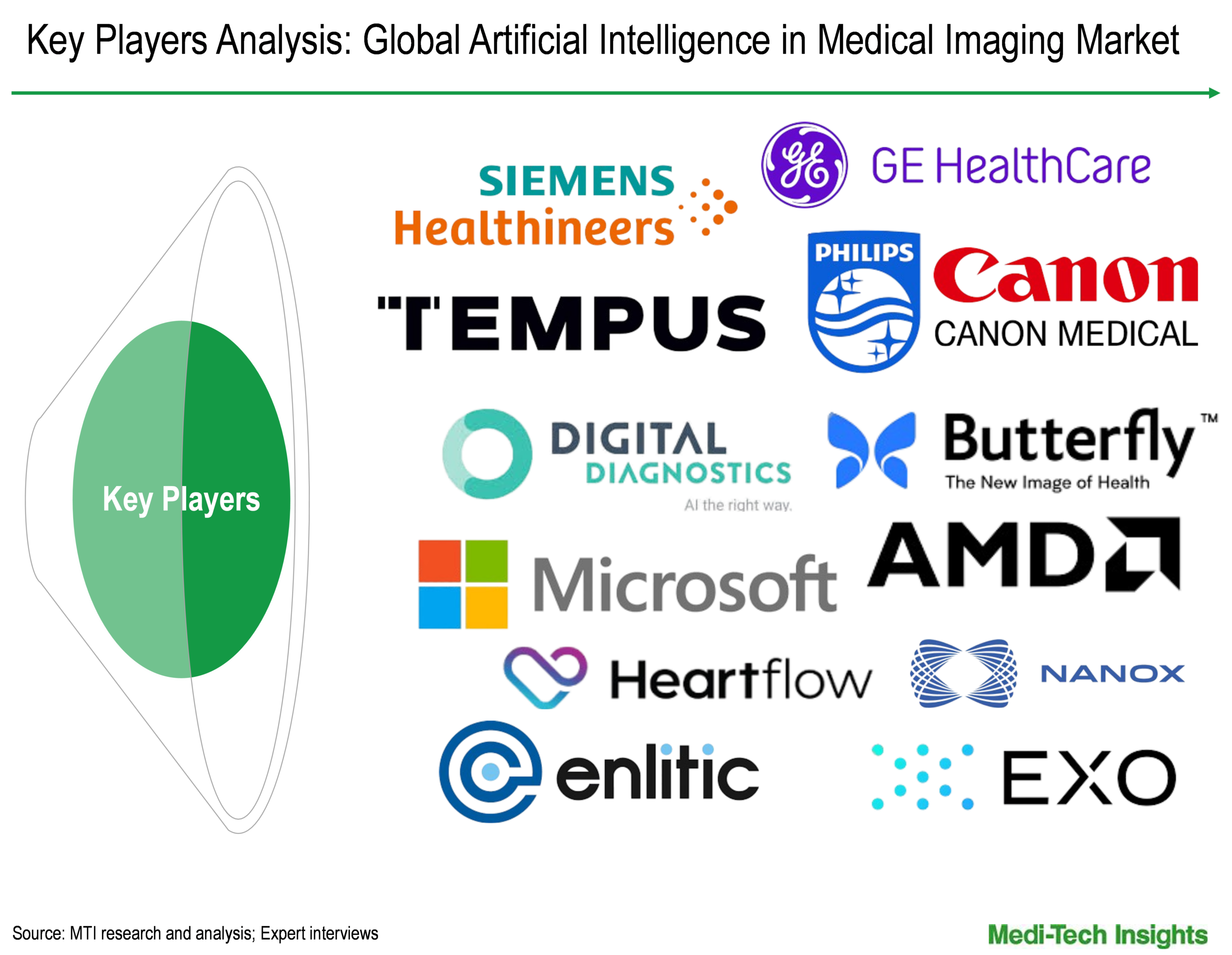
The global AI in medical imaging market is marked by the presence of established and emerging market players such as GE HealthCare (US); Siemens Healthineers (Germany); Koninklijke Philips N.V. (Netherlands); Microsoft (US); Digital Diagnostics Inc. (US); NVIDIA Corporation (US); TEMPUS (US); Butterfly Network, Inc. (US); Advanced Micro Devices, Inc. (US); HeartFlow, Inc. (US); Enlitic, Inc. (US); Canon Medical Systems Inc. (Japan); Viz.ai, Inc. (US); Exo Imaging, Inc. (US); Nano-X Imaging Ltd. (US) among others. Some of the key strategies adopted by market players include new product launches and approvals, acquisitions, expansions, and strategic partnerships, agreements, and collaborations.
Get a sample report for competitive landscape analysis
Organic and inorganic growth strategies adopted by players to establish their foothold in the market
Players operating in this market are adopting both organic and inorganic growth strategies, including technology partnerships, service expansions, and targeted acquisitions, to strengthen their digital capabilities, expand geographic presence, and enhance end-to-end logistics offerings. For instance,
- In December 2025, GE HealthCare introduced Imaging 360, an AI-enabled imaging operations solution designed to improve operational efficiency, optimize asset utilization, and enhance workflow management across imaging departments
- In November 2025, Siemens Healthineers launched an AI-enabled radiology services suite aimed at supporting healthcare providers with workflow optimization, image interpretation support, and operational performance improvements across radiology departments
- In March 2025, NVIDIA and GE HealthCare announced a collaboration to advance the development of autonomous diagnostic imaging systems by integrating physical AI technologies with medical imaging platforms
- In Feb 2024, Philips unveiled the AI-enabled CT 5300 system, designed to enhance image quality, increase diagnostic accuracy, and improve workflow efficiency in CT imaging environments
Report Scope
|
Report Metric |
Details |
|
Base Year Considered |
2025 |
|
Historical Data |
2024 2025 |
|
Forecast Period |
2026 2031 |
|
Growth |
30% |
|
Segment Scope |
Component, Modality, Application, and End User |
|
Regional Scope |
|
|
Market Drivers |
|
|
Attractive Opportunities |
|
|
Key Companies Mapped |
GE HealthCare (US); Siemens Healthineers (Germany); Koninklijke Philips N.V. (Netherlands); Microsoft (US); Digital Diagnostics Inc. (US); NVIDIA Corporation (US); TEMPUS (US); Butterfly Network, Inc. (US); Advanced Micro Devices, Inc. (US); HeartFlow, Inc. (US); Enlitic, Inc. (US); Canon Medical Systems Inc. (Japan); Viz.ai, Inc. (US); Exo Imaging, Inc. (US); and Nano-X Imaging Ltd. (US) among others |
|
Report Highlights |
Market Size & Forecast, Growth Drivers & Restraints, Trends, Competitive Analysis |
Global AI in Medical Imaging Market Segmentation
This report by Medi-Tech Insights provides the size of the global AI in medical imaging market at the regional- and country-level from 2024 to 2031. The report further segments the market based on component, modality, application, and end user.
Market Size & Forecast (2024-2031), By Component, USD Billion
- Software
- Services
- Hardware
Market Size & Forecast (2024-2031), By Modality, USD Billion
- Introduction
- X-ray
- CT
- MRI
- Ultrasound
- Mammography
- Others
Market Size & Forecast (2024-2031), By Application, USD Billion
- Oncology
- Cardiology
- Neurology
- Obstetrics
- Others
Market Size & Forecast (2024-2031), By End User, USD Billion
- Hospitals
- Diagnostic Imaging Centers
- Academic & Research Institutes
- Others
Market Size & Forecast (2024-2031), By Region, USD Billion
- North America
- US
- Canada
- Europe
- UK
- Germany
- France
- Italy
- Spain
- Rest of Europe
- Asia Pacific
- China
- India
- Japan
- Rest of Asia Pacific
- Latin America
- Middle East & Africa
Related Reports:
Need a More Tailored Analysis?
- Discuss the market sizing methodology and forecast assumptions with our healthcare analysts.
- Expand the scope with additional countries, market segments, technologies, or competitor profiling.
- Use the insights to support strategic planning, market entry, commercial due diligence, and long-term revenue growth initiatives.