Download FREE Sample


Artificial intelligence (AI) in pharmacovigilance refers to applying machine learning, natural language processing, and other AI technologies to enhance the monitoring, detection, assessment, and prevention of adverse drug reactions and related issues. It helps streamline the traditionally manual processes involved in pharmacovigilance by automating data extraction, signal detection, and case processing. AI facilitates faster and more accurate analysis of large datasets, ensuring regulatory compliance and improving drug safety. The technology is particularly valuable in managing the complexities of real-world data, including unstructured information from medical records, social media, and adverse event reports.
To learn more about this report, download the PDF brochure
Growing Volume of Adverse Event Data
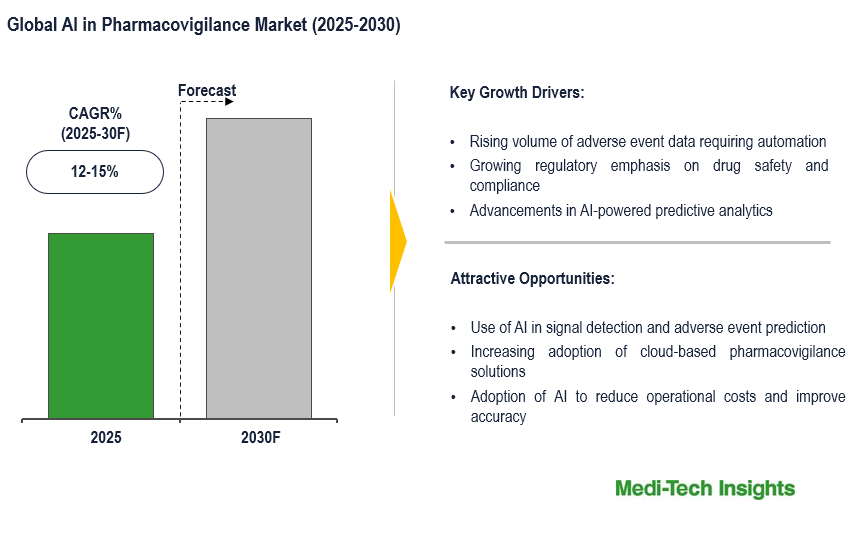
The increasing volume and complexity of adverse drug reaction (ADR) data are major factors driving the adoption of AI in pharmacovigilance. With the rise of global drug usage and access to various reporting channels, pharmacovigilance teams are overwhelmed by the sheer amount of structured and unstructured data generated daily. AI technologies, such as machine learning and natural language processing, enable efficient data extraction, deduplication, and classification from disparate sources, such as electronic health records, social media, and clinical trial databases. Automating these processes reduces human errors and ensures faster identification of potential safety signals, allowing quicker interventions. This capability is especially crucial as pharmaceutical companies face stringent timelines to comply with regulatory requirements and ensure public safety. By leveraging AI, the industry can handle data growth while maintaining cost efficiency and precision.
Integration of AI with Real-World Data Analytics
One significant advancement boosting the market is the integration of AI with real-world data (RWD) analytics in pharmacovigilance. RWD, sourced from electronic medical records, wearable devices, and patient registries, offers valuable insights into drug safety and efficacy in real-life settings. AI-powered algorithms can process and analyze these vast datasets to detect adverse drug reactions and patterns that might go unnoticed in clinical trials. Additionally, AI enables the identification of rare or long-term side effects through predictive modeling and signal detection. This integration enhances proactive safety monitoring, improves decision-making, and aids in personalized medicine approaches. As regulators increasingly recognize the importance of RWD in drug safety evaluations, the use of AI-driven RWD analytics has become a transformative force in the pharmacovigilance landscape, offering faster and more accurate results to safeguard patient health.
To learn more about this report, download the PDF brochure
Competitive Landscape Analysis
The global AI in pharmacovigilance market is marked by the presence of established and emerging market players such as WNS, Accenture Plc, IQVIA Inc, Oracle, PAREXEL International Corporation, Cognizant and Aris Global among others. Some of the key strategies adopted by market players include new product development, strategic partnerships and collaborations, and geographic expansion.
Report Scope
| Report Metric | Details |
| Base Year Considered | 2024 |
| Historical Data | 2023 - 2024 |
| Forecast Period | 2025 - 2030 |
| Growth | 12-15% |
| Market Drivers |
|
| Attractive Opportunities |
|
| Segment Scope | Component, Deployment and End-user |
| Regional Scope |
|
| Key Companies Mapped | WNS, Accenture Plc, IQVIA Inc, Oracle, PAREXEL International Corporation, Cognizant and Aris Global among others |
| Report Highlights | Market Size & Forecast, Growth Drivers & Restraints, Trends, Competitive Analysis |
Global AI in Pharmacovigilance Market Segmentation
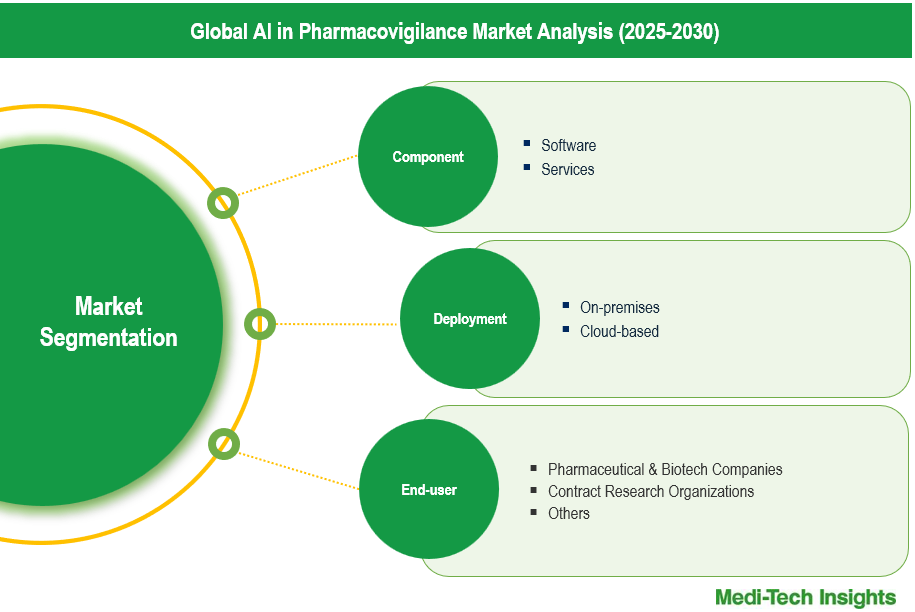
This report by Medi-Tech Insights provides thesize of the global AI in pharmacovigilance market at theregional- and country-level from 2023 to 2030. The report further segments the market based on component, deployment and end-user.
-
Market Size & Forecast (2023-2030), By Component, USD Million
- Software
- Services
-
Market Size & Forecast (2023-2030), By Deployment, USD Million
- On-premises
- Cloud-based
-
Market Size & Forecast (2023-2030), By End-user, USD Million
- Pharmaceutical and Biotech Companies
- Contract Research Organizations (CROs)
- Others
-
Market Size (2023-2030), By Region, USD Million
- North America
- US
- Canada
- Europe
- UK
- Germany
- Italy
- Spain
- Rest of Europe
- Asia Pacific
- China
- India
- Japan
- Rest of Asia Pacific
- Latin America
- Middle East & Africa
- North America
Frequently Asked Questions About This Report
What is the market size & forecast of AI in pharmacovigilance market?
What are historical, present, and forecasted market shares and growth rates of various segments and sub-segments of AI in pharmacovigilance market?
What are the key trends defining the market?
What are the major factors impacting the market?
What are the opportunities prevailing in the market?
Need a More Tailored Analysis?
- Discuss the market sizing methodology and forecast assumptions with our healthcare analysts.
- Expand the scope with additional countries, market segments, technologies, or competitor profiling.
- Use the insights to support strategic planning, market entry, commercial due diligence, and long-term revenue growth initiatives.