Download FREE Sample


Cell sorting is a laboratory technique used to separate and isolate specific cells from a heterogeneous population based on their physical, chemical, or biological properties. It enables researchers to analyze and study targeted cell types for various applications, including drug discovery, immunology, stem cell research, and cancer studies. Common methods include fluorescence-activated cell sorting (FACS), magnetic-activated cell sorting (MACS), and microfluidic-based sorting. By providing high purity and viability of sorted cells, this technology plays a critical role in advancing precision medicine, facilitating immunotherapies, and supporting basic and clinical research in life sciences and biotechnology.
To learn more about this report, download the PDF brochure
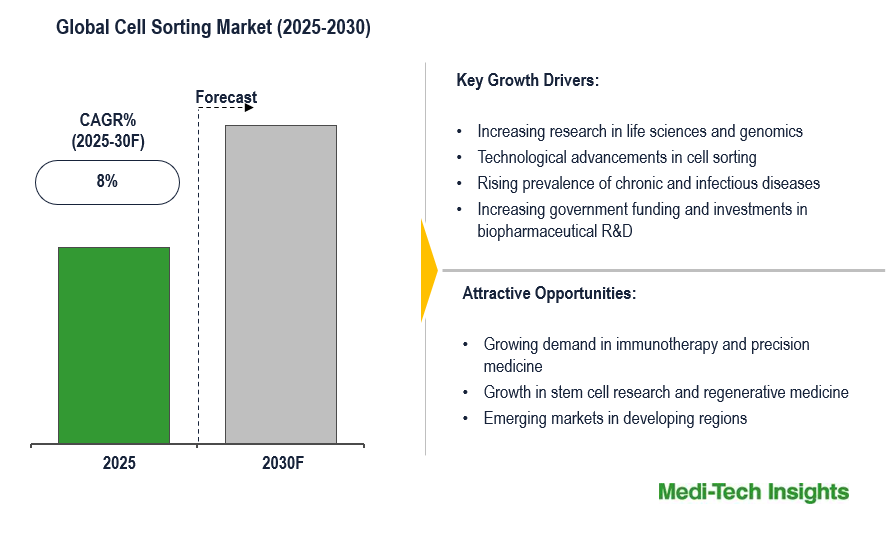
Increasing research in life sciences and genomics to propel market demand
The rising prevalence of chronic and infectious diseases is driving the cell sorting market by increasing the demand for advanced diagnostic and therapeutic solutions. Conditions like cancer, diabetes, and autoimmune disorders require precise identification and isolation of specific cell types for research and treatment development. Similarly, infectious diseases like HIV and COVID-19 necessitate studying immune responses at the cellular level, where cell sorting plays a critical role. By enabling detailed cellular analysis, cell sorting supports advancements in immunotherapy, vaccine development, and personalized medicine, fueling market growth. The urgent need for innovative healthcare solutions continues to boost the adoption of this technology.
Increasing research activities on cell sorting technologies are driving the market growth
Increasing research in life sciences and genomics fuels the cell sorting market by driving demand for technologies that precisely isolate and analyze individual cells. As researchers delve deeper into single-cell sequencing, transcriptomics, and proteomics, high-resolution sorting becomes essential for uncovering cellular heterogeneity and understanding gene expression patterns. Enhanced funding and technological advancements, including fluorescence-activated and microfluidics-based sorters, enable rapid, accurate cell separation. This trend supports breakthroughs in personalized medicine, cancer diagnostics, and regenerative therapies, ultimately accelerating discovery and improving clinical outcomes. Thus, the expansion of life sciences research in genomics directly propels market growth for advanced cell sorting solutions.
To learn more about this report, download the PDF brochure
Competitive Landscape Analysis
The global cell sorting market is marked by the presence of established and emerging market players such as Becton, Dickinson and Company (BD Biosciences), Beckman Coulter, Inc., Bio-Rad Laboratories, Inc., Sony Biotechnology Inc., Thermo Fisher Scientific Inc., Miltenyi Biotec, DH Life Sciences, LLC, Union Biometrica, Inc., On-chip Biotechnologies Co., Ltd., and Cytonome/ST LLC; among others. Some of the key strategies adopted by market players include new product development, strategic partnerships and collaborations, and geographic expansion.
Report Scope
| Report Metric | Details |
| Base Year Considered | 2024 |
| Historical Data | 2023 - 2024 |
| Forecast Period | 2025 - 2030 |
| Growth Rate | 8% |
| Market Drivers |
|
| Attractive Opportunities |
|
| Segment Scope | Technology, Product & Service, Application, End User |
| Regional Scope |
|
| Key Companies Mapped | Becton, Dickinson and Company (BD Biosciences), Beckman Coulter, Inc., Bio-Rad Laboratories, Inc., Sony Biotechnology Inc., Thermo Fisher Scientific Inc., Miltenyi Biotec, DH Life Sciences, LLC, Union Biometrica, Inc., On-chip Biotechnologies Co., Ltd., and Cytonome/ST LLC among others |
| Report Highlights | Market Size & Forecast, Growth Drivers & Restraints, Trends, Competitive Analysis |
Global Cell Sorting Market Segmentation
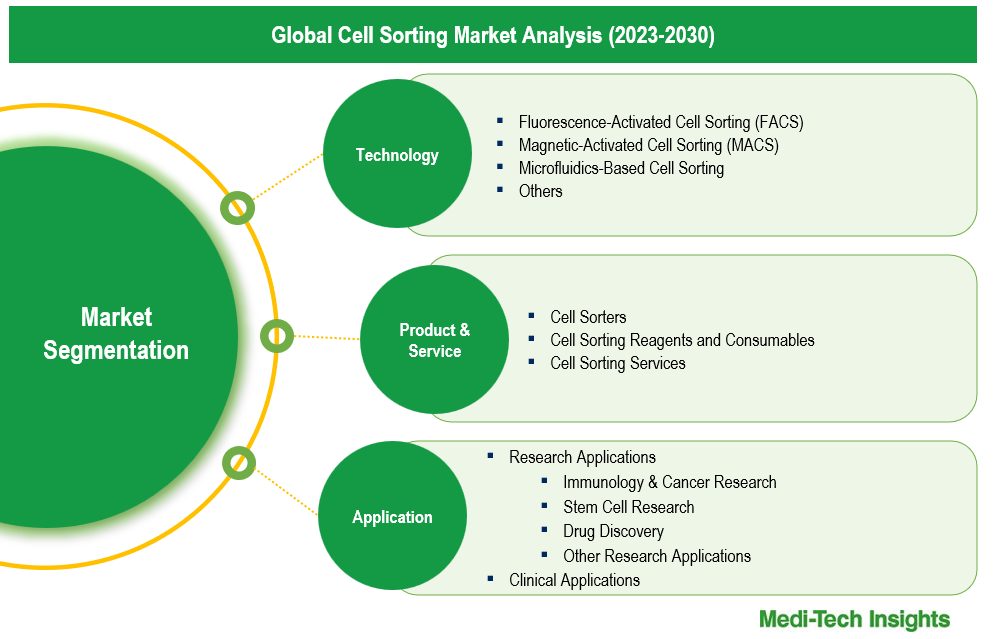
This report by Medi-Tech Insights provides thesize of the global cell sorting market at theregional- and country-level from 2023 to 2030. The report further segments the market based on technology, product & service, application, end user.
-
Market Size & Forecast (2023-2030), By Technology, USD Million
- Fluorescence-Activated Cell Sorting (FACS)
- Magnetic-Activated Cell Sorting (MACS)
- Microfluidics-Based Cell Sorting
- Others
-
Market Size & Forecast (2023-2030), By Product & Service, USD Million
- Cell Sorters
- Cell Sorting Reagents and Consumables
- Cell Sorting Services
-
Market Size & Forecast (2023-2030), By Application, USD Million
- ations
- Immunology & Cancer Research
- Stem Cell Research
- Drug Discovery
- Other Research Applications
- Clinical Applications
- ations
-
Market Size & Forecast (2023-2030), By End User, USD Million
- Research Institutions
- Medical Schools and Academic Institutions
- Pharmaceutical and Biotechnology Companies
- Hospitals and Clinical Testing Laboratories
- Others
-
Market Size & Forecast (2023-2030), By Region, USD Million
- North America
- US
- Canada
- Europe
- UK
- Germany
- France
- Italy
- Spain
- Rest of Europe
- Asia Pacific
- China
- India
- Japan
- Rest of Asia Pacific
- Latin America
- Middle East & Africa
- North America
Frequently Asked Questions About This Report
What is the market size & forecast of the cell sorting market?
What are historical, present, and forecasted market shares and growth rates of various segments and sub-segments of the cell sorting market?
What are the key trends defining the market?
What are the major factors impacting the market?
What are the opportunities prevailing in the market?
Need a More Tailored Analysis?
- Discuss the market sizing methodology and forecast assumptions with our healthcare analysts.
- Expand the scope with additional countries, market segments, technologies, or competitor profiling.
- Use the insights to support strategic planning, market entry, commercial due diligence, and long-term revenue growth initiatives.