Download FREE Sample


Cell therapy technologies encompass the tools, equipment, and processes used to develop, manufacture, and deliver cell-based therapies for treating various diseases and medical conditions. These technologies support the isolation, modification, expansion, and administration of live cells, such as stem cells, T-cells, or dendritic cells, for therapeutic purposes. They include bioreactors, cell culture systems, flow cytometers, cell preservation tools, and automation platforms. Designed to ensure consistency, sterility, scalability, and regulatory compliance, these technologies are essential for both autologous (patient-derived) and allogeneic (donor-derived) therapies. Their rapid evolution is enabling advancements in regenerative medicine, immunotherapy, and personalized treatment strategies.
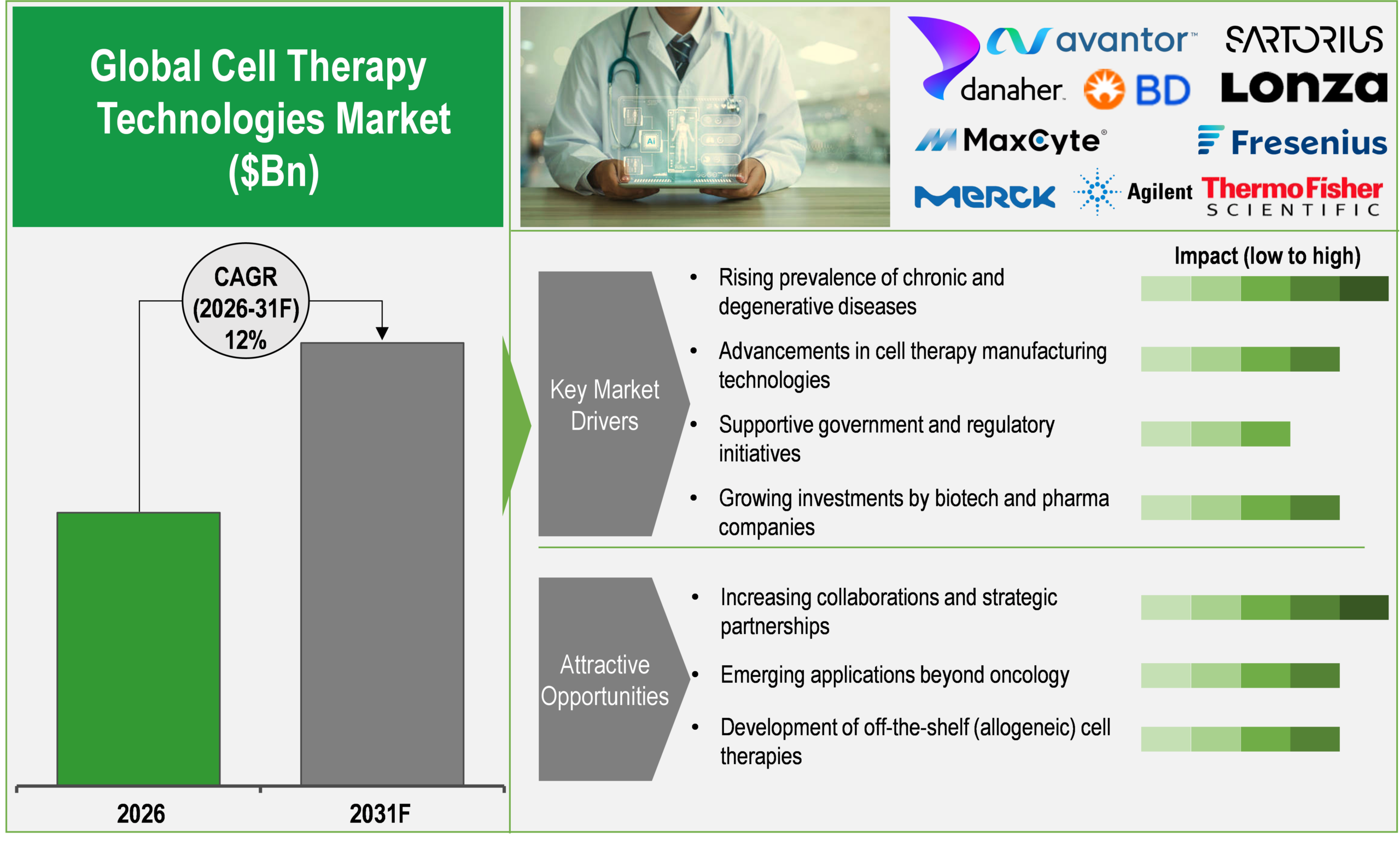
Advancements in cell therapy manufacturing technologies to drive market growth
Advancements in cell therapy manufacturing technologies are emerging as a major growth driver for the global cell therapy technologies market. As cell-based therapies move from research settings to commercial-scale production, manufacturers are increasingly adopting advanced platforms that improve scalability, process efficiency, and product consistency. Technologies such as closed-system bioreactors, automated cell culture platforms, and 3D cell culture systems help reduce contamination risks, minimize manual interventions, and lower overall production costs. These innovations enable more reproducible manufacturing processes, which are essential for meeting stringent regulatory requirements and ensuring consistent therapeutic quality.
In addition, modern manufacturing platforms incorporate high-throughput processing, real-time monitoring, and data-driven process control capabilities that support better batch tracking and quality assurance. The growing development of autologous and allogeneic cell therapies is further increasing the need for scalable manufacturing infrastructure capable of handling larger production volumes while maintaining cell viability and functionality. Companies are also investing in automation, digital workflow management, and integrated processing systems to shorten production timelines and improve operational efficiency. As healthcare providers and biopharmaceutical companies seek broader commercialization of CAR-T, stem cell, and regenerative therapies, advanced manufacturing technologies are expected to play a critical role in accelerating clinical adoption, expanding production capacity, and supporting long-term market growth.
To learn more about this report, download the PDF brochure
Shift toward allogeneic cell therapies: a key market trend
One of the most significant trends shaping the cell therapy technologies market is the growing shift toward allogeneic cell therapies. These therapies use donor-derived cells that can be manufactured in large batches, cryopreserved, and supplied as off-the-shelf products for multiple patients. Compared with autologous therapies, which require individualized manufacturing for each patient, allogeneic cell therapies offer substantial advantages in terms of scalability, faster treatment delivery, and lower production costs. As a result, pharmaceutical companies, biotechnology firms, and contract manufacturing organizations are increasingly investing in technologies that support large-scale allogeneic cell therapy manufacturing.
Recent advancements in gene editing, immune-matching techniques, and cell engineering are helping reduce the risk of graft rejection and improve the safety profile of donor-derived therapies. The development of universal donor cell lines is becoming a strategic priority for many industry participants, as it enables standardized production processes and broader patient access. This trend is also driving demand for advanced cell culture systems, bioreactors, cryopreservation solutions, and quality-control technologies. As healthcare systems seek more commercially viable and widely accessible treatment options, the expansion of allogeneic cell therapy pipelines is expected to accelerate innovation across the global cell therapy technologies market and create significant long-term growth opportunities.
To learn more about this report, download the PDF brochure
Product Segment Outlook
The media, reagents, and sera segment accounted for the largest share of the cell therapy technologies market due to its recurring usage across cell expansion, activation, transfection, washing, and quality-control processes. Every stage of cell therapy manufacturing requires specialized media formulations, growth supplements, and process reagents, creating continuous demand from research laboratories, clinical trial programs, and commercial manufacturing facilities. The increasing number of CAR-T, stem cell, and regenerative medicine programs, along with the growing adoption of serum-free and chemically defined media, is further supporting segment growth.
The cell engineering products segment is projected to witness the fastest growth during the forecast period, driven by rising development of gene-modified and immune-engineered therapies such as CAR-T, TCR-T, and CRISPR-based cell therapies. Demand for electroporation systems, transfection reagents, viral vectors, and gene-editing technologies is increasing as manufacturers seek higher cell modification efficiency and improved therapeutic performance. Advancements in precision gene editing, expanding clinical pipelines, and growing investment in next-generation cell therapies are expected to accelerate adoption of cell engineering technologies across both research and commercial manufacturing applications.
Regional Outlook: North America maintains its leading position in the cell therapy technologies market due to a strong biopharmaceutical ecosystem & significant investment in advanced therapies
North America is expected to hold the largest share of the cell therapy technologies market due to its strong biopharmaceutical ecosystem, significant investment in advanced therapies, and well-established manufacturing infrastructure. The region benefits from a high concentration of leading cell therapy developers, contract manufacturing organizations, and technology providers. In addition, increasing FDA approvals for cell-based therapies, extensive clinical trial activity, and strong funding from both public and private sectors are supporting the adoption of advanced cell culture, processing, and quality-control technologies across the US and Canada.
Asia Pacific is projected to register the fastest growth during the forecast period, driven by expanding regenerative medicine initiatives, rising clinical research activity, and increasing investments in local biomanufacturing capacity. Countries such as China, Japan, India, South Korea, and Singapore are actively supporting cell and gene therapy development through favourable policies, research funding, and infrastructure development programs. The growing presence of regional biotechnology companies, increasing demand for advanced treatment options, and rapid expansion of GMP-compliant manufacturing facilities are expected to accelerate adoption of cell therapy technologies across the Asia Pacific market
Competitive Landscape Analysis
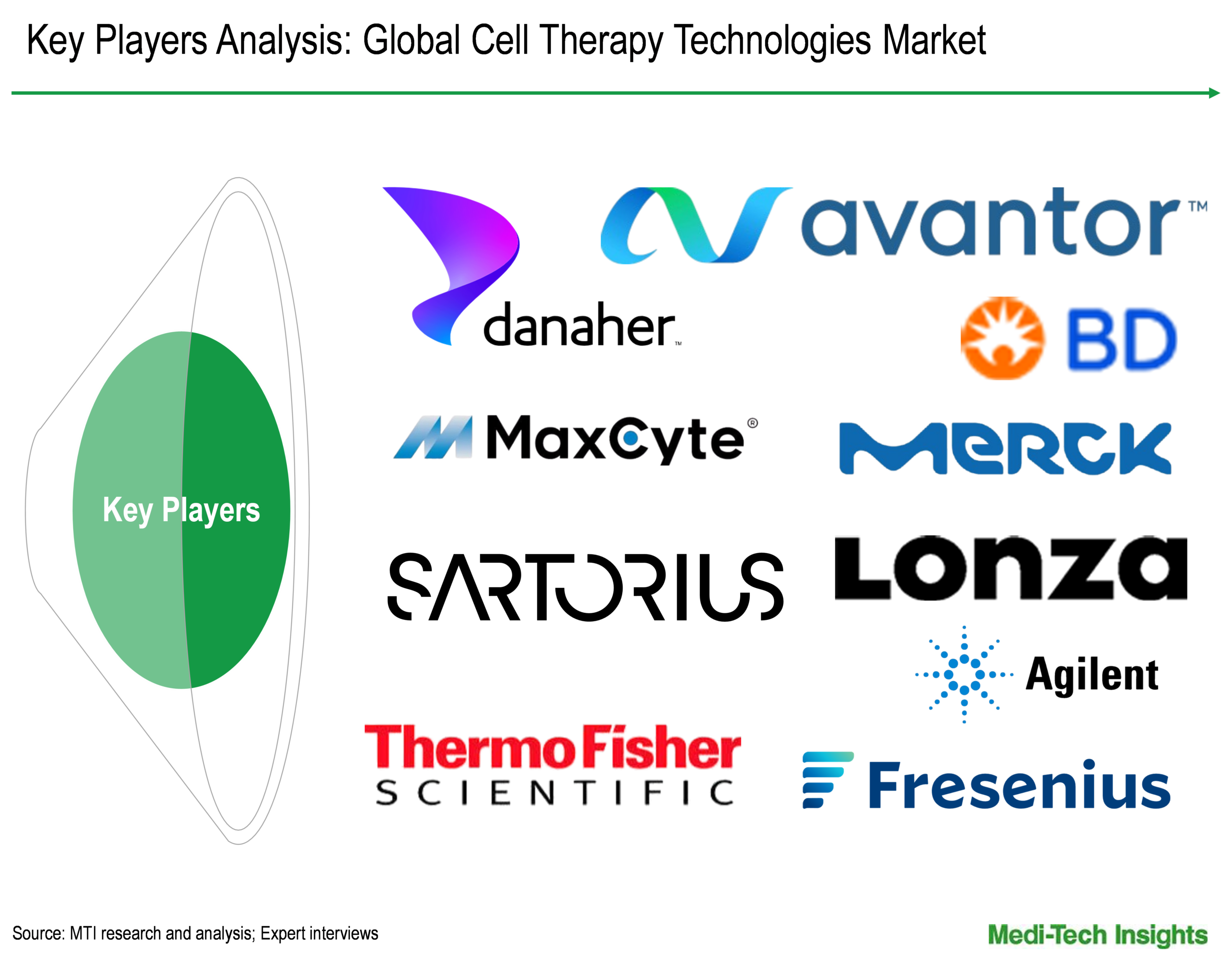
The global cell therapy technologies market is marked by the presence of established and emerging market players such as-
- Thermo Fisher Scientific Inc.
- Sartorius AG
- Lonza Group AG
- Danaher Corporation
- Merck KGaA
- Agilent Technologies, Inc.
- Avantor, Inc.
- Fresenius SE & Co. KGaA
- Becton, Dickinson and Company
- MaxCyte, Inc.
Get a sample report for competitive landscape analysis
Growth strategies adopted by players to establish their foothold in the cell therapy technologies market
Players operating in this market are adopting various growth strategies such as new product launch; acquisitions; expansions; and strategic partnerships, agreements, and collaborations, to garner market share. For instance,
- In May 2026, Thermo Fisher Scientific Inc. launched an integrated platform featuring the Gibco CTS DynaXS single-use bioreactor, designed to support scalable and cGMP-ready cell therapy manufacturing from process development through clinical production
- In May 2026, Sartorius opened a new competence center for cell and gene therapy components in Freiburg, Germany, to strengthen development and manufacturing capabilities for advanced therapy applications
- In June 2025, Merck KGaA announced the acquisition of Bio-Techne, a move aimed at enhancing its life science tools portfolio and expanding capabilities relevant to cell culture, cell engineering, and bioprocessing applications
Report Scope
Report Metric | Details |
Base Year Considered | 2025 |
Historical Data | 2024 – 2025 |
Forecast Period | 2026 – 2031 |
Growth Rate | 12% |
Segment Scope | Product, Cell Type, Process, and End User |
Regional Scope |
|
Market Drivers |
|
Attractive Opportunities |
|
Key Companies Mapped | Thermo Fisher Scientific Inc.; Sartorius AG; Lonza Group AG; Danaher Corporation; Merck KGaA; Agilent Technologies, Inc.; Avantor, Inc.; Fresenius SE & Co. KGaA; Becton, Dickinson and Company; and MaxCyte, Inc.; among others |
Report Highlights | Market Size & Forecast, Growth Drivers & Restraints, Trends, Competitive Analysis |
Global Cell Therapy Technologies Market Segmentation
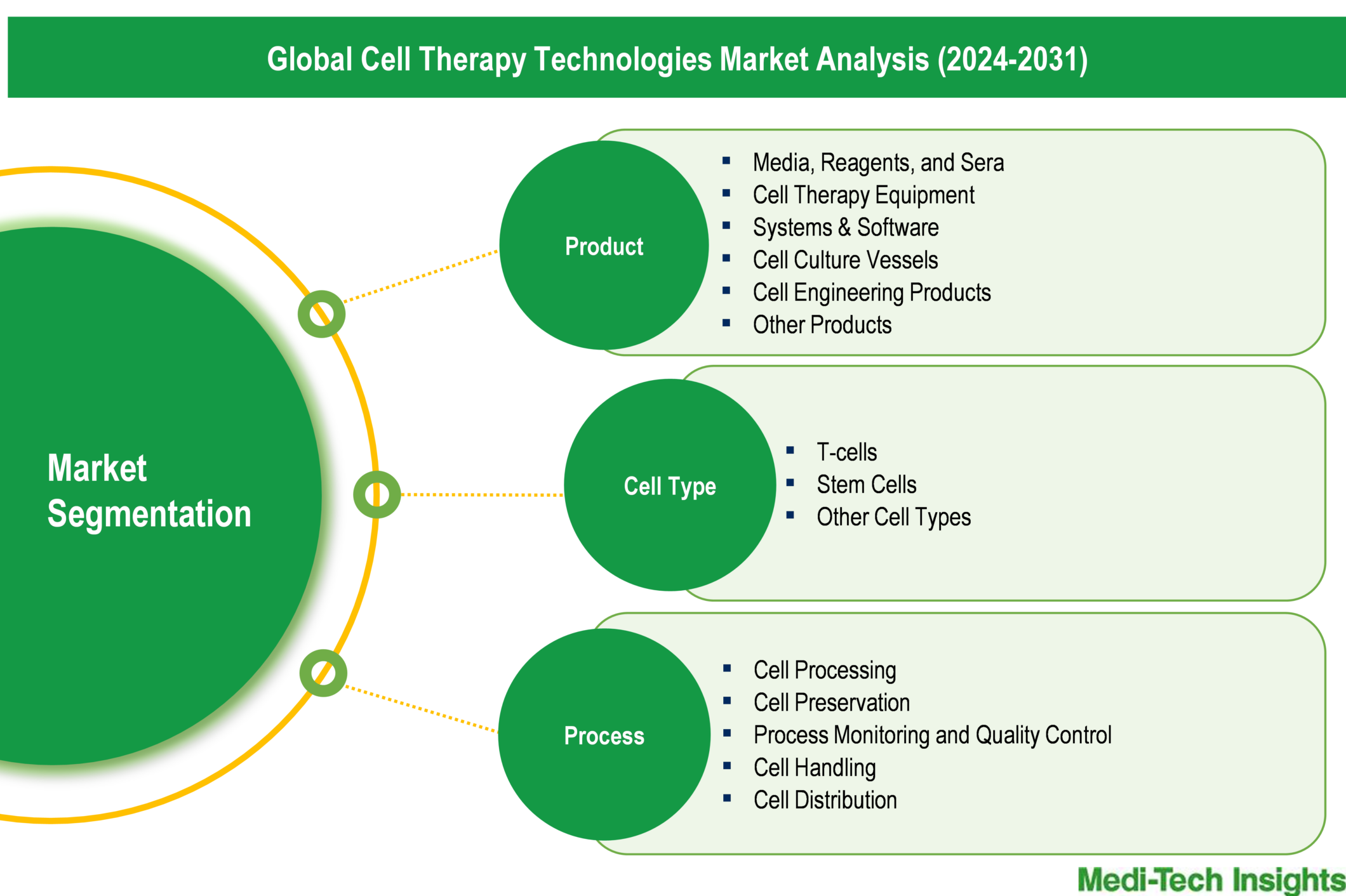
This report by Medi-Tech Insights provides the size of the global cell therapy technologies market at the regional and country-level from 2024 to 2031. The report further segments the market by product, cell type, process, and end user.
Market Size & Forecast (2024-2031), By Product, USD Billion
- Media, Reagents, and Sera
- Cell Therapy Equipment
- Systems & Software
- Cell Culture Vessels
- Cell Engineering Products
- Other Products
Market Size & Forecast (2024-2031), By Cell Type, USD Billion
- T-cells
- Stem Cells
- Other Cell Types
Market Size & Forecast (2024-2031), By Process, USD Billion
- Cell Processing
- Cell Preservation
- Process Monitoring and Quality Control
- Cell Handling
- Cell Distribution
Market Size & Forecast (2024-2031), By End User, USD Billion
- Research Institutes and Academic Centers
- Biotechnology & Pharmaceutical Companies
- Contract Development & Manufacturing Organizations (CDMOs)
- Other End Users
Market Size & Forecast (2024-2031), By Region, USD Billion
- North America
- US
- Canada
- Europe
- UK
- Germany
- France
- Italy
- Spain
- Rest of Europe
- Asia Pacific
- China
- India
- Japan
- Rest of Asia Pacific
- Latin America
- Middle East & Africa
Need a More Tailored Analysis?
- Discuss the market sizing methodology and forecast assumptions with our healthcare analysts.
- Expand the scope with additional countries, market segments, technologies, or competitor profiling.
- Use the insights to support strategic planning, market entry, commercial due diligence, and long-term revenue growth initiatives.