Download FREE Sample


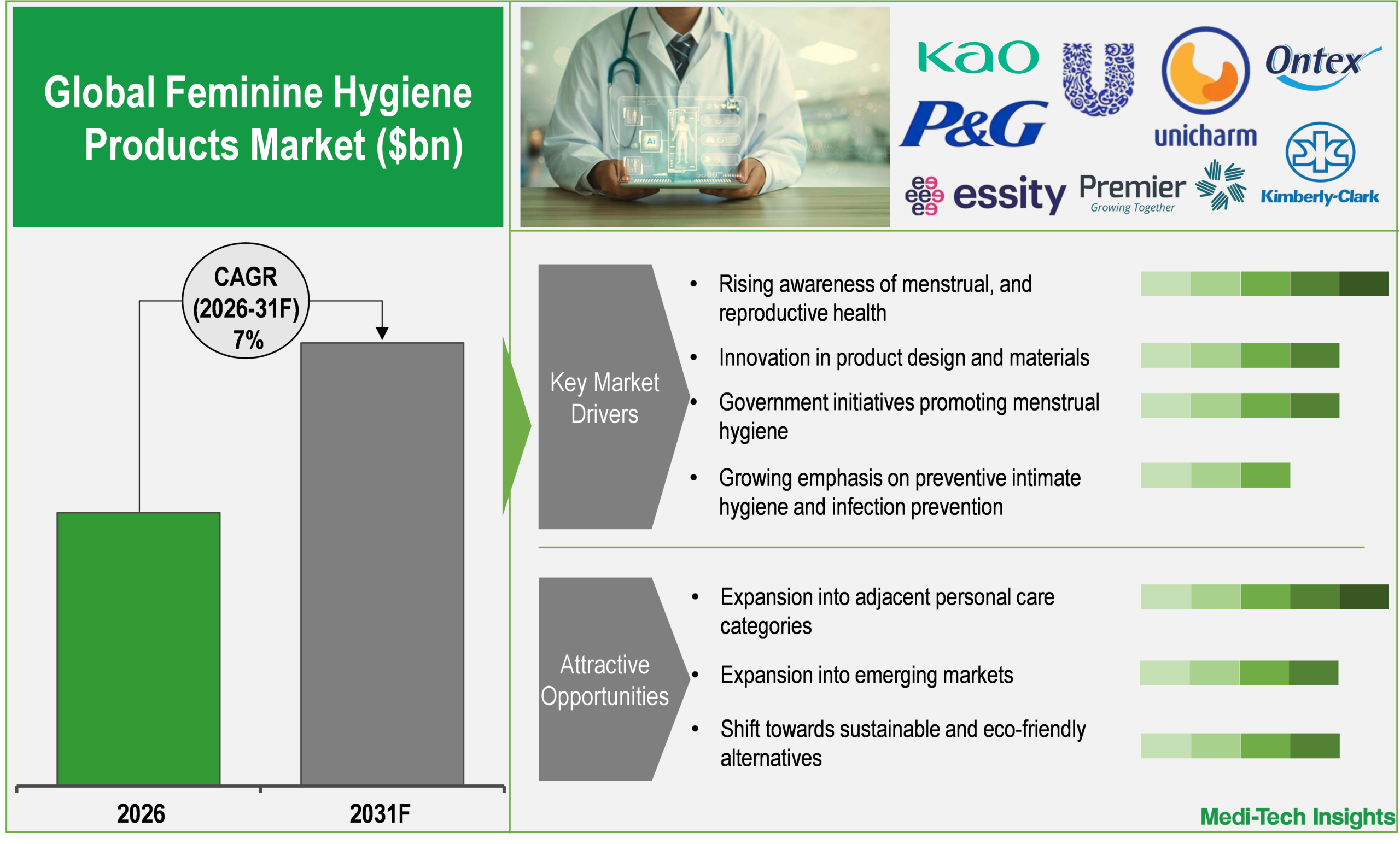
The global feminine hygiene products market size is set to grow at a 7% CAGR over the next 5 years. Key drivers include rising awareness of menstrual and reproductive health conditions, government initiatives and public health campaigns, innovation in product design & materials, rising number of reproductive tract infections, and rapid adoption of e-commerce platforms and subscription
Feminine hygiene products, also referred to as menstrual hygiene products or materials, are essential personal care items designed to support women and girls in managing menstruation with safety, hygiene, and dignity. The category encompasses both disposable and reusable products. Disposable products include sanitary pads, tampons, and pantyliners, which are widely used due to their convenience and accessibility. Reusable alternatives such as menstrual cups, cloth pads, and period underwear are gaining popularity for their cost-effectiveness and sustainability, offering long-term solutions that reduce environmental waste. In addition, the category extends to intimate washes, wipes, and related personal care products. Certain products, such as tampons and menstrual cups, are regulated as medical devices in several markets, while intimate washes and wipes are generally regulated as cosmetic or personal care products depending on the jurisdiction.
Rising awareness of menstrual and reproductive health conditions and growing demand for the feminine hygiene product market
Rising global focus on menstrual and reproductive health is a key driver of the feminine hygiene products market. According to UNICEF, approximately 1.8 billion people menstruate each month, while the World Bank estimates that more than 500 million women and girls worldwide lack adequate menstrual products and hygiene facilities. Government policies, school-level education initiatives, and awareness campaigns led by organizations such as WHO and UNICEF have improved menstrual health literacy and reduced stigma associated with menstruation. From a commercial perspective, increasing awareness is encouraging a shift from traditional cloth-based practices to branded feminine hygiene products, resulting in higher product penetration and recurring purchases. Consumers are also increasingly opting for premium products, including ultra-thin pads, organic cotton products, menstrual cups, and period underwear. This trend is particularly visible in urban regions with growing female workforce participation and improving disposable incomes. As awareness improves, companies benefit from expanded consumer reach, greater product adoption, and opportunities for premiumization across multiple product categories.
To learn more about this report, download the PDF brochure
Shift toward sustainability and the reusable alternatives as an emerging opportunity
The shift toward sustainable feminine hygiene products represents a significant opportunity for innovation and market expansion. Rising consumer concern about disposable menstrual waste is increasing demand for menstrual cups, washable pads, biodegradable sanitary products, and period underwear. Disposable sanitary products contribute to substantial global waste, with an average woman generating a large amount of non-biodegradable waste over her menstruating years. These alternatives can reduce single-use plastic waste and lower lifetime product consumption, aligning with broader environmental and circular economy goals.
Beyond environmental benefits, sustainability is creating commercial opportunities through product differentiation, premium pricing, and stronger brand positioning. Companies are increasingly investing in organic, biodegradable, and reusable product portfolios to attract environmentally conscious consumers. The trend also supports local manufacturing and entrepreneurship in affordable menstrual care solutions. Innovations such as biodegradable pads made from agricultural waste further align women's health with sustainability initiatives while opening new avenues for market expansion and long-term customer loyalty.
To learn more about this report, download the PDF brochure
Product Segment Outlook
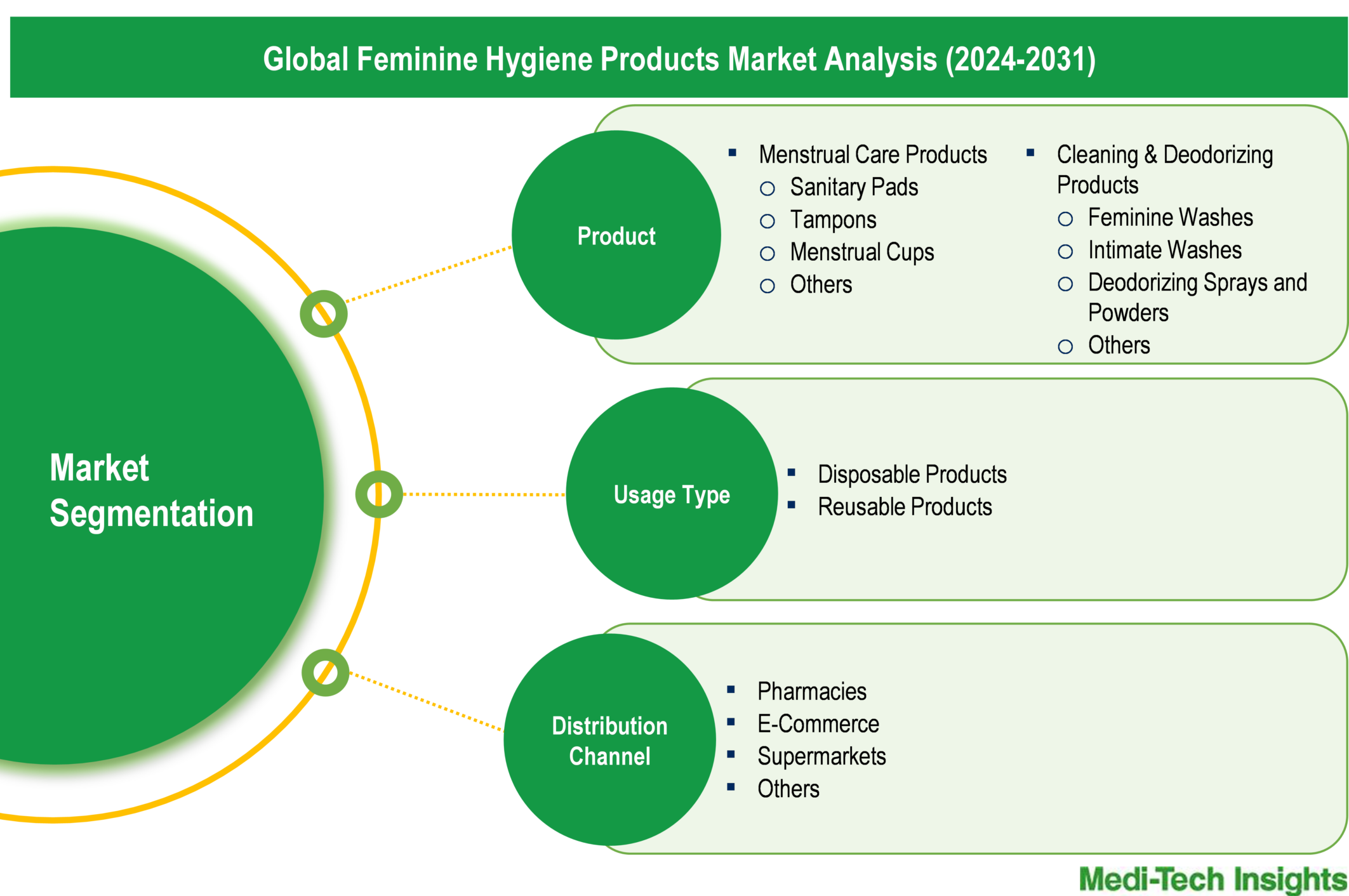
By product type, the feminine hygiene products market is segmented into menstrual care products, cleaning & deodorizing products, and others. Menstrual care products, widely adopted due to their essential monthly use and broad accessibility across diverse demographics, account for the largest share in the global market. This segment encompasses sanitary pads, tampons, menstrual cups, menstrual underwear, menstrual discs, and pain relief patches. Single-use or disposable products such as sanitary pads and tampons within this segment contribute to a larger share of the segment due to their convenience, affordability, and widespread availability. The growing awareness, product innovation in reusable and organic products, and an increasing menstruating population continue to support demand. Cleaning & deodorizing products are among the fastest-growported by rising awareness of intimate health, microbiome balance, and preventive care. The demand is increasing for pH-balanced, fragrance-free, and dermatologically tested formulations that support daily hygiene and post-menstrual care.Regional Outlook: North America is leading in the global feminine hygiene products market due to high menstrual health awareness and advanced retail infrastructure
North America leads the global feminine hygiene products market, which is driven by high menstrual health awareness, advanced retail infrastructure, and rapid adoption of innovative solutions, including organic, sustainable, and reusable products such as menstrual cups and period underwear. The region benefits from State-level menstrual equity initiatives, high healthcare expenditure, and widespread availability through supermarkets, pharmacies, and e-commerce channels, which continue to support market growth. Europe holds a strong second position, driven by a growing focus on preventive health and increasing demand for organic, biodegradable, and reusable menstrual products. Stringent environmental regulations, growing consumer preference for sustainable products, and rising adoption of premium dermatologically tested formulations are supporting market expansion across the region. Asia-Pacific is expected to record the fastest growth, supported by its large menstruating population, rapid urbanization, improving healthcare access, expanding retail networks, and increasing smartphone penetration that facilitates education and e-commerce. Moreover, rising awareness of menstrual hygiene, growing middle-class affordability, and efforts to reduce social stigma are accelerating adoption of both disposable and reusable products across the region.
Competitive Landscape Analysis
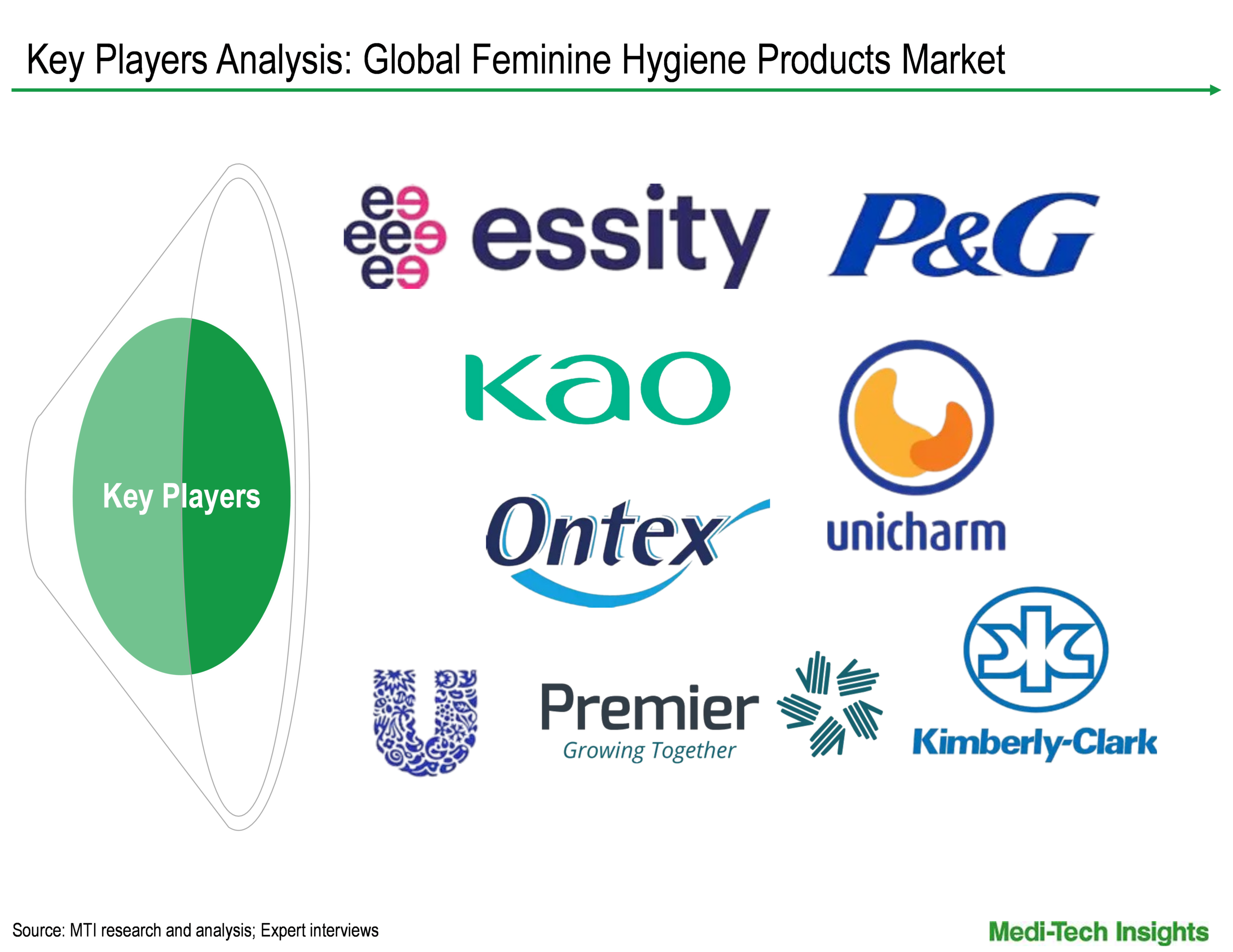
The global feminine hygiene products market is marked by the presence of established and emerging market players such as-- Procter & Gamble Company (US)
- Kimberly-Clark Corporation (US)
- Unicharm Corporation (Japan)
- Essity Aktiebolag (Sweden)
- Ontex Group (Belgium)
- Hindustan Unilever Limited (India)
- Koa Corporation (Japan)
- Premier FMCG (South Africa)
Get a sample report for competitive landscape analysis
Growth strategies adopted by players to establish their foothold in the feminine hygiene products market
Players operating in this market are adopting various growth strategies such as new product launches and approvals, acquisitions, expansions, and strategic partnerships, agreements, and collaborations to garner market share. For instance,- In February 2026, Essity completed the acquisition of Edgewell Personal Care's feminine care business, adding established brands such as Playtex, Stayfree, Carefree, and o.b. to its portfolio. The acquisition strengthens Essity's presence in the global feminine hygiene market by expanding its menstrual care and intimate hygiene product offerings while enhancing its competitive position across key international markets
- In January 2026, Ontex launched the Multi Liquid Liner in Europe, designed for women experiencing perimenopause and menopause. The product protects against menstrual flow and vaginal discharge, reflecting the company's focus on product innovation and expansion into specialized women's health and feminine hygiene solutions
- In September 2024, Kao Singapore launched Laurier Feminine Wash, formulated for gentle cleansing and daily use. The product emphasizes pH balance and hygiene maintenance, extending Kao -s personal care portfolio with an intimate wash designed to support routine feminine hygiene practices
- In December 2024, Procter & Gamble's Whisper introduced the Curvewear Ultra Pad, featuring an enhanced design intended to improve comfort, fit, and leakage protection during menstruation. The product launch highlights the company's continued investment in product innovation and premium sanitary protection solutions within the feminine hygiene market
- In August 2023, Sequel received thSpiral Tampon as a medical device. The product incorporates a patented spiral design intended to improve fluid absorption and user comfort, marking a significant regulatory milestone that expands innovation and technology adoption in the menstrual hygiene products market
Report Scope
| Report Metric | Details |
| Base Year Considered | 2025 |
| Historical Data | 2024 - 2025 |
| Forecast Period | 2026 - 2031 |
| Growth Rate | 7% |
| Segment Scope | Product, Usage Type, and Distribution Channel |
| Regional Scope |
|
| Market Drivers |
|
| Attractive Opportunities |
|
| Key Companies Mapped | Procter & Gamble Company (US), Kimberly-Clark Corporation (US), Unicharm Corporation (Japan), Essity Aktiebolag (Sweden), Ontex Group (Belgium), Hindustan Unilever Limited (India), Koa Corporation (Japan), and Premier FMCG (South Africa) among others |
| Report Highlights | Market Size & Forecast, Growth Drivers & Restraints, Trends, Competitive Analysis |
Global Feminine Hygiene Products Market Segmentation
This report by Medi-Tech Insights provides the size of the global feminine hygiene products market at the regional and country-level from 2024 to 2031. The report further segments the market by product, usage type, and distribution channel.Market Size & Forecast (2024-2031), By Product, USD Billion
- Menstrual Care Products
- Sanitary Pads
- Tampons
- Menstrual Cups
- Others
- Cleaning & Deodorizing Products
- Feminine Washes
- Deodorizing Sprays and Powders
- Intimate Wipes
- Others
Market Size & Forecast (2024-2031), By Usage Type, USD Billarket Size & Forecast (2024-2031), By Distribution Channel, USD Billion
- Pharmacies
- E-Commerce
- Supermarkets
- Others
Market Size & Forecast (2024-2031), By Region, USD Billion
- North America
- US
- Canada
- Europe
- UK
- Germany
- France
- Italy
- Spain
- Rest of Europe
- Asia Pacific
- China
- India
- Japan
- Rest of Asia Pacific
- Latin America
- Middle East & Africa
Frequently Asked Questions About This Report
What is the growth rate of the feminine hygiene products market?
The feminine hygiene products market is set to witness a growth rate of 7% during the forecast period from 2026 to 2031
What are the key trends defining the market?
Digital awareness and app-based education, rise of soap-free and microbiome-friendly intimate products are major trends in the feminine hygiene products market
What are the major factors impacting the market growth?
Rising awareness of menstrual and reproductive health conditions, government initiatives and public health campaigns, innovation in product design & materials, rising number of reproductive tract infections, and rapid adoption of digital channels such as e-commerce platforms and subscription models are some of the key factors driving the feminine hygiene products market
What are the opportunities prevailing in the market?
Expansion into adjacent personal care categories, expansion of digital awareness and app-based education, shift towards sustainable and eco-friendly alternatives, expansion in emerging economies offering numerous growth opportunities for companies operating in the feminine hygiene products market
Who are the major players operating in the market?
Some of the major players operating in the feminine hygiene products market include Procter & Gamble Company (US), Kimberly-Clark Corporation (US), Unicharm Corporation (Japan), Essity Aktiebolag (Sweden), Ontex Group (Belgium), Hindustan Unilever Limited (India), Koa Corporation (Japan), and Premier FMCG (South Africa), among others
Need a More Tailored Analysis?
- Discuss the market sizing methodology and forecast assumptions with our healthcare analysts.
- Expand the scope with additional countries, market segments, technologies, or competitor profiling.
- Use the insights to support strategic planning, market entry, commercial due diligence, and long-term revenue growth initiatives.