Download FREE Sample


Gene Transfer Technologies are methods used to introduce foreign genetic material into cells to modify or regulate biological function. These technologies have become foundational to gene therapy, cell engineering, vaccine development, and functional genomics. The genetic material is either delivered using specialized vectors, which can be modified viruses, such as retroviruses or adeno-associated viruses, that efficiently transport the DNA into the nucleus or non-viral approaches, such as lipid nanoparticles, liposomes, or physical methods like electroporation (electric-field-mediated membrane pores). These methods can be either in vivo, delivering genes directly into the body orex vivo, modifying cells outside the body before returning them. These technologies are now being rapidly adopted in healthcare by providing potential cures for hereditary disorders, blood cancers, and complex diseases like spinal muscular atrophy
Expanding clinical pipeline for cell aerapies
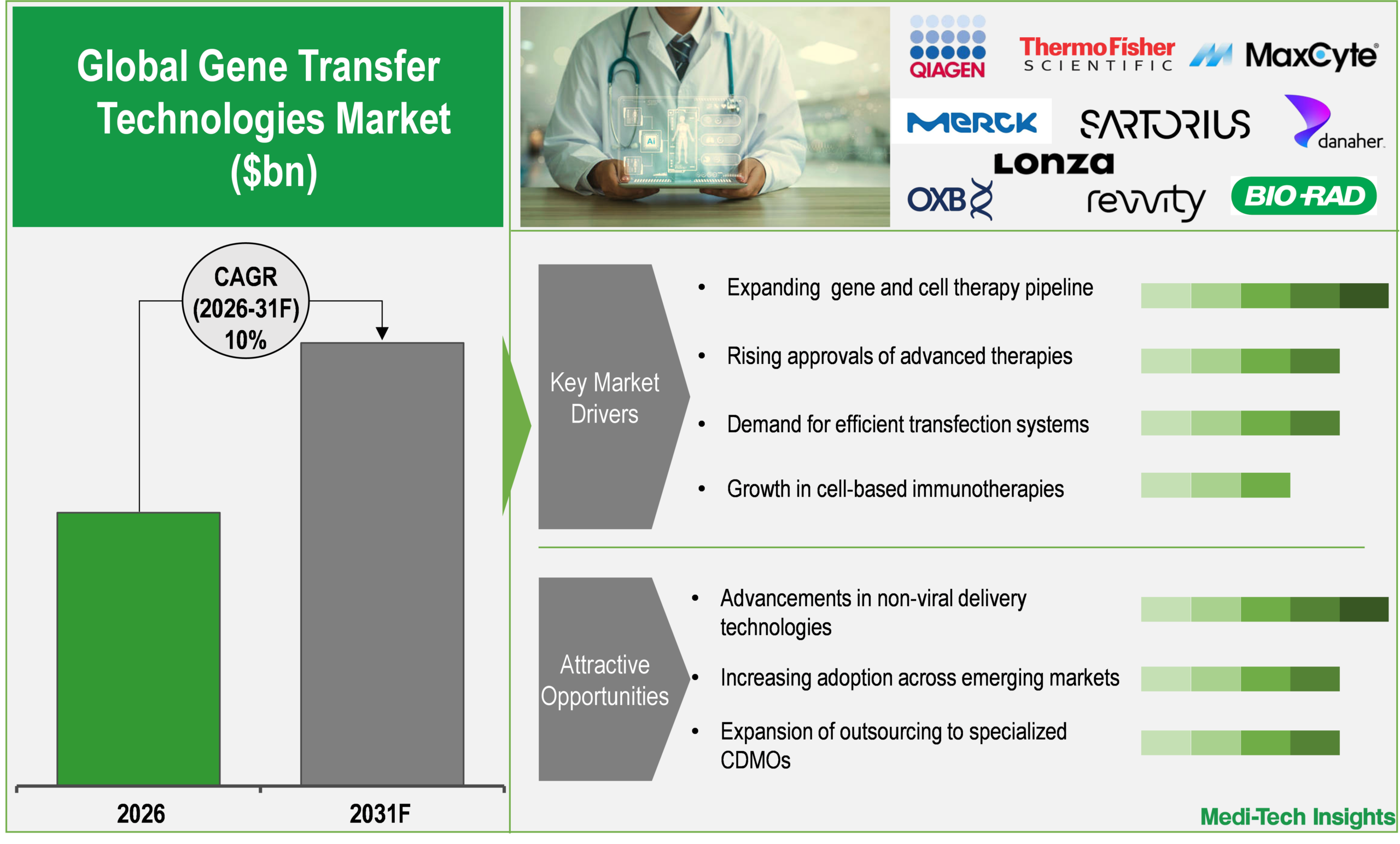
The growing number of cell and gene therapy treatments globally is playing a central role in transforming the gene transfer technologies market. These treatments represent a shift from treating symptoms to potentially curing diseases, particularly in oncology, rare genetic disorders, and haematological conditions. According to the report published by American Society of Gene & Cell Therapy Landscape (Q3 2025), the global pipeline includes over 4,000 gene, cell, and RNA therapy programs, reflecting expansion in both early- and late-stage development.
As this clinical pipeline continues to expand, there is a surge in demand for advanced vector delivery systems that meet stringent regulatory and manufacturing standards. Further, late-stage trials require consistent and scalable production processes, driving investment in both viral vector manufacturing capacity and non-viral delivery platforms. Moreover, the same report highlights that oncology, followed by rare and genetic diseases, were the top areas of gene therapy development. However, there is a growing diversity of indications, including solid tumours and neurological disorders, among others, which further reinforces the need for adaptable gene transfer solutions.
Lastly, the rising number of therapies from preclinical to clinical phases is increasing the demand for viral vectors such as AAV and lentiviral, which are widely used in both in vivo and ex vivo applications. This shift has driven companies to invest in scalable platforms and standardized processes to ensure reproducibility and regulatory compliance. Overall, the expanding & increasingly complex clinical pipeline.
To learn more about this report, download the PDF brochure
Advancements in high-efficiency gene delivery and transfection technologies
The advancements in gene delivery and transfection technologies are reshaping the gene transfer technologies market, driving a shift towards more precise, efficient, and safer molecular tools. While the expansion of the clinical pipeline, marked by a surge in CAR-T trials and gene-based treatments for rare diseases, is one of the primary drivers of the market, the ability to effectively deliver genetic material into target cells remains a key requirement influencing their therapeutic success and broader adoption.
Recent developments are focused on non-viral approaches, such as lipid nanoparticles (LNPs) and electro-actuated transfection, thereby enhancing delivery precision, efficiency, and safety while allowing for repeat dosingrather than just expanding existing vector systems. Further, the integration of gene-editing technologies such as CRISPR-Cas9 has intensified the need for reliable delivery mechanisms to minimize off-target effects and insertional mutagenesis. In addition, there is a growing emphasis on developing delivery systems that enable controlled and tissue-specific gene expression. This includes advancements in engineered vectors, nanoparticle-based carriers, and other next-generation platforms designed to reduce off-target effects, and therapeutic outcomes depend heavily on accurate gene insertion and expression. Additionally, growing investment in research and clinical trials for gene-based therapies is accelerating the development of more efficient and scalable delivery systems.
The rising importance of personalized medicine is also contributing to this shift, as therapies increasingly require tailored delivery approaches based on patient-specific conditions. As applications expand across complex disease areas, including neurological and genetic disorders, the demand for delivery technologies that combine precision, consistency, and scalability continues to grow. These ongoing advancements, supported by global research networks and regulatory frameworks, are strengthening the role of gene transfer technologies as a critical enabler of next-generation therapeutic development.
To learn more about this report, download the PDF brochure
Mode of Delivery Segment Outlook
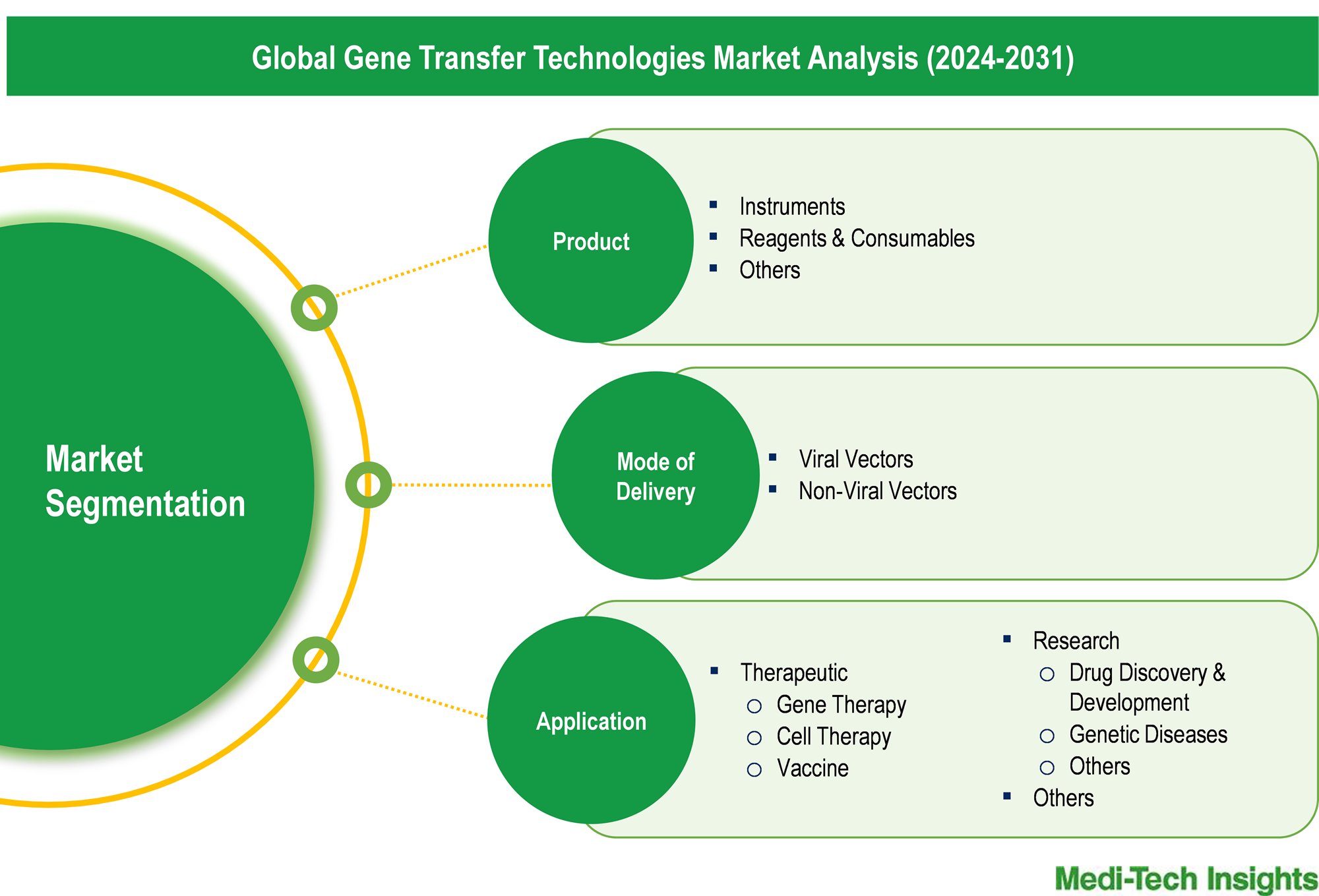
The global gene transfer technologies market, by delivery mode, is segmented into viral and non-viral vectors, each of which represents a distinct approach for introducing genetic material into target cells. Viral vectors lead the market due to their high gene-transfer efficiency and ability to target specific tissues, when compared with non-viral vectors. Some common types of viral vectors include Adeno-associated virus (AAV), lentiviral (LV), and adenovirus (Ad), which are the majority of approved gene therapy products. Viral vectors are more stable, with long-lasting gene expression, making them the preferred choice for complex therapeutic applications, including rare genetic disorders and oncology, and have sustained high demand despite the challenges related to manufacturing complexity and cost. However, the non-viral vector segment is experiencing raphe market is experiencing a shift towards safer and more scalable alternatives to viral vectors. Techniques such as LNPs, electroporation, and polymer-based carriers offer advantages in terms of production flexibility, low immunogenicity, and application in mRNA therapies.
Regional Outlook: North America holds a major share, supported by an advanced healthcare infrastructure
North America accounts for the largest share of the gene transfer technologies market, which is supported by advanced healthcare infrastructure, high investment in gene therapy research, and favourable regulatory support. Further, the presence of established key players further strengthens the region's leadership in the market. Europe follows with steady growth, propelled by rapid advances in viral vectors and LNPs, high investment in genomic research, and strong adoption of CAR-T and rare-disease therapies, supported by collaborative public-private research.
The Asia-Pacific is expected to witness the fastest growth, primarily driven by growing investments in biotechnology, improved healthcare infrastructure, and a large patient population. Other regions, including Latin America and the Middle East, hold a smaller share, but are experiencing growth due to the gradual adoption of gene-based technologies, primarily through increasing partnerships and modernized healthcare infrastructure.
Competitive Landscape Analysis
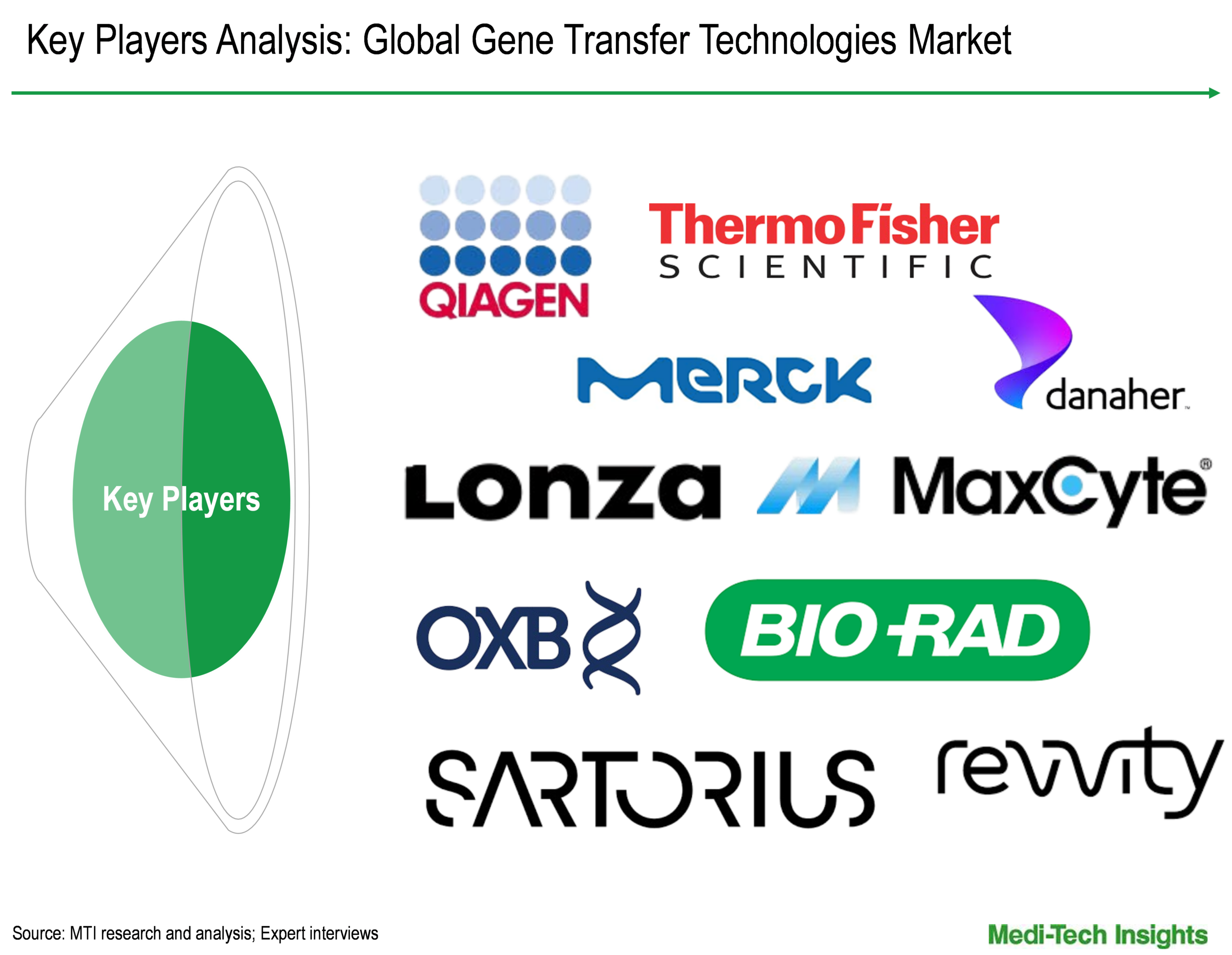
The global gene transfer technologies market is marked by the presence of established and emerging market players such as Thermo Fisher Scientific Inc. (US); Danaher Corporation (US); Merck KGaA (Germany); Qiagen N.V. (Netherlands); Sartorius AG (Germany); Bio-Rad Laboratories Inc. (US); Revvity, Inc. (US); Lonza Group AG (Switzerland); MaxCyte, Inc. (US); and Oxford Biomedica PLC (UK); among others. Some of the key strategies adopted by market players include new product launches and approvals, acquisitions, expansions, and strategic partnerships, agreements, and collaborations.
Get a sample report for competitive landscape analysis
Growth strategies adopted by players to establish their foothold in the market
Gene transfer technologies are evolving rapidly, with continuous advancements in delivery platforms, vector engineering, and process development to support the growing pipeline of gene and cell therapies. With rapid developments across both viral and non-viral systems, including improved vector design and higher transfection efficiency, and scalable manufacturing approaches. These advancements reflect the growing demand to enhance delivery precision, reduce safety concerns, and thereby enable broader accessibility of gene-based therapies across diverse therapeutic areas. For instance,
- In June 2025, US-based CDMO ProBio opened its flagship 128,000 sq ft GMP facility in Hopewell, New Jersey, to expand plasmid DNA and viral vector manufacturing capacity, supporting clinical development and large-scale production of gene cell therapies
- In April 2025, AGC Biologics launched a dedicated Cell and Gene Technologies Division while expanding its global manufacturing network and capacity, supported by facilities in the US, Europe, and Asia with large-scale viral vector suites and cell therapy capabilities, to address growing demand for scalable gene and cell therapy production
- In September 2024, MaxCyte signed a strategic licensing agreement with Kamau Therapeutics to deploy its flow electroporation technology across research, clinical, and commercial gene editing applications
- In August 2024, Merck KGaA acquired Mirus Bio to strengthen its gene delivery and viral vector capabilities, enhancing its integrated upstream and transfection solutions portfolio
- In March 2024, Polyplus released pPLUS AAV-RC2, a RepCap plasmid specifically designed for AAV2 vector production, expanding raw material options for AAV-based gene therapies
Report Scope
|
Report Metric |
Details |
|
Base Year Considered |
2025 |
|
Historical Data |
2024 2025 |
|
Forecast Period |
2026 2031 |
|
Growth |
10% |
|
Segment Scope |
Product, Mode of Delivery, Method, Application, and End User |
|
Regional Scope |
|
|
Market Drivers |
|
|
Attractive Opportunities |
|
|
Key Companies Mapped |
Thermo Fisher Scientific Inc. (US); Danaher Corporation (US); Merck KGaA (Germany); Qiagen N.V. (Netherlands); Sartorius AG (Germany); Bio-Rad Laboratories Inc. (US); Revvity, Inc. (US); Lonza Group AG (Switzerland); MaxCyte, Inc. (US); and Oxford Biomedica PLC (UK); among others |
|
Report Highlights |
Market Size & Forecast, Growth Drivers & Restraints, Trends, Competitive Analysis |
Global Gene Transfer Technologies Market Segmentation
This report by Medi-Tech Insights provides the size of the global gene transfer technologies market at the regional- and country-level from 2024 to 2031. The report further segments the market based on product, mode, method, application, and end user.
Market Size & Forecast (2024-2031), By Product, USD Billion
- Instruments
- Reagents & Consumables
- Others
Market Size & Forecast (2024-2031), By Mode of Delivery, USD Billion
- Viral Vectors
- Non-Viral Vectors
Market Size & Forecast (2024-2031), By Method, USD Billion
- In Vivo
- Ex Vivo
- In Vitro
Market Size & Forecast (2024-2031), By Application, USD Billion
- Therapeutic
- Gene Therapy
- Cell Therapy
- Vaccine
- Research
- Drug Discovery & Development
- Genetic Diseases
- Others
- Others
Market Size & Forecast (2024-2031), By End User, USD Billion
- Pharmaceutical & Biotechnology Companies
- Academic & Research Institutes
- CDMOs
- Hospitals
- Others
Market Size & Forecast (2024-2031), By Region, USD Billion
- North America
- US
- Canada
- Europe
- UK
- Germany
- France
- Italy
- Spain
- Rest of Europe
- Asia Pacific
- China
- India
- Japan
- Rest of Asia Pacific
- Latin America
- Middle East & Africa
Need a More Tailored Analysis?
- Discuss the market sizing methodology and forecast assumptions with our healthcare analysts.
- Expand the scope with additional countries, market segments, technologies, or competitor profiling.
- Use the insights to support strategic planning, market entry, commercial due diligence, and long-term revenue growth initiatives.