Download FREE Sample


Overview
A pulse oximeter is a non-invasive device used to measure a person-s blood oxygen saturation level (SpO-) and pulse rate. It functions by shining light wavelengths through a fingertip, earlobe, or toe, then detecting how much light is absorbed by oxygenated versus deoxygenated blood. Pulse oximeters are widely used in hospitals, clinics, ambulances, and increasingly in home healthcare. They are essential for monitoring patients with respiratory or cardiovascular conditions like COPD, asthma, pneumonia, and heart failure, as well as during surgeries, in ICUs, and for sleep apnea tests. During the COVID-19 pandemic, they became popular for early detection of -silent hypoxia- in infected individuals. There are several types of pulse oximeters: fingertip models, often used at home for spot checks; handheld devices, used in clinics for more detailed readings; tabletop units, typically found in hospitals; and wearable versions (like wristbands or rings) for contis can connect via Bluetooth or cellular networks for real-time remote patient monitoring. Pulse oximeters are valued for their ease of use, portability, and ability to deliver quick and reliable readings, making them an essential tool in both preventive and emergency care.

To learn more about this report, download the PDF brochure
Growing respiratory burden elevates the need for continuous oxygen monitoring
With the increasing environmental pollution, modern urban lifestyles, and an aging population, the global healthcare system is experiencing a rising demand for reliable and continuous oxygen monitoring. Pulse oximeters have become a vital tool in this context, enabling real-time tracking of blood oxygen saturation (SpO-) without the need for invasive procedures. The increasing prevalence of chronic respiratory conditions such as chronic obstructive pulmonary disease (COPD), asthma, interstitial lung disease, and pneumonia has further boosted demand across hospitals, outpatient settings, and even homes.
According to the Centers for Disease Control and Prevention (CDC), in 2024, approximately 4.2% of the US adults have been diagnosed with COPD, emphysema, or chronic bronchitis, including 854,000 emergency department visits w as the primary diagnosis. These devices are essential for patients experiencing silent hypoxia, a dangerous drop in oxygen levels without noticeable symptoms, enabling early detection and prompt intervention. Supported by clinical guidelines and public health initiatives, pulse oximeters are being increasingly integrated into routine care, particularly for high-risk groups.
Additionally, the Institute for Health Metrics and Evaluation (IHME) reports that chronic respiratory diseases rank as the third leading cause of death globally, with factors like smoking, air pollution, and occupational hazards contributing to their prevalence. As healthcare systems move toward preventive, patient-centered care, the role of the pulse oximeter is expanding from acute care to long-term disease management and telehealth services, making it a key driver of the market-s growth.
Smart and connected pulse oximeters drive innovation in patient monitoring
The pulse oximeter market iencing a significant shift toward wireless and connected technologies, largely driven by the rising demand for remote patient monitoring, chronic disease management, and telehealth integration. Modern pulse oximeters are no longer standalone devices; they now feature Bluetooth, Wi-Fi, and even cellular connectivity, allowing real-time data transmission to healthcare providers and electronic health records (EHR) systems. This connectivity enables continuous monitoring of blood oxygen levels (SpO-) in patients with conditions such as COPD, asthma, and post-COVID complications, especially outside traditional hospital settings. These devices allow quick clinical decision-making, thereby decreasing hospital readmissions, and support aging populations needing long-term care. Integration with mobile health apps, wearables, and cloud-based platforms has further enhanced the accessibility and convenience of oxygen monitoring for both clinicians and patients.
Recent developments in the pulse oximeter market
Recent product approvals and technology launches are reshaping the pulse oximeter market, with a growing focus on connected, consumer-friendly, and clinically validated devices. The shift towards remote patient monitoring has not only improved accessibility for at-home users but also ensured reliable SpO- tracking across diverse patient groups. Some of the key developments are listed below:
- In August 2024, Prevounce Health launched the Pylo OX1-LTE, a cellular-connected pulse oximeter designed specifically for remote patient monitoring with seamless, real-time SpO- and pulse rate tracking
- In February 2024, Masimo announced FDA clearance for MightySat Medical, an OTC fingertip pulse oximeter featuring hospital-grade accuracy, directly to consumers, offering reliable SpO- and pulse measurements without a prescription
- In November 2023, Masimo and Philips expanded their partnership to integrate the Masimo W1 medical watch into Philipsing and telehealth platforms, enabling continuous SpO- and vital sign monitoring that keeps patients connected to clinicians beyond the hospital
- In January 2022, Smart Meter launched the iPulseOx, the first cellular-enabled pulse oximeter that transmits real-time oxygen saturation and pulse data to care teams over AT&T-s secure IoT network, supporting better outcomes for patients with chronic conditions like COPD and heart disease
- Rising prevalence of chronic respiratory diseases
- Growing geriatric population requiring continuous oxygen monitoring
- Increasing adoption of remote patient monitoring (RPM)
- Demand for non-invasive and real-time SpO- tracking
- Technological advancements in devices
- Expansion of telehealth and virtual care models
- Rising demand in home healthcare and outpatient settings
- Integration with mobile apps and cloud-based health platforms
- Increasing focus on pediatric and neonatal monitoring solutions
- North America (US & Canada)
- Europe (UK, Germany, France, Italy, Spain, Rest of Europe)
- Asia Pacific (China, India, Japan, Rest of Asia Pacific)
- Latin America
- Middle East & Africa
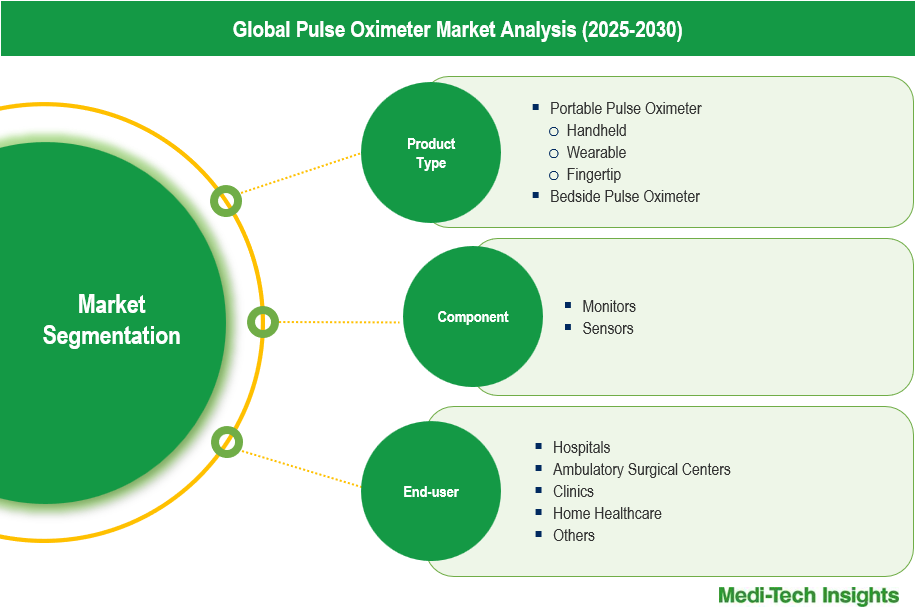
- Portable Pulse Oximeter
- Handheld
- Wearable
- Fingertip
- Bedside Pulse Oximeter
- Monitors
- Sensors
- North America
- US
- Canada
- Europe
- UK
- Germany
- France
- Italy
- Spain
- Rest of Europe
- Asia Pacific
- China
- India
- Japan
- Rest of Asia Pacific
- Latin America
- Middle East & Africa
To learn more about this report, download the PDF brochure
Competitive Landscape Analysis
The global pulse oximeter market is marked by the presence of established and emerging market players such as Medtronic plc; Koninklijke Philips N.V.; Masimo Corporation; Nonin Medical, Inc.; GE Healthcare Technologies Inc.; ICU Medical, Inc.; Nihon Kohden Corporation; Dragerwerk AG & Co. KGaA; OSI Systems Inc.; and Contec Medical Systems Co, Ltd.; among others. Some of the key strategies adopted by market players include new product development, strategic partnerships and collaborations, and geographic expansion.
Report Scope
| Report Metric | Details |
| Base Year Considered | 2024 |
| Historical Data | 2023 - 2024 |
| Forecast Period | 2025 - 2030 |
| Growth rate | 7% |
| Market Drivers |
|
| Attractive Opportunities |
|
| Segment Scope | Product Type, Component, and End-user |
| Regional Scope |
|
| Key Companies Mapped | Medtronic plc; Koninklijke Philips N.V.; Masimo Corporation; Nonin Medical, Inc.; GE Healthcare Technologies Inc.; ICU Medical, Inc.; Nihon Kohden Corporation; Dragerwerk AG & Co. KGaA; OSI Systems Inc.; and Contec Medical Systems Co, Ltd.; among others |
| Report Highlights | Market Size & Forecast, Growth Drivers & Restraints, Trends, Competitive Analysis |
Global Pulse Oximeter Market Segmentation
This report by Medi-Tech Insights provides thesize of the global pulse oximeter market at theregional- and country-level from 2023 to 2030. The report further segments the market based on product type, component, and end-user.
Market Size & Forecast (2023-2030), By Product Type, USD Million
Market Size & Forecast (2023-2030), By Component, USD Million
Market Size & Forecast (2023-2030), By Region, USD Million
Need a More Tailored Analysis?
- Discuss the market sizing methodology and forecast assumptions with our healthcare analysts.
- Expand the scope with additional countries, market segments, technologies, or competitor profiling.
- Use the insights to support strategic planning, market entry, commercial due diligence, and long-term revenue growth initiatives.