Download FREE Sample


Surgical helmets are powered headgear systems used primarily in operating rooms to provide barrier protection and controlled airflow around the surgeon-s head and face. The system includes a reusable plastic helmet containing a battery-powered fan that draws in air. This air is filtered and circulated under a disposable, sterile hood that covers the head, neck, and shoulders, with a clear plastic visor for vision. They are used in procedures with high exposure risk, particularly orthopedic, trauma, and joint replacement surgeries, where splash, aerosol, or particulate contamination is a concern. Standard masks lack effectiveness in protecting against aerosolized pathogens that can enter through the eyes or mask gaps. Unlike standard surgical masks or face shields, surgical helmet systems are designed to create a localized airflow environment that reduces direct exposure to bodily fluids. Moreover, these systems create a full-face barrier that eliminates visor fogging and allows for better periphera while improving comfort during long procedures.
Rising volume of orthopedic and high-risk surgeries
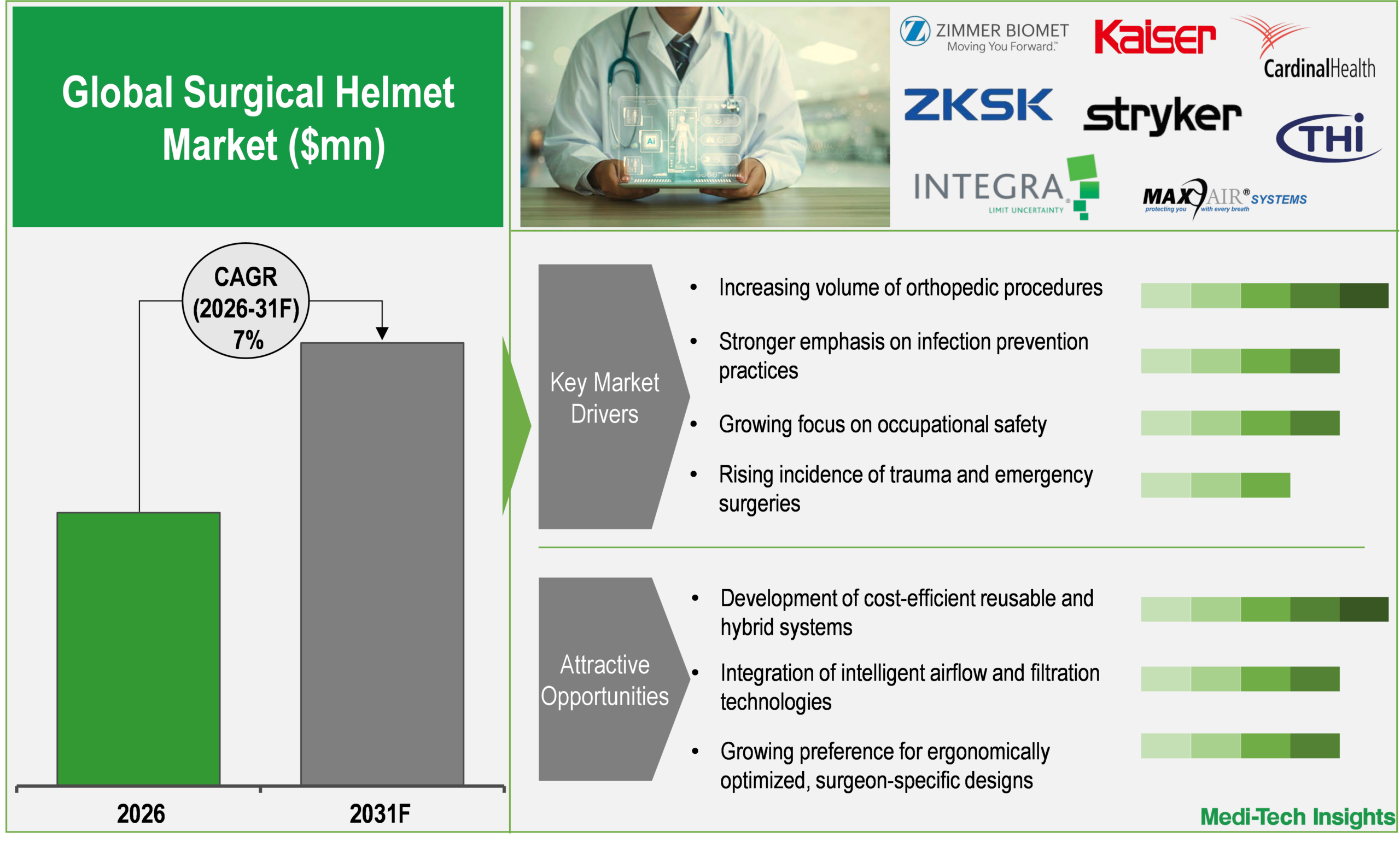
A steady rise in orthopedic interventions, including hip and knee replacements, is a central factor driving the demand for the market. Orthopedic procedures require high-speed tools, such as drills, oscillating saws etc., to cut through bone, which can lead to significant fluid exposure, creating a setting where conventional protective equipment may be inadequate for the surgical team's safety. Surgical helmets provide an added layer of protection ensuring that surgeons remain protected during long, intensive procedures while maintaining clear visibility and enhanced comfort, thereby lowering the risk of occupational exposure to blood-borne pathogens against splashes and airborne particulates generated during bone cutting or drilling procedures.
Further, the surge in the number of chronic ailments, a higher prevalence of trauma, and conditions associated with aging have all led to an increase in surgical volumes across the globe. For instance, the US surgical procedure volumes have increased by ~1-2% & total reached more than 95 million in 2025 (Source: NCBI). Similarly, the volume of surgical procedures is growing at a steady rate of 1-2% in Europe. Moreover, the expansion of trauma care infrastructure and improved access to surgical services in emerging markets are driving a substantial increase in the number of surgical procedure volumes. Lastly, as more hospitals standardize protective measures in operating rooms, advanced helmet systems are increasingly incorporated in surgical kits, particularly for high-exposure procedures.
To learn more about this report, download the PDF brochure
Emphasis on infection control and occupational safety
Modern healthcare systems are increasingly focusing on minimizing intraoperative contamination risks for both patients and surgical staff. Surgical helmets are part of this strategic shift toward comprehensive barrier protection, particularly in high-risk procedures where exposure to bloodborne pathogens, surgical smoke, droplets, and aerosols is significant, thereby reducing the risk of infection and improving occupational safety. When combined with sterile hoods and visors, surgical helmet systems provide dual protection, reducing the risk of contamination from surgical staff to patients, while also shielding clinicians from intraoperative exposure.
Furthermore, the rising incidence of hospital-acquired infections (HAIs), affecting nearly one in ten patients globally, is reinforcing the need for robust infection prevention measures during surgical procedures. Hospitals are also aligning their procurement strategies with infection control frameworks, prompting evaluation of protective equipment beyond traditional masks and gowns. Moreover, with the rising awareness of airborne transmission risks in clinical environments, surgical helmets are being gradually integrated into standard operating protocols for high-risk procedures.
Additionally, healthcare facilities are increasingly incorporating occupational safety policies that are more structured and closely monitored. This has resulted in the rising adoption of advanced surgical helmet systems that support compliance with stringent sterilization protocols while addressing both infection control and occupational safety.
To learn more about this report, download the PDF brochure
Product Type Segment Outlook
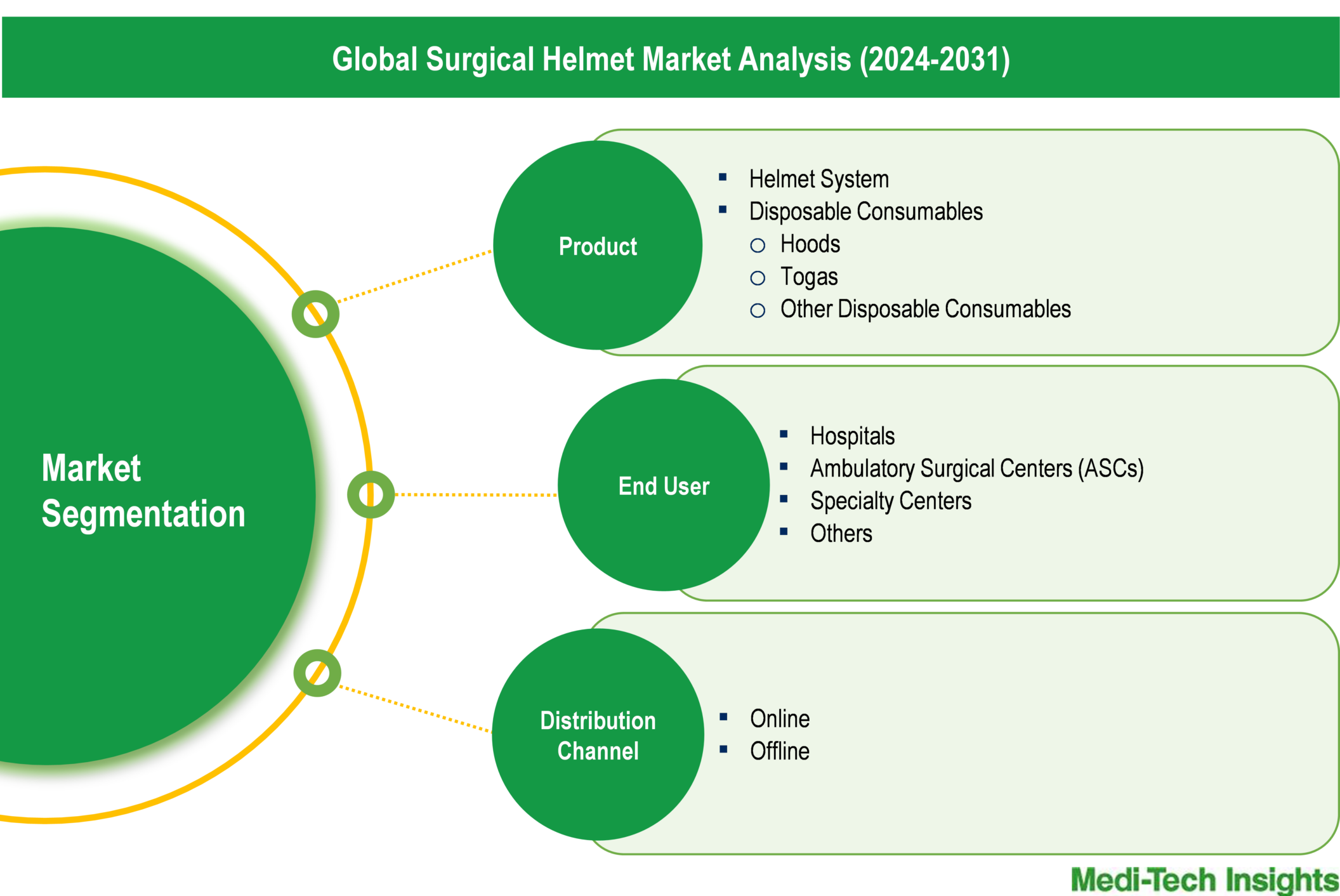
The global surgical helmet market by product is primarily segmented intohelmet systemsanddisposable consumables, with disposable items like hoods, togas, and filters holding the largest revenue share of the market. Disposable consumables are rapidly adopted in healthcare facilities, maintaining strict infection control and reducing decontamination costs, making them ideal for orthopedics and high-risk procedures.
However, the helmet systems segment, which includes the reusable helmet, fan, and battery components, is also witnessing rapid growth due to increasing demand for integrated, comfortable, and durable solutions, with advancements such as high-intensity LED lighting driving the adoption. Additionally, the segment growth is driven by demand for advanced and innovative helmets, with enhanced safety and operational efficiency during long, comple
Regional Outlook: North America maintains its surgical helmet market leadership through rising surgical volumes, advanced surgical infrastructure, and stringent occupational safety frameworks
North America accounts for the largest share of the surgical helmet market, driven by a surge in the number of surgical procedures. Moreover, the region's growth is supported by well-established surgical infrastructure, higher healthcare spending, and the adoption of strict occupational safety standards. The presence of leading medical device manufacturers, along with ongoing product innovation, further strengthens market penetration.
Europe holds a substantial share of the market, driven by standardized healthcare systems, stringent infection control guidelines, and increasing focus on surgical safety, which has led to widespread use of helmet systems. Additionally, a rising aging population, who are more prone to accidental falls, lead to higher orthopedic procedure volumes, thereby accelerating the need for surgical helmet systems. However, the Asia-Pacific region is expected to witness comparatively faster growth, primarily due to expanding healthcare infrastructure, alongside increasing investments in modern surgical facilities and rising surgical volumes.
Competitive Landscape Analysis
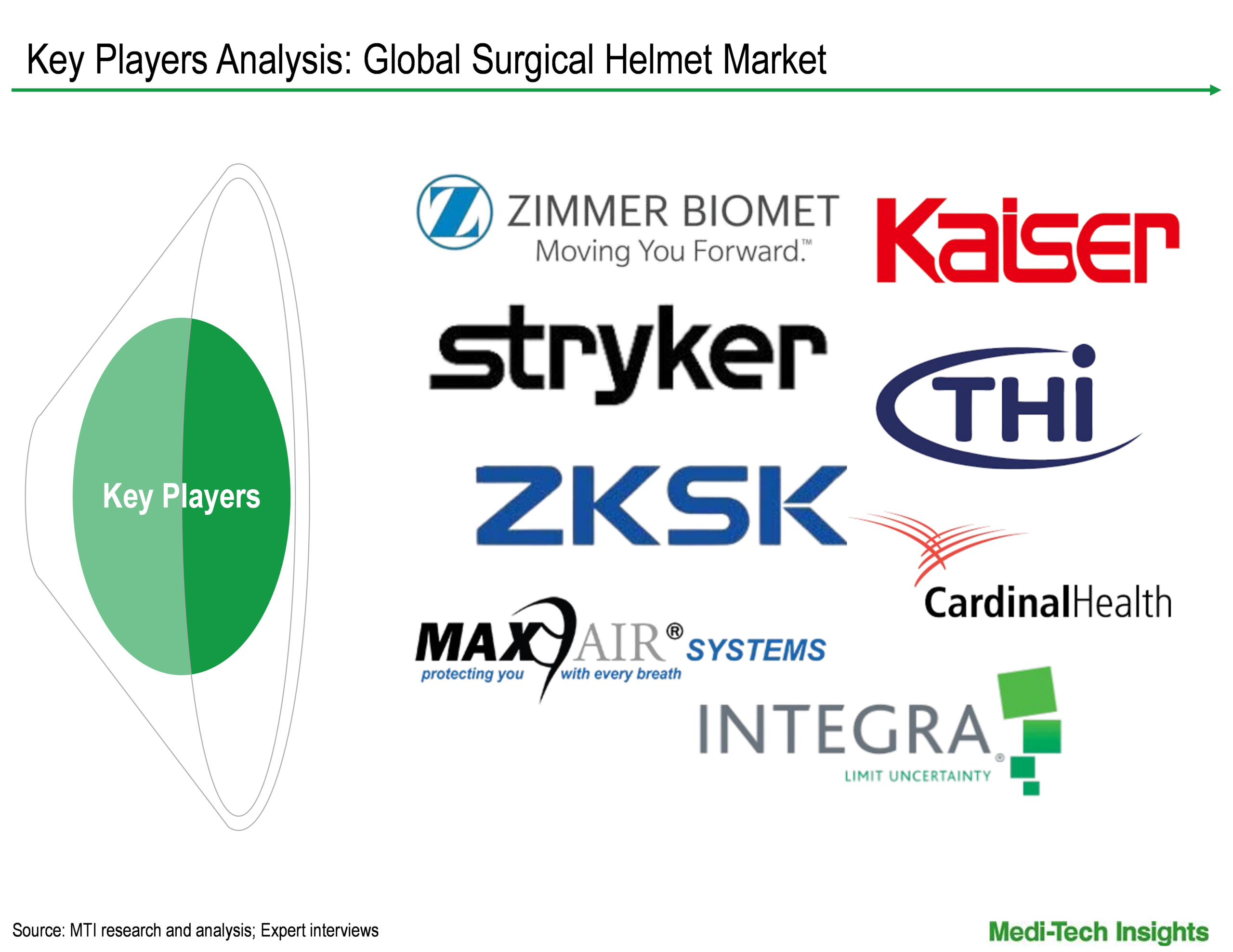
The global surgical helmet market is marked by the presence of established and emerging market players such as Zimmer Biomet Holding Inc (US); Stryker Corporation (US); Beijing ZKSK Technology Co., Ltd. (China); Kaiser Technology Co., Ltd. (Taiwan); THI Total Healthcare Innovation GmbH (Austria); MAXAIR Systems (US); Cardinal Health (US); Integra LifeSciences Corporation (US); Vizbl brand products (Prodancy Pvt. Ltd.) (India); and AresAir (India), among others.
Get a sample report for competitive landscape analysis
Growth strategies adopted by players to establish their foothold in the global surgical helmet market
Players operating in this market are adopting various growth strategies such as new product launches and approvals; acquisitions; expansions; and strategic partnerships, agreements, and collaborations, to garner market share. For instance,
- In June 2025, MaxAir Systems introduced its CAPR Bonnet as part of its respiratory protection portfolio, featuring a lightweight, integrated hood design aimed at improving user comfort, visibility, and airflow efficiency in clinical and high-risk environments, supporting enhanced safety and usability in healthcare settings
- In March 2025, Stryker launched the Steri-Shield 8 personal protection system, featuring a customizable helmet fit, wider field of vision, improved cooling, and upgraded battery performance for enhanced protection and comfort in operating room settings
- In May 2024, MaxAir Systems introduced the CAPR SHS Advanced Surgical Helmet System at the AORN Global Surgical Conference & Expo, featuring NIOSH-authorized filtration and enhanced outward particulate reduction to support improved infection control and operating room safety
- In February 2024, Zimmer Biomet showcased its latest innovations across its product portfolio at the 2024 annual meeting of the American Academy of Orthopaedic Surgeons (AAOS). The products also included the recently launched ViVi Surgical Helmet System featuring a lightweight, quiet design with dual-fan airflow, motion-sensing controls, and high-intensity LED lighting to enhance comfort and visibility during surgical procedures
| Report Scope | Details |
| Base Year Considered | 2025 |
| Historical Data | 2024 - 2025 |
|
Forecast Year |
2026 - 2031 |
|
Growth Rate |
7% |
| Segment Scope | Product, End User, and Distribution Channel |
| Regional Scope |
|
| Market Drivers |
|
| Attractive Opportunities |
|
| Key Companies Mapped | Zimmer Biomet Holding Inc (US); Stryker Corporation (US); Beijing ZKSK Technology Co., Ltd. (China); Kaiser Technology Co., Ltd. (Taiwan); THI Total Healthcare Innovation GmbH (Austria); MAXAIR Systems (US); Cardinal Health (US); Integra LifeSciences Corporation (US); Vizbl brand products (Prodancy Pvt. Ltd.) (India); and AresAir (India), among others |
| Report Highlights | Market Size & Forecast, Growth Drivers & Restraints, Trends, Competitive Analysis |
Global Surgical Helmet Market Segmentation
This report by Medi-Tech Insights provides thesize of the global surgical helmet market at theregional and country-level from 2024 to 2031. The report further segments the market by product, end user, and distribution channel.
- Market Size & Forecast (2024-2031), By Product, USD Million
- Helmet System
- Disposable Consumables
- Hoods
- Togas
- Other Disposable Consumables
- Market Size & Forecast (2024-2031), By End User, USD Million
- Hospitals
- Ambulatory Surgical Centers (ASCs)
- Specialty Centers
- Others
- Market Size & Forecast (2024-2031), By Distribution Channel, USD Million
- Online
- Offline
- MarForecast (2024-2031), By Region, USD Million
- North America
- US
- Canada
- Europe
- UK
- Germany
- France
- Italy
- Spain
- Rest of Europe
- Asia Pacific
- China
- India
- Japan
- Rest of Asia Pacific
- Latin America
- Middle East & Africa
Need a More Tailored Analysis?
- Discuss the market sizing methodology and forecast assumptions with our healthcare analysts.
- Expand the scope with additional countries, market segments, technologies, or competitor profiling.
- Use the insights to support strategic planning, market entry, commercial due diligence, and long-term revenue growth initiatives.