Download FREE Sample


Telehealth and telemedicine refer to delivering healthcare services through digital communication technologies, such as video conferencing, remote monitoring, and mobile health applications. Telehealth encompasses a broad spectrum of services, including clinical consultations, education, and remote patient monitoring. Telemedicine is a subset focusing specifically on clinical services. These solutions aim to improve healthcare accessibility, reduce costs, and provide timely interventions, particularly in underserved areas or for patients with limited mobility.
To learn more about this report, download the PDF brochure
Expanding Access to Healthcare Services
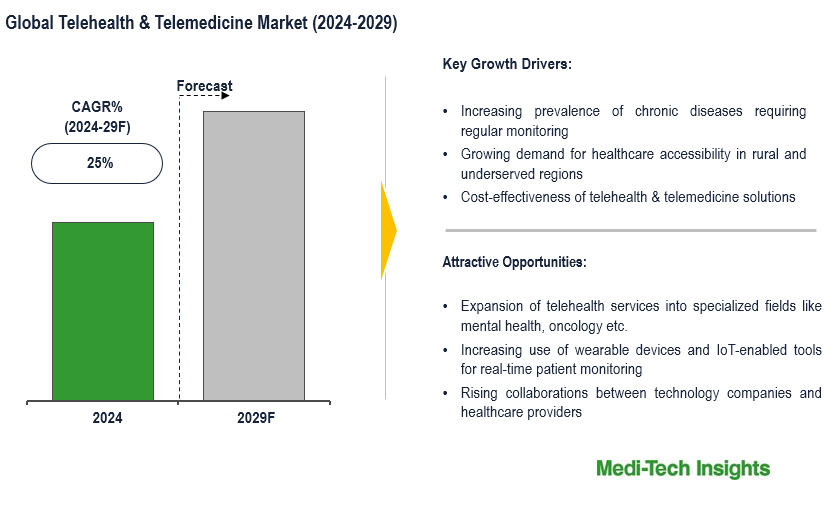
A major driver for the telehealth and telemedicine market is the growing demand for accessible healthcare solutions. Telehealth, encompassing both clinical and non-clinical applications, bridges gaps in healthcare delivery by leveraging digital platforms to connect patients and providers. Telemedicine, a key component of telehealth, specifically ensures access to clinical care, particularly in rural and underserved areas, reducing travel needs and providing timely consultations. In emergencies, telemedicine facilitates instant communication with specialists, which can be lifesaving. Additionally, telehealth platforms support chronic disease management, remote monitoring, and health education, benefiting individuals with limited mobility or healthcare access. The COVID-19 pandemic highlighted the importance of telehealth and telemedicine in maintaining care continuity while minimizing infection risks. By addressing healthcare disparities and enhancing patient engagement, these technologies have become essential for equitable and efficient healthcare delivery.
Artificial Intelligence Transforming Telehealth and Telemedicine
AI is reshaping both telehealth and telemedicine by advancing diagnostic accuracy, patient management, and healthcare operations. AI-powered tools analyze health data, medical histories, and symptoms, enabling clinicians to make faster, more precise decisions during virtual consultations. In telehealth, AI extends its capabilities to non-clinical applications like population health management and training programs. Chatbots and virtual assistants powered by AI enhance patient engagement, handling tasks such as scheduling, query resolution, and medication reminders. Remote monitoring systems integrated with AI offer real-time tracking of vital signs and alert providers to potential issues, ensuring early intervention. These innovations improve efficiency, accessibility, and personalization of care across digital health platforms. As AI evolves, it fosters a more integrated and adaptive healthcare ecosystem that meets diverse patient needs in the digital age.
To learn more about this report, download the PDF brochure
Competitive Landscape Analysis
The global telehealth and telemedicine market features both established and emerging players, including Medtronic; Veradigm (Allscripts Healthcare Solutions Inc).; GE Healthcare; Siemens Healthineers; Oracle (Cerner Corporation); Koninklijke Philips NV; Teladoc Health Inc., MD Live (Evernorth) and American Well among others. Leading companies are focusing on strategies such as product innovation and development, forging strategic partnerships and collaborations, and expanding their geographic footprint to enhance their market positions.
Report Scope
| Report Metric | Details |
| Base Year Considered | 2023 |
| Historical Data | 2022 - 2023 |
| Forecast Period | 2024 - 2029 |
| Growth Rate | CAGR of 25% |
| Market Drivers |
|
| Attractive Opportunities |
|
| Segment Scope | Component, Mode of Delivery, Application & End-User |
| Regional Scope |
|
| Key Companies Mapped | Medtronic; Veradigm (Allscripts Healthcare Solutions Inc).; GE Healthcare; Siemens Healthineers; Oracle (Cerner Corporation); Koninklijke Philips NV; Teladoc Health Inc.; MD Live (Evernorth) and American Well among others |
| Report Highlights | Market Size & Forecast, Growth Drivers & Restraints, Trends, Competitive Analysis |
Market Segmentation
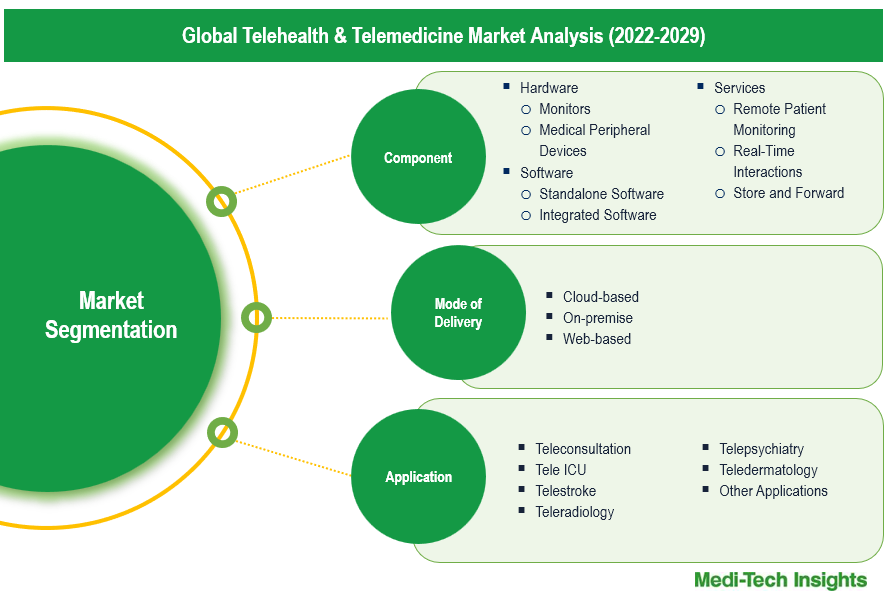
This report by Medi-Tech Insights provides size of the telehealth and telemedicine market at the regional- and country-level from 2022 to 2029. The report further segments the market on the basis of component, mode of delivery, application and end-user.
- Market Size & Forecast (2022-2029), By Component, USD Million
- Hardware
- Monitors
- Medical Peripheral Devices
- Blood Pressure Meters
- Blood Glucose Meters
- Weighing Scales
- Pulse Oximeters
- Peak Flow Meters
- ECG Monitors
- Others
- Hardware
-
- Software
- Standalone Software
- Integrated Software
- Services
- Remote Patient Monitoring
- Real-Time Interactions
- Store and Forward
- Software
- Market Size & Forecast (2022-2029), By Mode of Delivery, USD Million
- Cloud-based
- On-premise
- Web-based
- Market Size & Forecast (2022-2029), By Application, USD Million
- Teleconsultation
- Tele ICU
- Telestroke
- Teleradiology
- Telepsychiatry
- Teledermatology
- Other Applications
- Market Size & Forecast (2022-2029), By End-user, USD Million
- Providers
- Hospitals & Clinics
- Long-term Care Centers and Assisted Living Facilities
- Payers
- Public Payers
- Private Payers
- Patients
- Other End-users
- Providers
- Market Size & Forecast (2022-2029), By Region, USD Million
- North America
- US
- Canada
- Europe
- UK
- Germany
- France
- Italy
- Spain
- Rest of Europe
- Asia Pacific
- China
- India
- Japan
- Rest of Asia Pacific
- Latin America
- Middle East & Africa
- North America
Related Reports
Frequently Asked Questions About This Report
What is the market size & forecast of the telehealth and telemedicine market?
What are historical, present, and forecasted market shares and growth rates of various segments and sub-segments of the telehealth and telemedicine market?
What are the key trends defining the market?
What are the major factors impacting the market?
What are the opportunities prevailing in the market?
Need a More Tailored Analysis?
- Discuss the market sizing methodology and forecast assumptions with our healthcare analysts.
- Expand the scope with additional countries, market segments, technologies, or competitor profiling.
- Use the insights to support strategic planning, market entry, commercial due diligence, and long-term revenue growth initiatives.