Download FREE Sample


Urology Devices include a broad spectrum of products such as endoscopes, catheters, laser devices, and surgical instruments designed for diagnosing and treating urological conditions. The market is witnessing a shift towards minimally invasive surgeries, driven by benefits like reduced recovery times and lower risk of complications. The integration of digital technologies, such as telemedicine and artificial intelligence, is also enhancing the accuracy of diagnoses and improving treatment planning. Moreover, the increasing demand for urology devices in emerging markets is expected to open new avenues for growth, as healthcare systems enhance their urological care capabilities.
To learn more about this report, download the PDF brochure
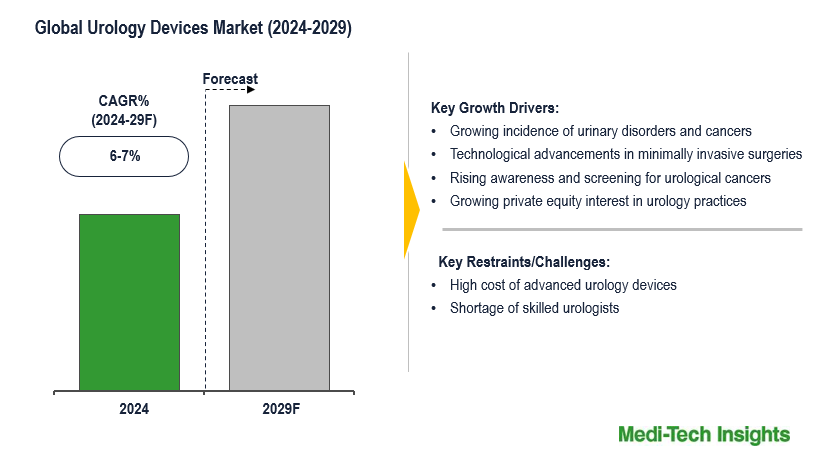
Advancements in Technology, Aging Population, and Rising Incidence of Urological Disorders Drive Growth in the Urology Devices Market
The urology devices market is experiencing significant growth driven by advancements in technology, such as minimally invasive surgical techniques, robotics, and enhanced imaging systems. These innovations are improving the precision and efficacy of procedures like prostatectomies, lithotripsy, and bladder surgeries, leading to better patient outcomes and shorter recovery times. Additionally, the aging global population is a key driver of demand, as older adults are more susceptible to urological conditions, including benign prostatic hyperplasia (BPH) and urinary incontinence. Furthermore, the increasing prevalence of lifestyle-related factors, such as obesity and diabetes, has contributed to a rise in urological disorders, fueling the adoption of urology devices.
Impact of Private Equity Investment in Urology Practices
Private equity investment in urology practices can serve as a catalyst for growth and innovation within the urology devices market. By providing capital and management expertise, private equity firms enable practices to enhance operational efficiencies, invest in advanced technologies, and expand service offerings. This financial backing facilitates the adoption of innovative urology devices, ultimately improving patient care and outcomes. Since, January 2018 to 2022, there have been only 26 urology deals. By comparison, in the same time frame, there have been nearly 200 deals involving dermatology practices, over 100 deals in orthopedics and gastroenterology, and more than 40 deals in cardiology. There is a lot of room for consolidation. A large portion of urologists are nearing retirement age. According to the American Urological Association, more than 55% of private practice urologists were aged 65 and older in 2022. For physicians approaching retirement, a private equity deal can be appealing, allowing them to maintain an ownership stake even after they stop practicing medicine.
To learn more about this report, download the PDF brochure
Competitive Landscape Analysis
Key players in the global urology devices include Boston Scientific Corporation, Medtronic, Coloplast, Baxter International, Becton Dickinson, Stryker Corporation, Olympus Corporation, ConvaTec, B. Braun Melsungen AG, and Fresenius Medical Care, among others. Strategic acquisitions, partnerships, and product launch are some of the key strategies adopted by market players to strengthen their market position.
Urology Devices Market Scope
| Report Scope | Details |
| Base Year Considered | 2023 |
| Historical Data | 2022 - 2023 |
| Forecast Period | 2024 - 2029 |
| Growth Rate | CAGR of 6-7% |
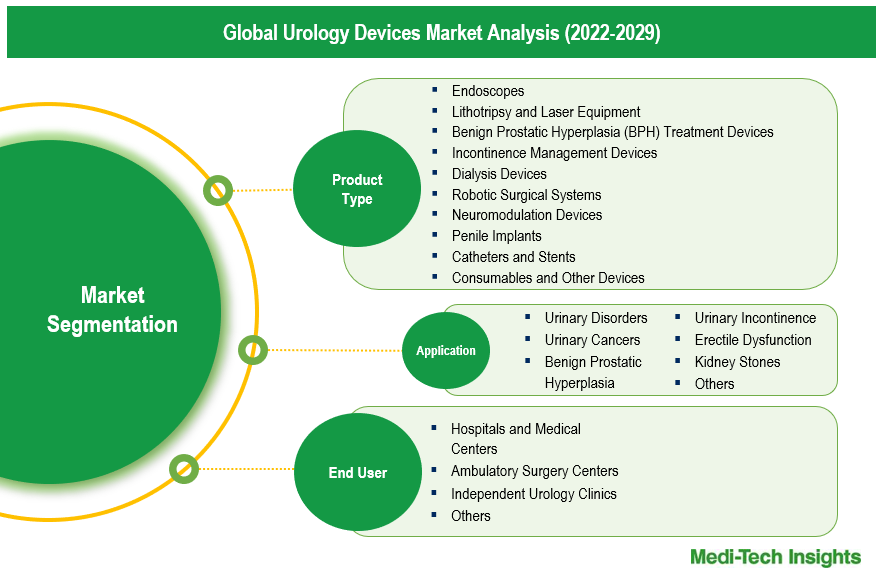
| Segment Scope | Product Type, Applications, and End User |
| Regional Scope |
|
| Key Companies Mapped | Boston Scientific Corporation, Medtronic, Coloplast, Baxter International, Becton Dickinson, Stryker Corporation, Olympus Corporation, ConvaTec, B. Braun Melsungen AG, and Fresenius Medical Care; among others |
| Report Highlights | Market Size & Forecast, Growth Drivers & Restraints, Trends, Competitive Analysis |
Frequently Asked Questions About This Report
What is the market size & forecast of the urology devices market?
What are the historical, present, and forecasted market shares and growth rates of various segments and sub-segments of the urology devices market?
What are the key trends defining the market?
What are the major factors impacting the market?
What are the opportunities prevailing in the market?
Need a More Tailored Analysis?
- Discuss the market sizing methodology and forecast assumptions with our healthcare analysts.
- Expand the scope with additional countries, market segments, technologies, or competitor profiling.
- Use the insights to support strategic planning, market entry, commercial due diligence, and long-term revenue growth initiatives.