Download FREE Sample


Report Overview
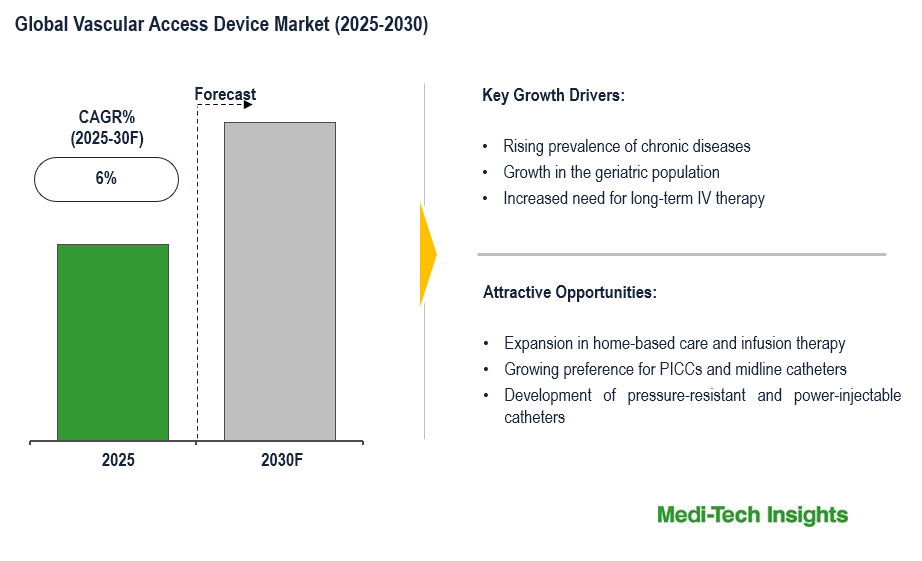
A vascular access device (VAD) is a medical apparatus inserted into a patient-s vein to deliver medications, fluids, blood products, or draw blood samples. These devices include central venous catheters, peripheral venous catheters, peripherally inserted central catheters and implanted ports. These devices play a significant role in managing diabetes, cancer, renal diseases or other severe conditions, requiring repeated vascular access without frequent needle pricks.
To learn more about this report, download the PDF brochure
Chronic disease burden driving demand for vascular access devices
One of the main factors propelling the VAD market is the rising global prevalence of chronic diseases such as cancer, diabetes, and end-stage renal disease. According to an article published by the WHO, there were approximately 43 million deaths in 2021, and three out of every four deaths were due to chronic or noncommunicable diseases. These conditions often necessitate frequent and long-term administration of medications, including chemotherapy, insulin, and antibiotics, as well as regular blood sampling.
Vascular access devices offer a reliable and less painful alternative to repeated venipunctures, making them essential in the long-term care of such patients. For example, implanted ports or peripherally inserted central catheters (PICCs) greatly aid cancer patients enduring chemotherapy cycles by enabling the safe and repetitive administration of cytotoxic medications. Additionally, the need for effective vascular access in acute and home care settings is only going to increase with rising hospitalization rates and an aging population. As healthcare providers focus more on improving patient comfort and streamlining drug delivery, the adoption of these devices continues to expand globally. For instance, in November 2023, BD (Becton, Dickinson and Company) launched SiteRite 9 Ultrasound System, an advanced ultrasound system designed to deliver enhanced image quality and as a vessel assessment tool to improve clinician efficiency when placing peripherally inserted central catheters (PICCs), central venous catheters, IV lines and other vascular access devices.
Antimicrobial-coated catheters: enhancing safety and reducing infection risk
The advent of antimicrobial-coated catheters, has improved the efficacy and safety of vascular access devices. These catheters are embedded or coated with substances such as silver sulfadiazine, chlorhexidine, or minocycline-rifampin that actively prevent bacterial colonization. By minimizing microbial adhesion to catheter surfaces, these coatings help reduce the risk of catheter-related bloodstream infections (CRBSIs), a major concern in long-term vascular access. According to some studies, using such coated devices in clinical settings can result in a measurable drop in infection rates, thereby resulting in decreased patient morbidity and shortened hospital stay. This technique has becoming more and more common in hospitals and infusion facilities, especially for high-risk patients with weak immune systems. Moreover, regulatory approvals and inclusion in infection prevention guidelines by institutions such as the CDC have further accelerated its integration into routine practice. This innovation not only enhances patient safety but also supports cost savings for healthcare providers.

To learn more about this report, download the PDF brochure
Competitive Landscape Analysis
The global vascular access device market is marked by the presence of established and emerging market players such BD; Teleflex Medical; B. Braun; AngioDynamics; ICU Medical, Inc; Medtronic; Medical Components, Inc.; Cook Medical; Terumo Medical Corporation; Access Vascular, Inc among others. Some of the key strategies adopted by market players include new product development, strategic partnerships and collaborations, and geographic expansion.
Report Scope
| Report Metric | Details |
| Base Year Considered | 2024 |
| Historical Data | 2023 - 2024 |
| Forecast Period | 2025 - 2030 |
| Growth | 6% |
| Market Drivers |
|
| Attractive Opportunities |
|
| Segment Scope | Type and End-user |
| Regional Scope |
|
| Key Companies Mapped | BD; Teleflex Medical; B. Braun; ICU Medical, Inc; AngioDynamics; Medtronic; Medical Components, Inc.; Cook Medical; Terumo Medical Corporation; Access Vascular, Inc among others |
| Report Highlights | Market Size & Forecast, Growth Drivers & Restraints, Trends, Competitive Analysis |
Global Vascular Access Device Market Segmentation
This report by Medi-Tech Insights provides thesize of the global vascular access device market at theregional- and country-level from 2023 to 2030. The report further segments the market based on type and end-user.
Market Size & Forecast (2023-2030), By Type, USD Million
- Peripheral
- Central
- CVCs
- PICCs
- Implantable Ports
- Intraosseous
- Accessory
Market Size & Forecast (2023-2030), By End-user, USD Million
- Hospitals
- Clinics
- Ambulatory Surgical Centers
- Others
Market Size & Forecast (2023-2030), By Region, USD Million
- North America
- US
- Canada
- EUK
- Germany
- France
- Italy
- Spain
- Rest of Europe
- China
- India
- Japan
- Rest of Asia Pacific
- Latin America
- Middle East & Africa
Need a More Tailored Analysis?
- Discuss the market sizing methodology and forecast assumptions with our healthcare analysts.
- Expand the scope with additional countries, market segments, technologies, or competitor profiling.
- Use the insights to support strategic planning, market entry, commercial due diligence, and long-term revenue growth initiatives.