Download FREE Sample


The veterinary diagnostics market encompasses the tools, techniques, and devices used to detect and monitor diseases in animals, including pets, livestock, and wildlife. It spans diagnostic imaging, molecular diagnostics, immunodiagnostics, and clinical chemistry, which help veterinarians make precise diagnoses and improve animal health outcomes. These diagnostics are crucial for managing zoonotic diseases, ensuring food safety, and enhancing productivity in livestock. Advancements in technology and growing awareness about animal health are driving innovations in this sector
To learn more about this report, download the PDF brochure
Impact of Zoonotic Diseases on Veterinary Diagnostics
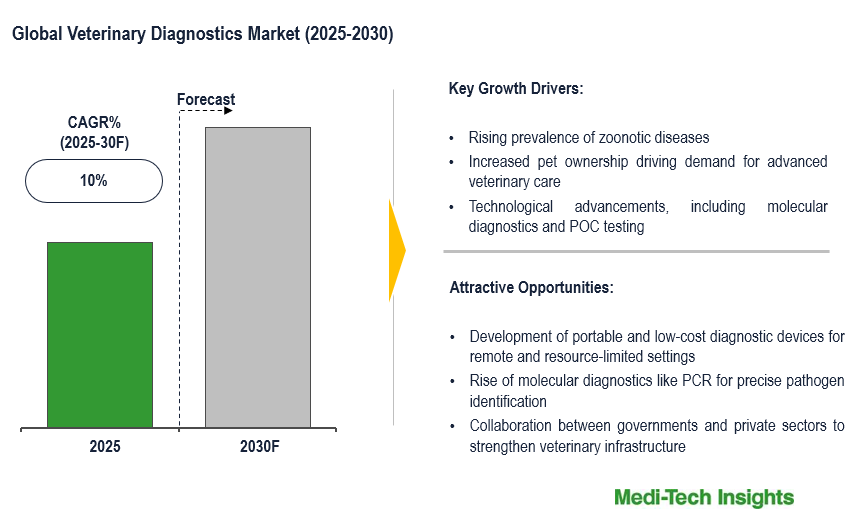
The increasing prevalence of zoonotic diseases is a significant factor driving growth in the veterinary diagnostics market. According to a National Institutes of Health (NIH) article, approximately 60% of emerging human pathogens and around 75% of all emerging infectious diseases are zoonotic. These staggering figures underscore the importance of understanding human activities' impact on zoonotic disease prevalence and transmission. Early detection and management are crucial to prevent outbreaks like avian influenza and rabies, which pose significant public health risks. This awareness has spurred investments in advanced veterinary diagnostic systems and healthcare infrastructure, particularly in regions vulnerable to zoonotic diseases. By enabling precise monitoring and early intervention, these diagnostic measures are critical for mitigating potential pandemics and ensuring the health of both animals and humans
Technological Innovations Shaping the Veterinary Diagnostics Market
Advancements in diagnostic technologies are revolutionizing the veterinary diagnostics landscape, making disease detection faster, more precise, and more accessible. Point-of-care (POC) diagnostic tools, for instance, allow veterinarians to perform tests on-site and receive immediate results, enhancing treatment efficiency. Molecular diagnostics, such as PCR and next-generation sequencing, have significantly improved the accuracy of detecting pathogens at the genetic level. Artificial intelligence (AI) and machine learning (ML) are also being integrated into diagnostic systems, enabling predictive analytics and personalized treatment plans. Additionally, the rise of portable and user-friendly diagnostic devices ensures that even resource-limited regions can adopt advanced testing methodologies. These innovations not only improve clinical outcomes but also contribute to the proactive management of animal health, addressing critical challenges such as zoonotic disease outbreaks and livestock productivity.
To learn more about this report, download the PDF brochure
Competitive Landscape Analysis
The global veterinary diagnostics market is marked by the presence of established and emerging market players such as IDEXX Laboratories, Inc.; Zoetis; Antech Diagnostics, Inc.; Agrolabo S.p.A.; Embark Veterinary, Inc.; Esaote SPA; Thermo Fisher Scientific, Inc.; Innovative Diagnostics SAS; Virbac and FUJIFILM Corporation among others. Some of the key strategies adopted by market players include new product development, strategic partnerships and collaborations, and geographic expansion.
Report Scope
| Report Metric | Details |
| Base Year Considered | 2024 |
| Historical Data | 2023 - 2024 |
| Forecast Period | 2025 - 2030 |
| Growth | 10% |
| Market Drivers |
|
| Attractive Opportunities |
|
| Segment Scope | Product, Test Type, Animal Type and End-user |
| Regional Scope |
|
| Key Companies Mapped | IDEXX Laboratories, Inc.; Zoetis; Antech Diagnostics, Inc.; Agrolabo S.p.A.; Embark Veterinary, Inc.; Esaote SPA; Thermo Fisher Scientific, Inc.; Innovative Diagnostics SAS; Virbac and FUJIFILM Corporation among others |
| Report Highlights | Market Size & Forecast, Growth Drivers & Restraints, Trends, Competitive Analysis |
Global Veterinary Diagnostics Market Segmentation
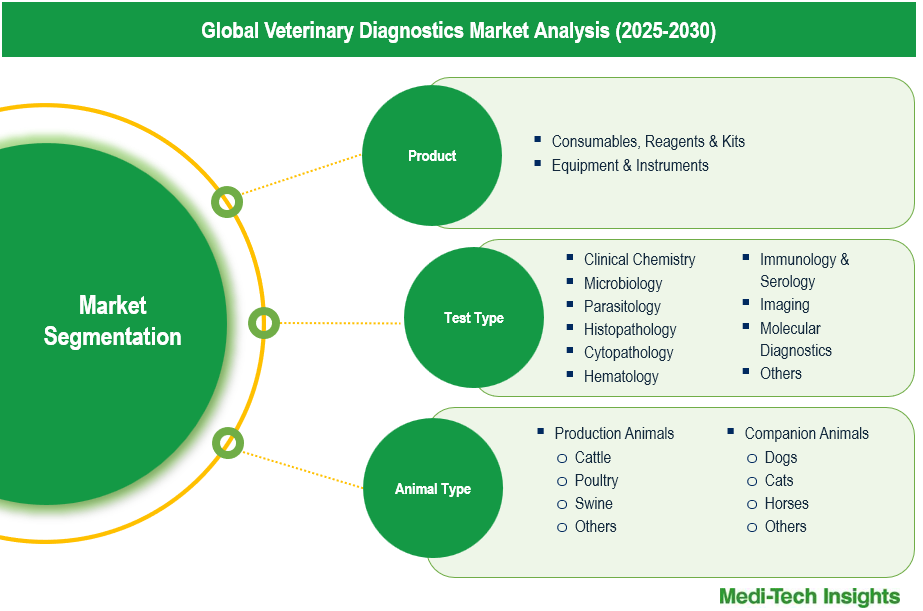
This report by Medi-Tech Insights provides thesize of the global veterinary diagnostics market at theregional- and country-level from 2023 to 2030. The report further segments the market based on product, test type, animal type and end-user
- Market Size & Forecast (2023-2030), By Product, USD Million
- Consumables, Reagents & Kits
- Equipment & Instruments
- Market Size & Forecast (2023-2030), By Test Type, USD Million
- Clinical Chemistry
- Microbiology
- Parasitology
- Histopathology
- Cytopathology
- Hematology
- Immunology & Serology
- Imaging
- Molecular Diagnostics
- Others
- Market Size &a023-2030), By Animal Type, USD Million
- Production Animals
- Cattle
- Poultry
- Swine
- Others
- Companion Animals
- Dogs
- Cats
- Horses
- Others
- Production Animals
- Market Size & Forecast (2023-2030), By End-user, USD Million
- Veterinary Hospitals & Clinics
- Animal Owners/ Producers
- Others
- Market Size & Forecast (2023-2030), By Region, USD Million
- North America
- US
- Canada
- Europe
- UK
- Germany
- Italy
- Spain
- Rest of Europe
- Asia Pacific
- China
- India
- Japan
- Rest of Asia Pacific
- Latin America
- Middle East & Africa
- North America
Frequently Asked Questions About This Report
What is the market size & forecast of the veterinary diagnostics market?
What are historical, present, and forecasted market shares and growth rates of various segments and sub-segments of the veterinary diagnostics market?
What are the key trends defining the market?
What are the major factors impacting the market?
What are the opportunities prevailing in the market?
Need a More Tailored Analysis?
- Discuss the market sizing methodology and forecast assumptions with our healthcare analysts.
- Expand the scope with additional countries, market segments, technologies, or competitor profiling.
- Use the insights to support strategic planning, market entry, commercial due diligence, and long-term revenue growth initiatives.