Download FREE Sample


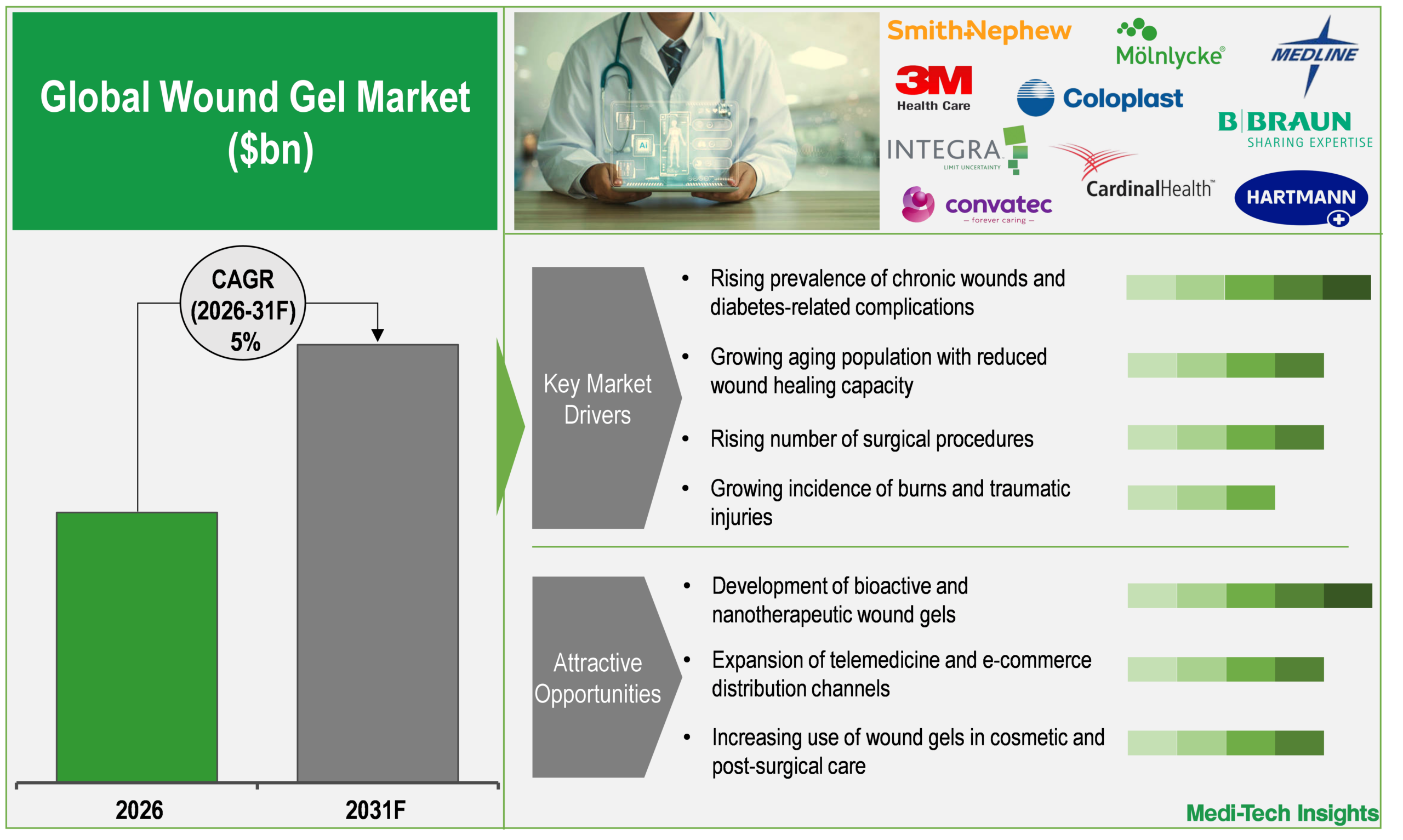
The global wound gel market size is set to grow at 5% CAGR over the next 5 years. Key drivers include rising prevalence of chronic wounds and diabetes-related complications, a growing aging population with reduced wound healing capacity, a rising number of surgical procedures, a growing incidence of burns and traumatic injuries, and expansion of home-based wound care services.
Wound gel is a topical wound care product designed to maintain a moist healing environment and support the natural wound healing process. It is commonly formulated using hydrogel-based materials containing high water content, which helps hydrate dry or necrotic tissue, promote autolytic debridement, and reduce discomfort at the wound site. Some wound gel formulations also incorporate antimicrobial agents that help reduce microbial burden, minimize the risk of infection, and support effective wound healing. Their high-water content provides a cooling and soothing effect while maintaining the moist environment necessary for tissue regeneration and faster healing. Wound gels are applied directly to various types of wounds, including burns, ulcers, and surgical wounds, among others. Owing to their versatility and ease of application, wound gels are widely used in hospitals, outpatient facilities, and home-care settings for managing a broad range of wounds.
Rising prevalence of chronic wounds and diabetes-related complications to drive market growth
The global wound gel market is primarily driven by the increasing burden of chronic wounds and complications associated with diabetes. Diabetes is a leading cause of non-healing wounds, particularly diabetic foot ulcers, as prolonged hyperglycemia disrupts normal inflammatory responses and delays tissue regeneration. These conditions require effective moisture management and support for tissue repair, increasing the demand for advanced wound gels that promote faster healing and improved wound outcomes.
These diabetic wounds fail to heal through normal processes, creating a patient population that consistently requires wound gel products during each dressing change to maintain optimal moisture balance and support tissue repair. The World Health Organization (WHO) reported 830 million people living with diabetes globally in 2022, creating an expanding patient pool that needs wound gel products for chronic wound management. Diabetic foot complications remain one of the leading causes of diabetes-related hospitalizations, resulting in prolonged wound management and recurring demand for wound gel products throughout the treatment period. To conclude, this growing global prevalence of diabetes continues to expand the demand for wound gels used in the management of chronic, non-healing diabetic ulcers.
To learn more about this report, download the PDF brochure
Growing incidence of burns and traumatic injuries to increase demand for wound gels
The growing incidence of road traffic accidents, workplace injuries, household burns, and sports-related trauma has significantly increased the number of patients requiring immediate and ongoing wound care. Burns, including thermal, chemical, and electrical burns, often result in extensive tissue damage that requires specialized treatment and continuous monitoring throughout the healing process. Similarly, traumatic injuries frequently lead to lacerations, abrasions, and open wounds that necessitate appropriate wound management interventions.
The growing number of burn and trauma cases managed in hospitals, emergency departments, and specialized burn units has led to greater adoption of wound gels as part of routine wound management. Wound gels are used throughout the healing process, supporting consistent prodemand as these injuries typically require repeated dressing changes and continuous clinical monitoring. Moreover, patients with severe burns and complex wounds often experience long recovery timelines, thereby resulting in more frequent application of wound gels during treatment. Additionally, increasing investments in emergency care infrastructure and burn treatment services are also supporting the market growth. Together, these factors continue to expand the patient population requiring advanced wound care products, thereby supporting sustained market growth.
To learn more about this report, download the PDF brochure
Product Type Segment Outlook
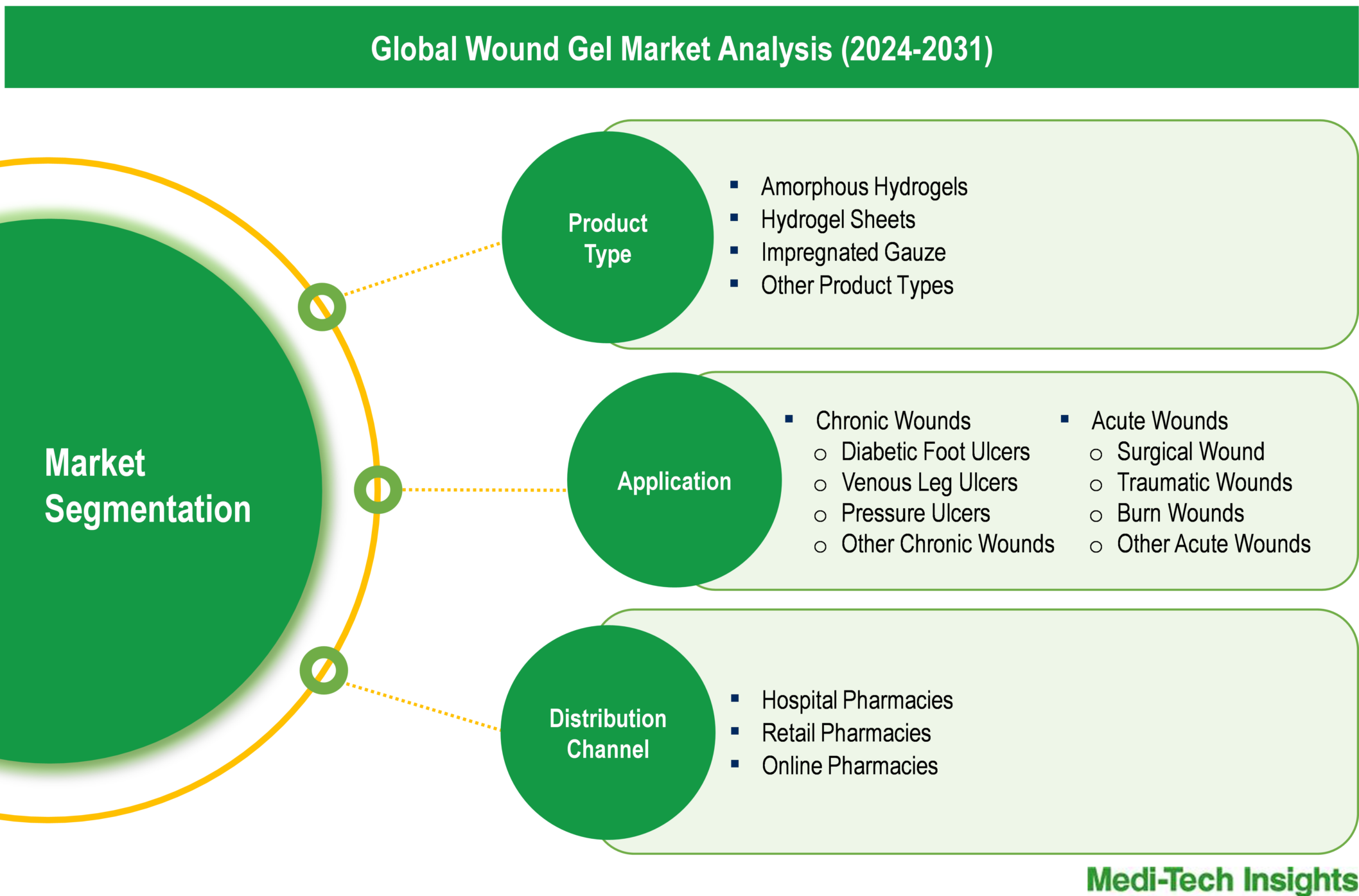
By product type, the wound gel market is categorized into amorphous hydrogels, hydrogel sheets, impregnated gauze, and others. The amorphous hydrogels segment accounted for the largest share of the global market owing to its widespread use across a broad range of wound types, including burn and surgical wounds. Its widespread adoption is supported by its versatility, ease of application, and ability to conform to wounds with irregular contours.
Hydrogel sheets represent a rapidly growing segment due to their ability to provide uniform wound coverage and maintain a moist healing environment. Further, growing use of hydrogel sheets in the treatment of burns, pressure ulcers, and other superficial wounds is contributing to continued segment growth. Impregnated gauze accounts for a notable share of the market, owing to its ability to maintain wound moisture while providing a protective barrier during the healing process. These products are commonly utilised in both acute and chronic wound management settings.
Regional Outlook: North America leads the wound gel market, supported by advanced wound care practices and well-established healthcare infrastructure
North America holds a major share of the global wound gel market. The region's high share is driven by the rising prevalence of chronic wounds and rapid adoption of advanced wound management solutions. Additionally, well-established healthcare infrastructure, favourable reimbursement frameworks, and the presence of key market players continue to support market expansion. Europe follows closely, supported by a growing elderly population, rising burden of chronic wounds, and increasing focus on effective wound management. Furthermore, advancements in healthcare services and greater awareness regarding wound treatment are contributing to the adoption of wound gels across the region.
Asia-Pacific is expected to witness the fastest growth during the forecast period. The region benefits from a large patient population, increasing prevalence of diabetes, rising incidence of burn injuries, and improving healthcare access. Moreover, expanding healthcare expenditure and growing awareness of advanced wound management practices are further driving market growth across the region.
Competitive Landscape Analysis
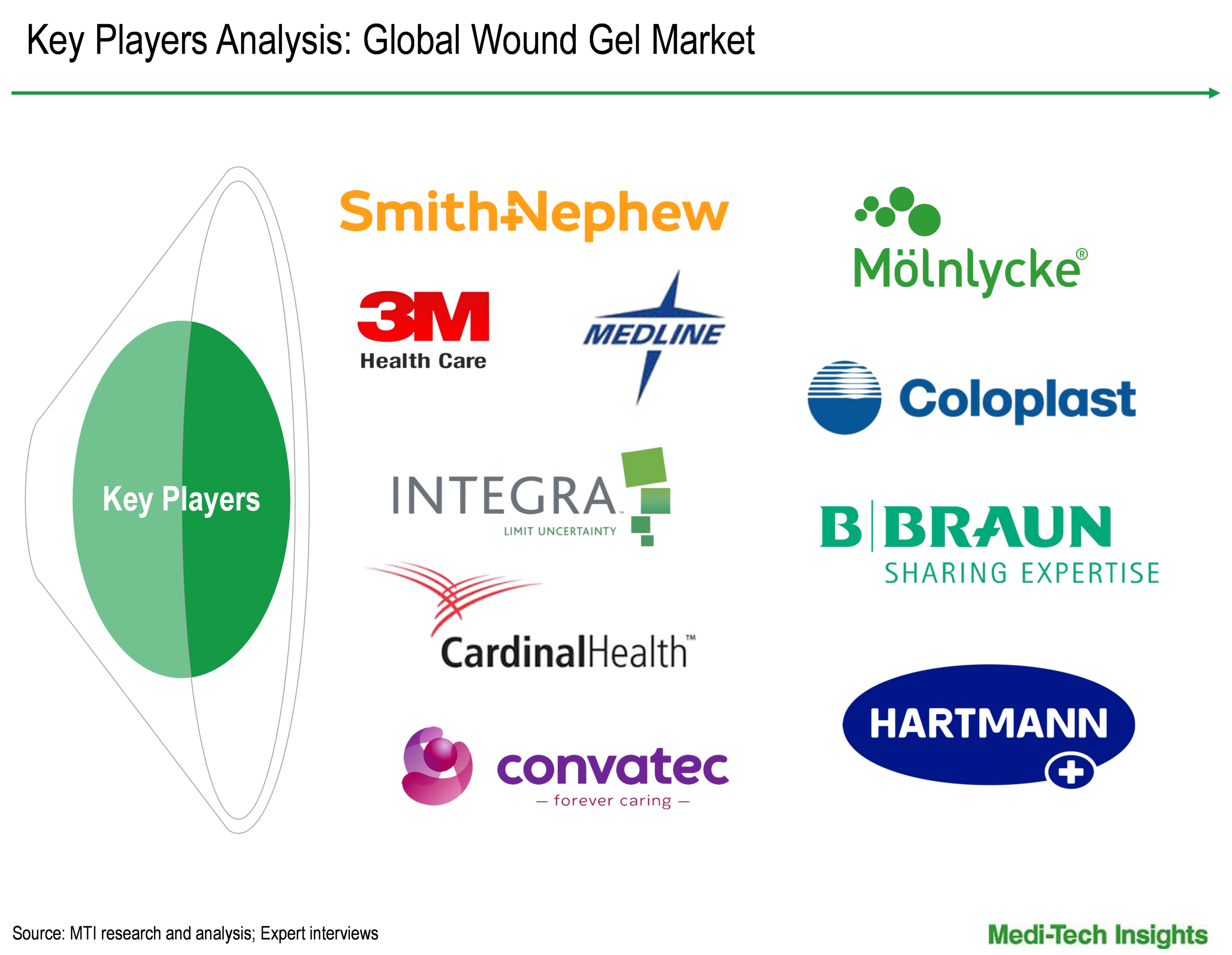
The global wound gel market is marked by the presence of established and emerging market players such as-
- Smith & Nephew plc (UK)
- Mlnlycke Health Care AB (Sweden)
- 3M Health Care Ltd (US)
- Coloplast A/S (Denmark)
- Integra LifeSciences Holdings Corporation (US)
- Braun Melsungen AG (Germany)
- Paul Hartmann SE (Germany)
- Medline Industries, LP (US)
- Cardinal Health (US)
- Convatec Group plc (UK)
Get a sample report for competitive landscape analysis
Growth strategies adopted by players to establish their foothold in the wound gel market
Players operating in this market are adopting various growth strategies such as new product launches and approvals, acquisitions, expansions, and strategic partnerships, agreements, and collaborations, to garner market share. For instance,
- In August 2025, Asclepii launched Poseidon, an FDA-cleared nanosilver hydrogel indicated for the management of acute and chronic wounds. The product was introduced following regulatory clearance as part of the company's expanding wound care portfolio
- In February 2025, Biomiq Inc. introduced PureGel, a hydrogel-based wound care product developed to support the treatment of burns and other acute and chronic wounds. The product incorporates stabilized hypochlorous acid (HOCl) technology to help maintain a moist environment and assist in wound healing
- In August 2024, Kane Biotech Inc. signed a distribution agreement with Razan Medical & Surgical Equipment Trading LLC to expand the availability of revyve Antimicrobial Wound Gel across countries in the Gulf Cooperation Council (GCC)
Report Scope
|
Report Metric |
Details |
|
Base Year Considered |
2025 |
|
Historical Data |
2024 2025 |
|
Forecast Period |
2026 2031 |
|
Growth |
5% |
|
Segment Scope |
Product Type, Application, Antimicrobial Property, Distribution Channel, and End User |
|
Regional Scope |
|
|
Market Drivers |
|
|
Attractive Opportunities |
|
|
Key Companies Mapped |
Smith & Nephew plc (UK); Mlnlycke Health Care AB (Sweden); 3M Health Care Ltd (US); Coloplast A/S (Denmark); Integra LifeSciences Holdings Corporation (US); B. Braun Melsungen AG (Germany); Paul Hartmann SE (Germany); Medline Industries, LP (US); Cardinal Health (US); and Convatec Group plc (UK), among others |
|
Report Highlights |
Market Size & Forecast, Growth Drivers & Restraints, Trends, Competitive Analysis |
Global Wound Gel Market Segmentation
This report by Medi-Tech Insights provides the size of the global wound gel market at the regional and country-level from 2024 to 2031. The report further segments the market by product type, application, antimicrobial property, distribution channel, and end user.
Market Size & Forecast (2024-2031), By Product Type, USD Billion
- Amorphous Hydrogels
- Hydrogel Sheets
- Impregnated Gauze
- Other Product Types
Market Size & Forecast (2024-2031), By Application, USD Billion
- Chronic Wounds
- Diabetic Foot Ulcers
- Venous Leg Ulcers
- Pressure Ulcers
- Other Chronic Wounds
- Acute Wounds
- Surgical Wound Dehiscence
- Traumatic Wounds
- Burn Wounds
- Other Acute Wounds
Market Size & Forecast (2024-2031), By Antimicrobial Property, USD Billion
- Silver Dressings & Gels
- Non-Silver Wound Gels
Market Size & Forecast (2024-2031), By Distribution Channel, USD Billion
- Hospital Pharmacies
- Retail Pharmacies
- Online Pharmacies
Market Size & Forecast (2024-2031), By End User, USD Billion
- Hospitals & Specialty Clinics
- Ambulatory Surgical Centres
- Home Care Settings
- Others
Market Size & Forecast (2024-2031), By Region, USD Billion
- North America
- US
- Canada
- Europe
- UK
- Germany
- France
- Italy
- Spain
- Rest of Europe
- Asia Pacific
- China
- India
- Japan
- Rest of Asia Pacific
- Latin America
- Middle East & Africa
Related reports for reference-
Frequently Asked Questions About This Report
What is the growth rate of the wound gel market?
The wound gel market is set to witness a growth rate of 5% during the forecast period from 2026 to 2031
What are the key trends defining the market?
Increasing demand for silver-based antimicrobial wound gels and shift toward advanced moist wound healing solutions are major trends in the wound gel market
What are the major factors impacting the market growth?
Rising prevalence of chronic wounds and diabetes-related complications, growing ageing population with reduced wound healing capacity, rising number of surgical procedures, growing incidence of burns and traumatic injuries, and expansion of home-based wound care services are some of the key factors driving the wound gel market
Who are the major players operating in the market?
Some of the major players operating in the wound gel market include Smith & Nephew plc (UK); Mölnlycke Health Care AB (Sweden); 3M Health Care Ltd (US); Coloplast A/S (Denmark); Integra LifeSciences Holdings Corporation (US); B. Braun Melsungen AG (Germany); Paul Hartmann SE (Germany); Medline Industries, LP (US); Cardinal Health (US); and Convatec Group plc (UK), among others
What are the key strategies adopted by players?
Key players in the wound gel market are adopting strategies such as new product launches, acquisitions, collaborations, and strategic alliances to expand their market presence
Need a More Tailored Analysis?
- Discuss the market sizing methodology and forecast assumptions with our healthcare analysts.
- Expand the scope with additional countries, market segments, technologies, or competitor profiling.
- Use the insights to support strategic planning, market entry, commercial due diligence, and long-term revenue growth initiatives.