Download FREE Sample


Peripheral vascular devices are medical tools and implants used to diagnose and treat conditions affecting the peripheral vascular system, which includes blood vessels outside the heart and brain. These devices address diseases such as peripheral artery disease (PAD), deep vein thrombosis (DVT), and chronic venous insufficiency. Common types include stents, angioplasty balloons, catheters, atherectomy devices, and vascular grafts. They are primarily utilized in minimally invasive procedures to restore blood flow, remove blockages, and manage vascular abnormalities. With advancements in technology, these devices enhance patient outcomes by reducing procedure-related risks and recovery times, making them essential in modern vascular care.
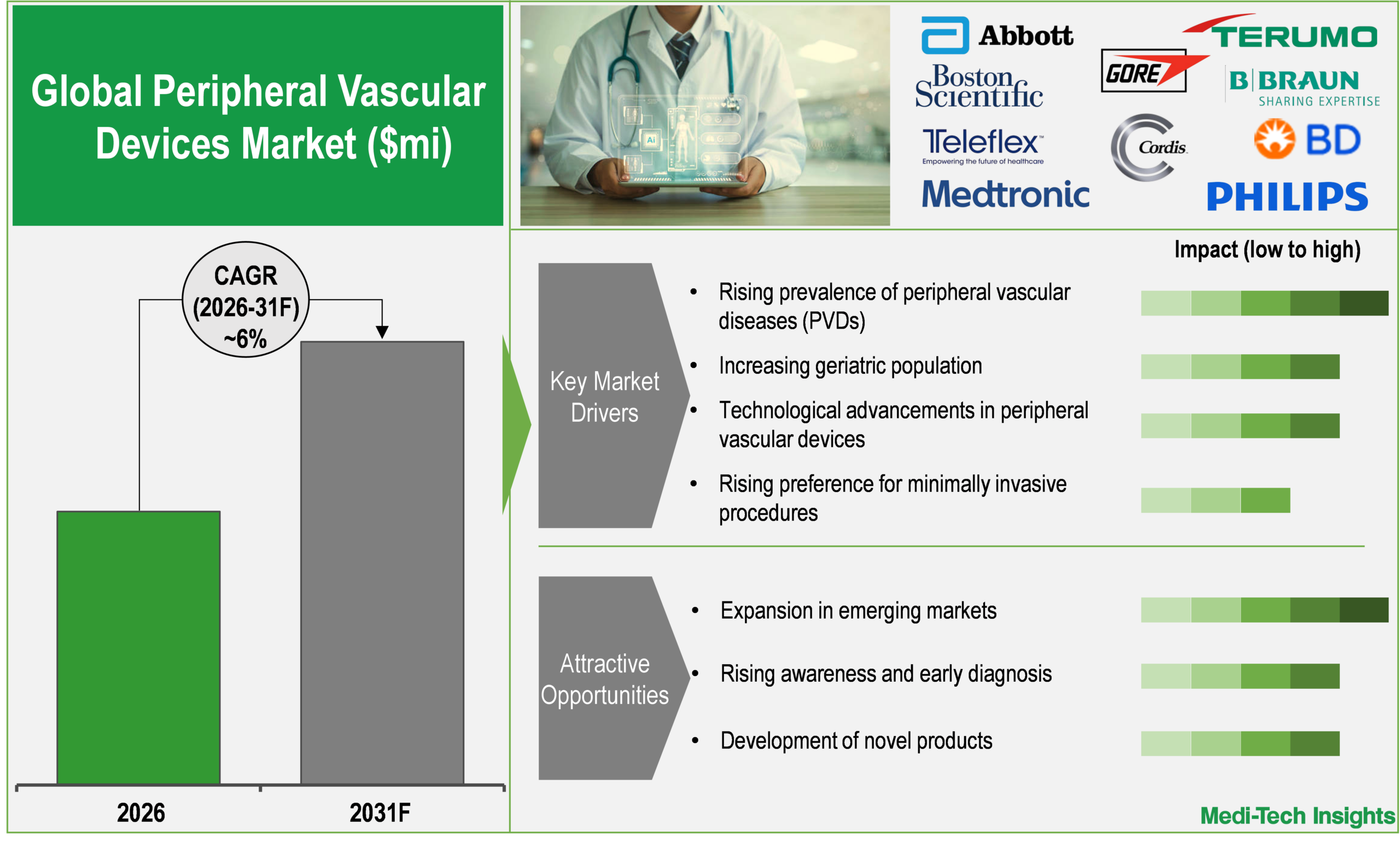
Rising prevalence of peripheral vascular diseases (PVDs) to propel market demand
The increasing prevalence of peripheral vascular diseases (PVDs), including peripheral artery disease (PAD), deep vein thrombosis (DVT), and chronic venous insufficiency (CVI), is a major factor driving growth in the peripheral vascular devices market. According to the American Heart Association, PAD affects more than 12 million people in the US and over 200 million individuals worldwide, making it one of the most common circulatory disorders globally. The burden of vascular diseases continues to rise due to the aging population, increasing incidence of diabetes, obesity, hypertension, hyperlipidemia, and smoking, all of which are well-established risk factors for vascular complications. Furthermore, sedentary lifestyles and unhealthy dietary habits have contributed to a growing number of patients requiring vascular interventions.
As disease prevalence increases, healthcare providers are witnessing a corresponding rise in the number of patients presenting with arterial blockages, venous thromboembolism, and critical limb ischemia, conditions that often require minimally invasive endovascular treatment. This has significantly increased demand for peripheral vascular devices such as angioplasty balloons, drug-coated balloons, stents, atherectomy systems, thrombectomy devices, guidewires, and catheters. Technological advancements enabling safer and more effective treatment of complex vascular lesions are further supporting adoption. In addition, growing awareness of early diagnosis, expanding screening programs, and favorable clinical outcomes associated with minimally invasive procedures are encouraging physicians to intervene earlier in the disease course. Consequently, the rising global burden of peripheral vascular diseases continues to create sustained demand for innovative peripheral vascular devices, supporting long-term market growth.
To learn more about this report, download the PDF brochure
Technological advancements in peripheral vascular devices are driving the market growth
Technological advancements in peripheral vascular devices are fueling market growth by enhancing treatment effectiveness and patient safety. Innovations such as drug-eluting stents, bioresorbable vascular scaffolds, and advanced balloon catheters offer improved outcomes by reducing restenosis and enhancing blood flow restoration. Devices incorporating imaging technologies like intravascular ultrasound (IVUS) and optical coherence tomography (OCT) enable precise diagnosis and intervention. Minimally invasive tools, such as hybrid stents and directional atherectomy devices, reduce procedure-related risks and recovery times. These advancements drive demand by improving procedural success rates and expanding the range of treatable peripheral vascular conditions. Some of these advancements are listed b
- In May 2026, MicroPort Endovastec's SunFlow Drug-Eluting Peripheral Stent System received Green Channel designation in China from the National Medical Products Administration (NMPA), accelerating development of a novel drug-eluting stent technology for peripheral artery disease treatment
- In January 2025, Bentley launched the BeFlow balloon-expandable covered stent system for the treatment of iliac occlusive disease, expanding advanced endovascular treatment options for patients with peripheral artery disease
- In November 2024, Shockwave Medical (Johnson & Johnson MedTech) reported positive clinical outcomes for its Shockwave Javelin Peripheral IVL Catheter, a novel intravascular lithotripsy platform designed to treat heavily calcified peripheral artery disease lesions
- In June 2024, Philips received FDA clearance for its Duo Venous Stent System, developed for the treatment of symptomatic venous outflow obstruction, expanding minimally invasive treatment options for patients with chronic venous disease
- In March 2024, Boston Scientific received FDA approval for the AGENT Drug-Coated Balloon for the treatment of coronary in-stent restenosis, reinforcing broader industry momentum toward drug-delivery technologies that are increasingly being adopted across vascular intervention markets
To learn more about this report, download the PDF brochure
Product Segment Outlook
The peripheral vascular devices market comprises a diverse range of products designed to diagnose and treat peripheral arterial and venous diseases through minimally invasive procedures. Angioplasty balloons, stents, catheters, and guidewires represent the core product categories used in endovascular interventions, enabling vessel access, lesion crossing, and blood flow restoration. Atherectomy devices are increasingly adopted for the treatment of heavily calcified and complex lesions, while hemodynamic flow alteration devices play an important role in managing aneurysms and vascular abnormalities. Continuous innovation in drug-coated balloons, drug-eluting stents, thrombectomy systems, and vessel preparation technologies is improving procedural outcomes and expanding treatment options. As healthcare providers increasingly favor minimally invasive therapies, demand for advanceipheral vascular devices is expected to grow across both arterial and venous interventions.
Regional Outlook: North America represents an innovation-driven market for peripheral vascular devices
North America, led by the US, represents a mature and innovation-driven market for peripheral vascular devices. Market growth is supported by the rapid expansion of office-based laboratories (OBLs) and ambulatory surgical centers (ASCs), which are increasingly performing minimally invasive vascular interventions in cost-effective outpatient settings. Additionally, favorable reimbursement policies from the Centers for Medicare & Medicaid Services (CMS) continue to encourage the adoption of endovascular procedures. The region also benefits from strong uptake of advanced technologies, including drug-coated balloons, intravascular lithotripsy, atherectomy systems, and next-generation stents.
Meanwhile, the Asia Pacific region is emerging as a high-growth market, driven by significant investments in catheterization laboratories, interventional radiology infrastructure, and vascular care facilities. Government-led healthcare modernization programs across countries such as China, India, and Southeast Asian nations are improving access to advanced vascular treatments. Furthermore, the growth of private healthcare providers and increasing medical tourism are accelerating the adoption of innovative peripheral vascular devices throughout the region.
Competitive Landscape Analysis
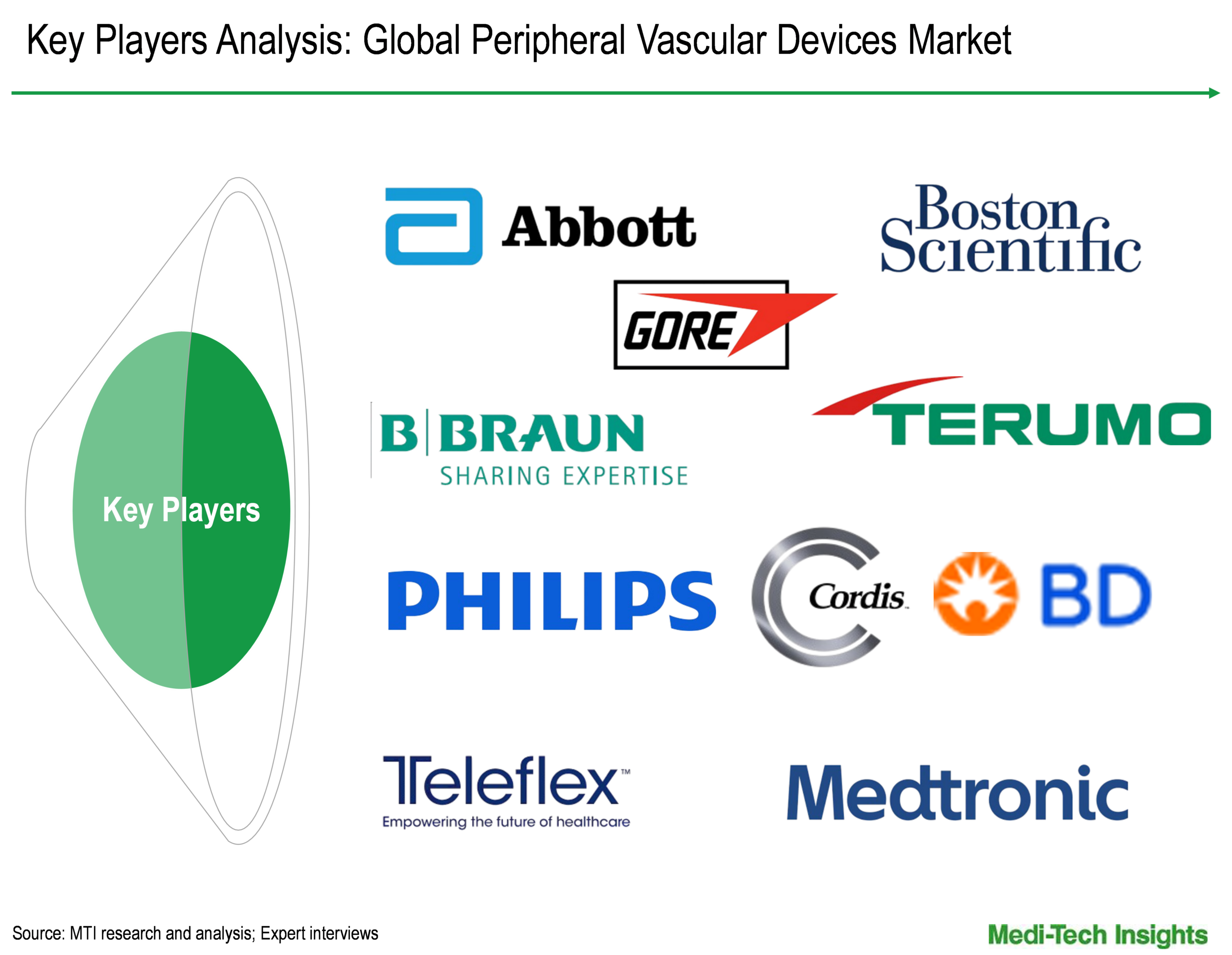
The global peripheral vascular devices market is marked by the presence of established and emerging market players such as-
- Abbott
- Koninklijke Philips N.V.
- Boston Scientific Corporation
- Medtronic
- Becton, Dickinson and Company
- Terumo Corporation
- Braun SE
- Teleflex Incorporated
- L. Gore & Associates, Inc.
- Cordis
Get a sample report for competitive landscape analysis
Growth strategies adopted by players to establish their foothold in the peripheral vascular devices market
Players operating in this market are adopting various growth strategies such as new product launch; acquisitions; expansions; and strategic partnerships, agreements, and collaborations to garner market share. For instance,
- In July 2025, Teleflex completed the acquisition of BIOTRONIK's Vascular Intervention business, strengthening its global presence in peripheral interventions and enhancing its cath lab and endovascular therapy offerings
- In February 2025, Stryker completed its acquisition of Inari Medical, strengthening its position in the peripheral vascular segment and expanding its portfolio of mechanical thrombectomy solutions for venous thromboembolism and other vascular diseases
- In February 2025, BrosMed and Cordis signed an exce distribution agreement for the VaSecure drug-coated peripheral balloon catheter in China, supporting commercialization of next-generation peripheral vascular intervention technologies
- In January 2025, Medtronic entered an exclusive US distribution agreement with Contego Medical for its carotid and peripheral vascular disease treatment portfolio, with an option to acquire the company in the future
Report Scope
|
Report Metric |
Details |
|
Base Year Considered |
2025 |
|
Historical Data |
2024 - 2025 |
| Forecast Period |
2026 - 2031 |
| Growth |
6% |
|
Segment Scope |
Product, Application, and End User |
|
Regional Scope |
|
|
Market Drivers |
|
|
Attractive Opportunities |
|
|
Key Companies Mapped |
Abbott, Koninklijke Philips N.V., Boston Scientific Corporation, Medtronic, Becton, Dickinson and Company, Terumo Corporation, B. Braun SE, Teleflex Incorporated, W. L. Gore & Associates, Inc., and Cordis, among other |
|
Report Highlights |
Market Size & Forecast, Growth Drivers & Restraints, Trends, Competitive Analysis |
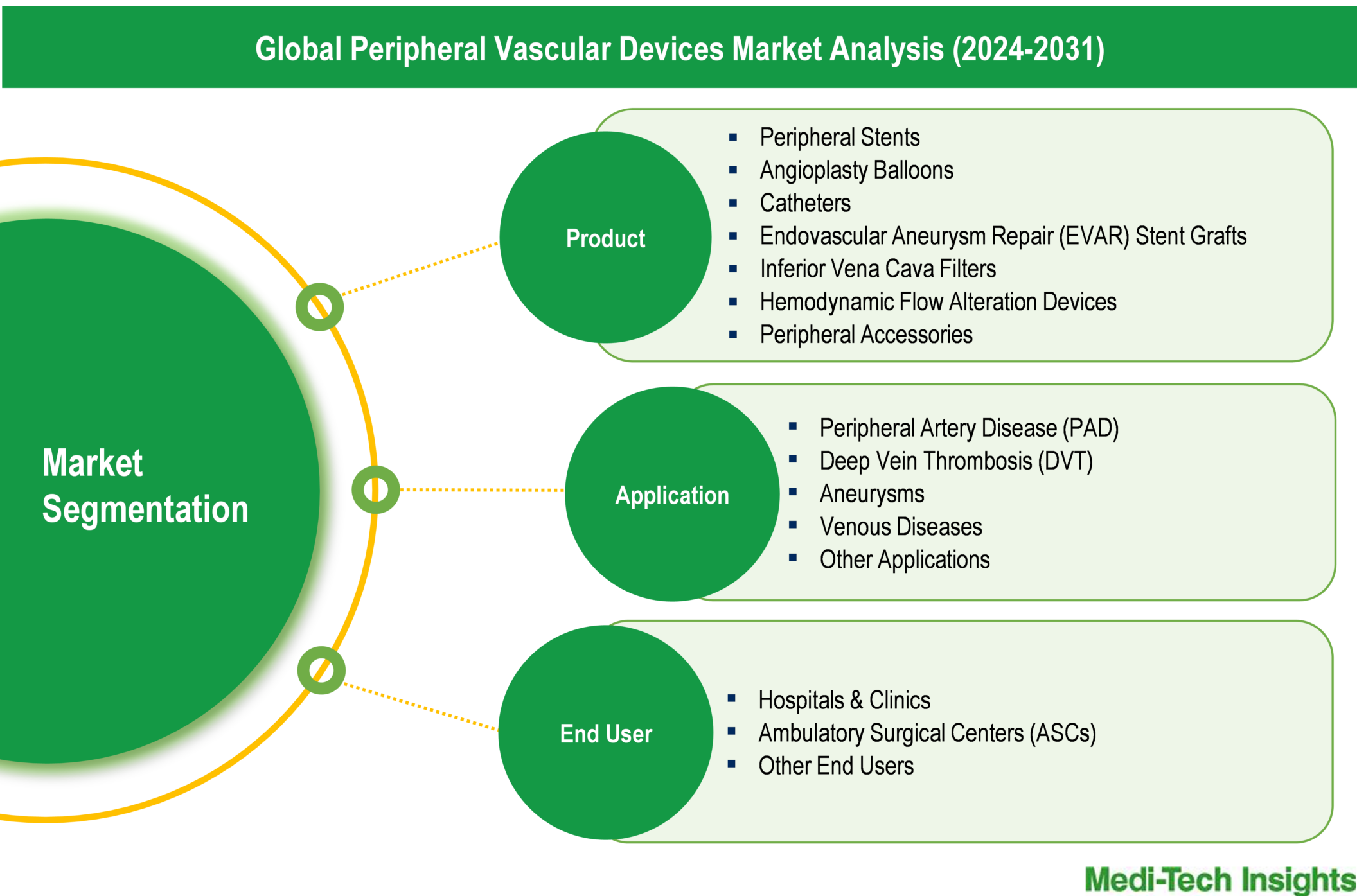
Global Peripheral Vascular Devices Market Segmentation
This report by Medi-Tech Insights provides the size of the global peripheral vascular devices market at the regional and country levels from 2024 to 2031. The report further segments the market by product, application, and end user.
Market Size & Forecast (2024-2031), By Product, USD Billion
- Peripheral Stents
- Iliac Artery Stents
- Femoral Artery Stents
- Carotid Artery Stents
- Renal Artery Stents
- Other Peripheral Stents
- Angioplasty Balloons
- Old/Normal Balloons
- Drug-Eluting Balloons
- Cutting & Scoring Balloons
- Catheters
- Angiography Catheters
- Guiding Catheters
- IVUS/OCT Catheters
Endovascular Aneurysm Repair Stent Grafts
- Thoracic Endovascular Aneurysm Stent Grafts
- Abdominal Endovascular Aneurysm Stent Grafts
- Plaque Modification Devices
- Atherectomy Devices
- Thrombectomy Devices
- Inferior Vena Cava Filters
- Permanent Filters
- Retrievable Filters
- Hemodynamic Flow Alteration Devices
- Chronic Total Occlusion Devices
- Embolic Protection Devices
- Peripheral Accessories
- Guidewires
- Workhorse Guidewires
- Specialty Guidewires
- Extra Support Guidewires
- Frontline Finesse Guidewires
- Peripheral Vascular Closure Devices
- Balloon Inflation Devices
- Introducer Sheaths
- Guidewires
Market Size & Forecast (2024-2031), By Application, USD Billion
- Peripheral Artery Disease (PAD)
- Deep Vein Thrombosis (DVT)
- Aneurysms
- Venous Diseases
- Other Applications
Market Size & Forecast (2024-2031), By End User, USD Billion
- Hospital & Clinics
- Ambulatory Surgery Centres (ASCs)
- Other End Users
Market Size & Forecast (2024-2031), By Region, USD Billion
- North America
- US
- Canada
- Europe
- UK
- Germany
- France
- Italy
- Spain
- Rest of Europe
- Asia Pacific
- China
- India
- Japan
- Rest of Asia Pacific
- Latin America
- Middle East & Africa
--
Recent Published Reports
Nanoparticle Drug Delivery Systems Market
Targeted Drug Delivery Market
Drug Delivery in Cancer Market
Contrast Media Injectors Market
Controlled Release Drug Delivery Market
Smart Drug Delivery Systems Market
Frequently Asked Questions About This Report
What is the growth rate of the peripheral vascular devices market?
What are the key trends defining the market?
What are the major factors impacting the market growth?
Who are the major players operating in the market?
What are the opportunities prevailing in the market?
Need a More Tailored Analysis?
- Discuss the market sizing methodology and forecast assumptions with our healthcare analysts.
- Expand the scope with additional countries, market segments, technologies, or competitor profiling.
- Use the insights to support strategic planning, market entry, commercial due diligence, and long-term revenue growth initiatives.