Download FREE Sample


Smart drug delivery systems (SDDS) represent an advanced technology for administering medications. These systems are comprised of two components viz. devices or technologies that deliver medications and include digital, electronic, or intelligent capabilities and communication systems like, wireless, networked, internet-based, for real-time and remote monitoring and controlling of the administration of drugs. For instance, there are many different smart drug delivery systems available today, including smart inhalers, connected insulin pens, transdermal patches, wearable injectors, and infusion pumps among others. By using wireless communication and advanced data analytics, smart drug delivery systems can help improve the accuracy of dosing, increase medication adherence, enable remote patient monitoring, and support personalized treatment plans. The number of chronic disease management applications employing SDDS is steadily increasing, as are the number of home healthcare providers utilizing these technologies and the overall advancement of precision medicine initiatives.
Growing need for medication adherence to propel market demand
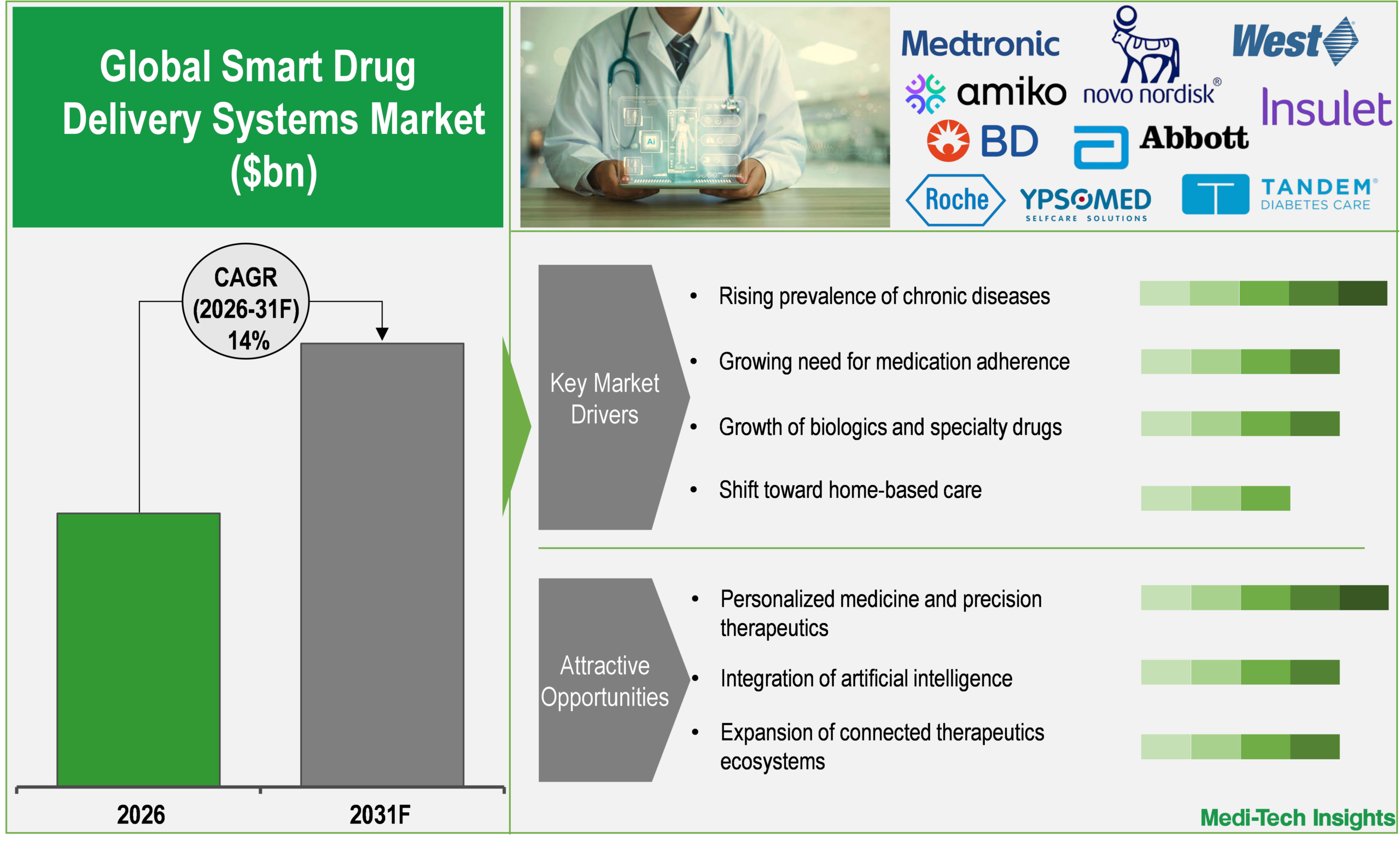
Growing demand for enhanced quality of care and adherence to medications coupled with an increasing ageing population is a key factor driving the smart drug delivery systems market. Medication adherence is a significant issue with respect to patients suffering from chronic illnesses like diabetes, asthma, heart disease & autoimmune diseases where many of them do not follow through on taking their prescribed therapies. Missing doses, improper administration or dosages and inconsistent treatment schedules contribute to the progression of disease and lead to hospitalizations and increase in overall healthcare costs associated with the disease process.
These challenges are being addressed by smart drug delivery systems by using automated reminders and dose logs, real time monitoring, mobile application connectivity, & alerts for both patients & their caregivers to help ensure medicines are taken correctly and at the appropriate time which will ultimately increase the likelihood of therapy working and improve patient outcomes. Providers also benefit from having access to the data which supports adherence and allows for timely intervention & individualized adjustment of their patient-s care. With the healthcare system-s focus on improving clinical outcomeoidable healthcare expenditures, and assisting with the management of chronic diseases for the long haul, the demand for intelligent drug delivery devices that support medication adherence is expected to increase across both clinical and home-care settings.
To learn more about this report, download the PDF brochure
Shift toward home-based care is fueling the demand for smart drug delivery systems
The growth of smart drug delivery systems is being driven by the increasing shift to home-based healthcare, which has resulted in an increased demand for technology that enables patients to self-administer medication conveniently, safely and effectively in non-traditional healthcare environments. Increasingly high costs of providing healthcare, increasing pressure on hospitals, and the preference of many patients to receive treatment in their own homes, has led to a demand for home-based models of care. Smart drug delivery systems such as connected insulin pens, wearable injectors, smart infusion pumps and digital inhalers facilitate this shift to home-based care by enabling patients to manage their complex therapy independently, while still ensuring that the correct treatment is being received and that the patient is adhering to their treatment plan.
Additionally, by using the automated dosing, treatment reminders, real time monitoring, and remote connectivity to their healthcare providers enabled through smart drug delivery systems; healthcare providers can remotely track patient therapy, identify potential problems, and intervene when required thus reducing the need for patients to visit the hospital regularly. The increasing number of patients with chronic diseases and the increased use of biologic products that require long term administration also support the demand for smart drug delivery solutions designed for use within the home environment or to support remote patient management.
To learn more about this report, download the PDF brochure
Product Segment Outlook
Insulin pumps represent the largest product segment of the smart drug delivery systems market. Insulin pumps are leading this market due to their established use in diabetes management, widespread adoption among patients who require continuous insulin delivery, and steadily increasing integration of connectivity, automation, and glucose-monitoring capabilities. By supporting increased global prevalence of diabetes along with a growing demand for accurate insulin delivery and improved glycemic control, insulin pumps maintain their leading position within the smart drug delivery systems market.
On the other hand, wearable injectors are expected to register the highest growth rate in the smart drug delivery systems market. These devices enable the subcutaneous delivery of large-volume therapies outside clinical settings, supporting the broader shift toward home-based care. Wearable injectors promote greater patient comfort, decrease the number of office visits, and allow patients to self-administer, all of which contribute to their desirability as a management solution for chronic diseases. Additionally, the continued trend toward increasing use of biologics, specialty pharmaceuticals, and remote healthcare delivery models is expected to further enhance the adoption of wearable injectors.
Regional Outlook: Growing investments in biologics and vaccine manufacturing are supporting North American market expansion
North America held the largest share of the smart drug delivery systems market. With its robust health-care infrastructure, high acceptance of digital health solutions, and presence of numerous big pharmaceutical and medical device companies in the region, North America continues to lead the smart drug delivery systems market. The region also benefits from significant healthcare spending, favorable reimbursement frameworks for advanced therapies, and ongoing investments in remote patient monitoring and precision medicine.
Conversely, Asia Pacific continues to be the fastest growing market, mainly due to a high number of people suffering from chronic illness, a rapidly expanding patient population, rapid advancement of technology, increasing smartphone penetration, rapid growth of the health care infrastructure, and favorable government programs and support for digital health. Continued increases in awareness of medication support systems and/or home-based treatment will further increase the demand for smart drug delivery technologies throughout the region.
Competitive Landscape Analysis
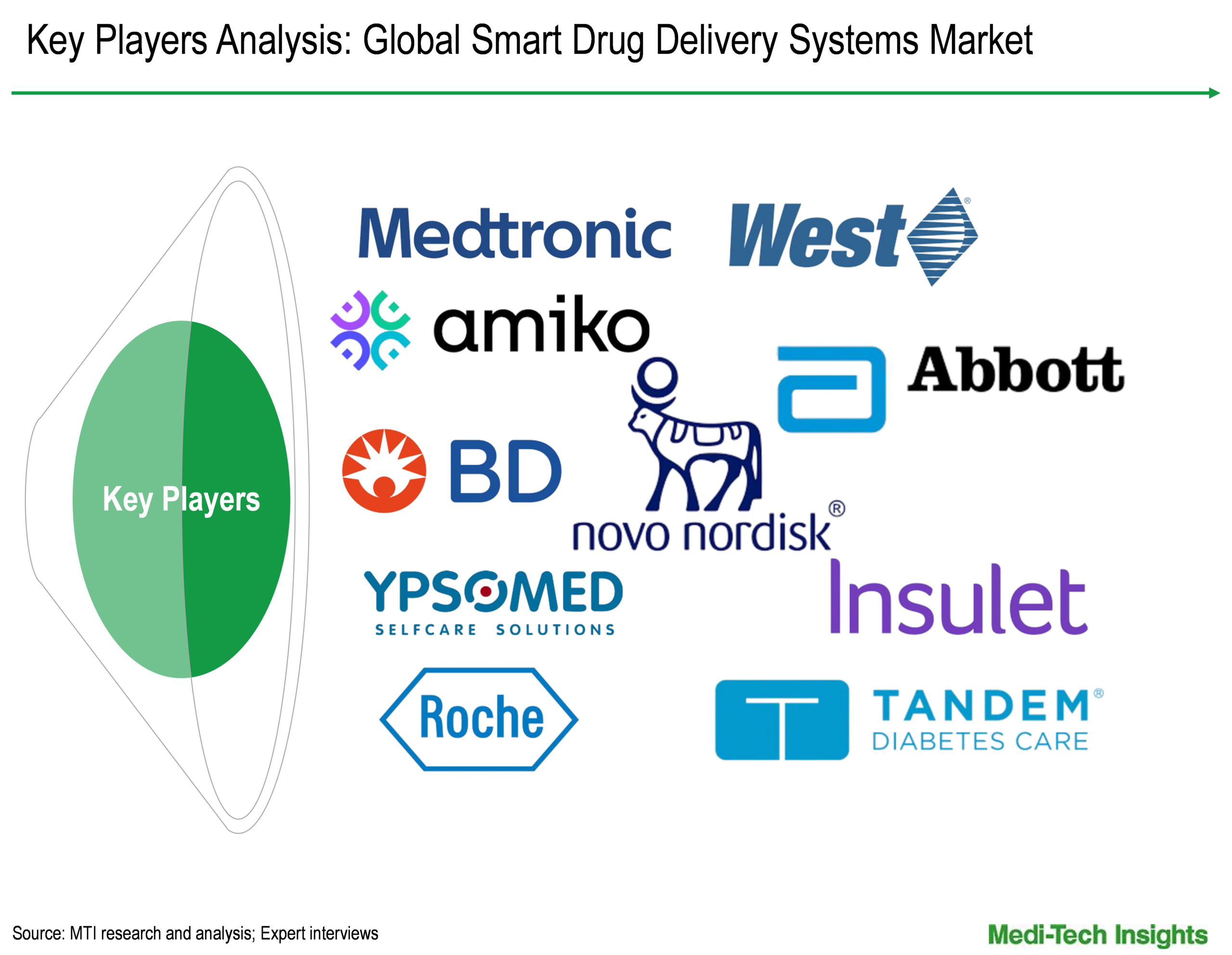
The global smart drug delivery systems market is marked by the presence of established and emerging market players such as-
- Medtronic (Ireland)
- Amiko Digital Health Limited (Italy)
- Becton, Dickinson and Company (BD) (US)
- Ypsomed (Switzerland)
- Novo Nordisk A/S (Denmark)
- Hoffmann-La Roche Ltd (Switzerland)
- Abbott (US)
- Tandem Diabetes Care, Inc. (US)
- West Pharmaceutical Services, Inc. (US)
- Insulet Corporation (US).
Get a sample report for competitive landscape analysis
Growth strategies adopted by players to establish their foothold in the smart drug delivery systems market
Players operating in this market are adopting various growth strategies such as new product launches and approvals; acquisitions; expansions; and strategic partnerships, agreements, and collaborations, to garner market share. For instance,
- In June 2026, MiniMed initiated the US commercial rollout of its FDA-cleared Flex automated insulin delivery system, the company's smallest and first app-controlled, screenless insulin pump designed for people with diabetes. The Flex system integrates MiniMed-s SmartGuard algorithm and Simplera Sync sensor, supporting automated insulin delivery, smartphone-based control, and enhanced convenience for home-based diabetes management
- In June 2026, Croda-s subsidiary Avanti Polar Legic collaboration with NovoArc GmbH to expand its advanced lipid technology portfolio, enhancing drug delivery solutions for complex therapeutics including mRNA, proteins, and peptides. The collaboration strengthens capabilities in lipid-based drug delivery by supporting improved stability, alternative administration routes such as oral delivery, and accelerated development of next-generation biologics and nucleic acid-based therapies
- In January 2026, AbbVie acquired West Pharmaceutical Services- SmartDose manufacturing facility in Arizona, investing over $175 million to expand and integrate advanced on-body drug delivery capabilities into its manufacturing network. The acquisition strengthens AbbVie-s position in next-generation drug delivery by enhancing its capacity to develop and manufacture large-volume injectable therapies using wearable on-body delivery systems for complex medicines
Report Scope
|
Report Matric |
Details |
|
Base Year Considered |
2025 |
|
Historical Data |
2024 - 2025 |
|
Forecast Year |
2026 - 2031 |
|
Growth Rate |
14% |
|
Segment Scope |
Product, Route of Administration, Distribution Channel, and End User |
|
Regional Scope |
|
|
Market Drivers |
|
|
Attractive Opportunities |
|
|
Key Companies Mapped |
Medtronic (Ireland); Amiko Digital Health Limited (Italy); Becton, Dickinson and Company (BD) (US); Ypsomed (Switzerland); Novo Nordisk A/S (Denmark); F. Hoffmann-La Roche Ltd (Switzerland); Abbott (US); Tandem Diabetes Care, Inc. (US); West Pharmaceutical Services, Inc. (US); and Insulet Corporation (US), among others |
|
Report Highlights |
Market Size & Forecast, Growth Drivers & Restraints, Trends, Competitive Analysis |
Global Smart Drug Delivery Systems Market Segmentation
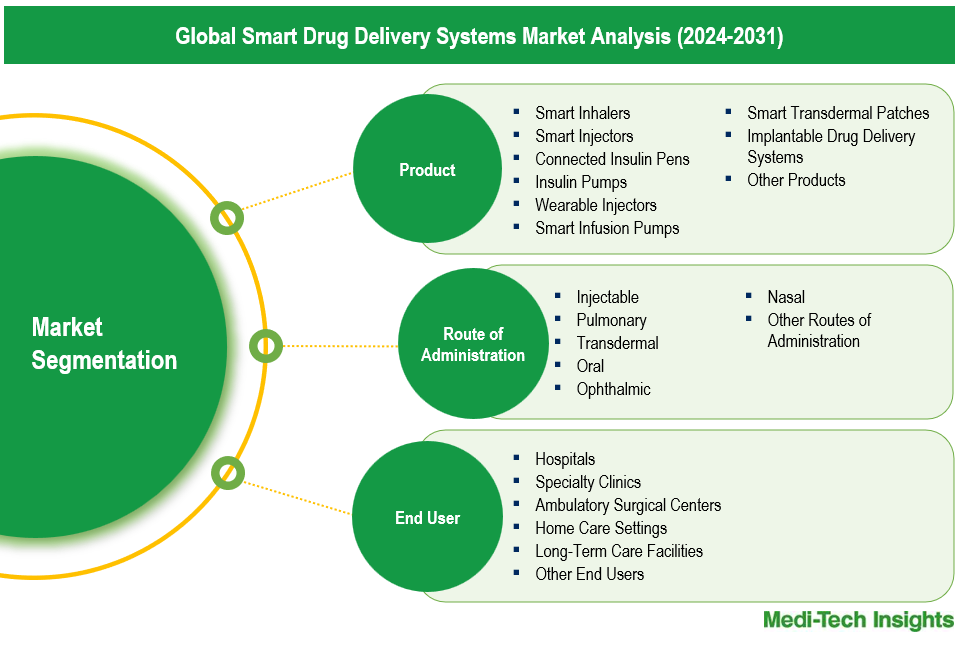
This report by Medi-Tech Insights provides thesize of the global smart drug delivery systems market at theregional and country-level from 2024 to 2031. The report further segments the market by product, route of administration, distribution channel, and end user.
Market Size & Forecast (2024-2031), By Product, USD Billion
- Smart Inhalers
- Smart Injectors
- Connected Insulin Pens
- Insulin Pumps
- Wearable Injectors
- Smart Infusion Pumps
- Smart Transdermal Patches
- Implantable Drug Delivery Systems
- Other Products
Market Size & Forecast (2024-2031), By Route of Administration, USD Billion
- Injectable
- Pulmonary
- Oral
- Ophthalmic
- Nasal
- Other Routes of Administration
Market Size & Forecast (2024-2031), By Distribution Channel, USD Billion
- Hospital and Retail Pharmacies
- Online Distribution Channels
- Direct Sales (D2C)
- Other Distribution Channels
Market Size & Forecast (2024-2031), By End User, USD Billion
- Hospitals
- Specialty Clinics
- Ambulatory Surgical Centers
- Home Care Settings
- Long-Term Care Facilities
- Other End Users
Market Size & Forecast (2024-2031), By Region, USD Billion
- North America
- US
- Canada
- Europe
- UK
- Germany
- France
- Italy
- Spain
- Rest of Europe
- Asia Pacific
- China
- India
- Japan
- Rest of Asia Pacific
- Latin America
- Middle East & Africa
Related reports
Frequently Asked Questions About This Report
What is the growth rate of the smart drug delivery systems market?
The smart drug delivery systems market is set to witness a growth rate of 14% during the forecast period from 2026 to 2031
What are the key trends defining the market?
AI-enabled drug delivery systems, IoT-connected drug delivery devices, growth of smart injectable devices and wearable injectors, and smartphone-integrated delivery platforms are major trends in the smart drug delivery systems market
What are the major factors impacting the market growth?
Rising prevalence of chronic diseases, growing need for medication adherence, expansion of digital health and connected care, growth of biologics and specialty drugs, and shift toward home-based care are some of the key factors driving the smart drug delivery systems market
What are the opportunities prevailing in the market?
Personalized medicine and precision therapeutics, integration of artificial intelligence (AI), emerging markets expansion, and expansion of connected therapeutics ecosystems offer numerous growth opportunities for companies operating in the smart drug delivery systems market
Who are the major players operating in the market?
Some of the major players operating in the smart drug delivery systems market include as Medtronic (Ireland); Amiko Digital Health Limited (Italy); Becton, Dickinson and Company (BD) (US); Ypsomed (Switzerland); Novo Nordisk A/S (Denmark); F. Hoffmann-La Roche Ltd (Switzerland); Abbott (US); Tandem Diabetes Care, Inc. (US); West Pharmaceutical Services, Inc. (US); and Insulet Corporation (US)
Need a More Tailored Analysis?
- Discuss the market sizing methodology and forecast assumptions with our healthcare analysts.
- Expand the scope with additional countries, market segments, technologies, or competitor profiling.
- Use the insights to support strategic planning, market entry, commercial due diligence, and long-term revenue growth initiatives.