Download FREE Sample


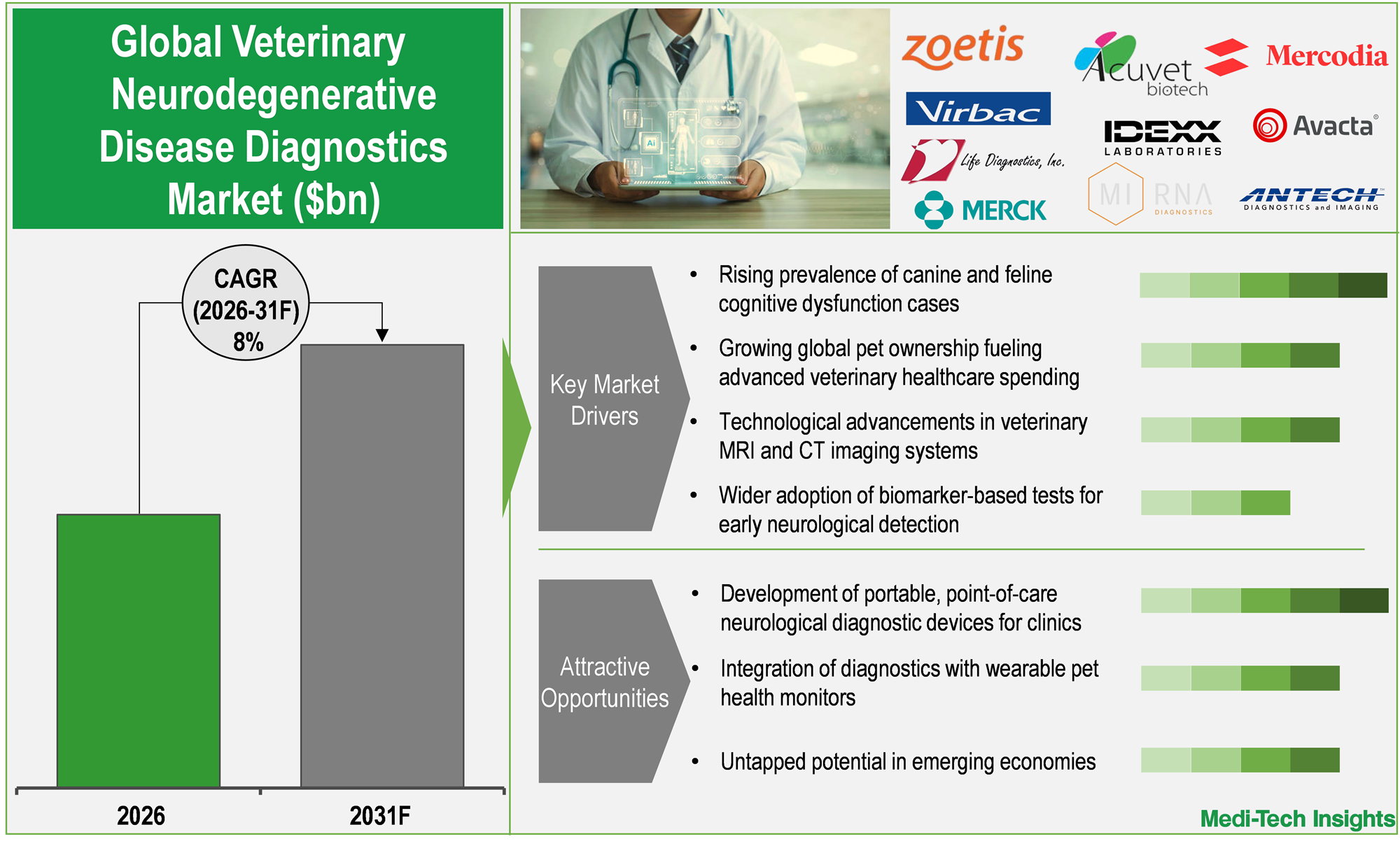
The global veterinary neurodegenerative disease diagnostics market size is set to grow at a CAGR of 8% over the next 5 years. Key drivers include the rising prevalence of canine and feline cognitive dysfunction cases, growing global pet ownership fueling advanced veterinary healthcare spending, technological advancements in veterinary MRI and CT imaging systems, wider adoption of biomarker-based tests for early neurological detection, and growing awareness among owners about age-related neurological disorders. However, factors such as limited availability of trained veterinary neurologists across many regions; high treatment and diagnostic costs discouraging owners from testing; and shortage of validated biomarkers for early-stage disease identification impact the market growth.
Veterinary neurodegenerative disease
diagnostics refer to the specialized instruments, consumables, and testing
methods used to detect, monitor, and evaluate progressive nervous system
disorders in animals, including conditions such as canine cognitive
dysfunction, feline cognitive dysfunction, and degenerative myelopathy. These
diagnostics are typically administered by veterinary neurologists and general
practitioners using tools such as MRI, CT imaging, cerebrospinal fluid
analysis, electrodiagnostic testing, and biomarker-based assays to identify
early signs of cognitive decline, motor dysfunction, and behavioral changes in
aging pets and livestock. Beyond basic clinical evaluation, several solutions
now incorporate AI-assisted imaging interpretation, genetic screening, and
predictive analytics to support earlier and more accurate detection. The market
caters to companion animals, including canines and felines, as well as
livestock species, serving veterinary hospitals, diagnostic laboratories, and
specialty neurology clinics involved in animal healthcare management.
Rising prevalence
of canine and
feline cognitive dysfunction cases to drive demand
Cognitive dysfunction in aging companion animals has emerged as one of
the most significant contributors to the growth of the veterinary
neurodegenerative disease diagnostics market. Canine Cognitive Dysfunction
(CCD) and Feline Cognitive Dysfunction (FCD), often described as the animal
equivalent of Alzheimer's disease in humans, are increasingly being recognized
by veterinarians and pet owners alike as pets live longer due to improved
nutrition, vaccination, and preventive healthcare. Industry estimates suggest
that a substantial share of senior dogs and cats exhibit at least one
behavioral sign consistent with cognitive decline, such as disorientation,
disrupted sleep-wake cycles, house-soiling, altered social interactions, and
reduced activity levels, yet many cases remain undiagnosed due to owners mistaking
these symptoms for normal aging.
Veterinary associations and animal health organizations,
including guidance referenced by bodies such as the World Small Animal
Veterinary Association (WSAVA), have been actively promoting structured
cognitive screening during routine senior wellness visits, encouraging
practitioners to move beyond anecdotal observation toward standardized
behavioral questionnaires and diagnostic imaging. This growing clinical
emphasis, combined with rising pet humanization and owners' willingness to
invest in geriatric pet care, is prompting veterinary hospitals and specialty
clinics to expand their diagnostic capabilities, including MRI, cerebrospinal
fluid analysis, and emerging biomarker panels.
As awareness campaigns, veterinary continuing education, and published research on animal neurodegeneration continue to expand globally, early identification of cognitive dysfunction is increasingly viewed as essential to timely intervention, symptom management, and improved quality of life for aging pets, reinforcing sustained demand for accurate and accessible diagnostic solutions.
To learn more about this report, download the PDF brochure
Integration of diagnostics with wearable pet health monitors to create opportunity for market growth
The growing integration of wearable health monitors with veterinary diagnostic platforms presents a significant opportunity within the neurodegenerative disease diagnostics space. Wearable devices, such as smart collars, activity trackers, and biosensors, are increasingly being adapted for animals to continuously capture physiological and behavioral parameters, including gait patterns, sleep-wake cycles, activity levels, and heart rate variability. When paired with diagnostic platforms, this continuous data stream allows veterinarians to detect subtle early indicators of cognitive decline, mobility disorders, and behavioral changes long before they become clinically apparent through conventional examination alone.
This convergence enables a shift from
episodic, clinic-based assessment to continuous, at-home monitoring, providing
veterinary neurologists with richer longitudinal data to support earlier and
more accurate diagnosis. Wearable-integrated diagnostics can also flag
irregular movement or restlessness patterns associated with conditions such as
canine cognitive dysfunction, prompting timely veterinary consultation. For
diagnostic companies, this creates opportunities to develop connected
ecosystems combining hardware, cloud-based analytics, and veterinary reporting
dashboards. As pet owners increasingly seek proactive, technology-enabled care
for aging companion animals, wearable-linked diagnostics are positioned to
become a valuable growth avenue, strengthening preventive neurological
screening while expanding the overall diagnostic value chain across companion
animal healthcare.
To learn more about this report, download the PDF brochure
Diagnostic Type Segment Outlook
By
diagnostic type, the veterinary neurodegenerative disease diagnostics market is
segmented into imaging and biomarkers diagnostic tests. The imaging segment
accounts for the largest market share, driven by widespread reliance on MRI,
CT, and ultrasound technologies for detecting structural brain and spinal cord
abnormalities in companion animals and livestock. Growth in this segment is
further supported by increasing investments in advanced imaging infrastructure
and rising adoption of AI-assisted image interpretation for faster, more
accurate neurological assessment.
Biomarkers
diagnostic tests represent the fastest-growing segment, gaining momentum as
veterinarians and diagnostic laboratories seek minimally invasive methods for
early-stage disease detection. This segment includes cerebrospinal fluid
analysis, genetic testing, and blood-based biomarker assays that help identify
neurodegenerative changes before clinical symptoms fully manifest. Growth is
further driven by ongoing research into species-specific biomarkers and rising
demand for cost-effective, rapid diagnostic alternatives to imaging. Together,
both segments are increasingly complementing one another, enabling veterinary
practitioners to combine structural and molecular insights for comprehensive,
evidence-based neurological disease diagnosis and monitoring across companion
and livestock animal populations.
Regional Outlook: North America maintains its leading position in the market, followed by Europe
North
America holds the largest share of the veterinary neurodegenerative disease
diagnostics market, supported by high pet ownership rates, strong veterinary
infrastructure, and widespread adoption of pet insurance. The region's
leadership is further reinforced by growing integration of artificial
intelligence (AI) in veterinary imaging interpretation and the rising
popularity of at-home cognitive screening tools, both of which are helping
practitioners identify neurological decline earlier and more accurately in
aging companion animals.
Asia-Pacific is expected to witness the fastest growth, fueled by a rapidly expanding companion animal population, rising disposable incomes, and improving access to advanced veterinary diagnostic infrastructure. Growing awareness of age-related neurological conditions is further accelerating adoption across the region. Europe accounts for the second largest share of the market, driven by increasing veterinary specialty services, rising pet-humanization trends, and greater owner's willingness to invest in preventive neurological care for senior pets. Supportive research initiatives and expanding diagnostic laboratory networks further strengthen regional growth.
Competitive Landscape Analysis
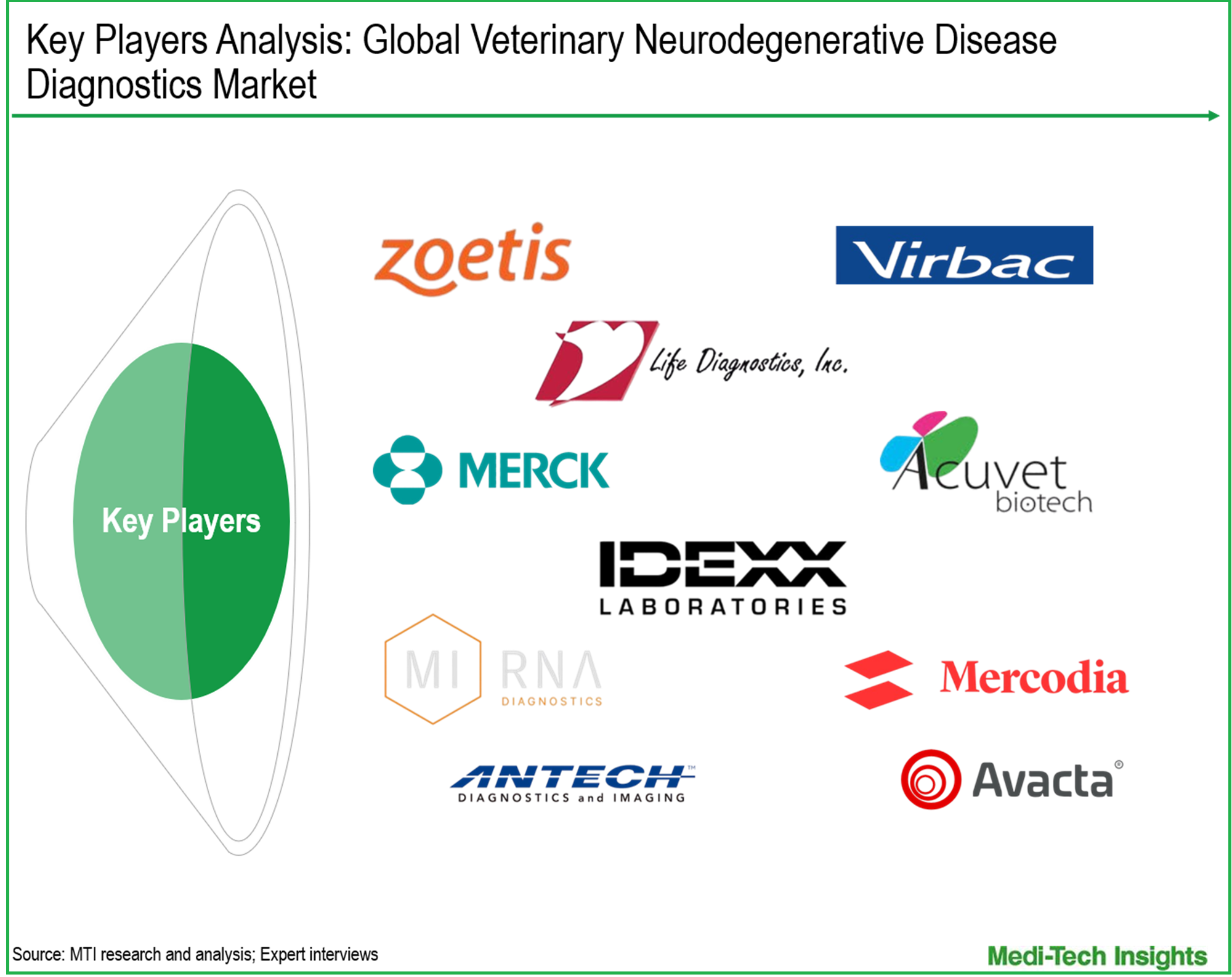
The global veterinary neurodegenerative
disease diagnostics market is marked by the presence of established and
emerging market players such as-
- Zoetis Inc. (US)
- Virbac (France)
- Life Diagnostics, Inc. (US)
- ACUVET BIOTECH (Spain)
- Merck & Co., Inc. (US)
- IDEXX Laboratories, Inc. (US)
- MI: RNA Diagnostics Ltd. (UK)
- Mercodia AB (Sweden)
- Antech Diagnostics, Inc. (US)
- Avacta Animal Health Limited (UK)
To learn more about this report, download the PDF brochure
Growth strategies adopted by players to establish their foothold in the veterinary neurodegenerative disease diagnostics market
Players
operating in this market are adopting various growth strategies such as new
product launches and approvals, acquisitions, expansions, and strategic partnerships, agreements, and
collaborations, to garner market share. For instance,
- In November 2025, Zoetis acquired Veterinary
Pathology Group (VPG), a diagnostic laboratory network across the UK and
Ireland, to expand its reference lab and point-of-care diagnostic offerings
- In January 2025, IDEXX introduced the IDEXX Cancer
Dx panel, an affordable, biomarker-based early detection test for canine
lymphoma, expanding its diagnostic portfolio into oncology
- In April 2024, Antech Diagnostics made its AI-powered radiology tool, AIS RapidRead, available alongside the in-house Nu.Q Canine Cancer Test, strengthening its diagnostic imaging and biomarker testing capabilities for veterinary clinics
Report Scope
|
Report Metric |
Details |
|
Base Year Considered |
2025 |
|
Historical Data |
2024 – 2025 |
|
Forecast Period |
2026 – 2031 |
|
Growth Rate |
8% |
|
Segment Scope |
Diagnostic
Type, Animal Type, Indication, and End User |
|
Regional Scope |
|
|
Market Drivers |
|
|
Attractive
Opportunities |
|
|
Key Companies Mapped |
Zoetis Inc.
(US); Virbac (France); Life Diagnostics, Inc. (US); ACUVET BIOTECH (Spain);
Merck & Co., Inc. (US); IDEXX Laboratories, Inc. (US); MI: RNA
Diagnostics Ltd. (UK); Mercodia AB (Sweden); Antech Diagnostics, Inc. (US);
Avacta Animal Health Limited (UK); and among others |
|
Report Highlights |
Market Size & Forecast, Growth Drivers &
Restraints, Trends, Competitive Analysis |
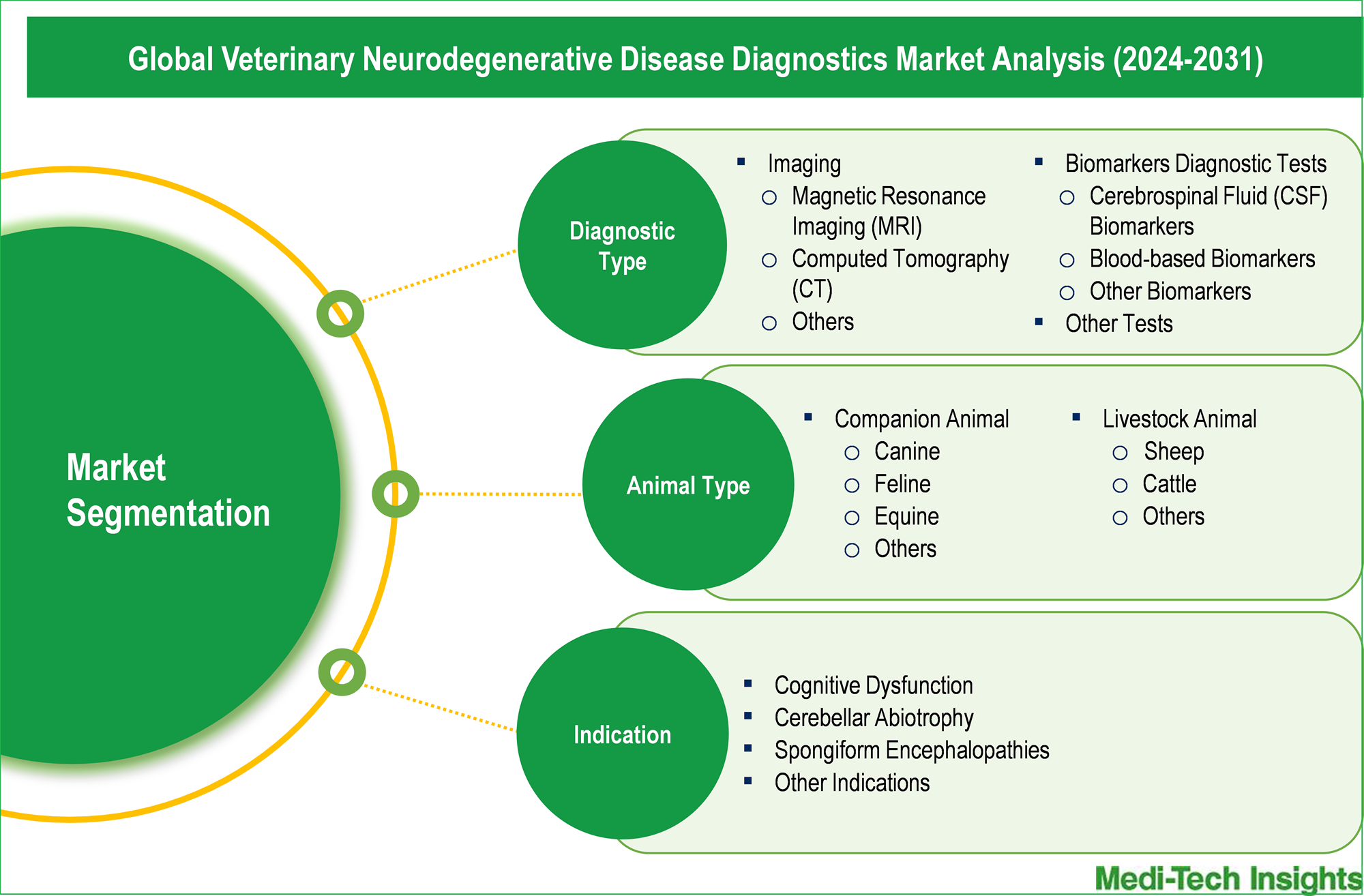
Global Veterinary Neurodegenerative Disease Diagnostics Market Segmentation
This report by Medi-Tech Insights provides the size of the global veterinary neurodegenerative disease diagnostics market at the regional and country-level from 2024 to 2031. The report further segments the market by diagnostic type, animal type, indication, and end user.
Market Size & Forecast (2024-2031), By Diagnostic Type, USD Billion
- Imaging
- Magnetic Resonance Imaging (MRI)
- Computed Tomography (CT)
- Others
- Biomarkers Diagnostic Tests
- Cerebrospinal Fluid (CSF) Biomarkers
- Blood-based Biomarkers
- Other Biomarkers
- Other Test
Market Size & Forecast (2024-2031), By Animal Type, USD Billion
- Companion Animal
- Canine
- Feline
- Equine
- Others
- Livestock Animal
- Sheep
- Cattle
- Others
Market Size & Forecast (2024-2031), By Indication, USD Billion
- Cognitive Dysfunction
- Cerebellar Abiotrophy
- Spongiform Encephalopathies
- Other Indications
Market Size & Forecast (2024-2031), By End User, USD Billion
- Veterinary Hospitals and Clinics
- Veterinary Diagnostic Laboratories
- Other End Users
Market Size & Forecast (2024-2031), By Region, USD Billion
- North America
- US
- Canada
- Europe
- UK
- Germany
- France
- Italy
- Spain
- Rest of Europe
- Asia Pacific
- China
- India
- Japan
- Rest of Asia Pacific
- Latin America
- Middle East & Africa
Frequently Asked Questions About This Report
What is the growth rate of the veterinary neurodegenerative disease diagnostics market?
The veterinary neurodegenerative disease diagnostics market is set to witness a growth rate of 8% during the forecast period from 2026 to 2031
What are the key trends defining the market?
Growing integration of artificial intelligence (AI) in veterinary imaging interpretation and rising popularity of at-home cognitive screening tools for pets are major trends in the veterinary neurodegenerative disease diagnostics market
What are the major factors impacting the market growth?
Rising prevalence of canine and feline cognitive dysfunction cases, growing global pet ownership fueling advanced veterinary healthcare spending, technological advancements in veterinary MRI and CT imaging systems, wider adoption of biomarker-based tests for early neurological detection, and growing awareness among owners about age-related neurological disorders are the major factors driving the market growth
What are the opportunities prevailing in the market?
Development of portable, point-of-care neurological diagnostic devices for clinics; integration of diagnostics with wearable pet health monitors; untapped potential in emerging economies; and expansion into livestock neurological disease monitoring for large farms offer numerous growth opportunities for companies operating in the veterinary neurodegenerative disease diagnostics market
Which region has the highest share in the global market? Which region is expected to witness the highest growth rate in the next 5 years?
North America held the largest share of the global veterinary neurodegenerative disease diagnostics market in 2025, while Asia-Pacific is projected to grow at the highest CAGR during the forecast period
Who are the major players operating in the market?
Some of the major players operating in the veterinary neurodegenerative disease diagnostics market include Zoetis Inc. (US); Virbac (France); Life Diagnostics, Inc. (US); ACUVET BIOTECH (Spain); Merck & Co., Inc. (US); IDEXX Laboratories, Inc. (US); MI: RNA Diagnostics Ltd. (UK); Mercodia AB (Sweden); Antech Diagnostics, Inc. (US); Avacta Animal Health Limited (UK); and among others
What are the key strategies adopted by players?
Key players in the veterinary neurodegenerative disease diagnostics market are adopting strategies such as new product launch, acquisitions, collaborations, and strategic alliances to expand their market presence
Need a More Tailored Analysis?
- Discuss the market sizing methodology and forecast assumptions with our healthcare analysts.
- Expand the scope with additional countries, market segments, technologies, or competitor profiling.
- Use the insights to support strategic planning, market entry, commercial due diligence, and long-term revenue growth initiatives.