Download FREE Sample


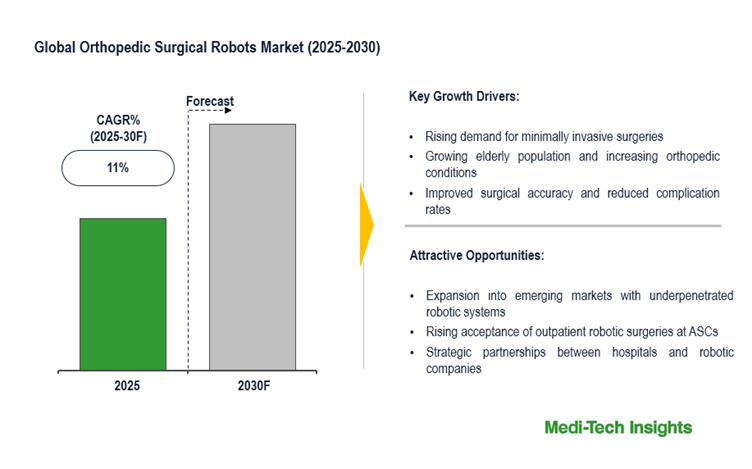
Orthopedic surgical robots are specialized systems that aid orthopedic surgeons in surgical procedures like spinal procedures, fracture reductions and joint replacements, with high precision. The robots integrate pre-operative planning with intra-operative assistance to provide accurate bone cutting and implant insertion. The procedure usually entails 3D imaging, individualized surgical plans, and robot arms that perform tasks as per surgeons' input. The application of orthopedic robots improves surgical outcome, shortens recovery period, and lowers complication rate, thus becoming more important in contemporary orthopedic treatment.
To learn more about the research report, download a sample report.
High demand for minimally invasive surgery accelerates orthopedic surgical robot adoption
The key driver of the orthopedic surgical robots market is the growing need for minimally invasive orthopedic procedures. Patients prefer shorter hospital stays, less postoperative pain & shorter recovery periods- all of which are facilitated through robot-assisted surgical procedures. Robotic systems enable surgeons to perform procedures through minimally invasive incisions with high precision, and this is reflected as reduced infection risk and improved post-surgical joint function. There is growing adoption of robotic-assisted procedures among hospitals and clinics, as this can enhance patient satisfaction scores and reduce overall healthcare costs linked to complications or readmissions. Consequently, the increasing preference for minimally invasive techniques is not merely fueling investmeobotic platforms but also encouraging hospitals to heavily invest in reskilling surgeons in robotic methods. This increased trend towards less invasive, more precise surgery is likely to continue to be a key driver of the market's growth curve.
To learn more about the research report, download a sample report.
Integration of haptic feedback technology advances orthopedic surgical robots market
One of the most significant advancements in orthopedic robots is integrating haptic feedback technology into surgical systems. Unlike traditional robotic configurations, more recent platforms allow surgeons to feel tactile resistance when they are operating through bone structures, giving them a tactile perception of the tissues they are manipulating, which greatly improves surgical precision by preventing overcutting or misalignment during surgery. Haptic robots create a real-time, sensitive setting that fills the gap between human senses and mechanical accuracy. Surgeons can maintain full control while benefiting from the robot's ability for guidance and restriction of motion into safe zones for optimal implant placement and minimum bone loss. Haptic feedback also allows for more tailored surgical planning. Through haptic feedback and 3D imaging, surgeons can tailor the procedure to each patient's anatomy, leading to better outcomes and more tailored treatment. As the clinical results for haptic feedback systems give better patient outcomes, more healthcare institutions are increasingly incorporating these latest robotic technologies
Competitive Landscape Analysis
The global orthopedic surgical robots market is marked by the presence of established and emerging market players such as Medtronic; Smith and Nephew; Stryker Corporation; Zimmer Biomet; Globus Medical; Asensus Surgical, Inc.; Johnson & Johnson Services Inc.; THINK Surgical, Inc.; Intuitive Surgical; and OMNILife Science Inc. (acquired by Corin Group), among others. Some of the key strategies adopted by market players include new product development, strategic partnerships and collaborations, and geographic expansion.
Report Scope
| Report Scope | Details |
| Base Year Considered | 2024 |
| Historical Data | 2023 - 2024 |
| Forecast Period | 2025 - 2030 |
| Growth | 11% |
| Market Drivers |
|
| Attractive Opportunities |
|
| Segment Scope | Application and End-user |
| Regional Scope |
|
| Key Companies Mapped | Medtronic; Smith and Nephew; Stryker Corporation; Zimmer Biomet; Globus Medical; Asensus Surgical, Inc.; Johnson & Johnson Services Inc.; THINK Surgical, Inc.; Intuitive Surgical; and OMNILife Science Inc. (acquired by Corin Group) among others |
| Report Highlights | Market Size & Forecast, Growth Drivers & Restraints, Trends, Competitive Analysis |
Market Segmentation
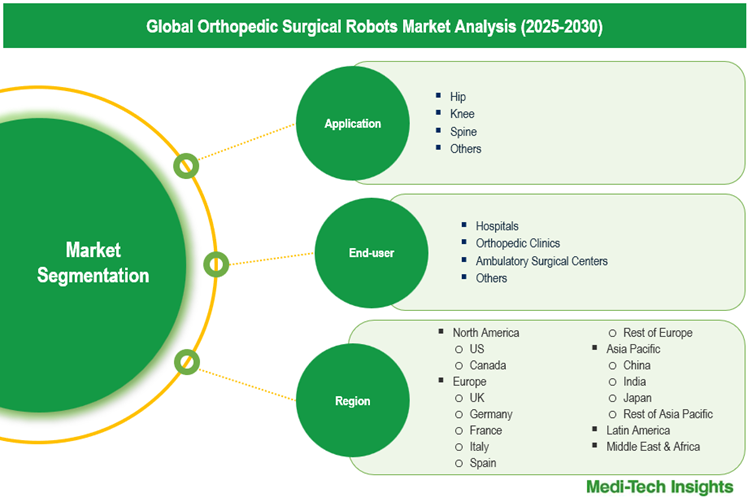
This report by Medi-Tech Insights provides thesize of the global orthopedic surgical robots market at theregional- and country-level from 2023 to 2030. The report further segments the market based on application and end-user.
- Market Size & Forecast (2023-2030), By Application, USD Million
- Hip
- Knee
- Spine
- Others
- Market Size & Forecast (2023-2030), By End-user, USD Million
- Hospitals
- Orthopedic Clinics
- Ambulatory Surgical Centers (ASCs)
- Others
- Market Size & Forecast (2023-2030), By Region, USD Million
- North America
- US
- Canada
- Europe
- UK
- Germany
- France
- Italy
- Spain
- Rest of Europe
- Asia Pacific
- China
- India
- Japan
- Rest of Asia Paci/ul>
- Latin America
- Middle East & Africa
- North America
Need a More Tailored Analysis?
- Discuss the market sizing methodology and forecast assumptions with our healthcare analysts.
- Expand the scope with additional countries, market segments, technologies, or competitor profiling.
- Use the insights to support strategic planning, market entry, commercial due diligence, and long-term revenue growth initiatives.