Download FREE Sample


Report Overview
Surgical navigation systems are advanced medical tools that assist surgeons in performing complex procedures with enhanced precision. By integrating real-time imaging technologies such as MRI, CT, or fluoroscopy with tracking systems, these platforms provide detailed 3D visualization of the patient-s anatomy. Surgeons use this data to guide instruments accurately, improving the outcomes of procedures in areas like neurosurgery, orthopedics, and ENT surgeries. These systems enable minimally invasive surgeries, reduce complications, and enhance the surgeon's ability to navigate delicate tissues and structures during operations, ultimately improving patient safety and recovery time.

To learn more about this report, download the PDF brochure
Growing demand for minimally invasive surgeries to propel market demand
Minimally invasive surgeries offer numerous advantages, including smaller incisions, reduced postoperative pain, quicker recovery, and lower risk of complications compared to traditional open surgeries. However, these procedures require extreme precision due to the limited visibility and access to internal structures. Surgical navigation systems address this need by providing real-time imaging and advanced tracking, allowing surgeons to accurately navigate instruments within confined spaces. These systems improve the surgeon's ability to perform complex, delicate procedures with greater control and precision. As a result, their application in fields like orthopedics, neurosurgery, and ENT surgery has surged, supporting the growth of the market as healthcare providers increasingly adopt MIS techniques to improve patient outcomes.
Rising adoption in orthopedic and neurosurgery is driving the market growth
In orthopedic surgeries, especially for joint replacements and spinal procedures, precise alignment is crucial to improving patient outcomes and reducing complications. Surgical navigation systems provide real-time 3D imaging and guidance, enabling surgeons to accurately place implants and perform complex reconstructions. In neurosurgery, these systems are critical for navigating delicate brain and spinal structures, helping avoid vital areas while enhancing precision during tumor removals, biopsies, and other intricate procedures. As the demand for high-precision surgeries increases in these fields, healthcare providers are increasingly adopting navigation technologies to improve surgical accuracy, reduce risks, and enhance recovery, driving growth in the surgical navigation systems market.
To learn more about this report, download the PDF brochure
Competitive Landscape Analysis
The global surgical navigation systems market is marked by the presence of established and emerging market players such as Medtronic, Stryker, Brainlab AG, B. Braun SE, Corin Group, Siemens Healthineers, Johnson & Johnson, Karl Storz GmbH & Co. Kg, Zimmer Biomet, and Smith & Nephew, Ltd; among others. Some of the key strategies adopted by market players include new product development, strategic partnerships and collaborations, and geographic expansion.
Report Scope
| Report Scope | Details |
| Base Year Considered | 2023 |
| Historical Data | 2022 - 2023 |
| Forecast Period | 2024 - 2029 |
| Growth Rate | CAGR of 6-8% |
| Market Drivers |
|
| Attractive Opportunities |
|
| Segment Scope | Application, Technology, End User |
| Regional Scope |
|
| Key Companies Mapped | Medtronic, Stryker, Brainlab AG, B. Braun SE, Corin Group, Siemens Healthineers, Johnson & Johnson, Karl Storz GmbH & Co. Kg, Zimmer Biomet., and Smith & Nephew, Ltd. among others |
| Report Highlights | Market Size & Forecast, Growth Drivers & Restraints, Trends, Competitive Analysis |
Market Segmentation
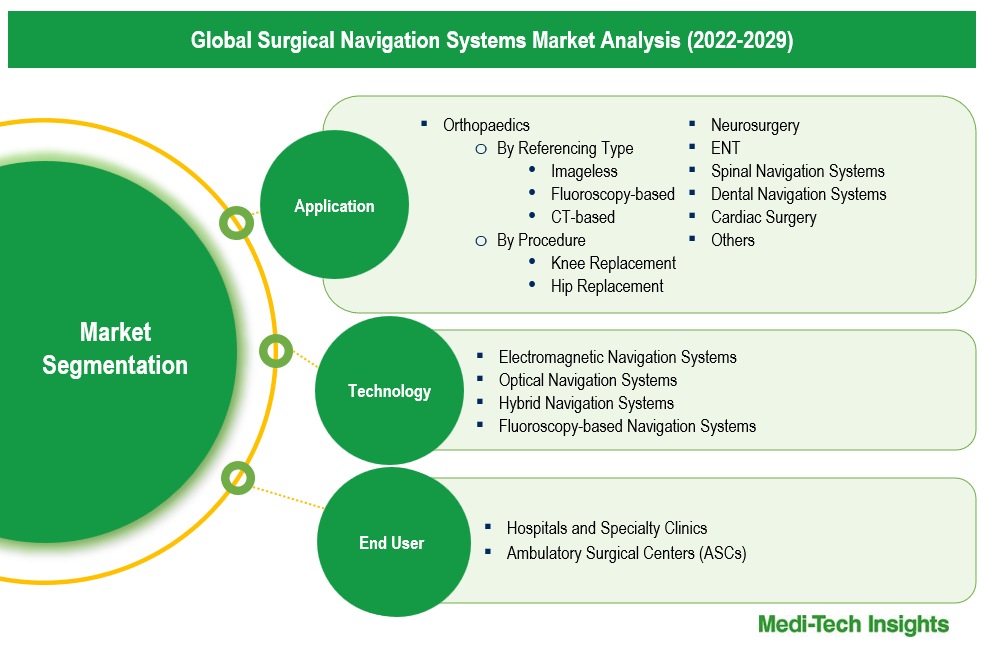
This report by Medi-Tech Insights provides thesize of the global surgical navigation systems market at theregional- and country-level from 2022 to 2029. The report further segments the market based on application, technology, and end user.
- Market Size & Forecast (2022-2029), By Application, USD Million
- Orthopaedics
- By Referencing Type
- Imageless
- Fluoroscopy-based
- CT-based
- By Procedure
- Knee replacement
- Hip replacement
- By Referencing Type
- Neurosurgery
- ENT
- Spinal navigation systems
- Dental navigation systems
- Cardiac Surgery
- Others
- Orthopaedics
- Market Size & Forecast (2022-2029), By Technology, USD Million
- Electromagnetic Navigation Systems
- Optical Navigation Systems
- Hybrid Navigation Systems
- Fluoroscopy-based Navitems
- Others
- Market Size & Forecast (2022-2029), By End User, USD Million
- Hospitals and Specialty Clinics
- Ambulatory Surgical Centers (ASCs)
- Market Size & Forecast (2022-2029), By Region, USD Million
- North America
- US
- Canada
- Europe
- UK
- Germany
- France
- Italy
- Spain
- Rest of Europe
- Asia Pacific
- China
- India
- Japan
- Rest of Asia Pacific
- Latin America
- Middle East & Africa
- North America
Frequently Asked Questions About This Report
What is the market size & forecast of the surgical navigation systems market?
What are historical, present, and forecasted market shares and growth rates of various segments and sub-segments of the surgical navigation systems market?
What are the key trends defining the market?
What are the major factors impacting the market?
What are the opportunities prevailing in the market?
Need a More Tailored Analysis?
- Discuss the market sizing methodology and forecast assumptions with our healthcare analysts.
- Expand the scope with additional countries, market segments, technologies, or competitor profiling.
- Use the insights to support strategic planning, market entry, commercial due diligence, and long-term revenue growth initiatives.