Download FREE Sample


Report Overview
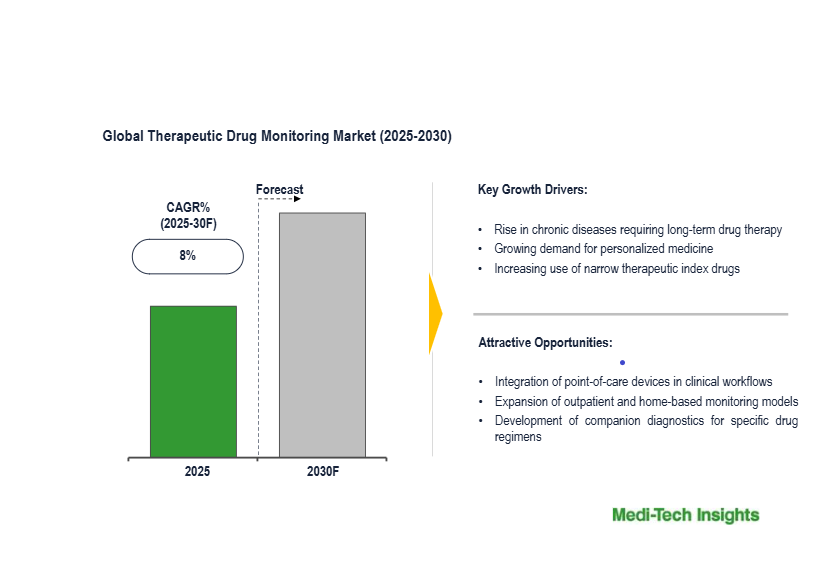
Therapeutic Drug Monitoring (TDM) is a clinical application aimed at measuring the concentration of certain drugs in the patient-s blood at specific time intervals. The main goal is to maintain medication in the therapeutic range-sufficient to be beneficial but not enough to result in toxicity. TDM is commenced by sample collection (generally blood sample), then analyzed in the laboratory by using immunoassays or chromatographic techniques. It is very important for individualizing drug treatment regimens with a narrow therapeutic window, maximizing drug efficacy and patient safety.
To learn more about the research report, download a sample report
Increasing Prevalence of Chronic Diseases Requiring Long-Term Medication
One of the key drivers of the widespread adoption of TDM devices is the global rise in chronic conditions such as cancer, cardiovascular disease, epilepsy and autoimmune diseases, which require frequent monitoring and prolonged treatment with drugs that have narrow therapeutic windows, including immunosuppressants, antiepileptics, and some antibiotics. In these instances, it is important to sustain drug levels in a specified range-both to avoid underdosing and overdosing. Since chronic illnesses require ongoing and accurate dosing over weeks or months, physicians are now relying more on TDM to individualize treatment regimens and improve patient safety. Additionally, the rising geriatric population and the common use of complex drug regimens (mainly in oncology and transplant medicine) have further expanclinical relevance of TDM. This emerging medical need is directly correlating with increased demand for monitoring devices and services by hospitals and diagnostic laboratories.
To learn more about the research report, download a sample report
Integration of Microsampling Techniques in Therapeutic Drug Monitoring
One of the most significant innovations augmenting TDM is the creation of microsampling technologies, including volumetric absorptive microsampling (VAMS) and dried blood spot (DBS) testing. These technologies enable the collection of very small volumes of blood-often a few microliters-via minimally invasive procedures like finger pricks. In contrast to standard venipuncture, microsampling does not involve skilled phlebotomists or large volumes of blood, so it is less invasive for patients and more convenient for outpatient or home settings. Microsampling is particularly valuable with pediatric, geriatric, and rural populations, where standard sampling proves difficult. The less complicated logistics also allow for samples to be taken in non-clinical settings and sent by mail to cout requiring cold chain shipping. As a result, microsampling has enhanced the patient compliance and feasibility considerably in standard TDM programs, thus facilitating broader use and increased monitoring in clinical practice.
Competitive Landscape Analysis
The global therapeutic drug monitoring market is marked by the presence of established and emerging market players such as Abbott; ALPCO; Danaher Corporation; Bio-Rad Laboratories, Inc; Thermo Fisher Scientific Inc.; F.Hoffmann-La Roche Ltd.; Randox laboratories Ltd; Siemens Healthineers AG.; biomrieux, Inc. and Chromsystems Instruments & Chemicals GmbH among others. Some of the key strategies adopted by market players include new product development, strategic partnerships and collaborations, and geographic expansion.
Report Scope
|
Report Scope |
Details |
|
Base Year Considered |
2024 |
|
Historical Data |
2023 - 2024 |
|
Forecast Period |
2025 - 2030 |
|
Growth |
8% |
|
Market Drivers |
|
|
Attractive Opportunities |
|
|
Segment Scope |
Product, Drug Class, Therapeutic Area and End-user |
|
Regional Scope |
|
|
Key Companies Mapped |
Abbott; ALPCO; Danaher Corporation; Bio-Rad Laboratories, Inc; Thermo Fisher Scientific Inc.; F.Hoffmann-La Roche Ltd.; Randox laboratories Ltd; Siemens Healthineers AG.; biomrieux, Inc. and Chromsystems Instruments & Chemicals GmbH among others |
|
Report Highlights |
Market Size & Forecast, Growth Drivers & Restraints, Trends, Competitive Analysis |
Market Segmentation
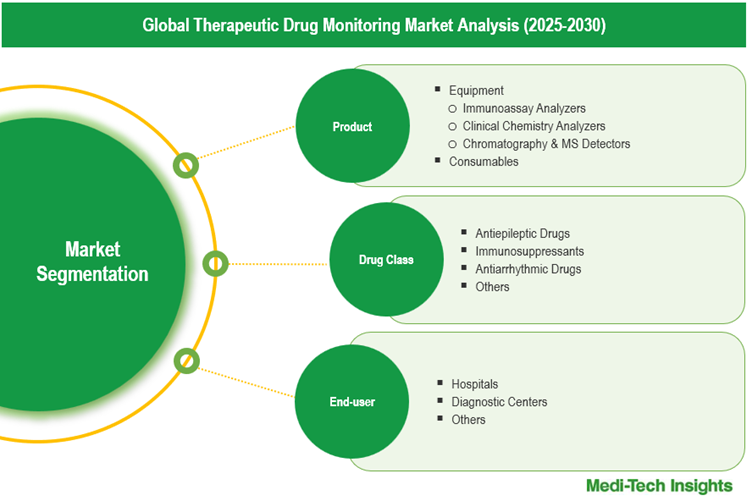
This report by Medi-Tech Insights provides thesize of the global therapeutic drug monitoring market at theregional- and country-level from 2023 to 2030. The report further segments the market based on product, drug class, therapeutic area and end-user.
- Market Size & Forecast (2023-2030), By Product, USD Million
- Equipment
- Immunoassay Analyzers
- Clinical Chemistry Analyzers
- Chromatography & MS Detectors
- Consumables
- Equipment
- Market Size & Forecast (2023-2030), By Drug Class, USD Million
- Antiepileptic Drugs
- Immunosuppressants
- Antiarrhythmic Drugs
- Others
- Market Size & Forecast (2023-2030), By Therapeutic Area, USD Million
- Cancer
- Cardiovascular Diseases
- Autoimmune Diseases
- Others
- Market Size & Forec2030), By End-user, USD Million
- Hospitals
- Diagnostic Centers
- Others
- Market Size & Forecast (2023-2030), By Region, USD Million
- North America
- US
- Canada
- Europe
- UK
- Germany
- France
- Italy
- Spain
- Rest of Europe
- Asia Pacific
- China
- India
- Japan
- Rest of Asia Pacific
- Latin America
- Middle East & Africa
- North America
Need a More Tailored Analysis?
- Discuss the market sizing methodology and forecast assumptions with our healthcare analysts.
- Expand the scope with additional countries, market segments, technologies, or competitor profiling.
- Use the insights to support strategic planning, market entry, commercial due diligence, and long-term revenue growth initiatives.