Download FREE Sample


Transcatheter Mitral Valve Replacement (TMVR) is a minimally invasive procedure designed to replace a damaged or diseased mitral valve in the heart. As one of the four heart valves regulating blood flow between chambers, the mitral valve plays a crucial role in circulation. When it becomes compromised, it can lead to blood leakage into the lungs, causing symptoms such as shortness of breath, fatigue, and fluid buildup.
During TMVR, a new valve is delivered through a catheter, typically inserted via an artery in the groin or chest. Using advanced imaging techniques like X-ray or echocardiography, the catheter is carefully guided to the heart. Once positioned, the new valve is expanded and secured within the existing valve structure, restoring proper blood flow. TMVR can be performed using two main techniques:
- Native Valve Replacement: An investigational approach that directly replaces the patient-s original mitral valve
A method used to implant a new valve within a failing prosthetic valve or a previously placed annuloplasty ring from prior surgery
To learn more about the research report, download a sample report.
The increasing prevalence of mitral valve diseases drives market growth
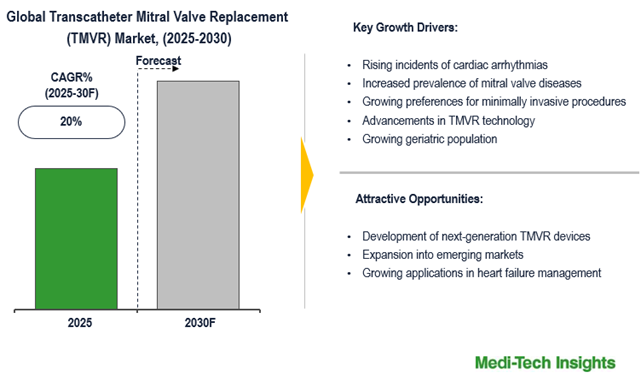
The increasing prevalence of mitral valve diseases, particularly mitral regurgitation (MR) and mitral stenosis (MS), is becoming a significant global health concern. Factors such as an aging population, rising incidences of cardiovascular diseases, and lifestyle-related conditions like hypertension and obesity contribute to the growing burden of these disorders. A 2023 ScienceDirect article states that mitral regurgitation, the most prevalent valvular heart disease, impacts approximately 2% of the general population and up to 10% of individuals over 75, frequently resulting in heart failure if untreated. Additionally, mitral stenosis remains a major issue in developing regions due to persistent cases of rheumatic heart disease. Many of these conditions progress silently, resulting in late-stage diagnosis he need for advanced interventions. As surgical treatments pose high risks for elderly and comorbid patients, the demand for minimally invasive solutions such as transcatheter mitral valve replacement (TMVR) is rising, driving innovation and growth in the global TMVR market.
To learn more about the research report, download a sample report.
Growing preference for minimally invasive procedures in TMVR fuels its demand
The growing preference for minimally invasive procedures in transcatheter mitral valve replacement (TMVR) is transforming the landscape of mitral valve disease treatment. Unlike traditional open-heart surgery, which involves significant risks, long recovery times, and potential complications, TMVR offers a less invasive alternative with reduced hospital stays and faster patient recovery. Advancements in catheter-based technology, imaging guidance, and procedural techniques have made TMVR a viable option for high-risk patients who are ineligible for conventional surgery. Additionally, the increasing awareness of patient-centric care and the demand for quicker, less painful treatments are driving the adoption of minimally invasive TMVR. As healthcare systems prioritize cost-effective solutions with better clinical outcomes, the shift toward minimally invasive interventions is expected to accelerate, further boosting the growth of the TMVR market.
Competitive Landscape Analysis
The global transcatheter mitral valve replacement (TMVR) market is marked by the presence of established and emerging market players such as Abbott Laboratories; Edwards Lifesciences; Medtronic plc; Boston Scientific Corporation; LivaNova; Cardiac Dimensions; NeoChord, Inc.; Opus Medical Therapies, LLC; HighLife Medical; and Neovasc; among others. Some of the key strategies adopted by market players include new product development, strategic partnerships and collaborations, and investments.
Report Scope
|
Report Scope |
Details |
|
Base Year Considered |
2024 |
|
Historical Data |
2023 - 2024 |
|
Forecast Year |
2025 - 2030 |
Growth Rate |
20% |
|
Market Drivers |
|
|
Attractive Opportunities |
|
|
Segment Scope |
Product Type, Indication, and End User |
|
Regional Scope |
|
|
Key Companies Mapped |
Abbott Laboratories; Edwards Lifesciences; Medtronic plc; Boston Scientific Corporation; LivaNova; Cardiac Dimensions; NeoChord, Inc.; Opus Medical Therapies, LLC; HighLife Medical; and Neovasc |
|
Report Highlights |
Market Size & Forecast, Growth Drivers & Restraints, Trends, Competitive Analysis |
Market Segmentation
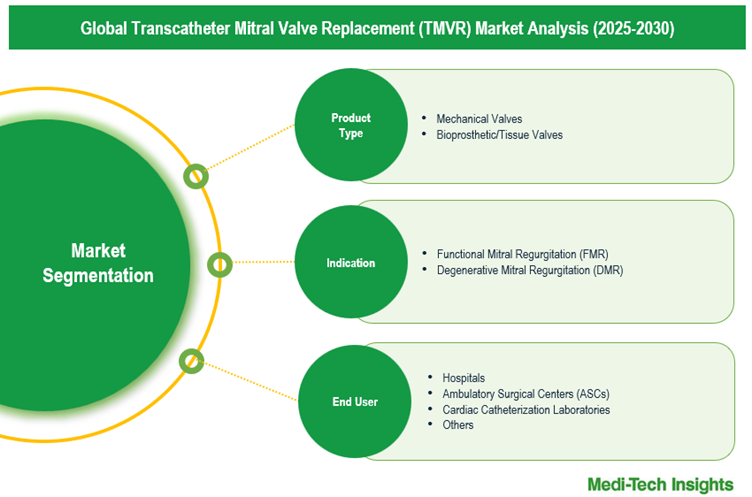
This report by Medi-Tech Insights provides thesize of the global transcatheter mitral valve replacement (TMVR) market at theregional- and country level from 2023 to 2030. The report further segments the market based on product type, indication, and end user.
- Market Size & Forecast (2023-2030), By Product Type, USD Million
- Mechanical Valves
- Bioprosthetic/Tissue Valves
- Market Size & Forecast (2023-2030), By Indication, USD Million
- Functional Mitral Regurgitation (FMR)
- Degenerative Mitral Regurgitation (DMR)
- Market Size & Forecast (2023-2030), By End User, USD Million
- Hospitals
- Ambulatory Surgical Centers (ASCs)
- Cardiac Catheterization Laboratories
- Others
- Market Size & Forecast (2023-2030), By Region, USD Million
- North America
- Canada
- Europe
- UK
- Germany
- France
- Italy
- Spain
- Rest of Europe
- Asia Pacific
- China
- India
- Japan
- Rest of Asia Pacific
- Latin America
- Middle East & Africa
Frequently Asked Questions About This Report
What is the market size & forecast of the transcatheter mitral valve replacement (TMVR) market?
What are the historical, present, and forecasted market shares and growth rates of various segments and sub-segments of the transcatheter mitral valve replacement (TMVR) market?
What are the key trends defining the market?
What are the major factors impacting the market?
What are the opportunities prevailing in the market?
Need a More Tailored Analysis?
- Discuss the market sizing methodology and forecast assumptions with our healthcare analysts.
- Expand the scope with additional countries, market segments, technologies, or competitor profiling.
- Use the insights to support strategic planning, market entry, commercial due diligence, and long-term revenue growth initiatives.