

Global Drug Delivery Devices Market Size Report Segmented by Product (Inhalers, Injection, Infusion Pumps, Nebulizers), Route of Administration (Injectable, Pulmonary, Transdermal, Oral), Application (Oncology, Diabetes, CVDs) & Regional Forecast to 2031
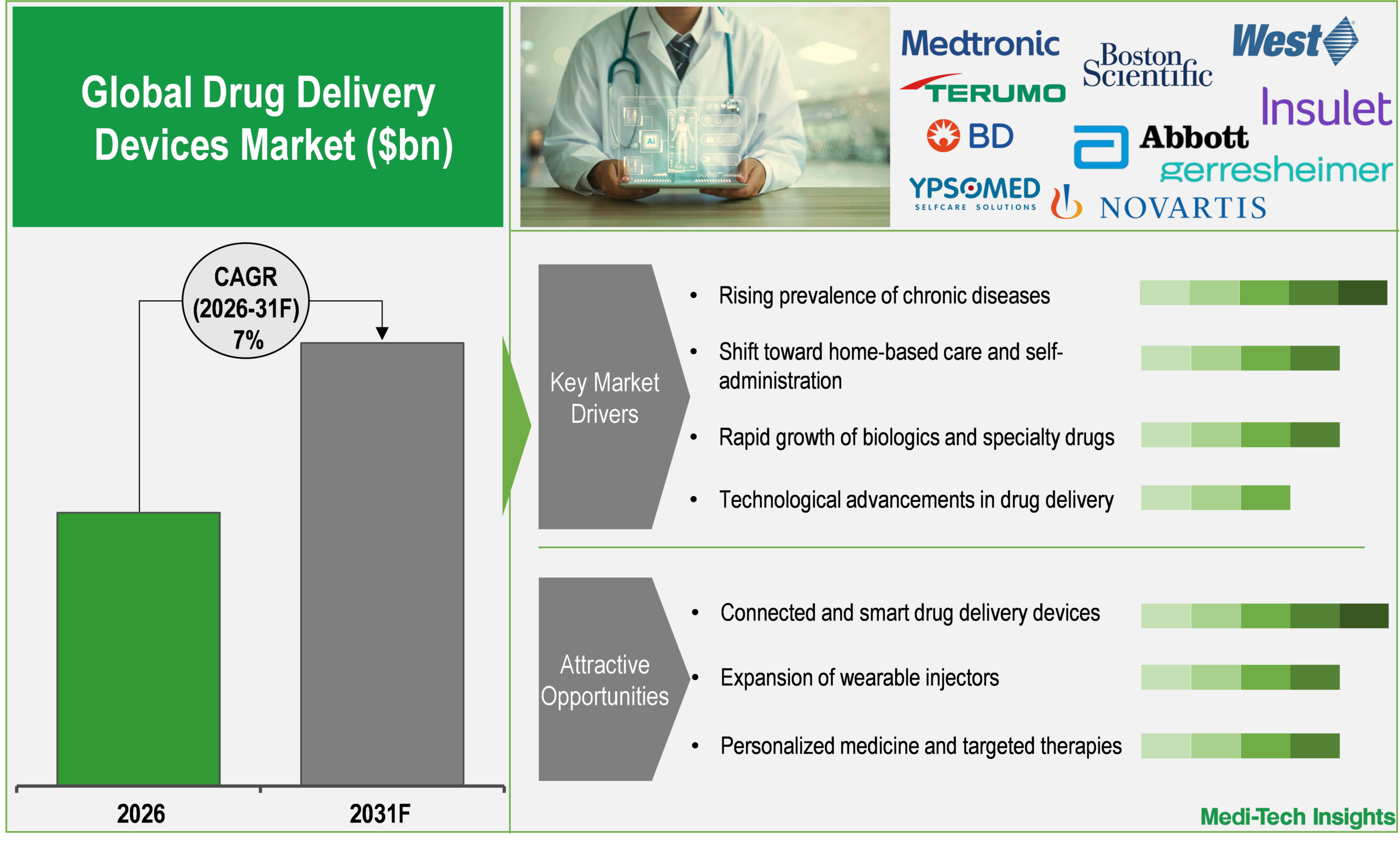
The global drug delivery devices market size is set to grow at a CAGR of 7% over the next 5 years. Rising prevalence of chronic diseases, rapid growth of biologics and specialty drugs, shift toward home-based care and self-administration, technological advancements in drug delivery, and growing focus on patient-centric healthcare are some key factors driving the growth of the drug delivery devices market. To learn more about the research report, download a sample report.
Drug delivery device is a type of medical technology that allows for the controlled, precise, and efficient administration of pharmaceutical drugs into the patient body to provide optimum therapeutic benefit. Drug delivery devices allow for drugs to be administered by multiple routes like oral, injectable, pulmonary, transdermal, nasal, and ocular, among others, and include, but are not limited to products like, syringes, auto-injectors, infusion pumps, inhalers, nebulizers, wearable injectors, or transdermal patches among others. Use of drug delivery devices improves the accuracy of dosing, increases patient compliance with medication regimens, decreases medication administration errors, and allows for patients to perform self-care. They are essential for the management of chronic health conditions, biologic therapeutics, and personalized medicine while also improving the overall efficiency of the treatment process.
Rising prevalence of chronic diseases to propel market demand
The increasing prevalence of chronic diseases is one of the key forces driving the growth of drug delivery devices market. According to the WHO, noncommunicable diseases (NCDs) account for approximately 74% of all deaths globally, with cardiovascular diseases causing over 19 million deaths annually, followed by cancer (10 million), chronic respiratory diseases (4 million), and diabetes (>2 million). These four major chronic diseases collectively account for around 80% of all premature NCD-related deaths worldwide, highlighting their substantial global health burden. As chronic diseases require long-term and often continual use of medication like insulin, heart medicines, cancer drugs, to manage symptoms and achieve control, reliable drug delivery systems are needed to provide for their long-term usage. Most patients with chronic disease rely on the use of insulin pens, infusion pumps, inhalers, auto-injectors, and other drug delivery devices to maintain control over their condition. As the world population continues to age, coupled with other risk factors related to lifestyle choices including obesity, lack of physical activity and poor dietary choices, chronic diseases continue to be on the rise, resulting in an increase in the number of individuals who will need long-term treatment.
Additionally, healthcare providers are increasingly promoting home-based disease management to reduce hospital visits and healthcare costs, further accelerating the adoption of user-friendly self-administration devices. The need for improved medication adherence, precise dosing, and enhanced patient convenience is encouraging manufacturers to develop advanced drug delivery technologies, thereby fueling market growth.
To learn more about this report, download the PDF brochure
Shift toward home-based care and self-administration is fueling the demand for drug delivery devices
Home-based care and self-administration of medication are key factors propelling the growth of the drug delivery device market by changing how patients receive and manage their treatments. Increasingly, healthcare providers around the world are supporting the paradigm shift from traditional to home-based delivery of care to lower costs to the healthcare system while improving efficiency and convenience for patients. This is resulting in a growing need for self-administered, user-friendly drug delivery devices like, auto-injectors, pen injectors, wearable injectors, infusion pumps, inhalers, and transdermal patches, that enable patients to administer their own medications confidently and safely at home. As this trend becomes more prominent, especially among medically complex populations requiring long-term treatment for chronic illnesses such as diabetes, autoimmune disorders, respiratory illnesses, and certain types of cancer, the role of home-based care is likely to become increasingly important as it helps reduce the need for frequent hospital visits and increasing patient satisfaction and compliance with their prescribed therapies.
Additionally, technological advances in the design of drug delivery devices such as reduced complexity, built-in tracking of doses taken, and connectivity features are likely to continue to support the trend toward patients administering their own medications. Furthermore, the continued evolution of, and demand for, patient-centered, convenient, and accessible forms of healthcare is likely to accelerate the adoption of drug delivery devices across multiple therapeutic categories.
To learn more about this report, download the PDF brochure
Application Segment Outlook
Among the application segments, diabetes accounted for the largest share of the drug delivery devices market, due to the rapidly increasing global incidence of diabetes and its long-term requirement for frequent administration of drugs as well as management of glucose levels in individuals with diabetes. In addition to this, the growing acceptance of self-administration devices and home-based diabetes service delivery further support the growth of this market.
In contrast, oncology segment is expected to register the highest growth rate over the forecast period driven by the increasing use of biologics, immunotherapy, targeted therapy, and antibody-drug conjugate therapies that all require advanced drug delivery systems using infusion pumps, implantable systems, wearable injectors, and precision injection devices among others. Furthermore, continued rise in annual global cancer incidence, increasing investments into oncology research, and an increasing global emphasis on targeted, patient-centric treatment therapies will drive the increased utilization of innovative drug delivery systems across oncology markets
Regional Outlook: Advanced healthcare infrastructure and strong innovation ecosystem position North America as the largest drug delivery devices market
North America accounted for the largest share of the drug delivery devices market due to the advanced healthcare system, expense of healthcare, high number of pharmaceutical and medical device companies present, and the fast acceptance of innovative drug delivery methods. The region also benefits from a high prevalence of chronic diseases such as diabetes, cancer, and respiratory disorders, which drive demand for inhalers, injection devices, infusion pumps, and wearable drug delivery systems. In addition to these chronic diseases, North America's leading position is also attributed to factors like, favorable reimbursement policies, the large amount of research being done and the significant investments in research and development in the region.
Meanwhile, Asia Pacific is projected to be the fastest-growing regional market during the forecast period. The growth rate in Asia Pacific is going to be due to the large and older population base in this area and increasing instances of chronic disease. There are countries like China, India, and Japan that are seeing a transition into tertiary healthcare facilities and increased spending on healthcare. Lastly, the developing activity of pharmaceutical manufacturing and improving healthcare system are making many individuals to use self-administered and homebased health solutions, thus increasing the demand for advanced drug delivery systems in this area.
Competitive Landscape Analysis
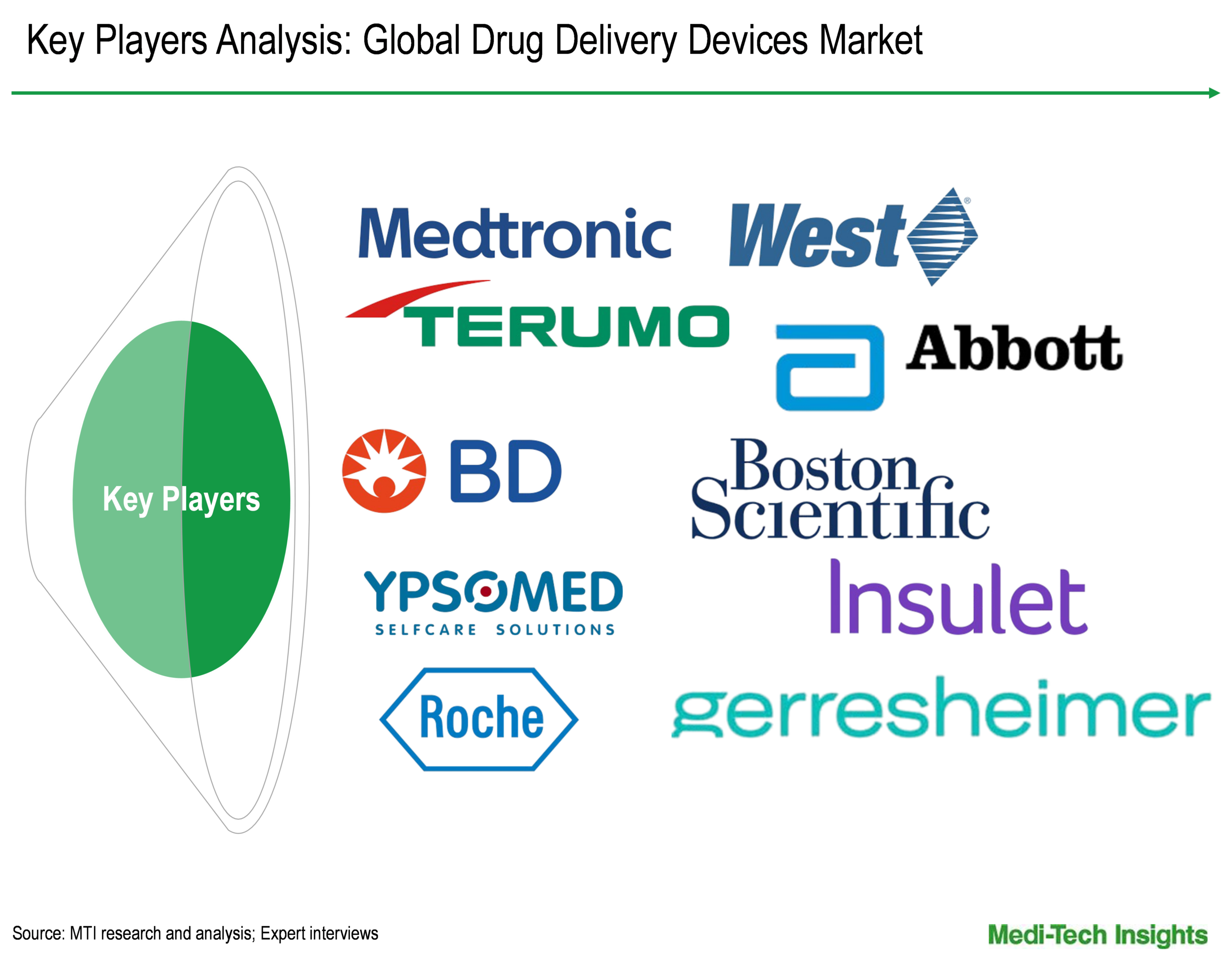
The global drug delivery devices market is marked by the presence of established and emerging market players such as-
- Medtronic (Ireland)
- Gerresheimer AG (Germany)
- Becton, Dickinson and Company (BD) (US)
- West Pharmaceutical Services, Inc. (US)
- Terumo Corporation (Japan)
- Novartis AG (Switzerland)
- Abbott (US)
- Boston Scientific Corporation (US)
- Ypsomed AG (Switzerland)
- Insulet Corporation (US)
Get a sample report for competitive landscape analysis
Growth strategies adopted by players to establish their foothold in the drug delivery devices market
Players operating in this market are adopting various growth strategies such as new product launches and approvals; acquisitions; expansions; and strategic partnerships, agreements, and collaborations, to garner market share. For instance,
- In June 2026, Bayer acquired Perfuse Therapeutics, securing full rights to PER-001, a Phase II sustained-release intravitreal implant being developed for the treatment of glaucoma and diabetic retinopathy. The acquisition strengthens Bayer’s ophthalmology portfolio and drug delivery pipeline, with the deal valued at up to USD 2.45 billion, including milestone-based payments
- In May 2026, Hovione and IDC launched a commercial intranasal dry powder drug delivery platform that integrates device technology, formulation development, and manufacturing to simplify development, reduce risk, and accelerate commercialization of nasal therapies. The companies completed the design and initial manufacturing capability for a single-use nasal delivery device and are also advancing a multi-use device to support a broader range of intranasal treatments and pharmaceutical partnerships
- In February 2026, Calla Lily Clinical Care entered a strategic collaboration with Merck to advance the development of Callavid, its novel intravaginal drug delivery platform focused on improving women's health treatments. The partnership represents the first pharmaceutical industry collaboration for the Callavid technology and highlights growing interest in patient-centric drug-device innovations for women's healthcare
Report Scope
|
Report Metric |
Details |
|
Base Year Considered |
2025 |
|
Historical Data |
2024 – 2025 |
|
Forecast Period |
2026 – 2031 |
|
Growth Rate |
7% |
|
Segment Scope |
Product, Route of Administration, Application, and End User |
|
Regional Scope |
|
|
Market Drivers |
|
|
Attractive Opportunities |
|
|
Key Companies Mapped |
Medtronic (Ireland); Gerresheimer AG (Germany); Becton, Dickinson and Company (BD) (US); West Pharmaceutical Services, Inc. (US); Terumo Corporation (Japan); Novartis AG (Switzerland); Abbott (US); Boston Scientific Corporation (US); Ypsomed AG (Switzerland); and Insulet Corporation (US), among others |
|
Report Highlights |
Market Size & Forecast, Growth Drivers & Restraints, Trends, Competitive Analysis |
Global Drug Delivery Devices Market Segmentation
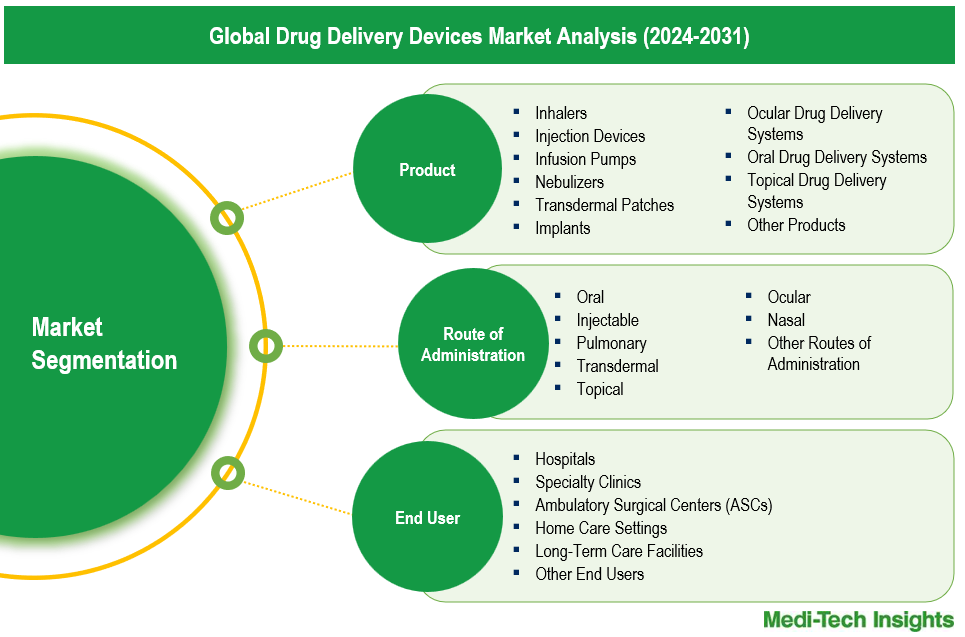
This report by Medi-Tech Insights provides the size of the global drug delivery devices market at the regional and country-level from 2024 to 2031. The report further segments the market by product, route of administration, application, and end user.
Market Size & Forecast (2024-2031), By Product, USD Billion
- Smart Inhalers
- Inhalers
- Injection Devices
- Infusion Pumps
- Nebulizers
- Transdermal Patches
- Implants
- Ocular Drug Delivery Systems
- Oral Drug Delivery Systems
- Topical Drug Delivery Systems
- Other Products
Market Size & Forecast (2024-2031), By Route of Administration, USD Billion
- Oral
- Injectable
- Pulmonary
- Transdermal
- Topical
- Ocular
- Nasal
- Other Routes of Administration
Market Size & Forecast (2024-2031), By Application, USD Billion
- Diabetes
- Oncology
- Respiratory Diseases
- Infectious Diseases
- Cardiovascular Diseases (CVDs)
- Neurological Disorders
- Autoimmune Diseases
- Pain Management
- Other Applications
Market Size & Forecast (2024-2031), By End User, USD Billion
- Hospitals
- Specialty Clinics
- Ambulatory Surgical Centers (ASCs)
- Home Care Settings
- Long-Term Care Facilities
- Other End Users
Market Size & Forecast (2024-2031), By Region, USD Billion
- North America
- US
- Canada
- Europe
- UK
- Germany
- France
- Italy
- Spain
- Rest of Europe
- Asia Pacific
- China
- India
- Japan
- Rest of Asia Pacific
- Latin America
- Middle East & Africa
Related reports for reference-
- Introduction
- Introduction
- Market Scope
- Market Definition
- Segments Covered
- Regional Segmentation
- Research Timeframe
- Currency Considered
- Study Limitations
- Stakeholders
- List of Abbreviations
- Key Conferences and Events (2026-2027)
- Research Methodology
- Secondary Research
- Primary Research
- Market Estimation
- Bottom-Up Approach
- Top-Down Approach
- Market Forecasting
- Executive Summary
- Drug Delivery Devices Market Snapshot (2026-2031)
- Segment Overview
- Regional Snapshot
- Competitive Insights
- Market Overview
- Market Dynamics
- Drivers
- Rising prevalence of chronic diseases
- Rapid growth of biologics and specialty drugs
- Shift toward home-based care and self-administration
- Technological advancements in drug delivery
- Growing focus on patient-centric healthcare
- Restraints
- Stringent regulatory requirements
- High development and manufacturing costs
- Pricing and reimbursement pressures
- Device-related safety concerns
- Opportunities
- Connected and smart drug delivery devices
- Expansion of wearable injectors
- Growth in emerging markets
- Personalized medicine and targeted therapies
- Key Market Trends
- Connected drug delivery ecosystems
- Wearable drug delivery devices
- Needle-free drug delivery
- Microneedle and transdermal technologies
- Drug-device combination products
- Unmet Market Needs
- Industry Speaks
- Drivers
- Market Dynamics
- Global Drug Delivery Devices Market Size & Forecast (2024-2031), By Product, USD Billion
- Introduction
- Inhalers
- Injection Devices
- Infusion Pumps
- Nebulizers
- Transdermal Patches
- Implants
- Ocular Drug Delivery Systems
- Oral Drug Delivery Systems
- Topical Drug Delivery Systems
- Other Products
- Global Drug Delivery Devices Market Size & Forecast (2024-2031), By Route of Administration, USD Billion
- Introduction
- Oral
- Injectable
- Pulmonary
- Transdermal
- Topical
- Ocular
- Nasal
- Other Routes of Administration
- Global Drug Delivery Devices Market Size & Forecast (2024-2031), By Application, USD Billion
- Introduction
- Diabetes
- Oncology
- Respiratory Diseases
- Infectious Diseases
- Cardiovascular Diseases (CVDs)
- Neurological Disorders
- Autoimmune Diseases
- Pain Management
- Other Applications
- Global Drug Delivery Devices Market Size & Forecast (2024-2031), By End User, USD Billion
- Introduction
- Hospitals
- Specialty Clinics
- Ambulatory Surgical Centers (ASCs)
- Home Care Settings
- Long-Term Care Facilities
- Other End Users
- Global Drug Delivery Devices Market Size & Forecast (2024-2031), By Region, USD Billion
- Introduction
- North America Drug Delivery Devices Market Size & Forecast (2024-2031), By Country, USD Billion
- US
- Market Size & Forecast, By Product (USD Billion)
- Market Size & Forecast, By Route of Administration (USD Billion)
- Market Size & Forecast, By Application (USD Billion)
- Market Size & Forecast, By End User (USD Billion)
- Canada
- Market Size & Forecast, By Product (USD Billion)
- Market Size & Forecast, By Route of Administration (USD Billion)
- Market Size & Forecast, By Application (USD Billion)
- Market Size & Forecast, By End User (USD Billion)
- US
- Europe Drug Delivery Devices Market Size & Forecast (2024-2031), By Country, USD Billion
- UK
- Market Size & Forecast, By Product (USD Billion)
- Market Size & Forecast, By Route of Administration (USD Billion)
- Market Size & Forecast, By Application (USD Billion)
- Market Size & Forecast, By End User (USD Billion)
- Germany
- Market Size & Forecast, By Product (USD Billion)
- Market Size & Forecast, By Route of Administration (USD Billion)
- Market Size & Forecast, By Application (USD Billion)
- Market Size & Forecast, By End User (USD Billion)
- France
- Market Size & Forecast, By Product (USD Billion)
- Market Size & Forecast, By Route of Administration (USD Billion)
- Market Size & Forecast, By Application (USD Billion)
- Market Size & Forecast, By End User (USD Billion)
- Italy
- Market Size & Forecast, By Product (USD Billion)
- Market Size & Forecast, By Route of Administration (USD Billion)
- Market Size & Forecast, By Application (USD Billion)
- Market Size & Forecast, By End User (USD Billion)
- Spain
- Market Size & Forecast, By Product (USD Billion)
- Market Size & Forecast, By Route of Administration (USD Billion)
- Market Size & Forecast, By Application (USD Billion)
- Market Size & Forecast, By End User (USD Billion)
- Rest of Europe
- Market Size & Forecast, By Product (USD Billion)
- Market Size & Forecast, By Route of Administration (USD Billion)
- Market Size & Forecast, By Application (USD Billion)
- Market Size & Forecast, By End User (USD Billion)
- UK
- Asia Pacific (APAC) Drug Delivery Devices Market Size & Forecast (2024-2031), By Country, USD Billion
- China
- Market Size & Forecast, By Product (USD Billion)
- Market Size & Forecast, By Route of Administration (USD Billion)
- Market Size & Forecast, By Application (USD Billion)
- Market Size & Forecast, By End User (USD Billion)
- Japan
- Market Size & Forecast, By Product (USD Billion)
- Market Size & Forecast, By Route of Administration (USD Billion)
- Market Size & Forecast, By Application (USD Billion)
- Market Size & Forecast, By End User (USD Billion)
- India
- Market Size & Forecast, By Product (USD Billion)
- Market Size & Forecast, By Route of Administration (USD Billion)
- Market Size & Forecast, By Application (USD Billion)
- Market Size & Forecast, By End User (USD Billion)
- Rest of Asia Pacific
- Market Size & Forecast, By Product (USD Billion)
- Market Size & Forecast, By Route of Administration (USD Billion)
- Market Size & Forecast, By Application (USD Billion)
- Market Size & Forecast, By End User (USD Billion)
- China
- Latin America (LATAM) Drug Delivery Devices Market Size & Forecast (2024-2031), USD Billion
- Market Size & Forecast, By Product (USD Billion)
- Market Size & Forecast, By Route of Administration (USD Billion)
- Market Size & Forecast, By Application (USD Billion)
- Market Size & Forecast, By End User (USD Billion)
- Middle East & Africa (MEA) Drug Delivery Devices Market Size & Forecast (2024-2031), USD Billion
- Market Size & Forecast, By Product (USD Billion)
- Market Size & Forecast, By Route of Administration (USD Billion)
- Market Size & Forecast, By Application (USD Billion)
- Market Size & Forecast, By End User (USD Billion)
- Competitive Landscape
- Key Players and their Competitive Positioning
- Key Player Comparison
- Segment-wise Player Mapping
- Market Share Analysis (2025)
- Company Categorization Matrix
- Dominants/Leaders
- New Entrants
- Emerging Players
- Innovative Players
- Key Strategies Assessment, By Player (2023-2026)
- New Product Launch
- Partnerships, Agreements, & Collaborations
- Mergers & Acquisitions
- Geographic Expansion
- Key Players and their Competitive Positioning
- Company Profiles*
(Business Overview, Financial Performance**, Products Offered, Recent Developments)
- Medtronic
- Gerresheimer AG
- Becton, Dickinson and Company (BD)
- West Pharmaceutical Services, Inc.
- Terumo Corporation
- Novartis AG
- Abbott
- Boston Scientific Corporation
- Ypsomed AG
- Insulet Corporation
- Other Prominent Players
Note: *Indicative list
**For listed companies
The study has been compiled based on extensive primary and secondary research.
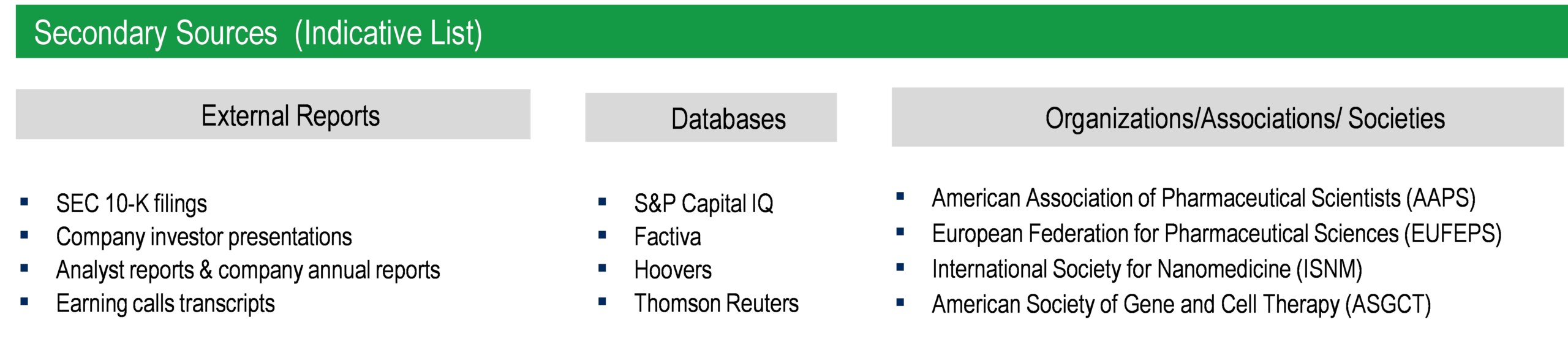
Secondary Research (Indicative List)
Primary Research
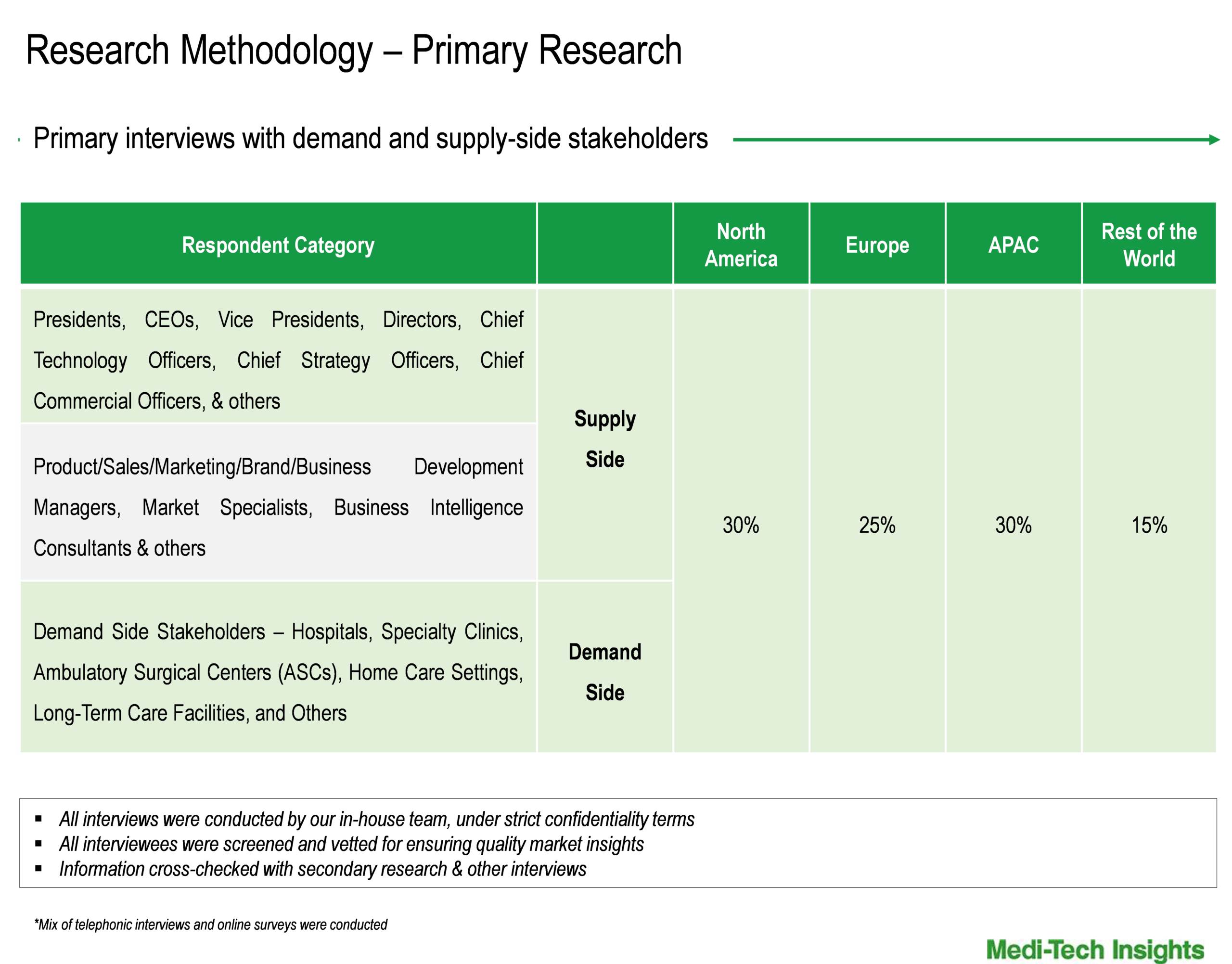
To validate research findings (market size & forecasts, market segmentation, market dynamics, competitive landscape, key industry trends, etc.), extensive primary interviews were conducted with both supply and demand-side stakeholders.
Supply Side Stakeholders:
- Senior Management Level: CEOs, Presidents, Vice-Presidents, Directors, Chief Technology Officers, Chief Commercial Officers
- Mid-Management Level: Product Managers, Sales Managers, Brand Managers, R&D Managers, Business Development Managers, Consultants
Demand Side Stakeholders:
- Hospitals, Specialty Clinics, Ambulatory Surgical Centers (ASCs), Home Care Settings, Long-Term Care Facilities, and Others
Breakdown of Primary Interviews
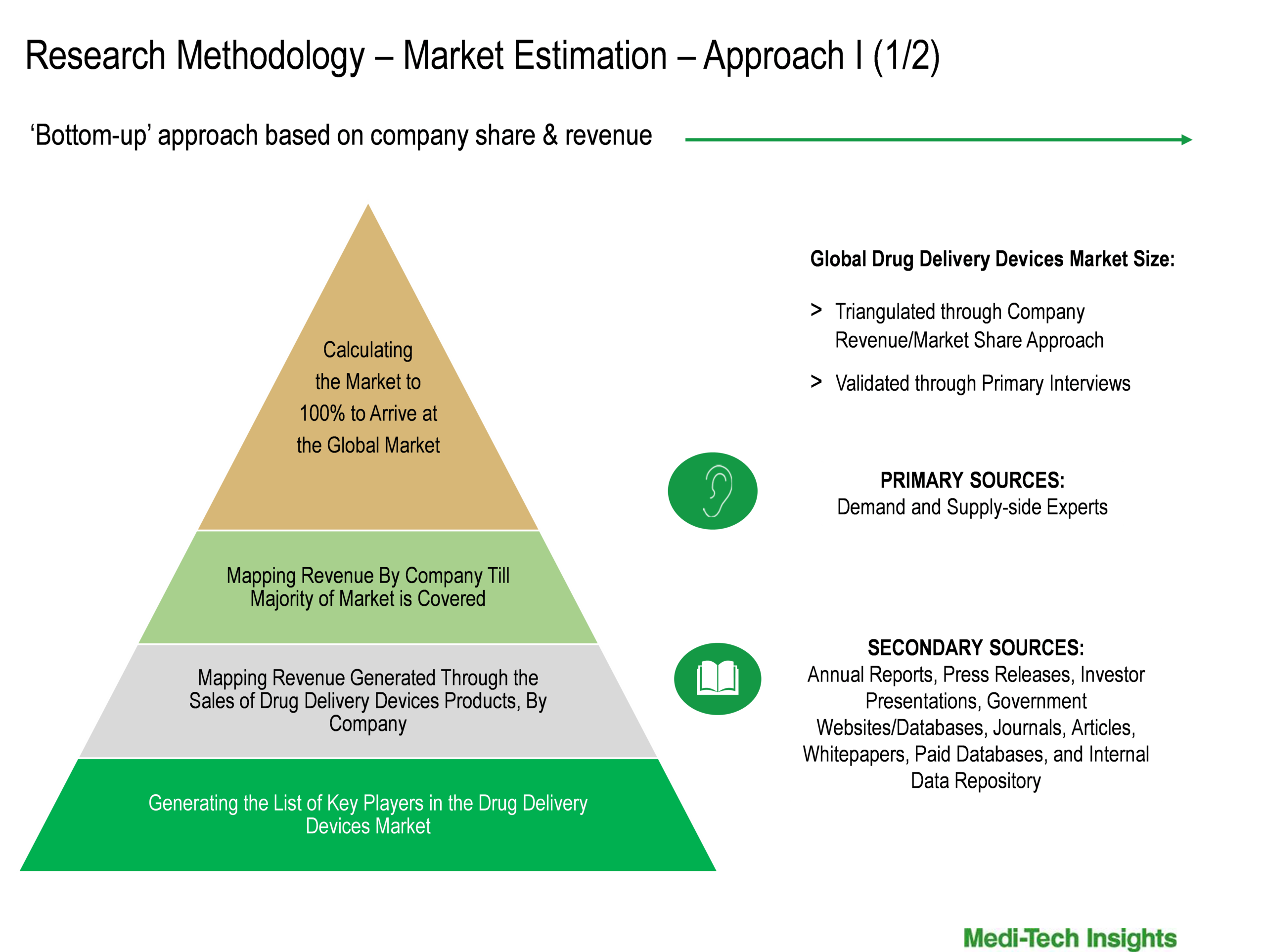
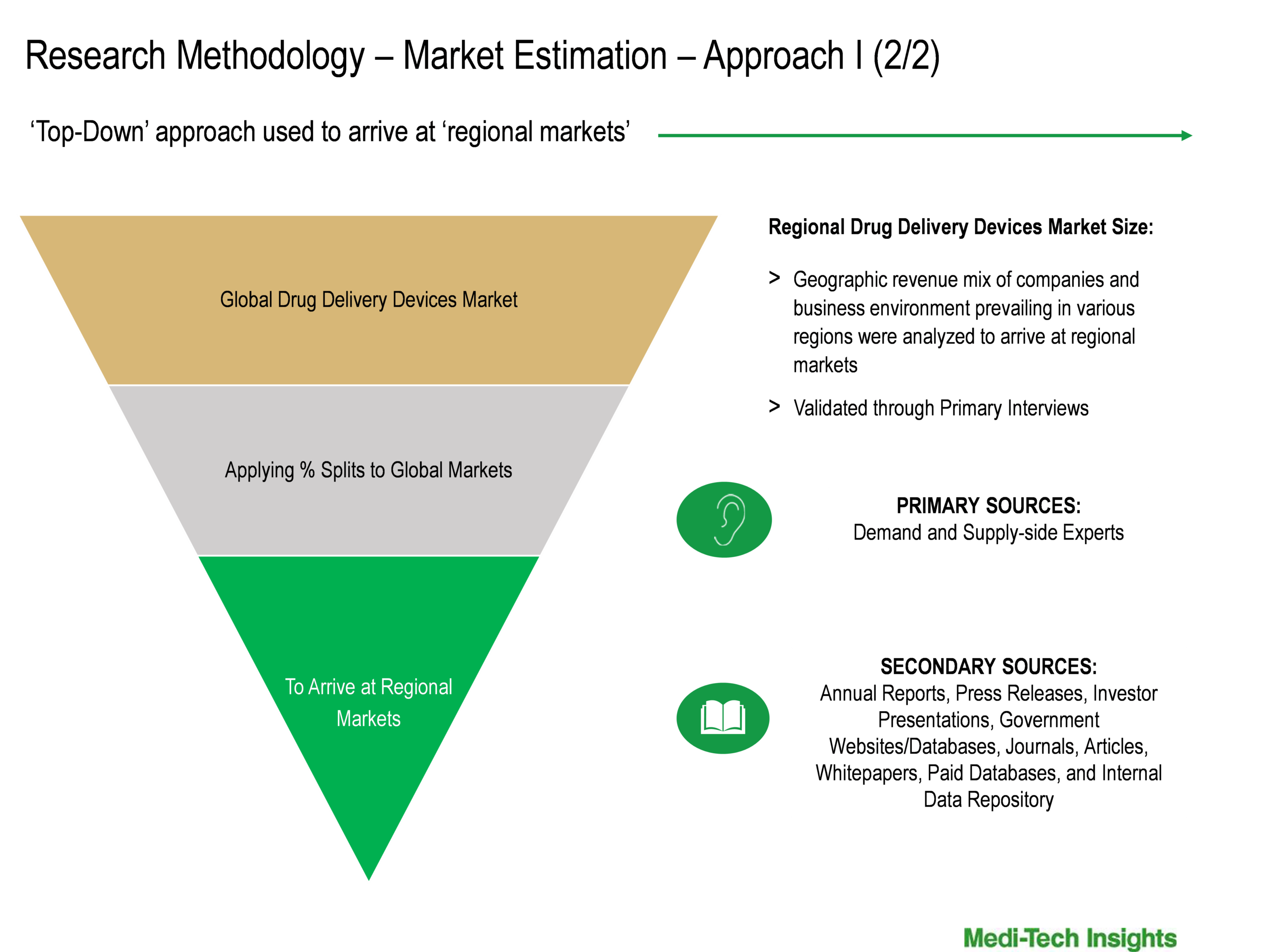
Market Size Estimation
Both ‘Top-Down & Bottom-Up Approaches’ were used to derive market size estimates and forecasts
To learn more about this report, download the PDF brochure
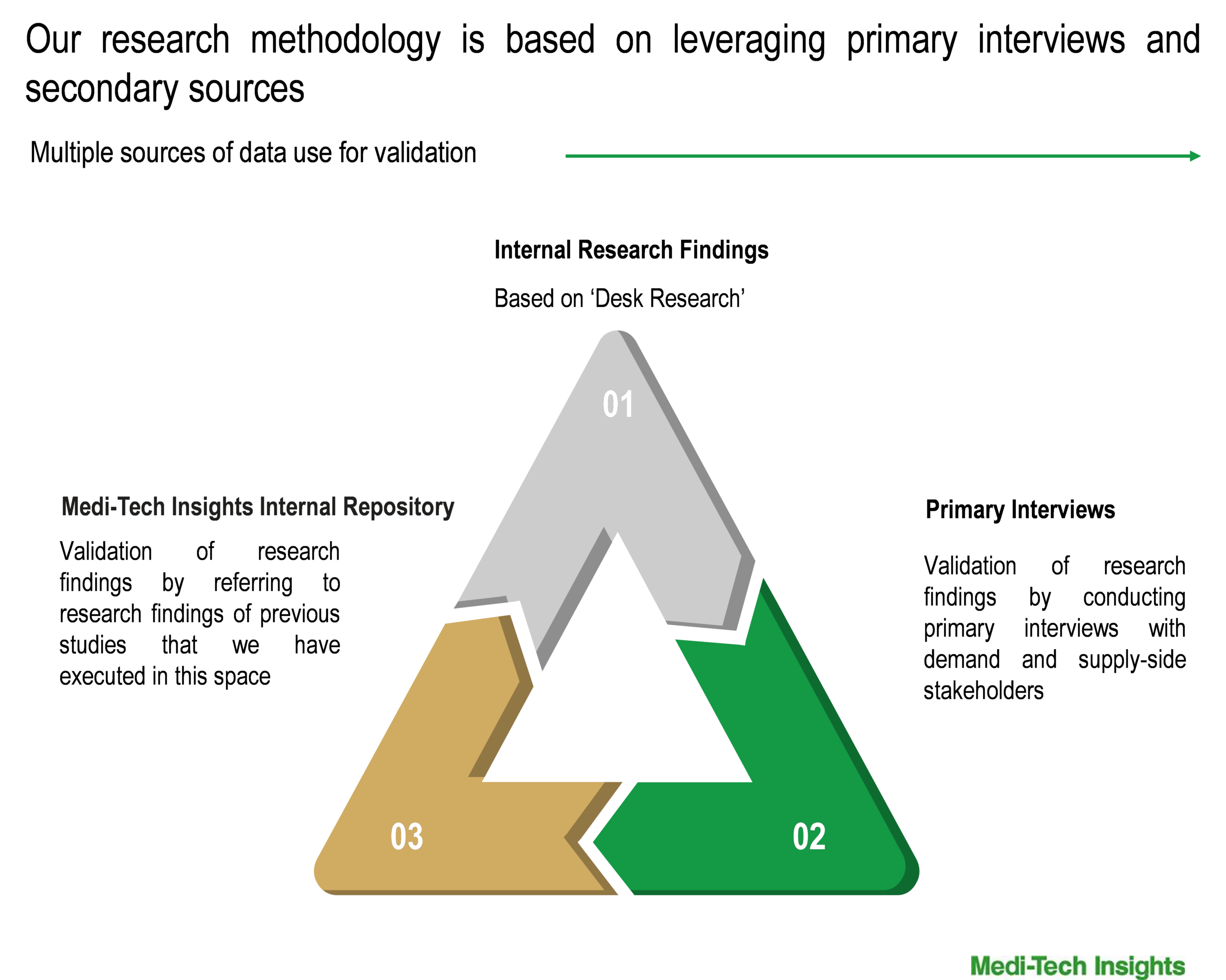
Data Triangulation
Research findings derived through secondary sources & internal analysis was validated with Primary Interviews, Internal Knowledge Repository and Company’s Sales Data
Frequently Asked Questions (FAQs)
Features of the Report
- Comprehensive Market Coverage
- Market Size and Forecast
- Geographic & Segment Deep Dives
- Strategic Insights & Competitive Landscape
- Timely & Updated Data
- Growth Indicators & Future Outlook
- Quick Turnaround on Queries
- Analyst Support
- Report Customization Available
- Reports in PDF & Excel
