

Global Generative AI in Healthcare Market Size & Trends Report Segmented by Application (Drug Discovery & Development, Imaging, Diagnostics, Personalized Medicine), End-User (Pharma & Biotech and Medical Device Companies, Payers, Providers) & Regional Forecast to 2031
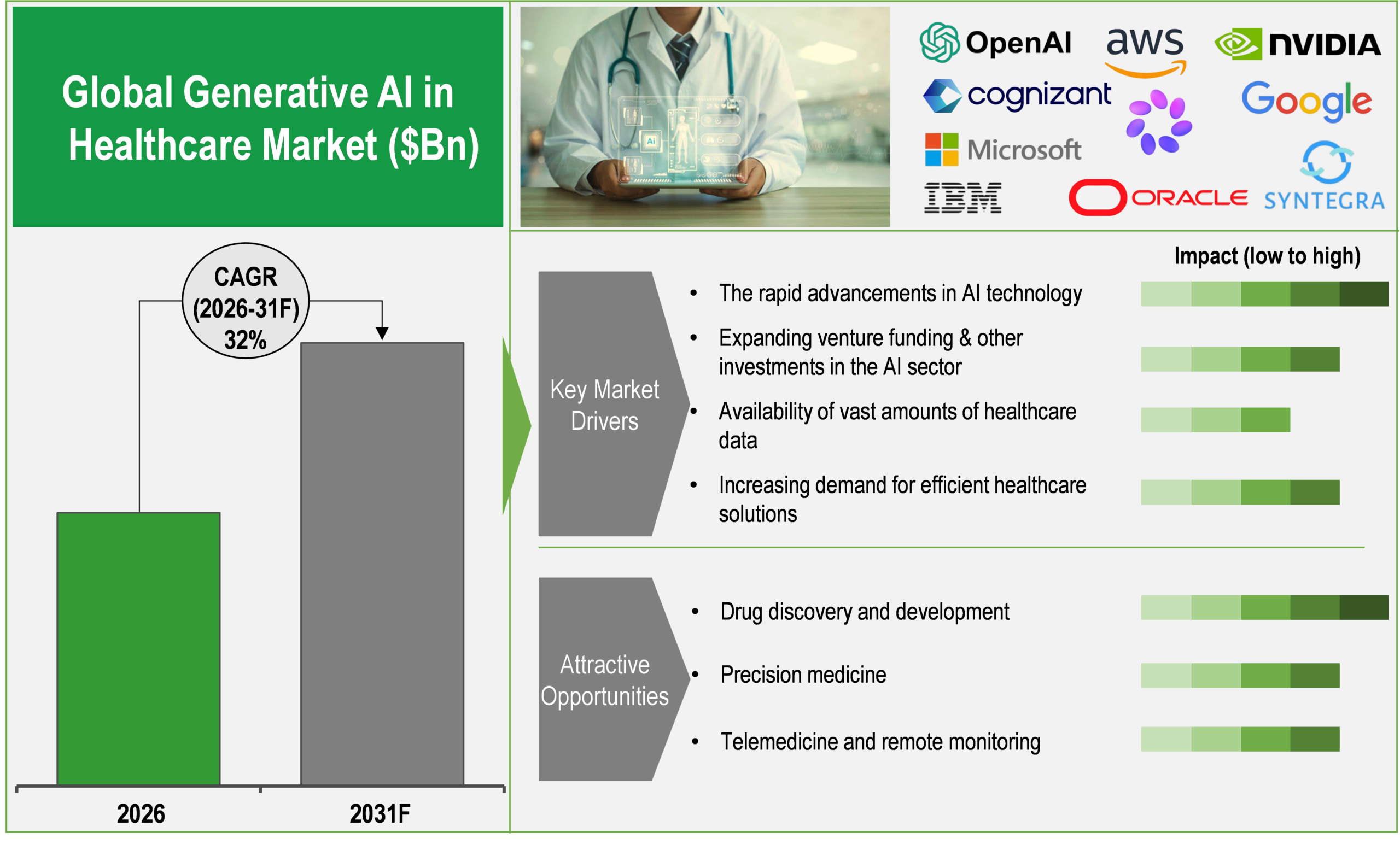
The global generative AI in healthcare market size is set to grow at 32% CAGR over the next 5 years. The rapid advancements in AI technology; increasing demand for precision medicine; increasing demand for efficient healthcare solutions; expanding venture funding and other investments in the AI sector; ability of generative AI to automate tasks, reduce errors, optimize treatment, and lowers costs; availability of vast amounts of healthcare data, including EHRs, medical imaging, and genomic data; and growing applications in drug discovery are some of the key factors driving the Generative AI in Healthcare market growth. However, data privacy and security concerns; regulatory challenges; the high cost associated with development, deployment, and maintenance of generative AI system; and ethical concerns related to the use of AI in healthcare is likely to hinder the market’s growth. To learn more about the research report, download a sample report.
Generative AI in healthcare refers to the application of advanced artificial intelligence models capable of creating new content, insights, and data by learning patterns from vast healthcare datasets. Powered by large language models (LLMs), deep learning, and neural networks, these systems can generate clinical documentation, medical summaries, diagnostic recommendations, synthetic patient data, medical images, and personalized treatment insights. Generative AI enhances clinical decision-making, streamlines administrative workflows, accelerates drug discovery, supports medical research, and improves patient engagement. As healthcare organizations increasingly adopt AI-driven solutions, generative AI is becoming a transformative technology that improves operational efficiency, enables precision medicine, and enhances overall healthcare delivery.
Rapid advancements in AI technology to drive market growth
The rapid advancements in AI technology are pivotal in driving the growth of generative AI in the healthcare market. Breakthroughs in deep learning, natural language processing (NLP), and neural networks enable AI systems to analyse vast amounts of medical data with unprecedented accuracy. These technologies facilitate the automation of complex tasks such as drug discovery, diagnostic imaging, and personalized treatment planning, improving patient outcomes and operational efficiency. Enhanced AI algorithms can predict disease progression, optimize treatment plans, and even generate novel therapeutic solutions tailored to individual patients. As these technologies continue to evolve, they reduce the time and cost of medical research and development, making advanced healthcare solutions more accessible. Consequently, the integration of cutting-edge AI technologies is transforming healthcare delivery, driving demand for generative AI applications, and fueling market expansion.
To learn more about this report, download the PDF brochure
Expanding venture funding and other investments in the AI sector to fuel market growth
Growing venture capital (VC) funding and strategic investments are significantly accelerating the adoption of generative AI in healthcare by enabling the development, commercialization, and scaling of innovative AI-powered healthcare solutions. According to the OECD, AI firms attracted USD 258.7 billion in venture capital investments in 2025, accounting for 61% of total global VC investments, more than double AI's share in 2022. Within this, generative AI companies secured USD 35.3 billion, representing over 14% of all AI venture capital investments, reflecting strong investor confidence in foundation models and large language model (LLM)-based applications.
The healthcare sector is emerging as one of the most promising application areas for these investments, particularly across clinical documentation, medical imaging, drug discovery, personalized medicine, clinical decision support, and patient engagement. In addition to venture capital, leading technology companies continue to make substantial strategic investments to strengthen the generative AI ecosystem. For example, Microsoft's multi-billion-dollar partnership with OpenAI has accelerated the integration of generative AI across cloud infrastructure and healthcare solutions, while companies such as Google, Amazon Web Services, NVIDIA, and Oracle continue to expand AI capabilities for life sciences and healthcare. Rising investments enable healthcare AI companies to strengthen research, recruit specialized talent, obtain regulatory approvals, and establish strategic collaborations with healthcare providers and pharmaceutical companies. As investor confidence and enterprise adoption continue to grow, sustained capital inflows are expected to accelerate innovation, commercialization, and global adoption of generative AI technologies across the healthcare industry.
Application Segment Outlook
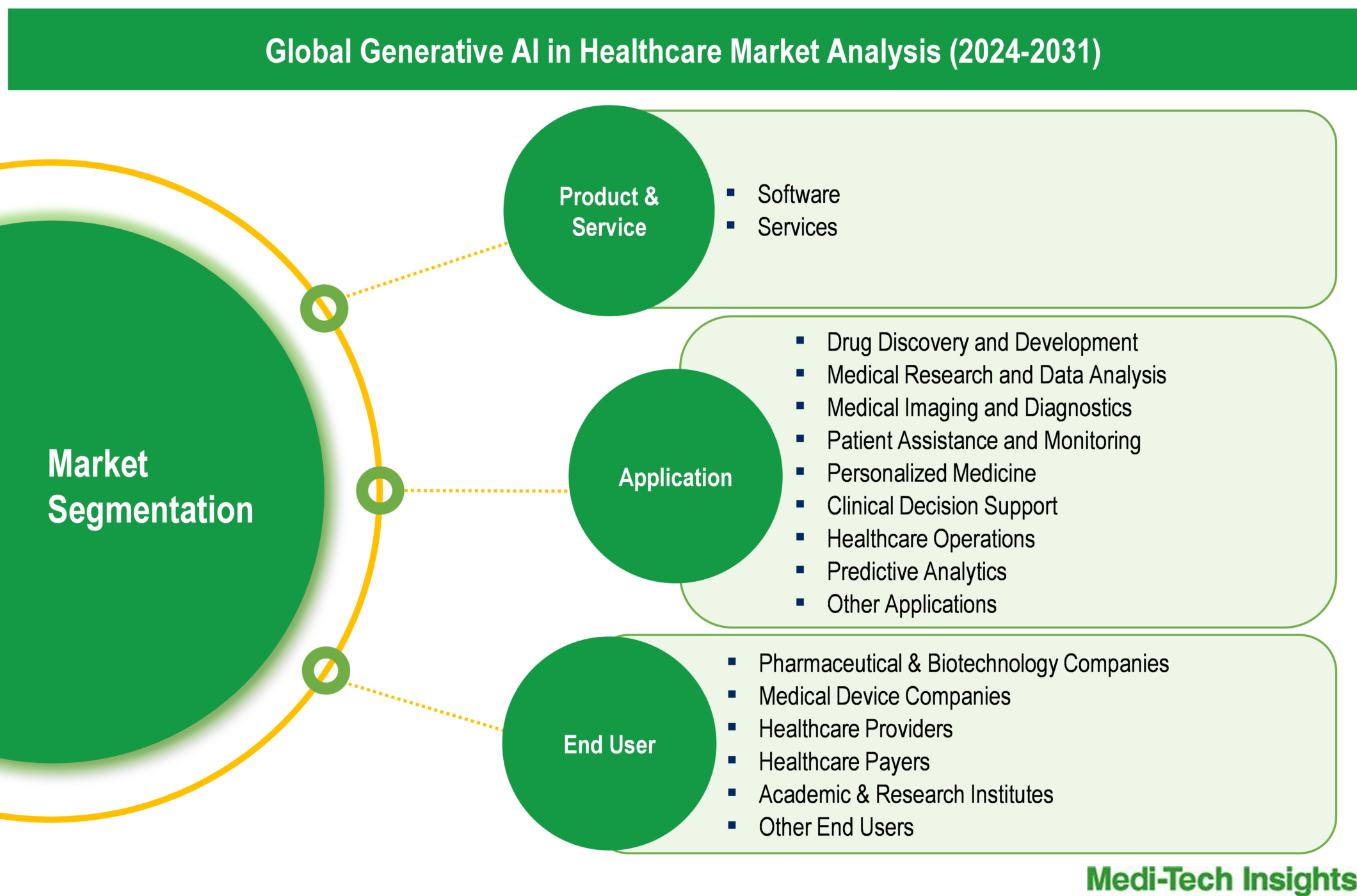
Drug Discovery and Development is the largest segment due to the extensive use of AI in accelerating the discovery of new drugs, optimizing clinical trials, and reducing time-to-market. This segment benefits from AI’s ability to analyze large datasets, simulate drug interactions, and predict outcomes more efficiently. Growth in the patient assistance and monitoring segment is driven by the rapid advancements in AI-driven virtual assistants and remote monitoring technologies. AI tools are increasingly being used to provide real-time health support, enhance patient engagement, and monitor chronic conditions, making this segment particularly dynamic.
To learn more about this report, download the PDF brochure
End User Segment Outlook
The pharmaceutical & biotechnology companies represent the largest segment. This is due to their extensive use of AI in drug discovery, development, and clinical trials. AI helps these companies streamline processes, enhance precision in drug targeting, and reduce costs, making them the primary adopters of generative AI technologies. The growth in the healthcare providers segment for AI in healthcare is driven by the need for improved patient care and operational efficiency. AI aids in automating administrative tasks, enhancing diagnostic accuracy, and personalizing treatment plans. This technology supports real-time data analysis and decision-making, leading to better patient outcomes and streamlined workflows, thus fueling its adoption among healthcare providers.
Regional Outlook: US expected to be a major growth engine in generative AI in healthcare market
The US is expected to be a major growth engine in the generative AI in healthcare market due to several factors. Firstly, the country’s robust healthcare infrastructure and advanced technology adoption create an ideal environment for AI integration. Major healthcare providers, such as hospitals and clinics, are increasingly embracing AI to enhance patient care, streamline administrative processes, and improve outcomes. Secondly, the US is home to leading AI companies, research institutions, and tech giants like Google, IBM, and NVIDIA, which are heavily investing in AI development and applications tailored for healthcare. This fosters innovation and accelerates the deployment of AI solutions in the medical field. Furthermore, there is significant venture capital funding and government support for AI in healthcare, further driving market growth. Regulatory bodies like the FDA are also adapting frameworks to ensure the safe integration of AI technologies, encouraging more widespread adoption. Overall, the US combines technological leadership, investment, and a supportive regulatory environment, making it a key driver in the global Generative AI healthcare market.
Growth in the APAC generative AI in healthcare market is driven by the rapid adoption of digital health technologies and AI-powered solutions across the region. Significant investments from both private and public sectors are fuelling innovation, while supportive government policies and initiatives are enhancing healthcare infrastructure, making the region a key area for AI-driven healthcare advancements. Additionally, a growing focus on personalized medicine and improving healthcare access in densely populated areas further accelerates market growth.
Competitive Landscape Analysis
The global generative AI in healthcare market is marked by the presence of established and emerging market players such as-
- Amazon Web Services
- Cognizant
- Google LLC
- IBM Corporation
- Meta
- Microsoft Corporation
- NVIDIA
- OpenAI
- Oracle Corporation
- Syntegra

Get a sample report for competitive landscape analysis
Growth strategies adopted by players to establish their foothold in the generative AI in healthcare market
Players operating in this market are adopting various growth strategies such as new product launch; acquisitions; expansions; and strategic partnerships, agreements, and collaborations, to garner market share. For instance,
- In February 2026, Fujitsu Japan launched a generative AI-powered medical documentation solution that automatically converts physician-patient conversations into structured clinical records, reducing administrative burden and improving healthcare workflow efficiency
- In June 2025, the US FDA launched Elsa, an agency-wide generative AI tool that streamlines scientific reviews, clinical evaluations, and regulatory workflows, improving operational efficiency and accelerating healthcare decision-making
- In July 2024, GE HealthCare and Amazon Web Services (AWS) formed a strategic partnership to develop generative AI applications aimed at enhancing medical diagnostics and patient care. GE HealthCare will use AWS’s cloud and AI services to create innovative solutions that improve clinical workflows, diagnostic accuracy, and patient outcomes, accelerating the development and implementation of new healthcare technologies
- In June 2024, Cognizant, in partnership with Google Cloud, launched healthcare-specific generative AI solutions to streamline administrative processes and improve patient care experiences. These AI-driven tools target high-cost workflows, enhancing efficiency, accuracy, and overall healthcare delivery, and manufacturing
- In March 2024, NVIDIA launched over two dozen healthcare microservices, enabling global healthcare enterprises to leverage generative AI for advanced medical applications across any cloud platform
- In February 2024, Hartford HealthCare launched its Center for Artificial Intelligence (AI) Innovation in Healthcare to advance AI research and development in clinical care, collaborating with institutions like MIT and the University of Oxford. The center aims to lead AI-driven healthcare transformation by focusing on collaboration, trustworthiness, and innovation, building on Hartford HealthCare's existing AI initiatives
- In November 2023, Wipro partnered with NVIDIA to enhance healthcare solutions using generative AI, leveraging NVIDIA’s AI Enterprise software for improved member experience, enrolment, and claims processing. This collaboration aims to accelerate the adoption of AI in healthcare, enabling custom AI models and transforming digital and business processes in the industry
Report Scope
|
Report Metric |
Details |
|
Base Year Considered |
2025 |
|
Historical Data |
2024 – 2025 |
|
Forecast Period |
2026 – 2031 |
|
Growth Rate |
32% |
|
Segment Scope |
Product & Service, Application, and End User |
|
Regional Scope |
|
|
Market Drivers |
|
|
Attractive Opportunities |
|
|
Key Companies Mapped |
Amazon Web Services; Cognizant; Google LLC; IBM Corporation; Meta; Microsoft Corporation; NVIDIA; OpenAI; Oracle Corporation; and Syntegra; among others |
|
Report Highlights |
Market Size & Forecast, Growth Drivers & Restraints, Trends, Competitive Analysis |
Global Generative AI in Healthcare Market Segmentation
This report by Medi-Tech Insights provides the size of the global generative AI in healthcare market at the regional and country-level from 2024 to 2031. The report further segments the market by product & service, application, and end user.
Market Size & Forecast (2024-2031), By Product & Service, USD Billion
- Software
- Services
Market Size & Forecast (2024-2031), By Application, USD Billion
- Drug Discovery and Development
- Medical Research and Data Analysis
- Medical Imaging and Diagnostics
- Patient Assistance and Monitoring
- Personalized Medicine
- Clinical Decision Support
- Healthcare Operations
- Predictive Analytics
- Other Applications
Market Size & Forecast (2024-2031), By End User, USD Billion
- Pharmaceutical & Biotechnology Companies
- Medical Device Companies
- Healthcare Providers
- Healthcare Payers
- Academic & Research Institutes
- Other End Users
Market Size & Forecast (2024-2031), By Region, USD Billion
- North America
- US
- Canada
- Europe
- UK
- Germany
- France
- Italy
- Spain
- Rest of Europe
- Asia Pacific
- China
- India
- Japan
- Rest of Asia Pacific
- Latin America
- Middle East & Africa
- Introduction
- Introduction
- Market Scope
- Market Definition
- Segments Covered
- Regional Segmentation
- Research Timeframe
- Currency Considered
- Study Limitations
- Stakeholders
- List of Abbreviations
- Key Conferences and Events (2026-2027)
- Research Methodology
- Secondary Research
- Primary Research
- Market Estimation
- Bottom-Up Approach
- Top-Down Approach
- Market Forecasting
- Executive Summary
- Generative AI in Healthcare Market Snapshot (2026-2031)
- Segment Overview
- Regional Snapshot
- Competitive Insights
- Market Overview
- Market Dynamics
- Drivers
- Rapid advancements in AI technology
- Expanding venture funding & other investments in the AI sector
- Availability of vast amounts of healthcare data
- Increasing demand for efficient healthcare solutions
- Restraints
- Data privacy and security concerns
- Regulatory challenges
- Ethical concerns related to the use of AI in healthcare
- Opportunities
- Drug discovery and development
- Precision medicine
- Virtual health assistants
- Telemedicine and remote monitoring
- Key Market Trends
- Increased integration with EHR systems
- AI-driven medical imaging analysis
- Unmet Market Needs
- Industry Speaks
- Drivers
- Market Dynamics
- Global Generative AI in Healthcare Market Size & Forecast (2024-2031), By Product & Service, USD Billion
- Introduction
- Software
- Services
- Global Generative AI in Healthcare Market Size & Forecast (2024-2031), By Application, USD Billion
- Introduction
- Drug Discovery and Development
- Medical Research and Data Analysis
- Medical Imaging and Diagnostics
- Patient Assistance and Monitoring
- Personalized Medicine
- Clinical Decision Support
- Healthcare Operations
- Predictive Analytics
- Other Applications
- Global Generative AI in Healthcare Market Size & Forecast (2024-2031), By End User, USD Billion
- Introduction
- Pharmaceutical & Biotechnology Companies
- Medical Device Companies
- Healthcare Providers
- Healthcare Payers
- Academic & Research Institutes
- Other End Users
- Global Generative AI in Healthcare Market Size & Forecast (2024-2031), By Region, USD Billion
- Introduction
- North America Generative AI in Healthcare Market Size & Forecast (2024-2031), By Country, USD Billion
- US
- Market Size & Forecast, By Product & Service (USD Billion)
- Market Size & Forecast, By Application (USD Billion)
- Market Size & Forecast, By End User (USD Billion)
- Canada
- Market Size & Forecast, By Product & Service (USD Billion)
- Market Size & Forecast, By Application (USD Billion)
- Market Size & Forecast, By End User (USD Billion)
- US
- Europe Generative AI in Healthcare Market Size & Forecast (2024-2031), By Country, USD Billion
- UK
- Market Size & Forecast, By Product & Service (USD Billion)
- Market Size & Forecast, By Application (USD Billion)
- Market Size & Forecast, By End User (USD Billion)
- Germany
- Market Size & Forecast, By Product & Service (USD Billion)
- Market Size & Forecast, By Application (USD Billion)
- Market Size & Forecast, By End User (USD Billion)
- France
- Market Size & Forecast, By Product & Service (USD Billion)
- Market Size & Forecast, By Application (USD Billion)
- Market Size & Forecast, By End User (USD Billion)
- Italy
- Market Size & Forecast, By Product & Service (USD Billion)
- Market Size & Forecast, By Application (USD Billion)
- Market Size & Forecast, By End User (USD Billion)
- Spain
- Market Size & Forecast, By Product & Service (USD Billion)
- Market Size & Forecast, By Application (USD Billion)
- Market Size & Forecast, By End User (USD Billion)
- Rest of Europe
- Market Size & Forecast, By Product & Service (USD Billion)
- Market Size & Forecast, By Application (USD Billion)
- Market Size & Forecast, By End User (USD Billion)
- UK
- Asia Pacific (APAC) Generative AI in Healthcare Market Size & Forecast (2024-2031), By Country, USD Billion
- China
- Market Size & Forecast, By Product & Service (USD Billion)
- Market Size & Forecast, By Application (USD Billion)
- Market Size & Forecast, By End User (USD Billion)
- Japan
- Market Size & Forecast, By Product & Service (USD Billion)
- Market Size & Forecast, By Application (USD Billion)
- Market Size & Forecast, By End User (USD Billion)
- India
- Market Size & Forecast, By Product & Service (USD Billion)
- Market Size & Forecast, By Application (USD Billion)
- Market Size & Forecast, By End User (USD Billion)
- Rest of Asia Pacific
- Market Size & Forecast, By Product & Service (USD Billion)
- Market Size & Forecast, By Application (USD Billion)
- Market Size & Forecast, By End User (USD Billion)
- China
- Latin America (LATAM) Generative AI in Healthcare Market Size & Forecast (2024-2031), USD Billion
- Market Size & Forecast, By Product & Service (USD Billion)
- Market Size & Forecast, By Application (USD Billion)
- Market Size & Forecast, By End User (USD Billion)
- Middle East & Africa (MEA) Generative AI in Healthcare Market Size & Forecast (2024-2031), USD Billion
- Market Size & Forecast, By Product & Service (USD Billion)
- Market Size & Forecast, By Application (USD Billion)
- Market Size & Forecast, By End User (USD Billion)
- Competitive Landscape
- Key Players and their Competitive Positioning
- Key Player Comparison
- Segment-wise Player Mapping
- Market Share Analysis (2025)
- Company Categorization Matrix
- Dominants/Leaders
- New Entrants
- Emerging Players
- Innovative Players
- Key Strategies Assessment, By Player (2023-2026)
- New Product & Service Launch
- Partnerships, Agreements, & Collaborations
- Mergers & Acquisitions
- Geographic Expansion
- Key Players and their Competitive Positioning
- Company Profiles*
(Business Overview, Financial Performance**, Product & Services Offered, Recent Developments)
- Amazon Web Services
- Cognizant
- Google LLC
- IBM Corporation
- Meta
- Microsoft Corporation
- NVIDIA
- OpenAI
- Oracle Corporation
- Syntegra
- Other Prominent Players
Note: *Indicative list
**For listed companies
The study has been compiled based on extensive primary and secondary research.
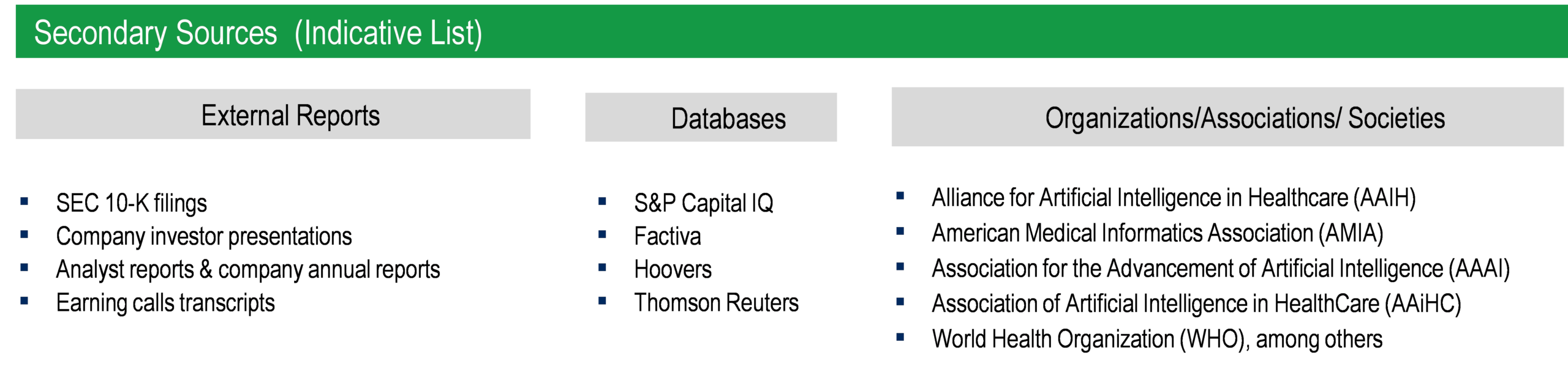
Secondary Research (Indicative List)
Primary Research
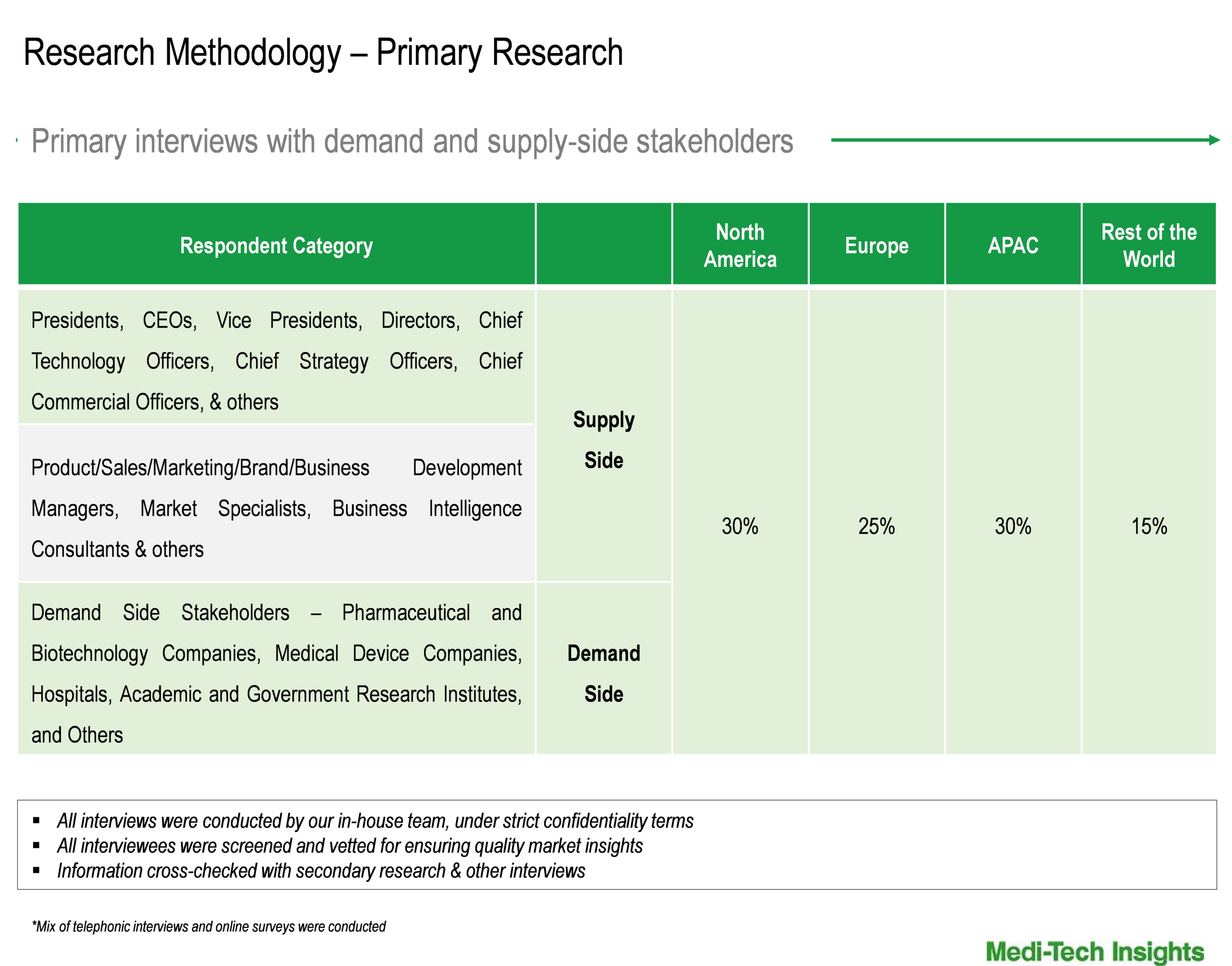
To validate research findings (market size & forecasts, market segmentation, market dynamics, competitive landscape, key industry trends, etc.), extensive primary interviews were conducted with both supply and demand-side stakeholders.
Supply Side Stakeholders:
- Senior Management Level: CEOs, Presidents, Vice-Presidents, Directors, Chief Technology Officers, Chief Commercial Officers
- Mid-Management Level: Product Managers, Sales Managers, Brand Managers, R&D Managers, Business Development Managers, Consultants
Demand Side Stakeholders:
- Pharmaceutical and Biotechnology Companies, Medical Device Companies, Hospitals, Academic and Government Research Institutes, and Others
Breakdown of Primary Interviews
Market Size Estimation
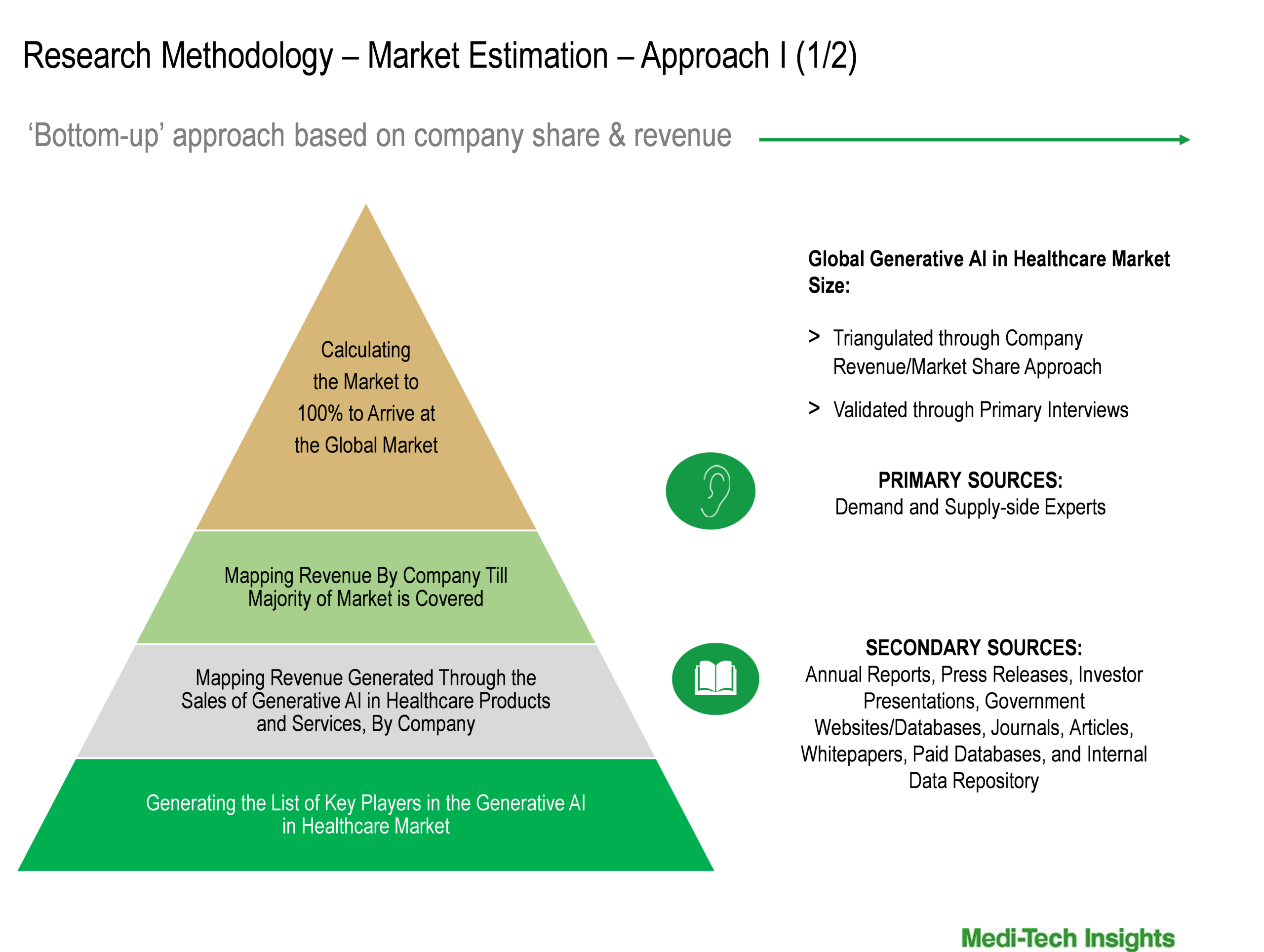
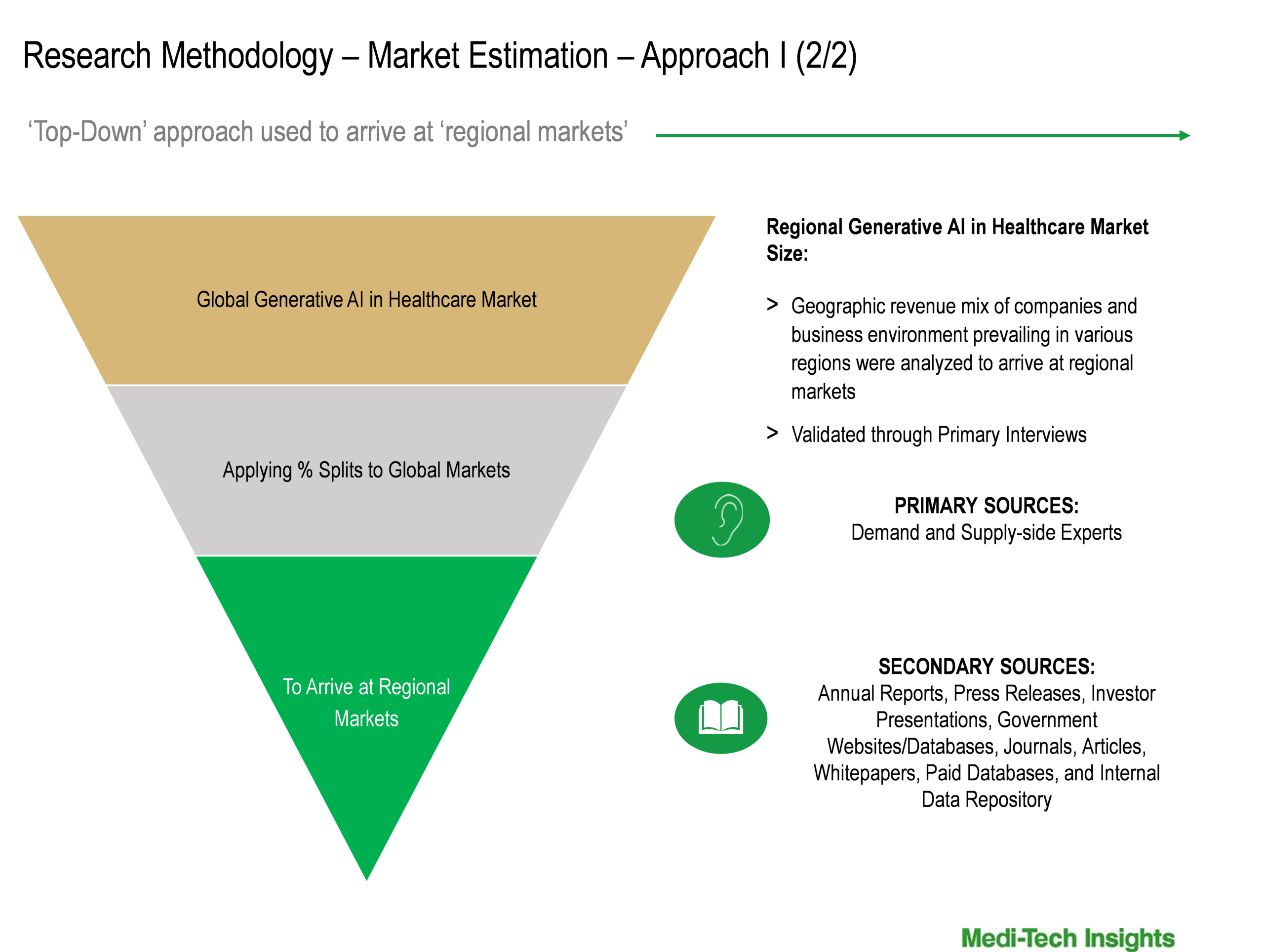
Both ‘Top-Down & Bottom-Up Approaches’ were used to derive market size estimates and forecasts
To learn more about this report, download the PDF brochure
Data Triangulation
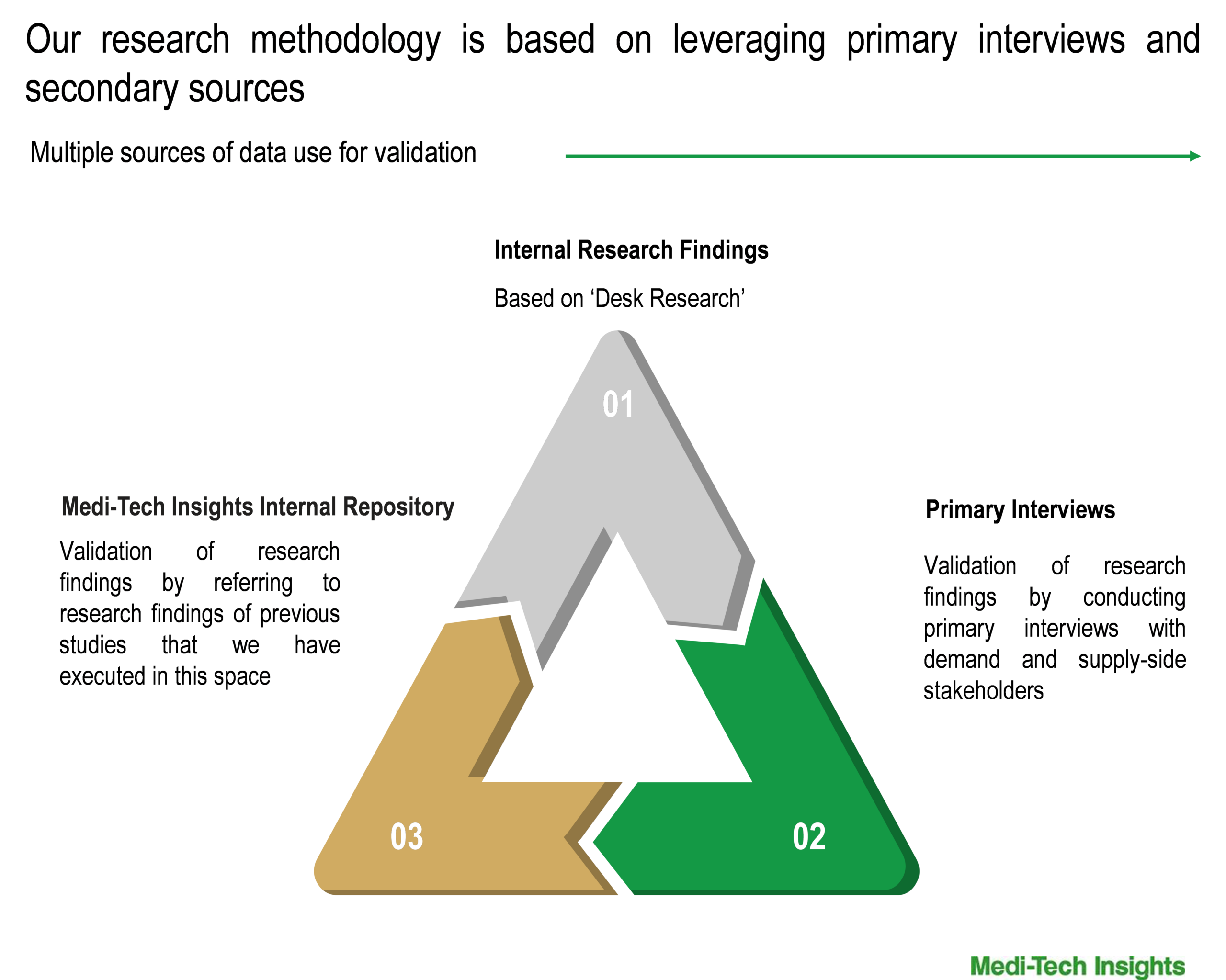
Research findings derived through secondary sources & internal analysis was validated with Primary Interviews, Internal Knowledge Repository and Company’s Sales Data
Frequently Asked Questions (FAQs)
Features of the Report
- Comprehensive Market Coverage
- Market Size and Forecast
- Geographic & Segment Deep Dives
- Strategic Insights & Competitive Landscape
- Timely & Updated Data
- Growth Indicators & Future Outlook
- Quick Turnaround on Queries
- Analyst Support
- Report Customization Available
- Reports in PDF & Excel
