

Global Nuclear Medicine Market Size & Trends Report Segmented by Product (SPECT, PET, Alpha & Beta Emitters, Brachytherapy), Application (Cardiology, Neurology, Oncology, Urology, Thyroid, Lymphoma, Bone Metastasis), End-user (Hospitals, Diagnostic Centers) & Regional Forecasts to 2031
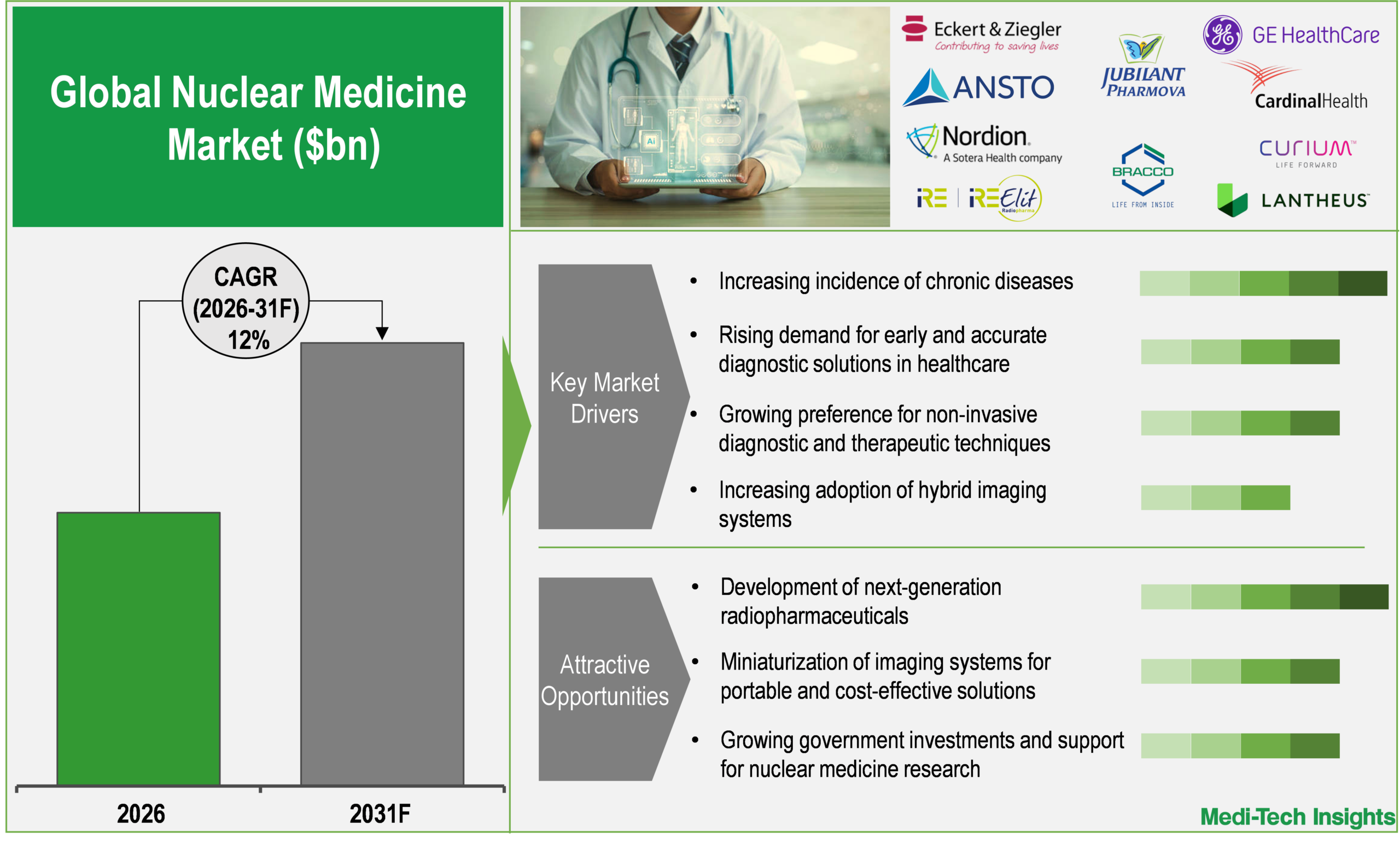
The global nuclear medicine market size is set to grow at 12% CAGR over the next 5 years. rising prevalence of cancer and cardiovascular diseases, increasing adoption of hybrid imaging systems, advancements in radiopharmaceuticals, and government investments in nuclear medicine research are some of the key factors driving the growth of the global market. However, high costs of equipment and radiopharmaceuticals, regulatory hurdles, and limited availability of radioisotopes are expected to impact the market’s growth. To learn more about the research report, download a sample report.
The nuclear medicine market involves advanced diagnostic and therapeutic methods utilizing radioactive substances to evaluate and treat a wide range of diseases. Central to these methods are radiopharmaceuticals and molecular imaging technologies, which provide precise insights into physiological processes and enable targeted treatment delivery. Predominantly applied in fields such as oncology, cardiology, and neurology, nuclear medicine offers non-invasive solutions for early disease detection and effective therapies.
Rising prevalence of cancer and cardiovascular diseases to drive market growth
The rising prevalence of cancer and cardiovascular diseases is a major factor driving the growth of the global nuclear medicine market, as these conditions require accurate diagnosis, disease staging, treatment planning, and continuous monitoring. Nuclear medicine provides highly sensitive molecular imaging techniques, including Positron Emission Tomography (PET) and Single Photon Emission Computed Tomography (SPECT), which enable clinicians to detect physiological and metabolic abnormalities at an early stage, often before structural changes become visible through conventional imaging modalities. According to the World Health Organization (WHO), cardiovascular diseases remain the leading cause of death globally, accounting for approximately 17.9 million deaths annually, while the International Agency for Research on Cancer (IARC) estimated nearly 20 million new cancer cases and 9.7 million cancer-related deaths in 2022. The growing burden of these chronic diseases has significantly increased the demand for advanced diagnostic imaging and targeted therapeutic solutions.
In addition to diagnostics, nuclear medicine plays an increasingly important role in precision oncology through radiopharmaceutical therapies and theranostics, which combine molecular imaging with targeted radionuclide treatment to deliver personalized care while minimizing damage to healthy tissues. Continuous advancements in radioisotope production, novel radiotracers, hybrid imaging systems, and targeted radioligand therapies are further enhancing clinical outcomes and expanding the scope of nuclear medicine. As healthcare systems increasingly prioritize early disease detection, personalized treatment approaches, and improved patient outcomes, the adoption of nuclear medicine is expected to accelerate, supporting sustained growth of the global nuclear medicine market throughout the forecast period.
To learn more about this report, download the PDF brochure
Next-generation radiopharmaceuticals: enhancing diagnostics and therapy
The development of next-generation radiopharmaceuticals is emerging as a key opportunity transforming the global nuclear medicine market, enabling significant advancements in both molecular diagnostics and targeted radionuclide therapy. Novel radioisotopes such as Lutetium-177 (Lu-177), Actinium-225 (Ac-225), Copper-64 (Cu-64), and Zirconium-89 (Zr-89) are expanding the clinical applications of nuclear medicine by improving imaging accuracy and delivering highly targeted treatments for complex diseases, particularly cancer. These radiopharmaceuticals are increasingly being incorporated into theranostic approaches, where the same molecular target is used for both disease diagnosis and therapy, supporting personalized treatment strategies and enhancing clinical decision-making. Compared with conventional therapies, targeted radioligand treatments minimize radiation exposure to healthy tissues while improving therapeutic efficacy and patient outcomes.
On the diagnostic front, innovative PET and SPECT tracers are enabling earlier detection and more accurate characterization of diseases such as prostate cancer, neuroendocrine tumors, Alzheimer's disease, and cardiovascular disorders. At the same time, pharmaceutical companies, research institutes, and healthcare organizations are investing heavily in the discovery of novel radioisotopes, ligand development, and advanced manufacturing technologies to strengthen radiopharmaceutical pipelines. Strategic collaborations, regulatory approvals, and investments in isotope production infrastructure are further accelerating commercialization and global availability. As precision medicine continues to gain momentum, next-generation radiopharmaceuticals are expected to play a pivotal role in expanding the adoption of nuclear medicine, improving patient outcomes, and driving long-term growth of the global nuclear medicine market.
To learn more about this report, download the PDF brochure
Product Segment Outlook
The diagnostics segment is expected to account for the largest share of the global nuclear medicine market, driven by the widespread adoption of molecular imaging for the early detection, diagnosis, and monitoring of cancer, cardiovascular, neurological, and endocrine disorders. Diagnostic nuclear medicine relies primarily on Single Photon Emission Computed Tomography (SPECT) and Positron Emission Tomography (PET) imaging, both of which provide high diagnostic accuracy by visualizing physiological and metabolic processes at the molecular level. Increasing demand for precision diagnostics, rising availability of hybrid imaging systems such as PET/CT and SPECT/CT, and the growing use of radiotracers in clinical practice continue to support market expansion. In addition, favourable reimbursement policies, expanding healthcare infrastructure, and increasing investments in advanced imaging technologies are further strengthening the adoption of diagnostic nuclear medicine across developed and emerging healthcare markets.
The therapeutics segment is projected to witness the fastest growth during the forecast period, fuelled by the increasing adoption of targeted radiopharmaceutical therapies for oncology and other chronic diseases. Therapeutic nuclear medicine includes alpha emitters, beta emitters, and brachytherapy, which deliver localized radiation directly to diseased tissues while minimizing damage to surrounding healthy cells. Growing clinical success of radioligand therapies, expanding applications of theranostics, and increasing regulatory approvals for novel radiopharmaceuticals are accelerating market growth. Furthermore, rising investments by pharmaceutical companies, expansion of isotope production capacity, and ongoing clinical research into next-generation targeted therapies are expected to drive sustained demand for therapeutic nuclear medicine, making it one of the fastest-evolving segments within the global nuclear medicine market.
Regional Outlook: North America maintains its leading position in the nuclear medicine market
North America is expected to account for the largest share of the global nuclear medicine market, driven by its advanced healthcare infrastructure, widespread adoption of PET and SPECT imaging, and strong presence of leading radiopharmaceutical manufacturers. The region benefits from increasing use of precision medicine, favourable reimbursement policies, and growing demand for theranostics in oncology. In addition, continued investments in radioisotope production, expansion of nuclear pharmacy networks, and ongoing clinical research are supporting the commercialization of innovative diagnostic and therapeutic radiopharmaceuticals, reinforcing North America's leadership in the global nuclear medicine market.
The Asia Pacific region is projected to witness the fastest growth during the forecast period, supported by expanding healthcare infrastructure, increasing cancer prevalence, and rising investments in nuclear medicine facilities. Countries such as China, India, Japan, and South Korea are strengthening domestic radioisotope production, expanding PET/CT and SPECT imaging capacity, and promoting the adoption of targeted radiopharmaceutical therapies. Government initiatives to improve cancer diagnosis and treatment, coupled with growing awareness of precision medicine and increasing healthcare expenditure, are expected to accelerate the demand for nuclear medicine across the region.
Competitive Landscape Analysis
The global nuclear medicine market is marked by the presence of established and emerging market players such as-
- GE HealthCare
- Curium Pharma
- Lantheus Holdings, Inc.
- Cardinal Health, Inc.
- Bracco Imaging S.p.A.
- Jubilant Pharmova Limited
- The Australian Nuclear Science and Technology Organization (ANSTO)
- Nordion (Canada) Inc.
- Eckert & Ziegler SE
- Institute for Radioelements (IRE)
Get a sample report for competitive landscape analysis
Growth strategies adopted by players to establish their foothold in the nuclear medicine market
Players operating in this market are adopting various growth strategies such as new product launch/approval; acquisitions; expansions; and strategic partnerships, agreements, and collaborations, to garner market share. For instance,
- In July 2026, Curium reintroduced Thallous Chloride Tl-201 Injection to the US market, restoring access to a critical SPECT radiopharmaceutical for myocardial perfusion imaging and expanding diagnostic options for high-stakes cardiac care amid ongoing Tc-99m supply challenges
- In June 2026, GE HealthCare collaborated with University Hospital Essen to establish a state-of-the-art Nuclear Medicine Center, advancing theranostics, AI-enabled molecular imaging, radiopharmaceutical production, and personalized cancer care across Europe
- In June 2026, In June 2026, RadioMedix received U.S. FDA approval for its generic Ga-68 PSMA-11 PET radiodiagnostic, expanding access to prostate cancer imaging and strengthening its precision nuclear medicine portfolio
- In May 2026, SHINE secured European Marketing Authorization for Ilumira (non-carrier-added lutetium-177), enabling commercialization across the EU. The approval strengthens SHINE's integrated nuclear medicine platform and expands the supply of high-purity Lu-177 for targeted radioligand therapies
- In April 2026, Telix announced the US FDA acceptance of its NDA for TLX101-Px (Pixclara), an investigational PET imaging agent for glioma, advancing precision neuro-oncology diagnostics and expanding its radiopharmaceutical imaging portfolio
- In April 2025, Sumitomo Corporation partnered with SHINE Technologies to commercialize fusion-derived medical isotopes, including non-carrier-added Lutetium-177 (Lu-177), strengthening the nuclear medicine supply chain and expanding access to diagnostic and therapeutic radioisotopes across Japan and Asia
- In October 2024, Jubilant Radiopharma partnered with Simplified Imaging Solutions to deliver an integrated nuclear medicine solution combining radiopharmaceutical supply, imaging equipment, staffing, and operational services, improving efficiency and expanding access to in-house diagnostic imaging
Report Scope
|
Report Metric |
Details |
|
Base Year Considered |
2025 |
|
Historical Data |
2024 – 2025 |
|
Forecast Period |
2026 – 2031 |
|
Growth Rate |
12% |
|
Segment Scope |
Product, Application, and End User |
|
Regional Scope |
|
|
Market Drivers |
|
|
Attractive Opportunities |
|
|
Key Companies Mapped |
GE HealthCare; Curium Pharma; Lantheus Holdings, Inc.; Cardinal Health, Inc.; Bracco Imaging S.p.A.; Jubilant Pharmova Limited; The Australian Nuclear Science and Technology Organization (ANSTO); Nordion (Canada) Inc.; Eckert & Ziegler SE; and Institute for Radioelements (IRE); among others |
|
Report Highlights |
Market Size & Forecast, Growth Drivers & Restraints, Trends, Competitive Analysis |
Global Nuclear Medicine Market Segmentation
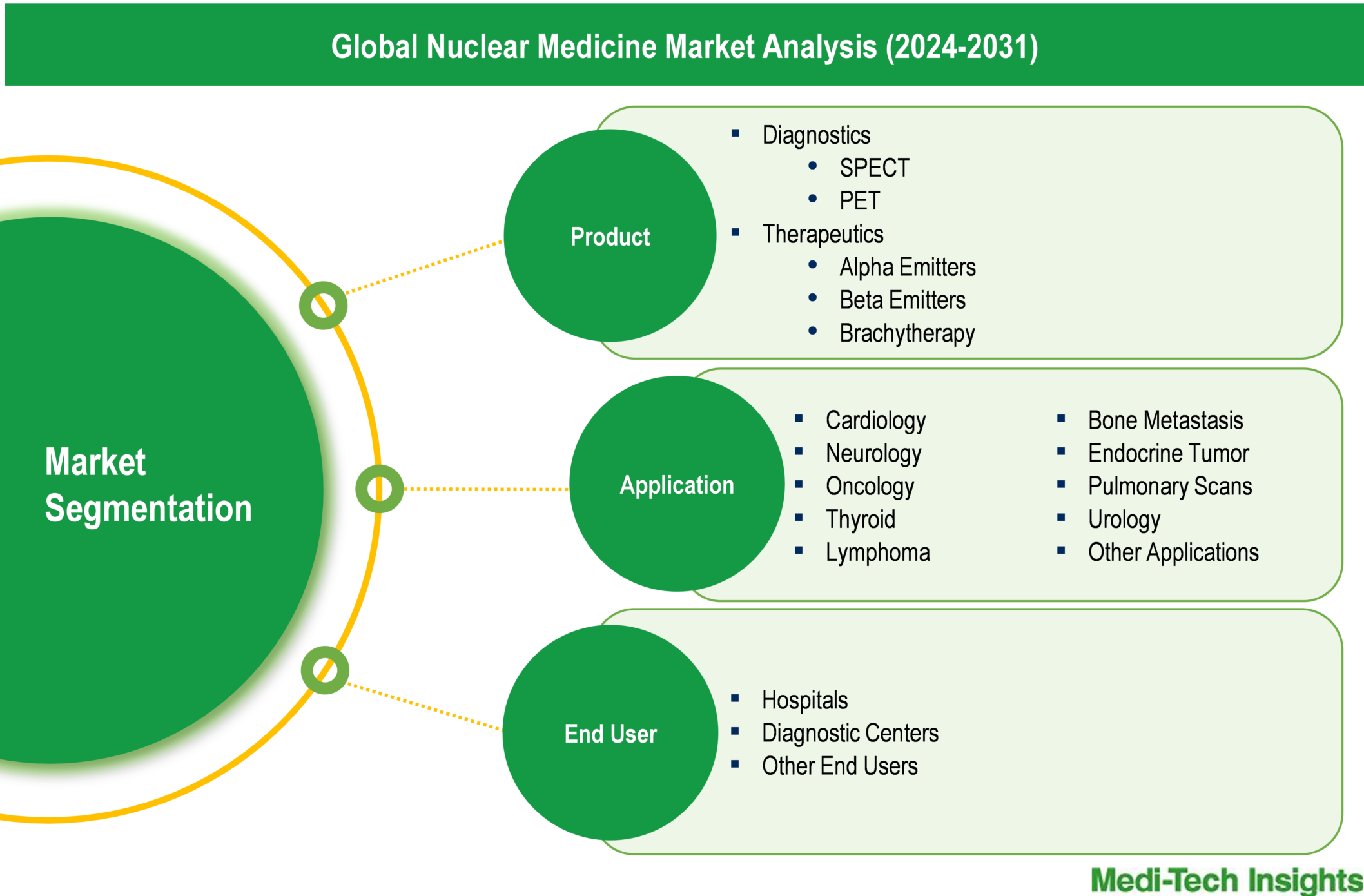
This report by Medi-Tech Insights provides the size of the global nuclear medicine market at the regional and country-level from 2024 to 2031. The report further segments the market by product, application, and end user.
Market Size & Forecast (2024-2031), By Product, USD Billion
- Diagnostics
- SPECT
- TC-99m
- TL-201
- GA-67
- I-123
- Others
- PET
- F-18
- SR-82/RB-82
- PYLARIFY (piflufolastat F 18)
- Illuccix (gallium Ga 68 gozetotide)
- Others
- Therapeutics
- Alpha Emitters
- RA-223
- Others
- Beta Emitters
- I-131
- Y-90
- SM-153
- Re-186
- Lu-177
- Others
- Brachytherapy
- Cesium-131
- Iodine-125
- Palladium-103
- Iridium-192
- Others
- Alpha Emitters
- SPECT
Market Size & Forecast (2024-2031), By Application, USD Billion
- Cardiology
- Neurology
- Oncology
- Thyroid
- Lymphoma
- Bone Metastasis
- Endocrine Tumour
- Pulmonary Scans
- Urology
- Other Applications
Market Size & Forecast (2024-2031), By End User, USD Billion
- Hospitals
- Diagnostic Centers
- Other End Users
Market Size & Forecast (2024-2031), By Region, USD Billion
- North America
- US
- Canada
- Europe
- UK
- Germany
- France
- Italy
- Spain
- Rest of Europe
- Asia Pacific
- China
- India
- Japan
- Rest of Asia Pacific
- Latin America
- Middle East & Africa
- Introduction
- Introduction
- Market Scope
- Market Definition
- Segments Covered
- Regional Segmentation
- Research Timeframe
- Currency Considered
- Study Limitations
- Stakeholders
- List of Abbreviations
- Key Conferences and Events (2026-2027)
- Research Methodology
- Secondary Research
- Primary Research
- Market Estimation
- Bottom-Up Approach
- Top-Down Approach
- Market Forecasting
- Executive Summary
- Nuclear Medicine Market Snapshot (2026-2031)
- Segment Overview
- Regional Snapshot
- Competitive Insights
- Market Overview
- Market Dynamics
- Drivers
- Increasing incidence of chronic diseases
- Rising demand for early and accurate diagnostic solutions in healthcare
- Growing preference for non-invasive diagnostic and therapeutic techniques
- Increasing adoption of hybrid imaging systems
- Expanding applications in personalized medicine and neurology
- Restraints
- High cost of nuclear imaging equipment and radiopharmaceuticals
- Stringent regulatory requirements for approval of isotopes and procedures
- Limited availability and short half-life of radioisotopes
- Opportunities
- Development of next-generation radiopharmaceuticals for emerging therapeutic applications
- Miniaturization of imaging systems for portable and cost-effective solutions
- Growing government investments and support for nuclear medicine research
- Key Market Trends
- Integration of AI in nuclear imaging for enhanced precision and efficiency
- Introduction of novel isotopes like Actinium-225 and Lutetium-177 for targeted therapies
- Unmet Market Needs
- Industry Speaks
- Drivers
- Market Dynamics
- Global Nuclear Medicine Market Size & Forecast (2024-2031), By Product, USD Billion
- Introduction
- Diagnostics
- SPECT
- TC-99m
- TL-201
- GA-67
- I-123
- Others
- PET
- F-18
- SR-82/RB-82
- PYLARIFY (piflufolastat F 18)
- Illuccix (gallium Ga 68 gozetotide)
- Others
- Therapeutics
- Alpha Emitters
- RA-223
- Others
- Beta Emitters
- I-131
- Y-90
- SM-153
- Re-186
- Lu-177
- Others
- Brachytherapy
- Cesium-131
- Iodine-125
- Palladium-103
- Iridium-192
- Others
- Alpha Emitters
- SPECT
- Global Nuclear Medicine Market Size & Forecast (2024-2031), By Application, USD Billion
- Introduction
- Cardiology
- Neurology
- Oncology
- Thyroid
- Lymphoma
- Bone Metastasis
- Endocrine Tumour
- Pulmonary Scans
- Urology
- Other Applications
- Global Nuclear Medicine Market Size & Forecast (2024-2031), By End User, USD Billion
- Introduction
- Hospitals
- Diagnostic Centers
- Other End Users
- Global Nuclear Medicine Market Size & Forecast (2024-2031), By Region, USD Billion
- Introduction
- North America Nuclear Medicine Market Size & Forecast (2024-2031), By Country, USD Billion
- US
- Market Size & Forecast, By Product (USD Billion)
- Market Size & Forecast, By Application (USD Billion)
- Market Size & Forecast, By End User (USD Billion)
- Canada
- Market Size & Forecast, By Product (USD Billion)
- Market Size & Forecast, By Application (USD Billion)
- Market Size & Forecast, By End User (USD Billion)
- US
- Europe Nuclear Medicine Market Size & Forecast (2024-2031), By Country, USD Billion
- UK
- Market Size & Forecast, By Product (USD Billion)
- Market Size & Forecast, By Application (USD Billion)
- Market Size & Forecast, By End User (USD Billion)
- Germany
- Market Size & Forecast, By Product (USD Billion)
- Market Size & Forecast, By Application (USD Billion)
- Market Size & Forecast, By End User (USD Billion)
- France
- Market Size & Forecast, By Product (USD Billion)
- Market Size & Forecast, By Application (USD Billion)
- Market Size & Forecast, By End User (USD Billion)
- Italy
- Market Size & Forecast, By Product (USD Billion)
- Market Size & Forecast, By Application (USD Billion)
- Market Size & Forecast, By End User (USD Billion)
- Spain
- Market Size & Forecast, By Product (USD Billion)
- Market Size & Forecast, By Application (USD Billion)
- Market Size & Forecast, By End User (USD Billion)
- Rest of Europe
- Market Size & Forecast, By Product (USD Billion)
- Market Size & Forecast, By Application (USD Billion)
- Market Size & Forecast, By End User (USD Billion)
- UK
- Asia Pacific (APAC) Nuclear Medicine Market Size & Forecast (2024-2031), By Country, USD Billion
- China
- Market Size & Forecast, By Product (USD Billion)
- Market Size & Forecast, By Application (USD Billion)
- Market Size & Forecast, By End User (USD Billion)
- Japan
- Market Size & Forecast, By Product (USD Billion)
- Market Size & Forecast, By Application (USD Billion)
- Market Size & Forecast, By End User (USD Billion)
- India
- Market Size & Forecast, By Product (USD Billion)
- Market Size & Forecast, By Application (USD Billion)
- Market Size & Forecast, By End User (USD Billion)
- Rest of Asia Pacific
- Market Size & Forecast, By Product (USD Billion)
- Market Size & Forecast, By Application (USD Billion)
- Market Size & Forecast, By End User (USD Billion)
- China
- Latin America (LATAM) Nuclear Medicine Market Size & Forecast (2024-2031), USD Billion
- Market Size & Forecast, By Product (USD Billion)
- Market Size & Forecast, By Application (USD Billion)
- Market Size & Forecast, By End User (USD Billion)
- Middle East & Africa (MEA) Nuclear Medicine Market Size & Forecast (2024-2031), USD Billion
- Market Size & Forecast, By Product (USD Billion)
- Market Size & Forecast, By Application (USD Billion)
- Market Size & Forecast, By End User (USD Billion)
- Competitive Landscape
- Key Players and their Competitive Positioning
- Key Player Comparison
- Segment-wise Player Mapping
- Market Share Analysis (2025)
- Company Categorization Matrix
- Dominants/Leaders
- New Entrants
- Emerging Players
- Innovative Players
- Key Strategies Assessment, By Player (2023-2026)
- New Product Launch/Approval
- Partnerships, Agreements, & Collaborations
- Mergers & Acquisitions
- Geographic Expansion
- Key Players and their Competitive Positioning
- Company Profiles*
(Business Overview, Financial Performance**, Products Offered, Recent Developments)
- GE HealthCare
- Curium Pharma
- Lantheus Holdings, Inc.
- Cardinal Health, Inc.
- Bracco Imaging S.p.A.
- Jubilant Pharmova Limited
- The Australian Nuclear Science and Technology Organization (ANSTO)
- Nordion (Canada) Inc.
- Eckert & Ziegler SE
- Institute for Radioelements (IRE)
- Other Prominent Players
Note: *Indicative list
**For listed companies
The study has been compiled based on extensive primary and secondary research.
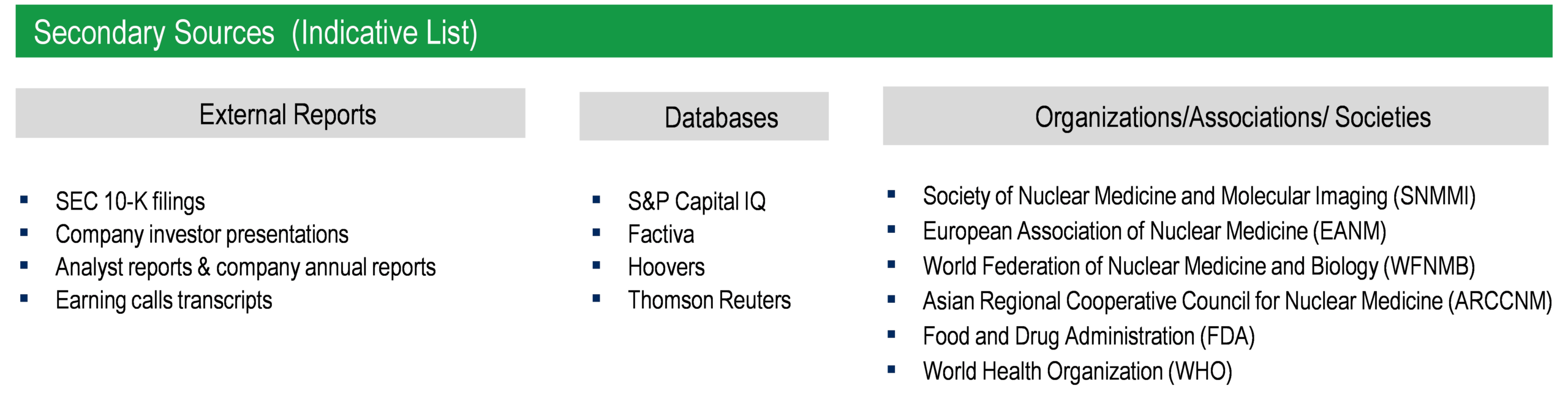
Secondary Research (Indicative List)
Primary Research
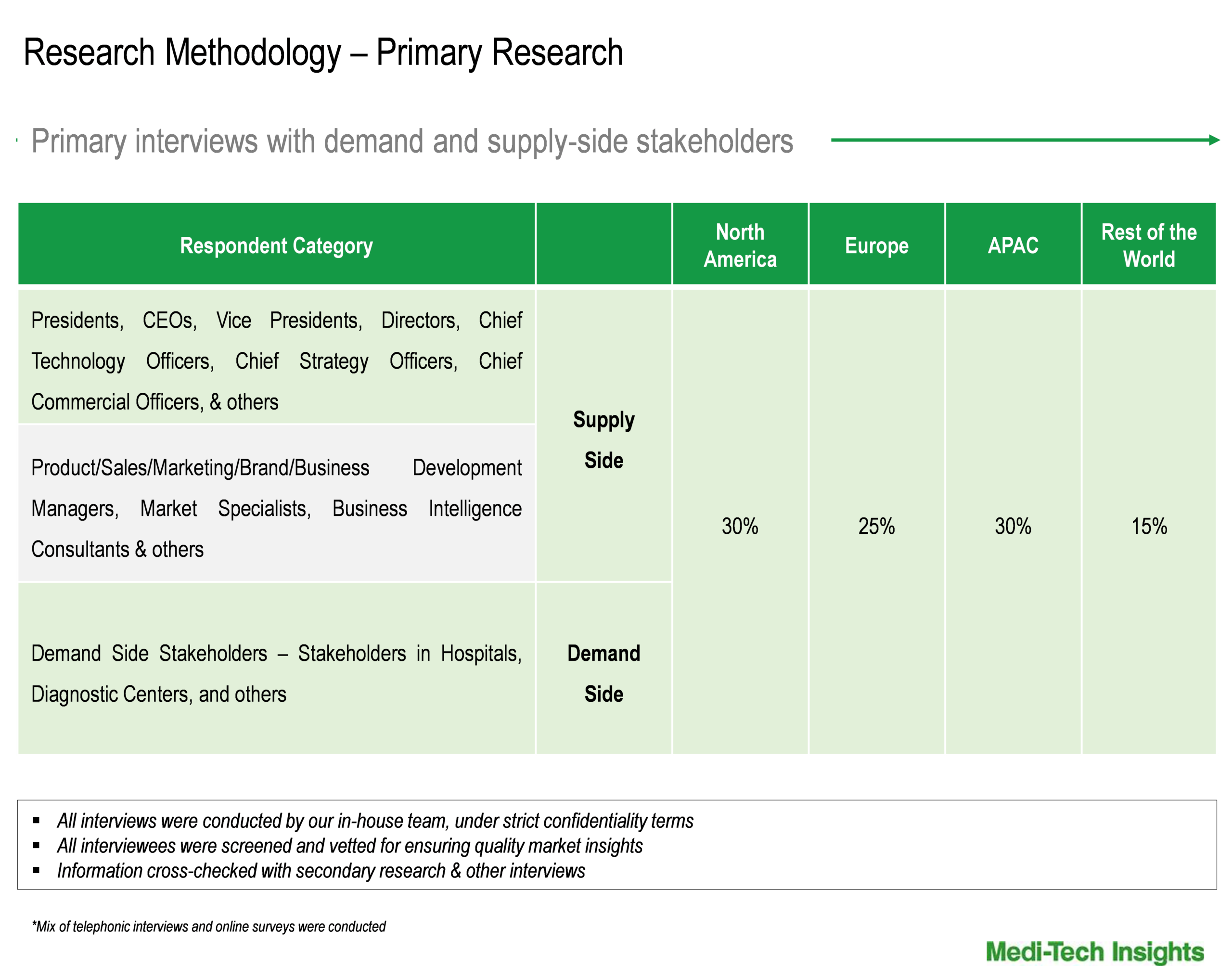
To validate research findings (market size & forecasts, market segmentation, market dynamics, competitive landscape, key industry trends, etc.), extensive primary interviews were conducted with both supply and demand-side stakeholders.
Supply Side Stakeholders:
- Senior Management Level: CEOs, Presidents, Vice-Presidents, Directors, Chief Technology Officers, Chief Commercial Officers
- Mid-Management Level: Product Managers, Sales Managers, Brand Managers, R&D Managers, Business Development Managers, Consultants
Demand Side Stakeholders:
- Hospitals, Diagnostic Centers, and Others
Breakdown of Primary Interviews
Market Size Estimation
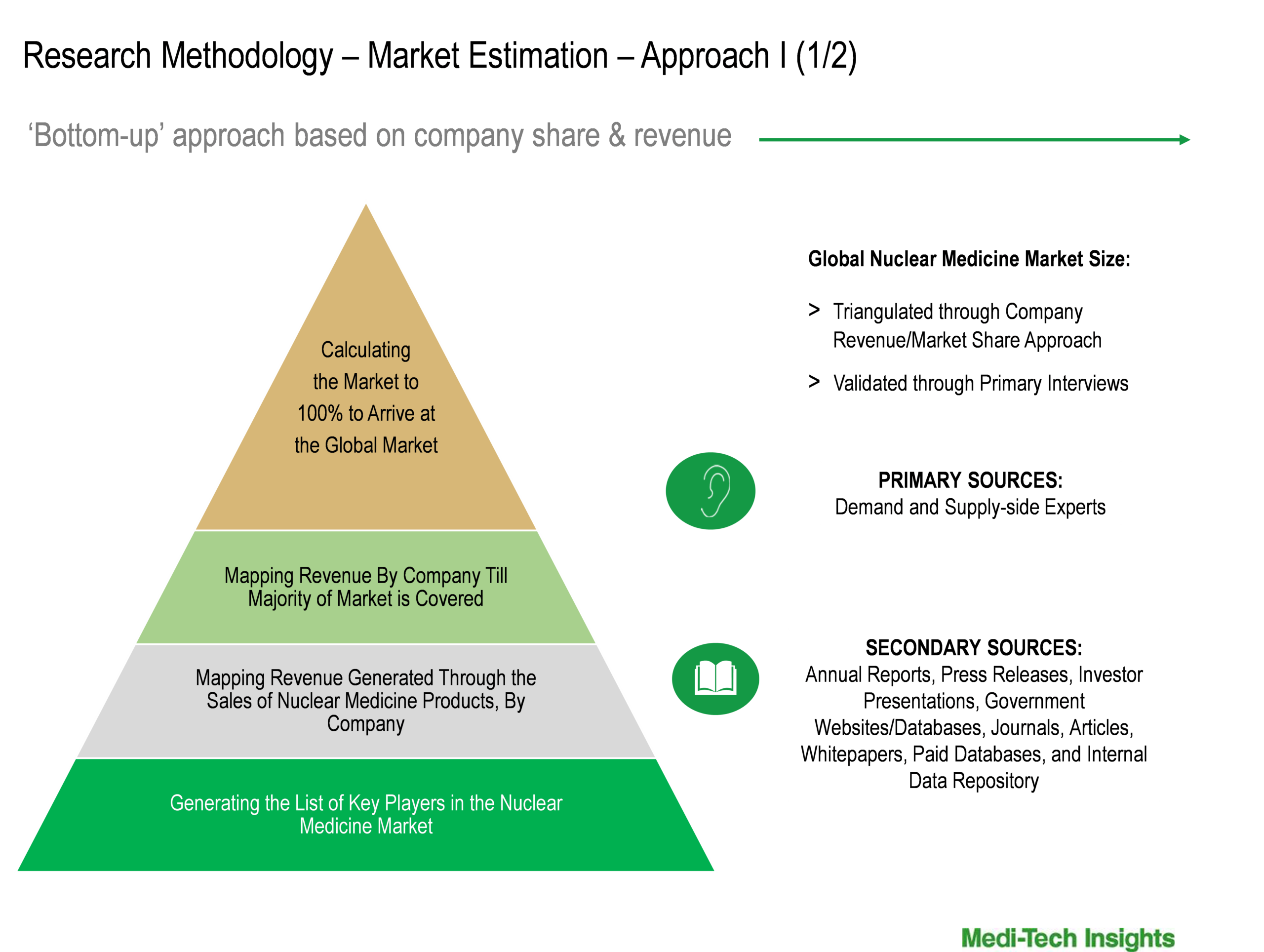
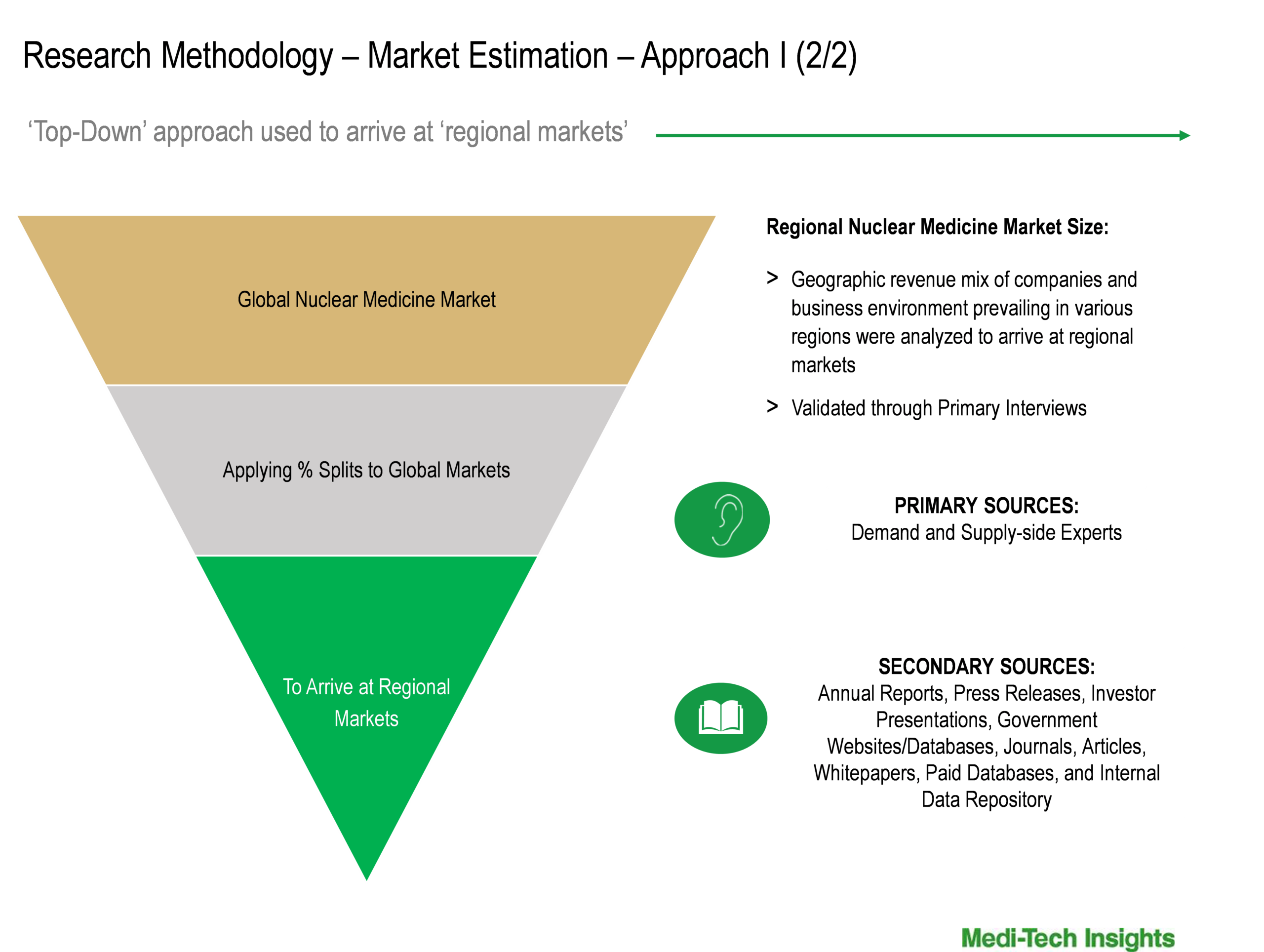
Both ‘Top-Down & Bottom-Up Approaches’ were used to derive market size estimates and forecasts
To learn more about this report, download the PDF brochure
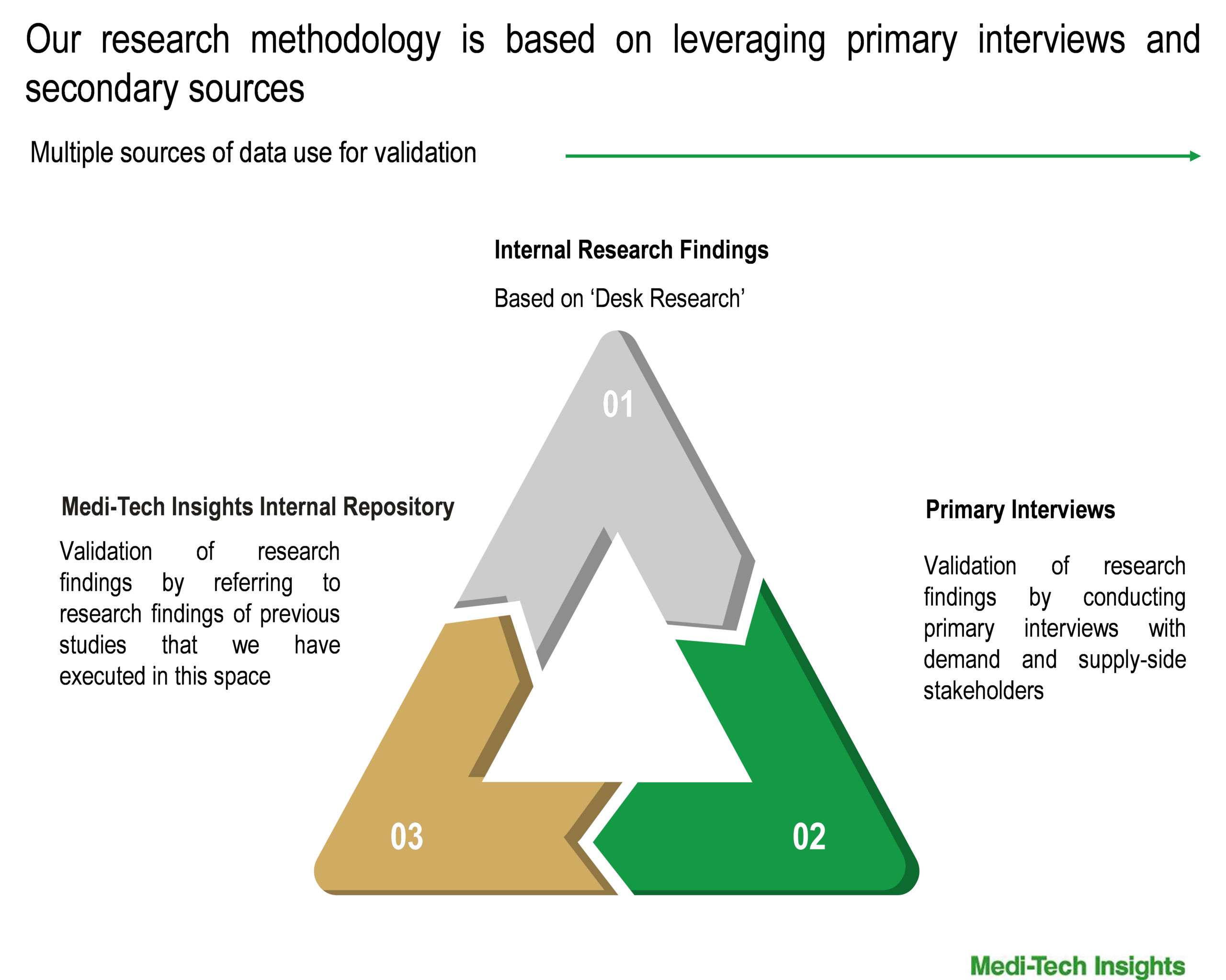
Data Triangulation
Research findings derived through secondary sources & internal analysis was validated with Primary Interviews, Internal Knowledge Repository and Company’s Sales Data
Frequently Asked Questions (FAQs)
Features of the Report
- Comprehensive Market Coverage
- Market Size and Forecast
- Geographic & Segment Deep Dives
- Strategic Insights & Competitive Landscape
- Timely & Updated Data
- Growth Indicators & Future Outlook
- Quick Turnaround on Queries
- Analyst Support
- Report Customization Available
- Reports in PDF & Excel
