

Global Bone Densitometer Market Size Report Segmented by Product Type (Axial, Peripheral), Application (Osteoporosis & Osteopenia Diagnosis, Fracture Risk, Body Composition, Chronic Disease-Related), Technology (DEXA/DXA, QUS, QCT), End-user, & Regional Forecast to 2031
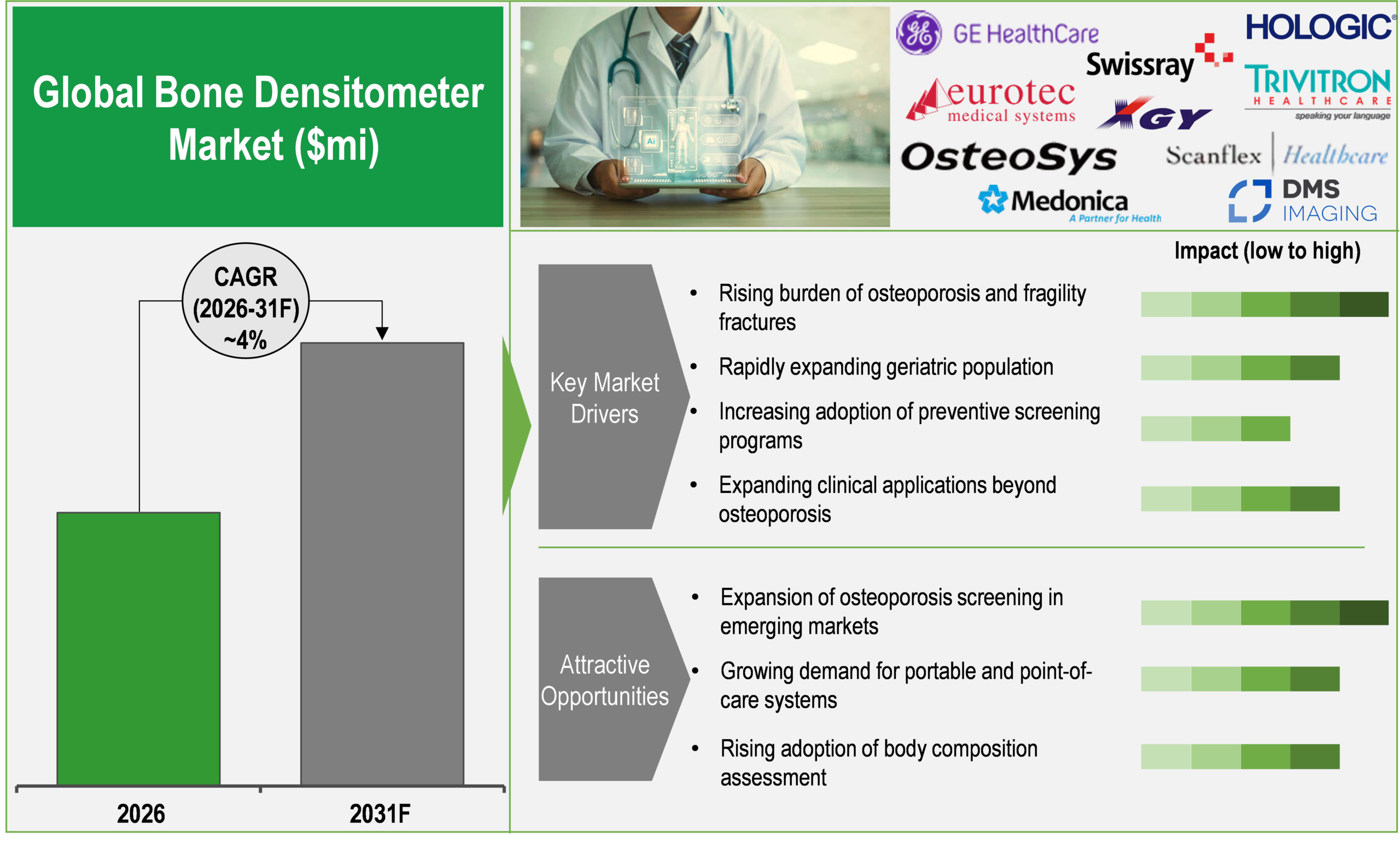
The global bone densitometer market size is set to grow at 4% CAGR over the next 5 years. The growing number of osteoporosis incidence and vitamin D deficiency, rising geriatric population, technological advancements in bone densitometry, increasing incidents of fragility fracture, and a growing number of bone-related disorders are some of the key factors driving the growth of the global market. However, higher costs associated with bone densitometer products and limited reimbursement and screening coverage are expected to impact the market’s growth. To learn more about the research report, download a sample report.
The bone densitometer market comprises medical devices and associated software used to measure bone mineral density (BMD) and assess bone health, primarily for the diagnosis and monitoring of osteoporosis, osteopenia, and fracture risk. These systems are widely utilized in hospitals, specialty clinics, diagnostic imaging centers, and research institutions to support early detection of bone loss and guide treatment decisions. The market includes axial and peripheral bone densitometers employing technologies such as dual-energy X-ray absorptiometry (DXA/DEXA), quantitative ultrasound (QUS), and quantitative computed tomography (QCT).
Rising burden of osteoporosis and fragility fractures support wider adoption of bone densitometers for early diagnosis
Growing osteoporosis prevalence and rising fragility fracture incidence are increasing demand for bone mineral density testing, supporting wider adoption of bone densitometers for early diagnosis, fracture risk assessment, and disease monitoring. Osteoporosis is a progressive skeletal disorder characterized by reduced bone mass and deterioration of bone tissue, increasing the risk of fractures, particularly in the hip, spine, and wrist. According to the International Osteoporosis Foundation (IOF), osteoporosis causes more than 8.9 million fractures annually worldwide, equivalent to one osteoporotic fracture every three seconds. The increasing prevalence of osteoporosis is closely linked to population aging, longer life expectancy, sedentary lifestyles, poor nutrition, and vitamin D deficiency.
Fragility fractures are associated with significant morbidity, mortality, loss of independence, and healthcare expenditure, prompting healthcare systems to prioritize early diagnosis and preventive intervention. Bone densitometry, particularly dual-energy X-ray absorptiometry (DXA), remains the gold standard for measuring bone mineral density and assessing fracture risk. Consequently, the growing clinical and economic burden of osteoporosis is driving greater adoption of bone density screening and monitoring solutions across healthcare settings.
To learn more about this report, download the PDF brochure
Increasing adoption of bone densitometry and expansion of osteoporosis screening programs
The increasing adoption of bone densitometry and expansion of osteoporosis screening programs are emerging as key growth drivers for the bone densitometer market. Governments, healthcare providers, and industry stakeholders are increasingly prioritizing early osteoporosis detection and fracture prevention to reduce disease burden and associated healthcare costs. Investments in new DEXA infrastructure, community-based screening initiatives, AI-enabled opportunistic screening, and awareness programs are improving access to bone health assessment services globally. Furthermore, the integration of advanced technologies and expansion of screening beyond traditional hospital settings into pharmacies, diagnostic centers, and primary care facilities are broadening the reach of bone mineral density testing and supporting long-term market growth. Some of the recent examples are listed below-
- In May 2026, Bindex introduced portable osteoporosis screening services across Boots Pharmacies (UK), expanding access to point-of-care bone health assessment and community-based osteoporosis screening
- In March 2026, the UK government announced the deployment of 20 new DEXA scanners across England to improve access to osteoporosis diagnosis, reduce waiting times, and support fracture prevention initiatives
- In February 2025, SimonMed Imaging (US) partnered with HeartLung Technologies to deploy AutoBMD, an AI-based opportunistic bone density screening solution that enables osteoporosis detection from routine CT scans
- In October 2024, Pharmed Limited launched the India Bone Health Initiative (IBHI) to enhance osteoporosis awareness and provide accessible bone mineral density screening through nationwide programs and community outreach
- In February 2024, Fujifilm installed an advanced DEXA system with 3D-DXA capabilities in New Delhi, India to support the diagnosis of bone-related diseases and improve access to advanced bone health assessment technologies
Growing demand for portable and point-of-care systems presents a significant growth opportunity
The growing demand for portable and point-of-care bone densitometry systems presents a significant market opportunity, particularly in regions with limited access to specialized diagnostic facilities. Portable devices enable bone health assessments to be conducted in primary care clinics, community health centers, mobile screening units, and rural healthcare settings, improving access to osteoporosis screening and early diagnosis. These systems are typically more affordable and easier to deploy than conventional fixed installations, making them attractive for emerging markets and preventive healthcare programs. As healthcare systems increasingly focus on decentralized care and population-based screening initiatives, demand for portable bone densitometry solutions is expected to rise
Increased adoption of dual-energy x-ray absorptiometry (DXA/DEXA) in various applications drives the bone densitometer market
Dual-energy X-ray absorptiometry (DXA or DEXA) is a fast and reliable technique of choice in the diagnosis and monitoring of osteoporosis since it objectively measures the most relevant parameters. It is also useful for measuring body composition and its distribution by region. In recent years, new applications have been developed which include vertebral morphometry through the study of the lateral spine, prosthesis integration in orthopaedics, and lipodystrophy and lipoatrophy in HIV+ patients. Also, DEXA is comparatively inexpensive with notably shorter scan times and radiation exposure compared to other imaging options. Technological advancements in bone densitometers are another key factor that is expected to propel its demand in the coming years.
Adoption of quantitative ultrasound (QUS) for estimating bone mineral status in children boosts the bone densitometer market
Quantitative ultrasound (QUS) is a relatively recent and non-invasive method of estimating bone mineral status in the peripheral skeleton. In addition to bone density, QUS technology provides structural information, which may be important in determining fracture risk. QUS technique is safe, easy to use, and cost-effective. The devices are portable, only a few minutes are needed to perform the measurements, and it is radiation-free. These characteristics of QUS are particularly indicated to assess bone mineral status in children.
Evaluation of bone mineral density (BMS) amongst postmenopausal women fuels the demand
Osteoporosis is more prevalent among postmenopausal women. This is because the low level of estrogen hormone that occurs at the time of menopause results in significant bone loss. Various researches have demonstrated that there is up to a 10% loss in bone mass in the first five years of women after attaining the menopause phase. The International Society of Clinical Densitometry, the United States Preventative Services Task Force, and the National Osteoporosis Foundation recommend all women over the age of 65 have their bone mineral density (BMS) evaluated. It is considered the gold standard for diagnosing osteoporosis and predicting fracture risk with algorithms like the Fracture Risk Assessment Tool. Therefore, health care providers sometimes recommend testing in people younger than 65 years who have one or more risk factors for fracture.
To learn more about this report, download the PDF brochure
Product Type Segment Outlook
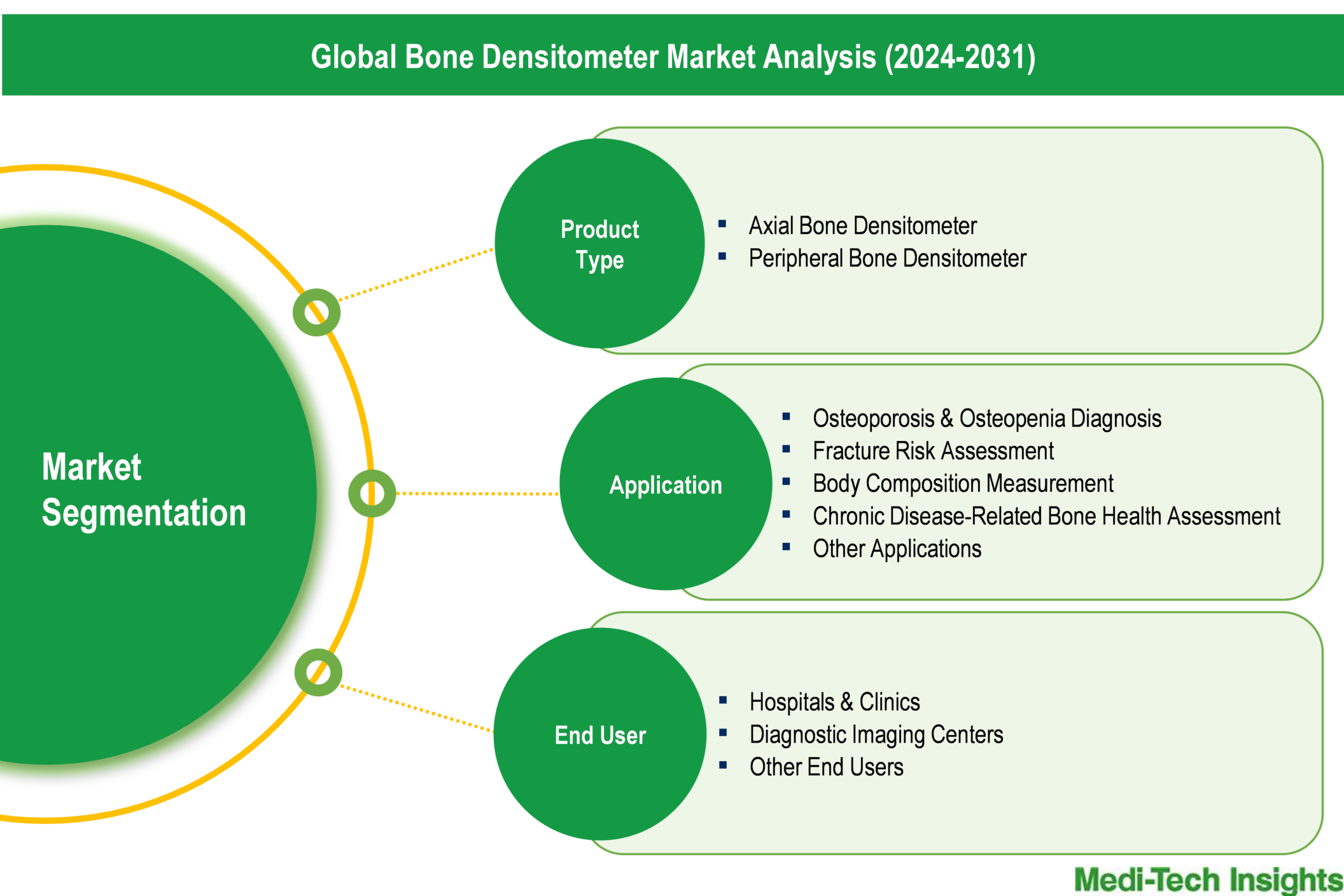
The bone densitometer market is segmented into axial bone densitometers and peripheral bone densitometers. Axial bone densitometers account for the larger share of the market and is widely used for diagnosing osteoporosis and assessing fracture risk. These systems measure bone mineral density at clinically significant skeletal sites, primarily the hip and lumbar spine, and are extensively used in hospitals, specialty clinics, and diagnostic imaging centers. In contrast, peripheral bone densitometers evaluate bone density at peripheral sites such as the wrist, forearm, finger, or heel and are commonly utilized for preliminary screening and community-based osteoporosis assessment.
From a technology perspective, axial bone densitometers predominantly utilize dual-energy X-ray absorptiometry (DXA/DEXA) technology due to its high accuracy and reproducibility, while peripheral systems employ technologies such as peripheral DXA (pDXA) and quantitative ultrasound (QUS) to provide cost-effective and portable screening solutions. Growing emphasis on early osteoporosis detection, preventive healthcare, and decentralized diagnostic services is expected to support demand for both product segments over the forecast period.
Regional Outlook: North America maintains its leading position in the bone densitometer market due to presence of leading companies and rising prevalence of osteoporosis
North America holds the largest share of the bone densitometer market, followed by Europe and APAC. The large share of North America can be attributed to the rising prevalence of osteoporosis, a well-developed healthcare infrastructure, technological advancements in bone densitometer products, and the presence of key market players in the region. APAC is expected to witness strong growth in the coming years, due to the growing prevalence of bone-related disorders, increasing awareness regarding osteoporosis care, rising geriatric population, and increasing healthcare expenditure in this region.
Competitive Landscape Analysis
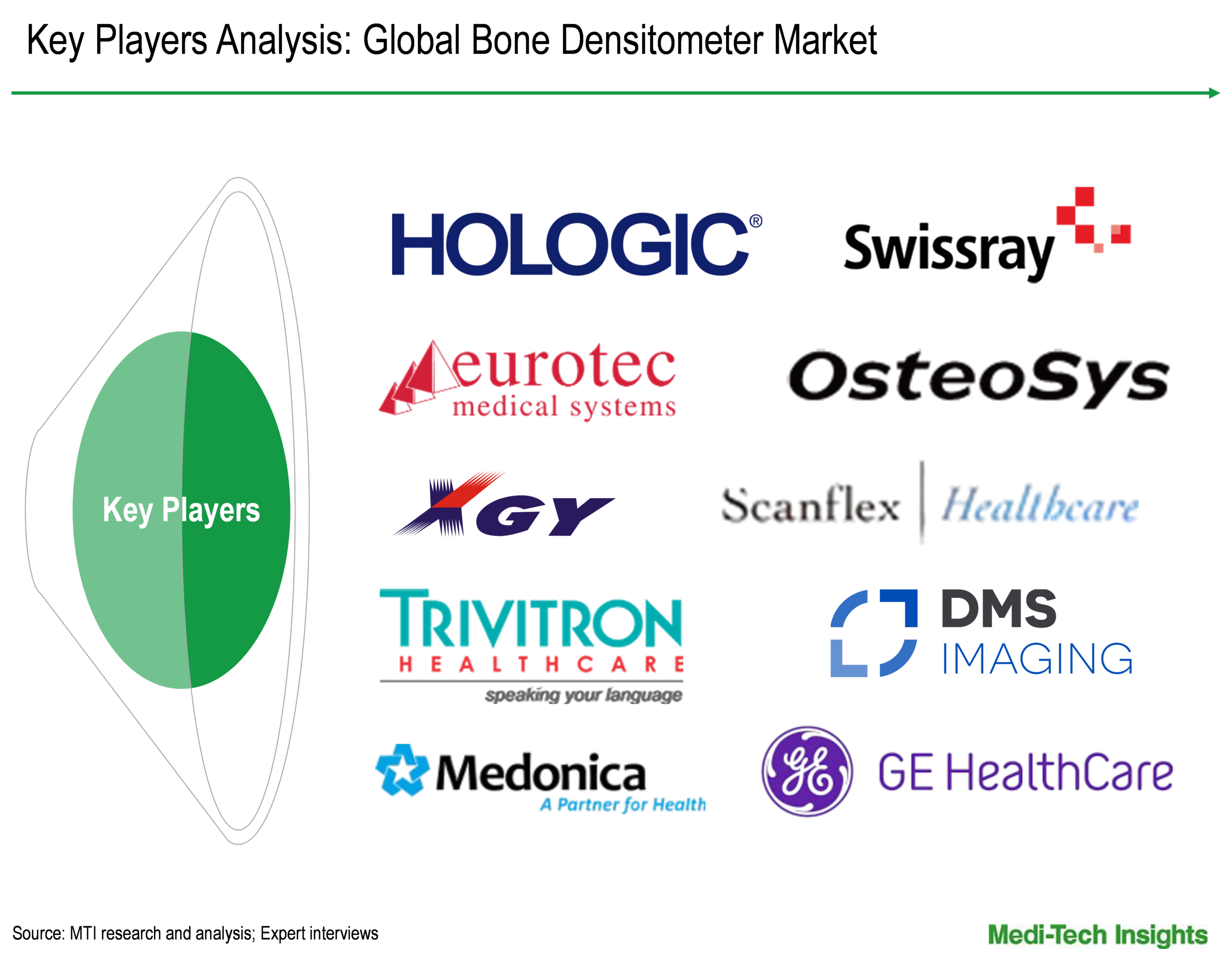
The global bone densitometer market is marked by the presence of established and emerging market players such as-
- GE Healthcare
- Swissray International, Inc.
- Hologic Inc.
- Eurotec Medical Systems Srl
- Xingaoyi Medical Equipment Co. Ltd
- Trivitron Healthcare
- OsteoSys Corp
- Scanflex Healthcare AB
- Medonica Co. Ltd
- DMS Imaging
Get a sample report for competitive landscape analysis
Growth strategies adopted by players to establish their foothold in the bone densitometer market
Players operating in this market are adopting various growth strategies such as new product launch; acquisitions; expansions; and strategic partnerships, agreements, and collaborations, to garner market share. For instance,
- In April 2026, DMS Imaging obtained European MDR certification for its STRATOS bone densitometer portfolio, strengthening regulatory compliance and supporting commercialization across European markets
- In March 2026, BPL Medical Technologies acquired South Korea-based Yozma BMtech to strengthen its bone health diagnostics portfolio and subsequently launched advanced bone mineral density systems in India and Dubai, expanding access to osteoporosis screening and preventive healthcare solutions
- In November 2024, Echolight entered a multi-year agreement with Siemens Healthineers, enabling the latter to resell Echolight's REMS-based bone densitometry systems and expand access to radiation-free osteoporosis diagnosis and bone health monitoring solutions
- In August 2024, OsteoSys received EU MDR certification for its complete portfolio of DXA bone mineral densitometry systems, reinforcing product quality, regulatory compliance, and its position in the global market
- In October 2023, GE HealthCare and University Hospitals entered a 10-year strategic collaboration to expand access to advanced diagnostic technologies, including bone densitometry systems, while supporting precision care, clinical research, digital innovation, and healthcare workforce development
Report Scope
|
Report Metric |
Details |
|
Base Year Considered |
2025 |
|
Historical Data |
2024 – 2025 |
|
Forecast Period |
2026 – 2031 |
|
Growth Rate |
4% |
|
Segment Scope |
Product Type, Application, and End User |
|
Regional Scope |
|
|
Market Drivers |
|
|
Attractive Opportunities |
|
|
Key Companies Mapped |
GE Healthcare; Swissray International, Inc.; Hologic Inc.; Eurotec Medical Systems Srl; Xingaoyi Medical Equipment Co. Ltd; Trivitron Healthcare; OsteoSys Corp; Scanflex Healthcare AB; Medonica Co. Ltd; and DMS Imaging, among others |
|
Report Highlights |
Market Size & Forecast, Growth Drivers & Restraints, Trends, Competitive Analysis |
Global Bone Densitometer Market Segmentation
This report by Medi-Tech Insights provides the size of the global bone densitometer market at the regional and country-level from 2024 to 2031. The report further segments the market by product type, application, and end user.
Market Size & Forecast (2024-2031), By Product Type, USD Million
- Axial Bone Densitometer
- Peripheral Bone Densitometer
Market Size & Forecast (2024-2031), By Application, USD Million
- Osteoporosis & Osteopenia Diagnosis
- Fracture Risk Assessment
- Body Composition Measurement
- Chronic Disease-Related Bone Health Assessment
- Other Applications
Market Size & Forecast (2024-2031), By End User, USD Million
- Hospitals & Clinics
- Diagnostic Imaging Centers
- Other End Users
Market Size & Forecast (2024-2031), By Region, USD Million
- North America
- US
- Canada
- Europe
- UK
- Germany
- France
- Italy
- Spain
- Rest of Europe
- Asia Pacific
- China
- India
- Japan
- Rest of Asia Pacific
- Latin America
- Middle East & Africa
- Introduction
- Introduction
- Market Scope
- Market Definition
- Segments Covered
- Regional Segmentation
- Research Timeframe
- Currency Considered
- Study Limitations
- Stakeholders
- List of Abbreviations
- Key Conferences and Events (2026-2027)
- Research Methodology
- Secondary Research
- Primary Research
- Market Estimation
- Bottom-Up Approach
- Top-Down Approach
- Market Forecasting
- Executive Summary
- Bone Densitometer Market Snapshot (2026-2031)
- Segment Overview
- Regional Snapshot
- Competitive Insights
- Market Overview
- Market Dynamics
- Drivers
- Rising burden of osteoporosis and fragility fractures
- Rapidly expanding geriatric population
- Increasing adoption of preventive screening programs
- Expanding clinical applications beyond osteoporosis
- Technological advancements in bone health assessment
- Restraints
- High capital investment requirements
- Limited reimbursement and screening coverage
- Underdiagnosis and low awareness of bone health
- Opportunities
- Expansion of osteoporosis screening in emerging markets
- Growing demand for portable and point-of-care systems
- Rising adoption of body composition assessment
- AI-enabled opportunistic bone health screening
- Key Market Trends
- Integration of AI and advanced analytics
- Expansion of DXA applications beyond bone mineral density
- Shift toward preventive and population-based screening
- Unmet Market Needs
- Industry Speaks
- Drivers
- Market Dynamics
- Bone Densitometers, Technology Landscape (qualitative analysis)
- Introduction
- Dual-Energy X-ray Absorptiometry (DXA/DEXA)
- Quantitative Ultrasound (QUS)
- Quantitative Computed Tomography (QCT)
- Global Bone Densitometer Market Size & Forecast (2024-2031), By Product Type, USD Million
- Introduction
- Axial Bone Densitometer
- Peripheral Bone Densitometer
- Global Bone Densitometer Market Size & Forecast (2024-2031), By Application, USD Million
- Introduction
- Osteoporosis & Osteopenia Diagnosis
- Fracture Risk Assessment
- Body Composition Measurement
- Chronic Disease-Related Bone Health Assessment
- Other Applications
- Global Bone Densitometer Market Size & Forecast (2024-2031), By End User, USD Million
- Introduction
- Hospitals & Clinics
- Diagnostic Imaging Centers
- Other End Users
- Global Bone Densitometer Market Size & Forecast (2024-2031), By Region, USD Million
- Introduction
- North America Bone Densitometer Market Size & Forecast (2024-2031), By Country, USD Million
- US
- Market Size & Forecast, By Product Type (USD Million)
- Market Size & Forecast, By Application (USD Million)
- Market Size & Forecast, By End User (USD Million)
- Canada
- Market Size & Forecast, By Product Type (USD Million)
- Market Size & Forecast, By Application (USD Million)
- Market Size & Forecast, By End User (USD Million)
- US
- Europe Bone Densitometer Market Size & Forecast (2024-2031), By Country, USD Million
- UK
- Market Size & Forecast, By Product Type (USD Million)
- Market Size & Forecast, By Application (USD Million)
- Market Size & Forecast, By End User (USD Million)
- Germany
- Market Size & Forecast, By Product Type (USD Million)
- Market Size & Forecast, By Application (USD Million)
- Market Size & Forecast, By End User (USD Million)
- France
- Market Size & Forecast, By Product Type (USD Million)
- Market Size & Forecast, By Application (USD Million)
- Market Size & Forecast, By End User (USD Million)
- Italy
- Market Size & Forecast, By Product Type (USD Million)
- Market Size & Forecast, By Application (USD Million)
- Market Size & Forecast, By End User (USD Million)
- Spain
- Market Size & Forecast, By Product Type (USD Million)
- Market Size & Forecast, By Application (USD Million)
- Market Size & Forecast, By End User (USD Million)
- Rest of Europe
- Market Size & Forecast, By Product Type (USD Million)
- Market Size & Forecast, By Application (USD Million)
- Market Size & Forecast, By End User (USD Million)
- UK
- Asia Pacific (APAC) Bone Densitometer Market Size & Forecast (2024-2031), By Country, USD Million
- China
- Market Size & Forecast, By Product Type (USD Million)
- Market Size & Forecast, By Application (USD Million)
- Market Size & Forecast, By End User (USD Million)
- Japan
- Market Size & Forecast, By Product Type (USD Million)
- Market Size & Forecast, By Application (USD Million)
- Market Size & Forecast, By End User (USD Million)
- India
- Market Size & Forecast, By Product Type (USD Million)
- Market Size & Forecast, By Application (USD Million)
- Market Size & Forecast, By End User (USD Million)
- Rest of Asia Pacific
- Market Size & Forecast, By Product Type (USD Million)
- Market Size & Forecast, By Application (USD Million)
- Market Size & Forecast, By End User (USD Million)
- China
- Latin America (LATAM) Bone Densitometer Market Size & Forecast (2024-2031), USD Million
- Market Size & Forecast, By Product Type (USD Million)
- Market Size & Forecast, By Application (USD Million)
- Market Size & Forecast, By End User (USD Million)
- Middle East & Africa (MEA) Bone Densitometer Market Size & Forecast (2024-2031), USD Million
- Market Size & Forecast, By Product Type (USD Million)
- Market Size & Forecast, By Application (USD Million)
- Market Size & Forecast, By End User (USD Million)
- Competitive Landscape
- Key Players and their Competitive Positioning
- Key Player Comparison
- Segment-wise Player Mapping
- Market Share Analysis (2025)
- Company Categorization Matrix
- Dominants/Leaders
- New Entrants
- Emerging Players
- Innovative Players
- Key Strategies Assessment, By Player (2023-2026)
- New Product Launch
- Partnerships, Agreements, & Collaborations
- Mergers & Acquisitions
- Geographic Expansion
- Key Players and their Competitive Positioning
- Company Profiles*
(Business Overview, Financial Performance**, Products Offered, Recent Developments)
- GE Healthcare
- Swissray International, Inc.
- Hologic Inc.
- Eurotec Medical Systems Srl
- Xingaoyi Medical Equipment Co. Ltd
- Trivitron Healthcare
- OsteoSys Corp
- Scanflex Healthcare AB
- Medonica Co. Ltd
- DMS Imaging
- Other Prominent Players
Note: *Indicative list
**For listed companies
The study has been compiled based on extensive primary and secondary research.
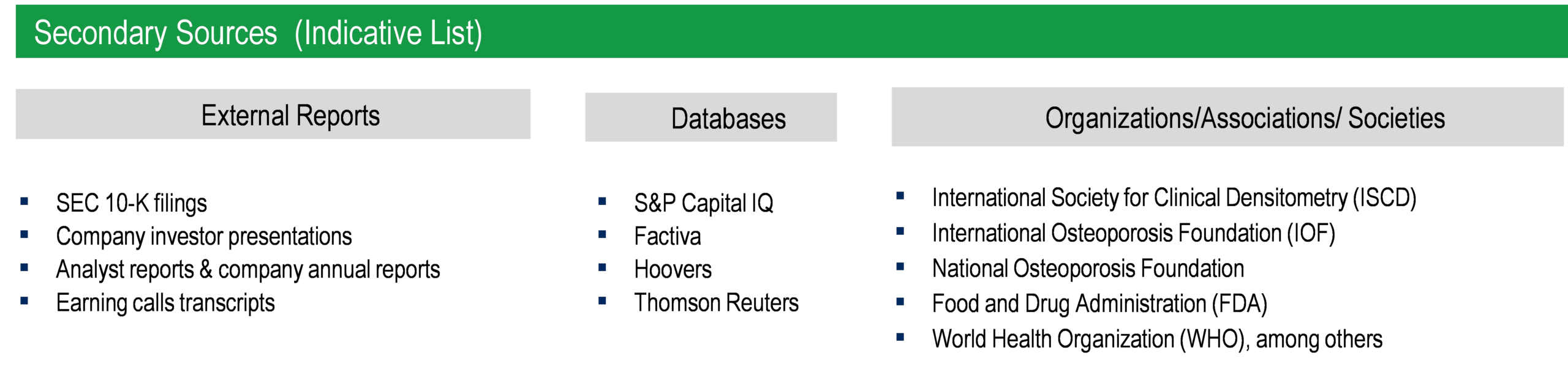
Secondary Research (Indicative List)
Primary Research
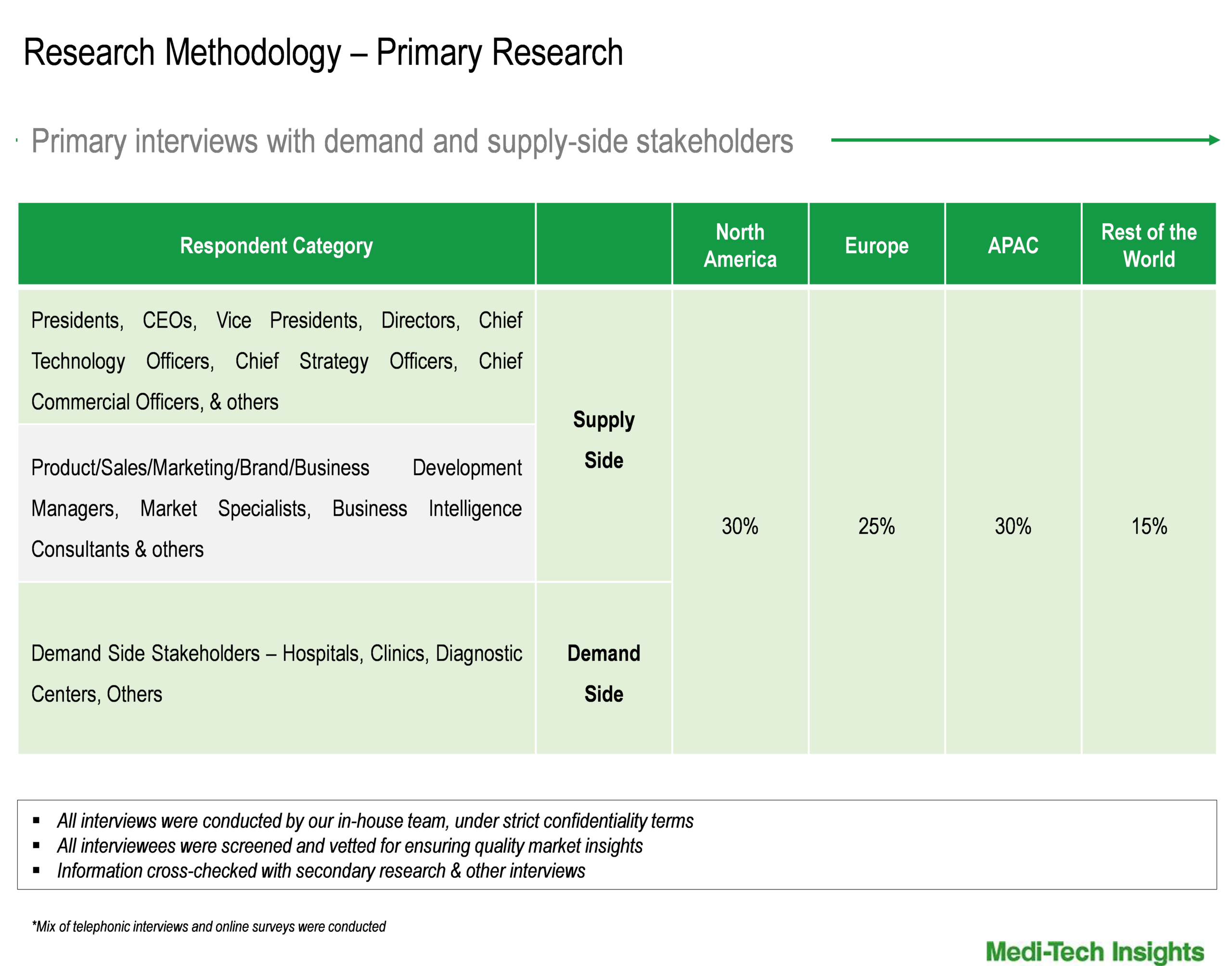
To validate research findings (market size & forecasts, market segmentation, market dynamics, competitive landscape, key industry trends, etc.), extensive primary interviews were conducted with both supply and demand-side stakeholders.
Supply Side Stakeholders:
- Senior Management Level: CEOs, Presidents, Vice-Presidents, Directors, Chief Technology Officers, Chief Commercial Officers
- Mid-Management Level: Product Managers, Sales Managers, Brand Managers, R&D Managers, Business Development Managers, Consultants
Demand Side Stakeholders:
- Hospitals, Clinics, Diagnostic Centers, Others
Breakdown of Primary Interviews
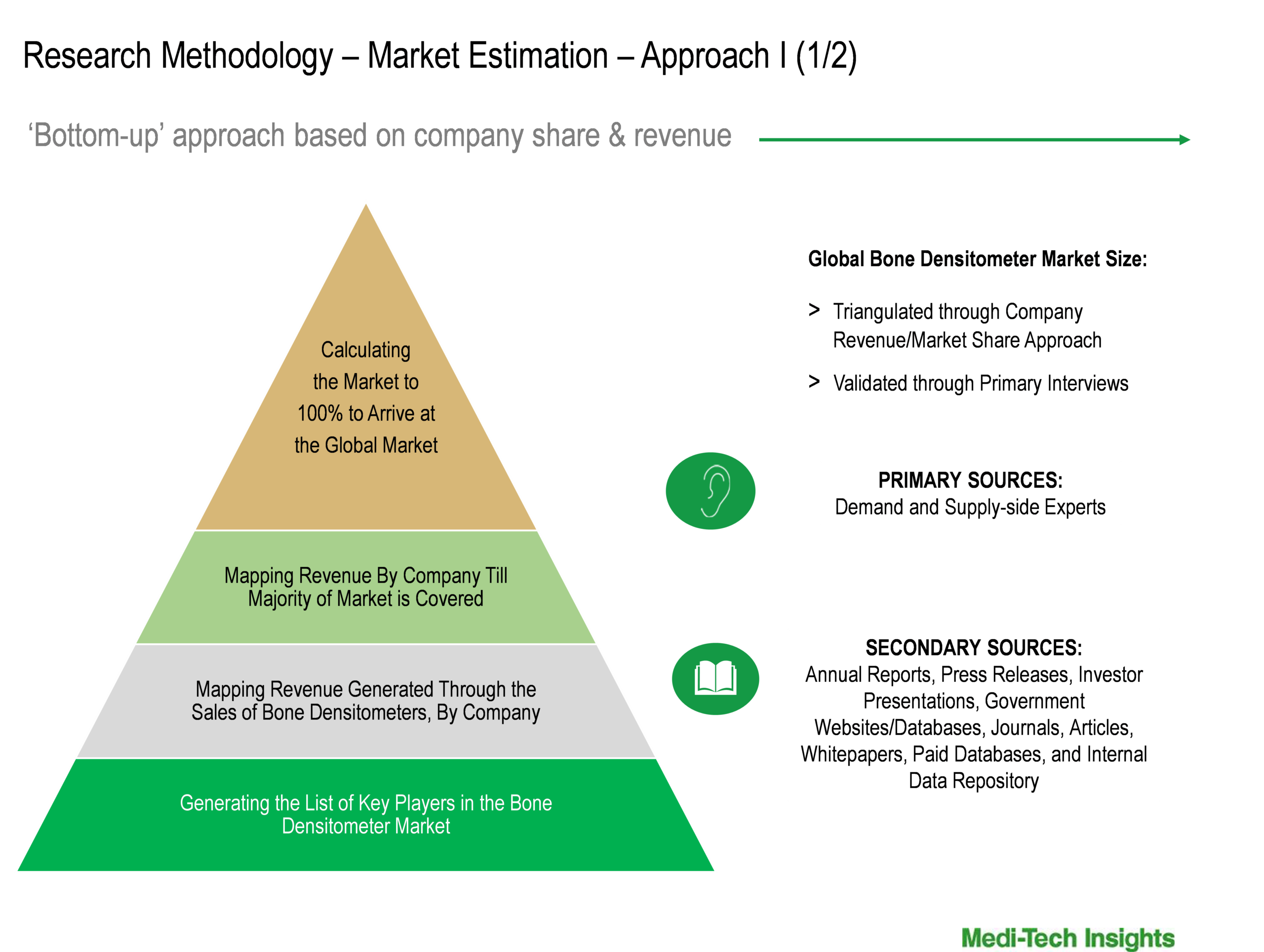
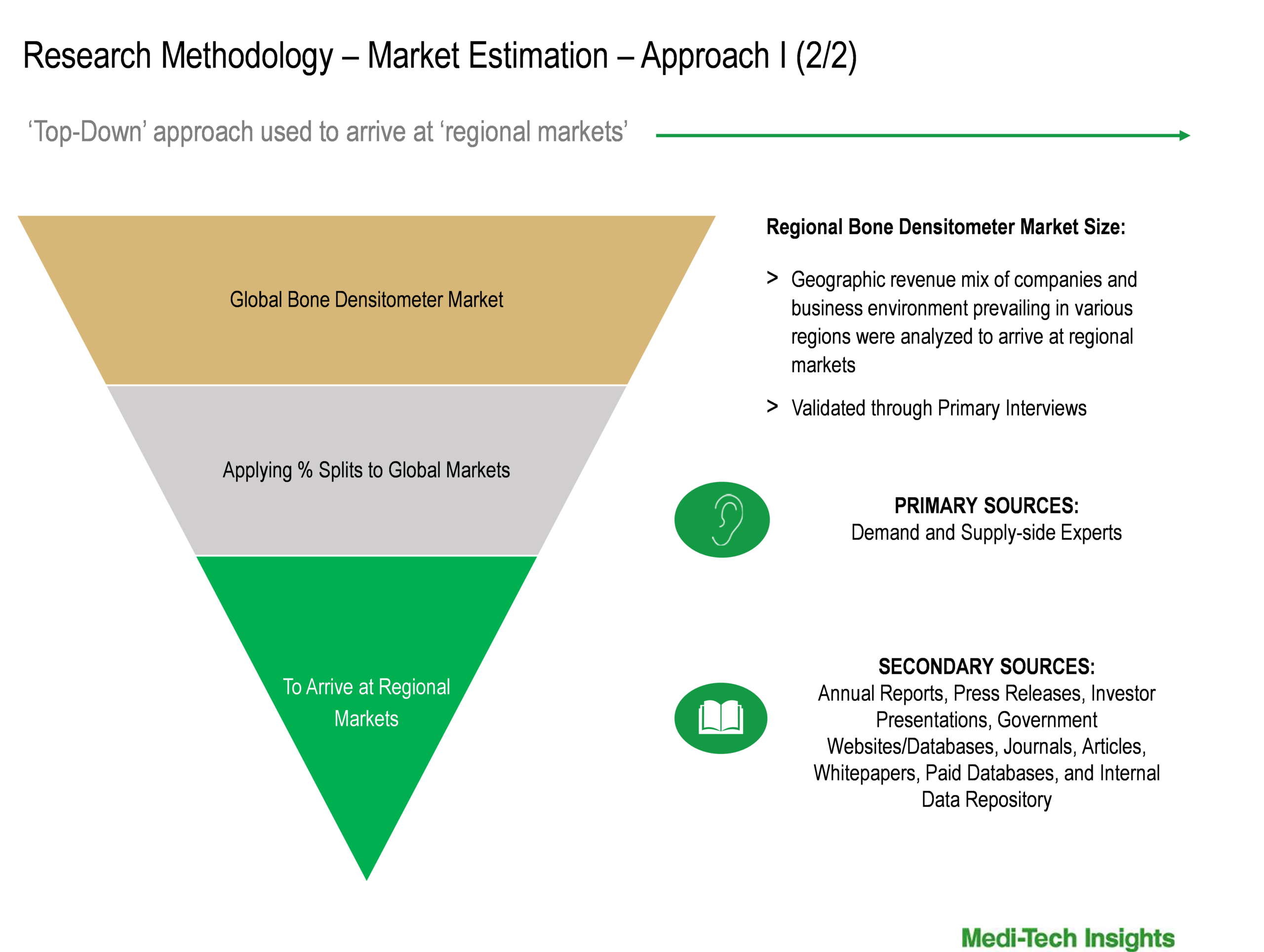
Market Size Estimation
Both ‘Top-Down & Bottom-Up Approaches’ were used to derive market size estimates and forecasts
To learn more about this report, download the PDF brochure
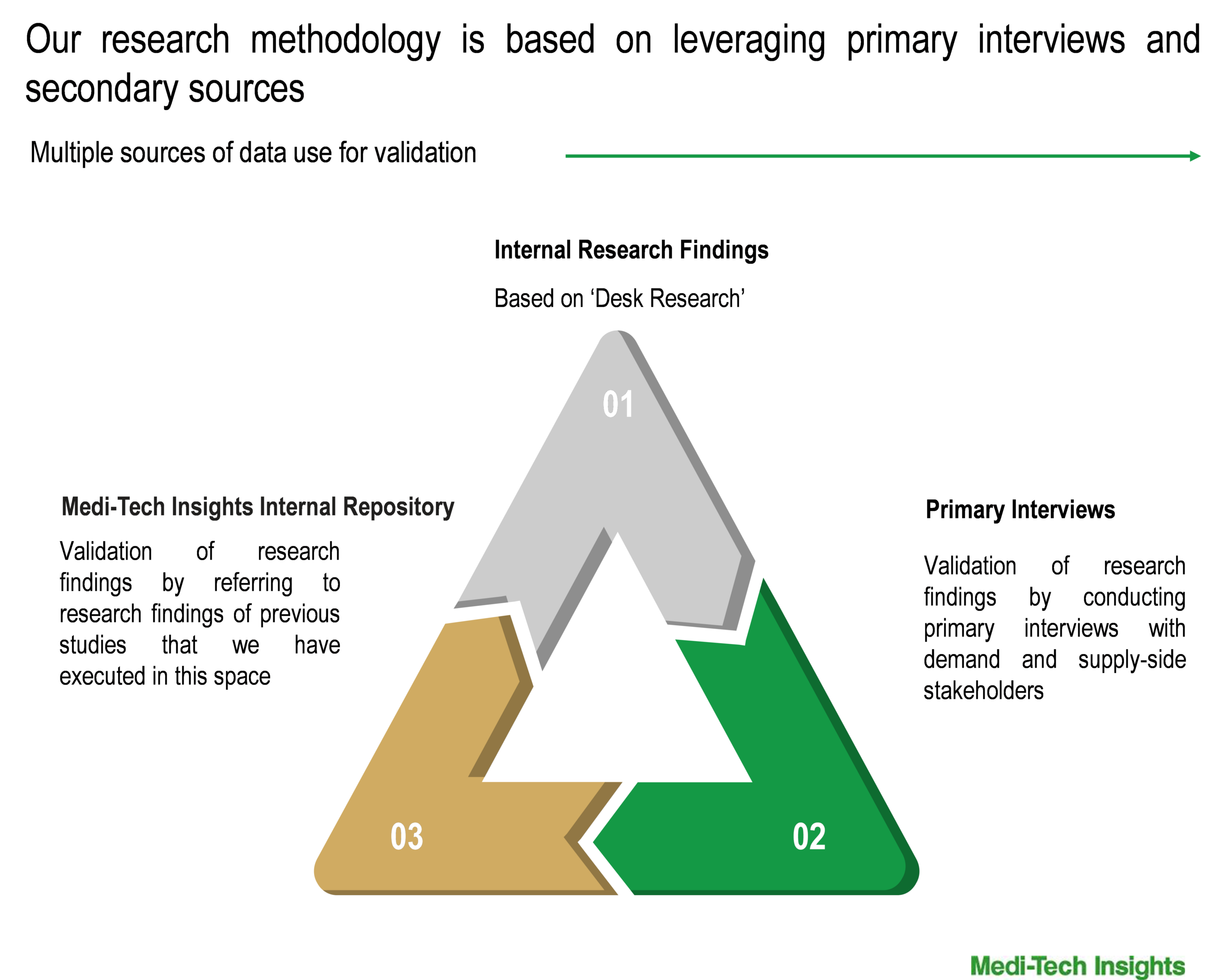
Data Triangulation
Research findings derived through secondary sources & internal analysis was validated with Primary Interviews, Internal Knowledge Repository and Company’s Sales Data
This report by Medi-Tech Insights provides the size of the global bone densitometer market at the regional and country-level from 2024 to 2031. The report further segments the market by product type, application, and end user.
- Market Size & Forecast (2024-2031), By Product Type, USD Million
- Axial Bone Densitometer
- Peripheral Bone Densitometer
- Market Size & Forecast (2024-2031), By Application, USD Million
- Osteoporosis & Osteopenia Diagnosis
- Fracture Risk Assessment
- Body Composition Measurement
- Chronic Disease-Related Bone Health Assessment
- Other Applications
- Market Size & Forecast (2024-2031), By End User, USD Million
- Hospitals & Clinics
- Diagnostic Imaging Centers
- Other End Users
- Market Size & Forecast (2024-2031), By Region, USD Million
- North America
- US
- Canada
- Europe
- UK
- Germany
- France
- Italy
- Spain
- Rest of Europe
- Asia Pacific
- China
- India
- Japan
- Rest of Asia Pacific
- Latin America
- Middle East & Africa
- North America
Frequently Asked Questions (FAQs)
Features of the Report
- Comprehensive Market Coverage
- Market Size and Forecast
- Geographic & Segment Deep Dives
- Strategic Insights & Competitive Landscape
- Timely & Updated Data
- Growth Indicators & Future Outlook
- Quick Turnaround on Queries
- Analyst Support
- Report Customization Available
- Reports in PDF & Excel
