

Global Digital Health for Obesity Market Size & Trends Report Segmented by Component (Software, Hardware, Services), Application (Weight Management and Fitness Tracking, Behavioural Therapy), and End User (Patients, Providers, Payers) & Regional Forecast to 2031
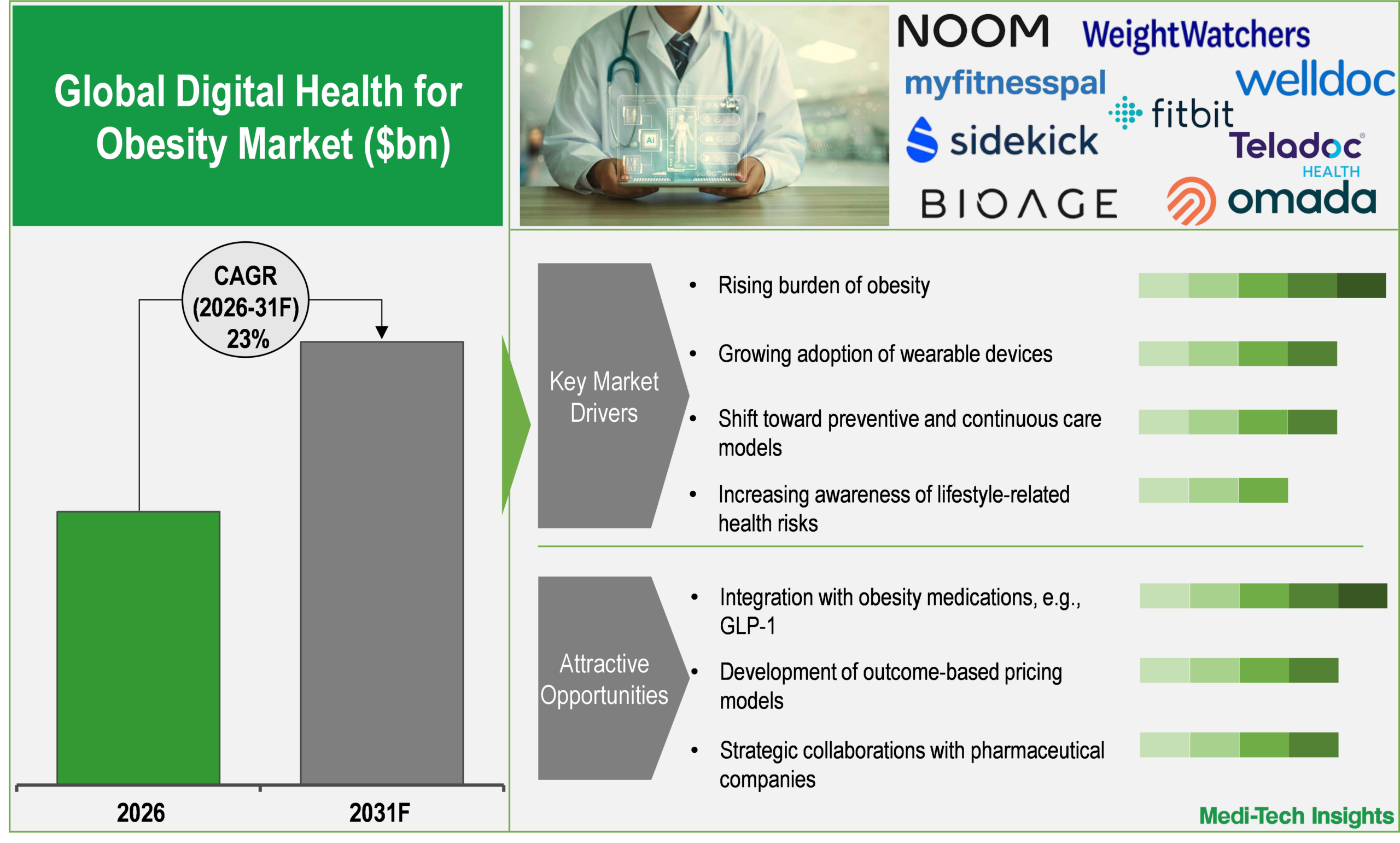
The global digital health for obesity market size is set to grow at 23% CAGR over the next 5 years. Key drivers include the rising burden of obesity and metabolic disorders, growing adoption of wearable and connected health devices, shift toward preventive and continuous care models, increasing awareness of lifestyle-related health risks, and increasing adoption of telehealth and virtual care services. To learn more about the research report, download a sample report.
Digital health for obesity refers to the use of software-driven platforms, artificial intelligence (AI) and connected technologies (IoT) to support weight management, metabolic health monitoring, and behaviour modification. This market includes mHealth applications, telehealth-based coaching programs, platforms integrated with wearable devices, and clinically validated digital therapeutics designed to address the challenges of obesity. These platforms are now integrated with pharmacological treatments such as GLP-1s and healthcare systems, to provide comprehensive, personalized support. Further, these AI-driven technologies have enabled predictive analytics, remote patient monitoring, and personalized feedback to achieve sustainable weight management and overall metabolic health
Rising burden of obesity and chronic comorbidities is driving adoption
The increasing prevalence of obesity and its associated conditions, such as type 2 diabetes, cardiovascular disease, and metabolic syndrome, is a central factor supporting market expansion. According to an article published by the WHO, more than 1 billion people, or roughly one in eight people, are now living with obesity. Obesity is now classified as a chronic disease requiring long-term, complex, and sometimes pharmacological management, such as GLP-1 therapies. Traditional in-person weight management approaches often face limitations related to accessibility, adherence, and long-term follow-up. These digital platforms address such gaps by enabling continuous engagement through real-time monitoring of behavioural metrics like caloric intake, energy expenditure, and physical activity, integrated with connected wearable devices. Furthermore, through remote monitoring, clinicians can address adherence challenges, which are often the primary cause of failure in lifestyle management.
As healthcare systems face growing pressure to manage chronic disease burdens efficiently, digital obesity solutions offer a scalable approach to support behavioural change and improve patient outcomes. These tools allow for real-time feedback, goal tracking, and integration with clinical workflows, making them suitable for both preventive and therapeutic use cases. Moreover, the ability to extend care beyond the clinical setting is perhaps the most transformative aspect of digital health for obesity. It bridges the gap between patient and provider, and encourages high engagement through gamification, peer support groups, and virtual consultations
To learn more about this report, download the PDF brochure
Expansion of personalized and data-driven interventions
The growing integration of artificial intelligence (AI) and data analytics is fundamentally transforming obesity management from a one-size-fits-all approach to individualized weight management strategies. Digital platforms can now analyze complex user data, including nutritional intake, behavioural triggers, and physiological metrics, and are therefore able to deliver tailored, real-time recommendations. This intervention can significantly enhance user engagement and improve the likelihood of long-term, sustained behavioural modification.
Furthermore, the integration of these digital platforms with wearable devices and healthcare systems allows for continuous data capture, including precise activity levels, metabolic indicators, and sleep quality. Comprehensive, real-time insights have enabled adaptive interventions that evolve with the user’s progress and changing health needs. For example, a system can automatically adjust caloric targets or exercise intensity based on an individual's recent metabolic data or physical activity. Further, as precision health is gaining popularity, the demand for these customized digital solutions is expected to grow exponentially. This will encourage more investment in the development of AI algorithms and predictive modelling to create more effective obesity intervention tools.
To learn more about this report, download the PDF brochure
Application Segment Outlook
The digital health for obesity market by application is segmented into weight management and fitness tracking, behavioural therapy, and virtual clinical consultations. The weight management and fitness tracking application represents the largest segment of the market. This segment includes platforms/apps that combine tracking of calorie intake, activity monitoring, and weight loss progress into a unified interface. Moreover, the segment is expected to grow further with the integration of AI-powered tools for real-time insights and widespread consumer adoption of wearable devices.
The behavioural therapy holds a significant share of the market, as digital platforms are increasingly incorporating cognitive behavioural techniques to change habits, manage emotional/binge eating, and achieve sustainable weight loss. Companies like Noom and Omada Health use behavioural coaches and AI to provide tailored support to nudge users toward better habits
The virtual clinical consultations segment is experiencing rapid growth, driven by the need for remote management of chronic conditions like obesity, which require long-term monitoring. This segment includes dietitians and coaches who not only provide remote obesity treatment, but also include GLP-1 medication management that tracks dosage, manages side effects, and ensures patients stay adherent to their treatment plans.
Regional Outlook: North America maintains its leading position in the digital health for obesity market, with the rising obesity burden and widespread adoption of digital care solutions
Currently, North America holds the largest share of the market, followed by Europe and APAC. North America is expected to grow further due to the rising prevalence of obesity, advanced digital infrastructure, and strong consumer adoption of digital platforms, mobile apps, and telehealth solutions. The region also benefits from the presence of key players, supportive regulatory initiatives and favourable reimbursement policies.
Europe holds a significant market share, supported by strong public health initiatives for accelerating the adoption of digital care models. The region's market is driven by the increasing burden of obesity related chronic diseases, along with growing awareness of preventive healthcare and the rise of integrated digital solutions that combine AI-powered tools, virtual consulting, and personalized behavioural therapies. Additionally, evolving regulatory frameworks for digital health are expected to facilitate broader integration into healthcare systems.
Asia-Pacific is emerging as the fastest-growing region in the global digital health for obesity market. The region's growth is driven by increasing use of smartphones, rising health awareness, and a growing burden of lifestyle-related diseases. Additionally, the region is seeing high demand for AI-powered mobile health apps along with culturally tailored nutritional support and virtual coaching, for weight management and remote patient monitoring solutions.
Competitive Landscape Analysis
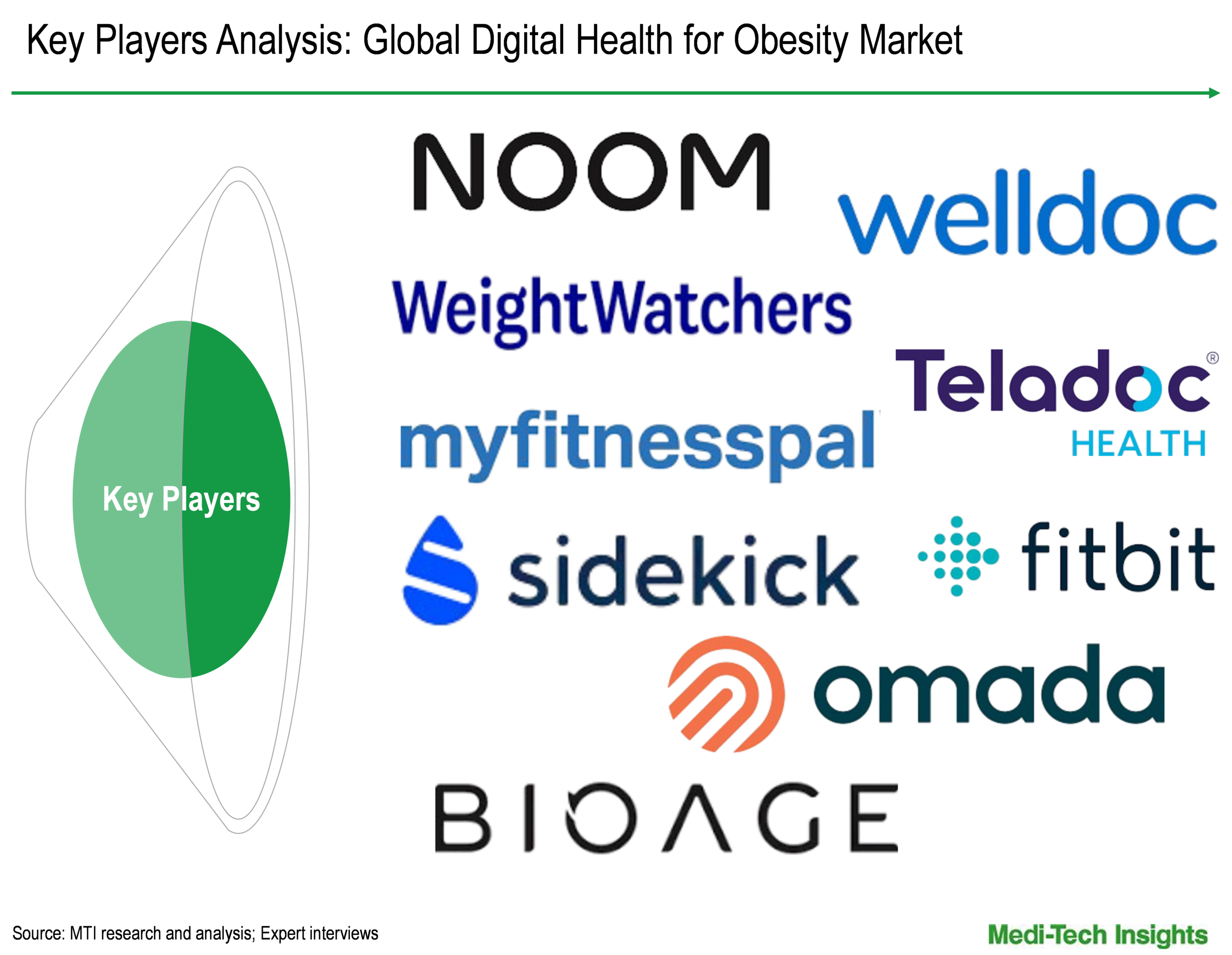
The global digital health for obesity market is marked by the presence of established and emerging market players such as Noom, Inc. (US); WW International, Inc. (US); MyFitnessPal, Inc. (US); Teladoc Health, Inc. (US); Fitbit, Inc. (now part of Google) (US); WellDoc, Inc. (US); Sidekick Health (US); Omada Health, Inc. (US); Hims & Hers Health, Inc. (US); and BioAge Labs (US), among others.
Get a sample report for competitive landscape analysis
Growth strategies adopted by players to establish their foothold in the digital health for obesity market
Players operating in this market are adopting various growth strategies such as new product launches and approvals; acquisitions; expansions; and strategic partnerships, agreements, and collaborations, to garner market share. For instance,
- In April 2026, Noom and b.well partnered to launch Health Record Connect, a feature that enables the seamless connection of medical records with the Noom platform to personalize support across weight loss, prediabetes, and diabetes programs. The integration allows users to link clinical data such as diagnoses, medications, and lab results, which are automatically used to personalize the member’s experience
- In April 2026, Welldoc announced it is bringing AI-powered cardiometabolic care to approximately 68 million Medicare beneficiaries through participation in the ACCESS Model and inclusion in the Medicare App Library. The initiative enables delivery of personalized, data-driven support for chronic conditions, including obesity, diabetes, and cardiovascular disease, aligned with CMS efforts to expand access to digitally enabled care
- In December 2025, WeightWatchers launched a fully integrated digital platform for the GLP-1 era, combining GLP-1 prescribing with personalized nutrition, behavioural support, coaching, and community within a redesigned app experience. The platform is designed to deliver coordinated, evidence-based support and help users achieve and sustain long-term weight management outcomes
- In April 2025, Novo Nordisk announced it is expanding patient access to Wegovy by enabling telehealth providers, including Hims & Hers, Ro, and LifeMD, to offer a simplified pathway to obtain the FDA-approved obesity treatment through NovoCare Pharmacy, aiming to make access as convenient as possible via digital care channels
- In April 2025, Ypsomed and Sidekick Health launched an integrated digital health solution for obesity management, combining Ypsomed’s autoinjectors with Sidekick’s support app for GLP-1 therapies. The solution integrates injection data tracking with digital coaching and self-care support to improve adherence and outcomes
Report Scope
|
Report Metric |
Details |
|
Base Year Considered |
2025 |
|
Historical Data |
2024 – 2025 |
|
Forecast Period |
2026 – 2031 |
|
Growth Rate |
23% |
|
Segment Scope |
Component, Application, and End User |
|
Regional Scope |
|
|
Market Drivers |
|
|
Attractive Opportunities |
|
|
Key Companies Mapped |
Noom, Inc. (US); WW International, Inc. (US); MyFitnessPal, Inc. (US); Teladoc Health, Inc. (US); Fitbit, Inc. (now part of Google) (US); WellDoc, Inc. (US); Sidekick Health (US); Omada Health, Inc. (US); Hims & Hers Health, Inc. (US); and BioAge Labs (US) among others |
|
Report Highlights |
Market Size & Forecast, Growth Drivers & Restraints, Trends, Competitive Analysis |
Global Digital Health for Obesity Market Segmentation
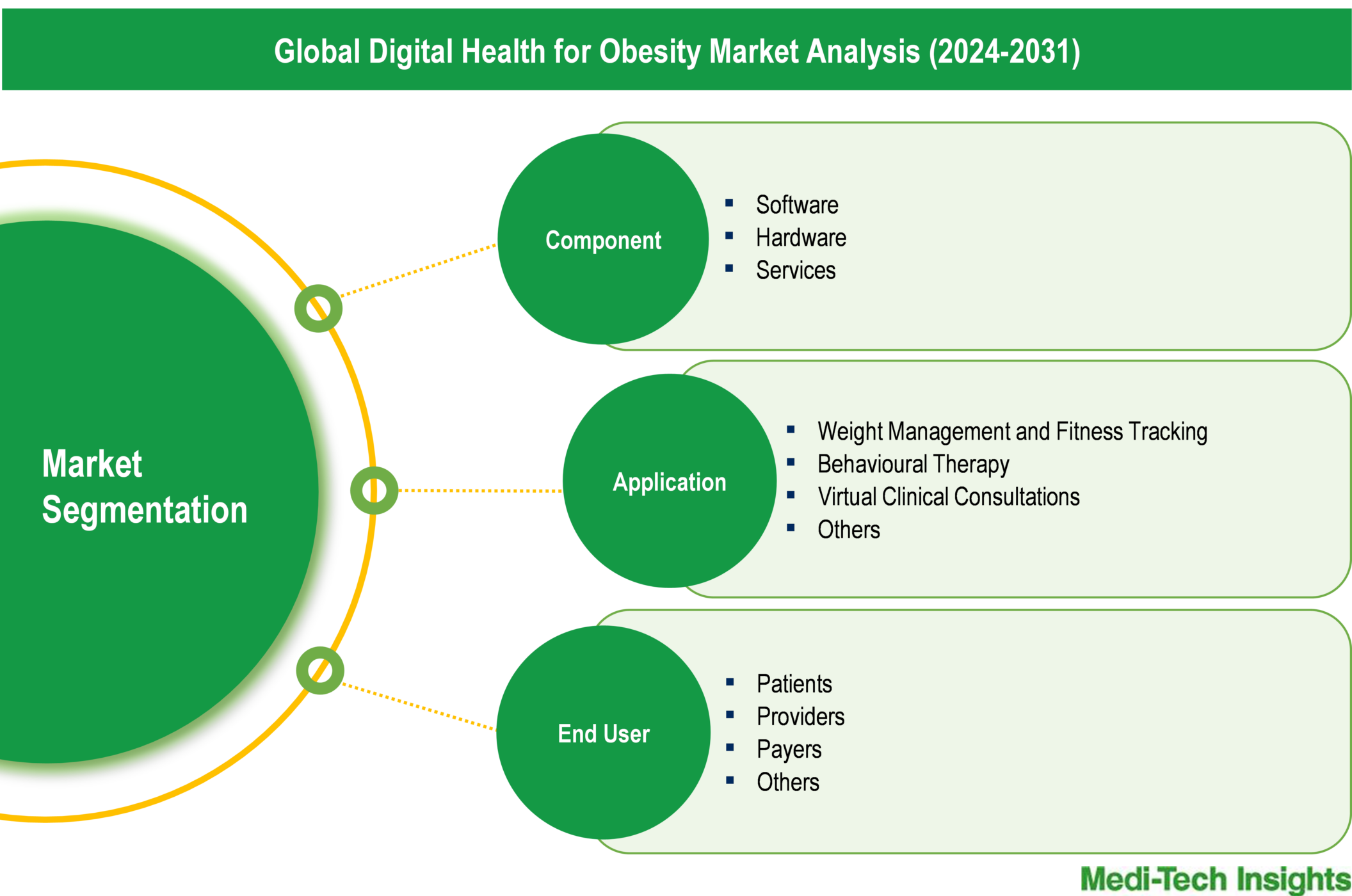
This report by Medi-Tech Insights provides the size of the global digital health for obesity market at the regional and country-level from 2024 to 2031. The report further segments the market by component, application, and end user.
Market Size & Forecast (2024-2031), By Component, USD Billion
- Software
- Hardware
- Services
Market Size & Forecast (2024-2031), By Application, USD Billion
- Weight Management and Fitness Tracking
- Behavioural Therapy
- Virtual Clinical Consultations
- Others
Market Size & Forecast (2024-2031), By End User, USD Billion
- Patients
- Providers
- Payers
- Others
Market Size & Forecast (2024-2031), By Region, USD Billion
- North America
- US
- Canada
- Europe
- UK
- Germany
- France
- Italy
- Spain
- Rest of Europe
- Asia Pacific
- China
- India
- Japan
- Rest of Asia Pacific
- Latin America
- Middle East & Africa
- Introduction
- Introduction
- Market Scope
- Market Definition
- Segments Covered
- Regional Segmentation
- Research Timeframe
- Currency Considered
- Study Limitations
- Stakeholders
- List of Abbreviations
- Key Conferences and Events (2026-2027)
- Research Methodology
- Secondary Research
- Primary Research
- Market Estimation
- Bottom-Up Approach
- Top-Down Approach
- Market Forecasting
- Executive Summary
- Digital Health for Obesity Market Snapshot (2026-2031)
- Segment Overview
- Regional Snapshot
- Competitive Insights
- Market Overview
- Market Dynamics
- Drivers
- Rising burden of obesity and metabolic disorders
- Growing adoption of wearable and connected health devices
- Shift toward preventive and continuous care models
- Increasing awareness of lifestyle-related health risks
- Increasing adoption of telehealth and virtual care services
- Restraints
- Data privacy and security concerns
- Limited reimbursement support
- Variability in regulatory frameworks across regions
- Opportunities
- Integration with obesity medications, e.g., GLP-1
- Development of outcome-based pricing models
- Strategic collaborations with pharmaceutical companies
- Growing potential in emerging and underserved markets
- Key Market Trends
- Increasing use of AI-enabled personalization in care delivery
- Emergence of hybrid care models combining digital and clinical support
- Expansion of remote patient monitoring capabilities
- Unmet Market Needs
- Industry Speaks
- Drivers
- Market Dynamics
- Global Digital Health for Obesity Market Size & Forecast (2024-2031), By Component, USD Billion
- Introduction
- Software
- Hardware
- Services
- Global Digital Health for Obesity Market Size & Forecast (2024-2031), By Application, USD Billion
- Introduction
- Weight Management and Fitness Tracking
- Behavioural Therapy
- Virtual Clinical Consultations
- Others
- Global Digital Health for Obesity Market Size & Forecast (2024-2031), By End User, USD Billion
- Introduction
- Patients
- Providers
- Payers
- Others
- Global Digital Health for Obesity Market Size & Forecast (2024-2031), By Region, USD Billion
- Introduction
- North America Digital Health for Obesity Market Size & Forecast (2024-2031), By Country, USD Billion
- US
- Market Size & Forecast, By Component (USD Billion)
- Market Size & Forecast, By Application (USD Billion)
- Market Size & Forecast, By End User (USD Billion)
- Canada
- Market Size & Forecast, By Component (USD Billion)
- Market Size & Forecast, By Application (USD Billion)
- Market Size & Forecast, By End User (USD Billion)
- US
- Europe Digital Health for Obesity Market Size & Forecast (2024-2031), By Country, USD Billion
- UK
- Market Size & Forecast, By Component (USD Billion)
- Market Size & Forecast, By Application (USD Billion)
- Market Size & Forecast, By End User (USD Billion)
- Germany
- Market Size & Forecast, By Component (USD Billion)
- Market Size & Forecast, By Application (USD Billion)
- Market Size & Forecast, By End User (USD Billion)
- France
- Market Size & Forecast, By Component (USD Billion)
- Market Size & Forecast, By Application (USD Billion)
- Market Size & Forecast, By End User (USD Billion)
- Italy
- Market Size & Forecast, By Component (USD Billion)
- Market Size & Forecast, By Application (USD Billion)
- Market Size & Forecast, By End User (USD Billion)
- Spain
- Market Size & Forecast, By Component (USD Billion)
- Market Size & Forecast, By Application (USD Billion)
- Market Size & Forecast, By End User (USD Billion)
- Rest of Europe
- Market Size & Forecast, By Component (USD Billion)
- Market Size & Forecast, By Application (USD Billion)
- Market Size & Forecast, By End User (USD Billion)
- UK
- Asia Pacific (APAC) Digital Health for Obesity Market Size & Forecast (2024-2031), By Country, USD Billion
- China
- Market Size & Forecast, By Component (USD Billion)
- Market Size & Forecast, By Application (USD Billion)
- Market Size & Forecast, By End User (USD Billion)
- Japan
- Market Size & Forecast, By Component (USD Billion)
- Market Size & Forecast, By Application (USD Billion)
- Market Size & Forecast, By End User (USD Billion)
- India
- Market Size & Forecast, By Component (USD Billion)
- Market Size & Forecast, By Application (USD Billion)
- Market Size & Forecast, By End User (USD Billion)
- Rest of Asia Pacific
- Market Size & Forecast, By Component (USD Billion)
- Market Size & Forecast, By Application (USD Billion)
- Market Size & Forecast, By End User (USD Billion)
- China
- Latin America (LATAM) Digital Health for Obesity Market Size & Forecast (2024-2031), USD Billion
- Market Size & Forecast, By Component (USD Billion)
- Market Size & Forecast, By Application (USD Billion)
- Market Size & Forecast, By End User (USD Billion)
- Middle East & Africa (MEA) Digital Health for Obesity Market Size & Forecast (2024-2031), USD Billion
- Market Size & Forecast, By Component (USD Billion)
- Market Size & Forecast, By Application (USD Billion)
- Market Size & Forecast, By End User (USD Billion)
- Competitive Landscape
- Key Players and their Competitive Positioning
- Key Player Comparison
- Segment-wise Player Mapping
- Market Share Analysis (2025)
- Company Categorization Matrix
- Dominants/Leaders
- New Entrants
- Emerging Players
- Innovative Players
- Key Strategies Assessment, By Player (2023-2026)
- New Product Launch
- Partnerships, Agreements, & Collaborations
- Mergers & Acquisitions
- Geographic Expansion
- Key Players and their Competitive Positioning
- Company Profiles*
(Business Overview, Financial Performance**, Products Offered, Recent Developments)
- Noom, Inc.
- WW International, Inc.
- MyFitnessPal, Inc.
- Teladoc Health, Inc.
- Fitbit, Inc.
- WellDoc, Inc.
- Sidekick Health
- Omada Health, Inc.
- Hims & Hers Health, Inc.
- BioAge Labs
- Other Prominent Players
Global Digital Health for Obesity Market Segmentation
This report by Medi-Tech Insights provides the size of the global digital health for obesity market at the regional and country-level from 2024 to 2031. The report further segments the market by component, application, and end user.
- Market Size & Forecast (2024-2031), By Component, USD Billion
- Software
- Hardware
- Services
- Market Size & Forecast (2024-2031), By Application, USD Billion
- Weight Management and Fitness Tracking
- Behavioural Therapy
- Virtual Clinical Consultations
- Others
- Market Size & Forecast (2024-2031), By End User, USD Billion
- Patients
- Providers
- Payers
- Others
- Market Size & Forecast (2024-2031), By Region, USD Billion
- North America
- US
- Canada
- Europe
- UK
- Germany
- France
- Italy
- Spain
- Rest of Europe
- Asia Pacific
- China
- India
- Japan
- Rest of Asia Pacific
- Latin America
- Middle East & Africa
- North America
The study has been compiled based on extensive primary and secondary research.
Secondary Research (Indicative List)

Primary Research
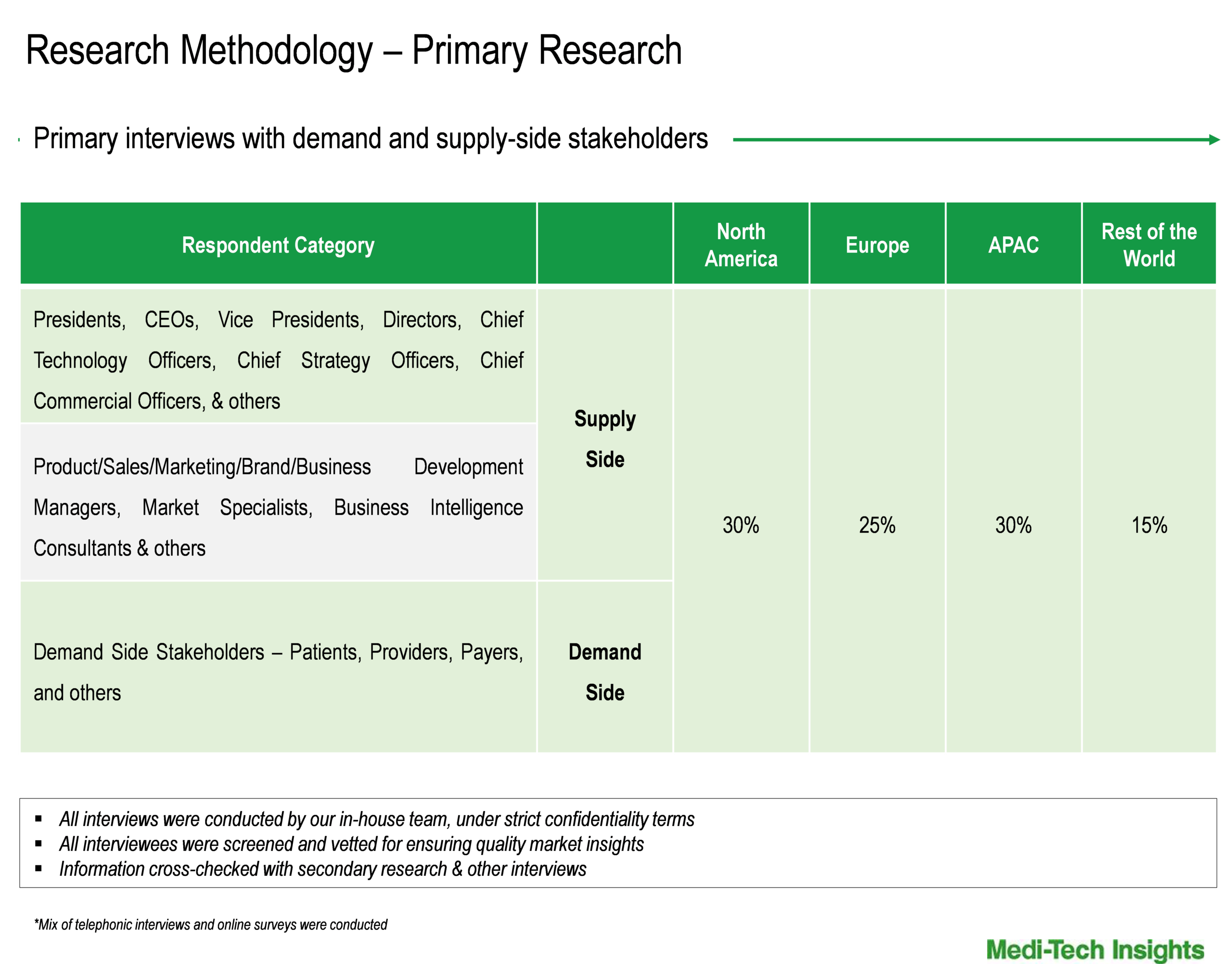
To validate research findings (market size & forecasts, market segmentation, market dynamics, competitive landscape, key industry trends, etc.), extensive primary interviews were conducted with both supply and demand-side stakeholders.
Supply Side Stakeholders:
- Senior Management Level: CEOs, Presidents, Vice-Presidents, Directors, Chief Technology Officers, Chief Commercial Officers
- Mid-Management Level: Product Managers, Sales Managers, Brand Managers, R&D Managers, Business Development Managers, Consultants
Demand Side Stakeholders:
- Patients, Providers, Payers, and others
Breakdown of Primary Interviews
Market Size Estimation
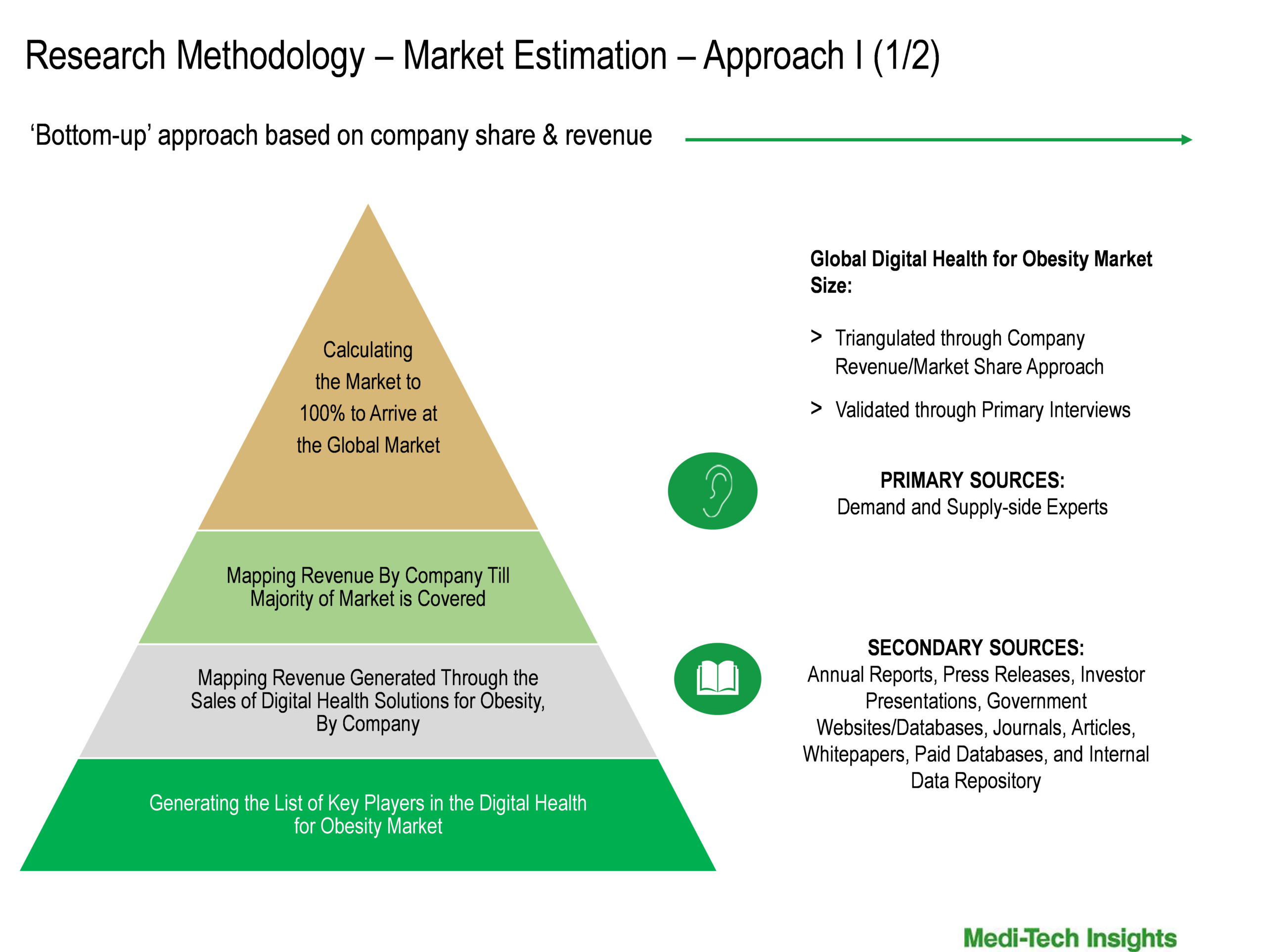
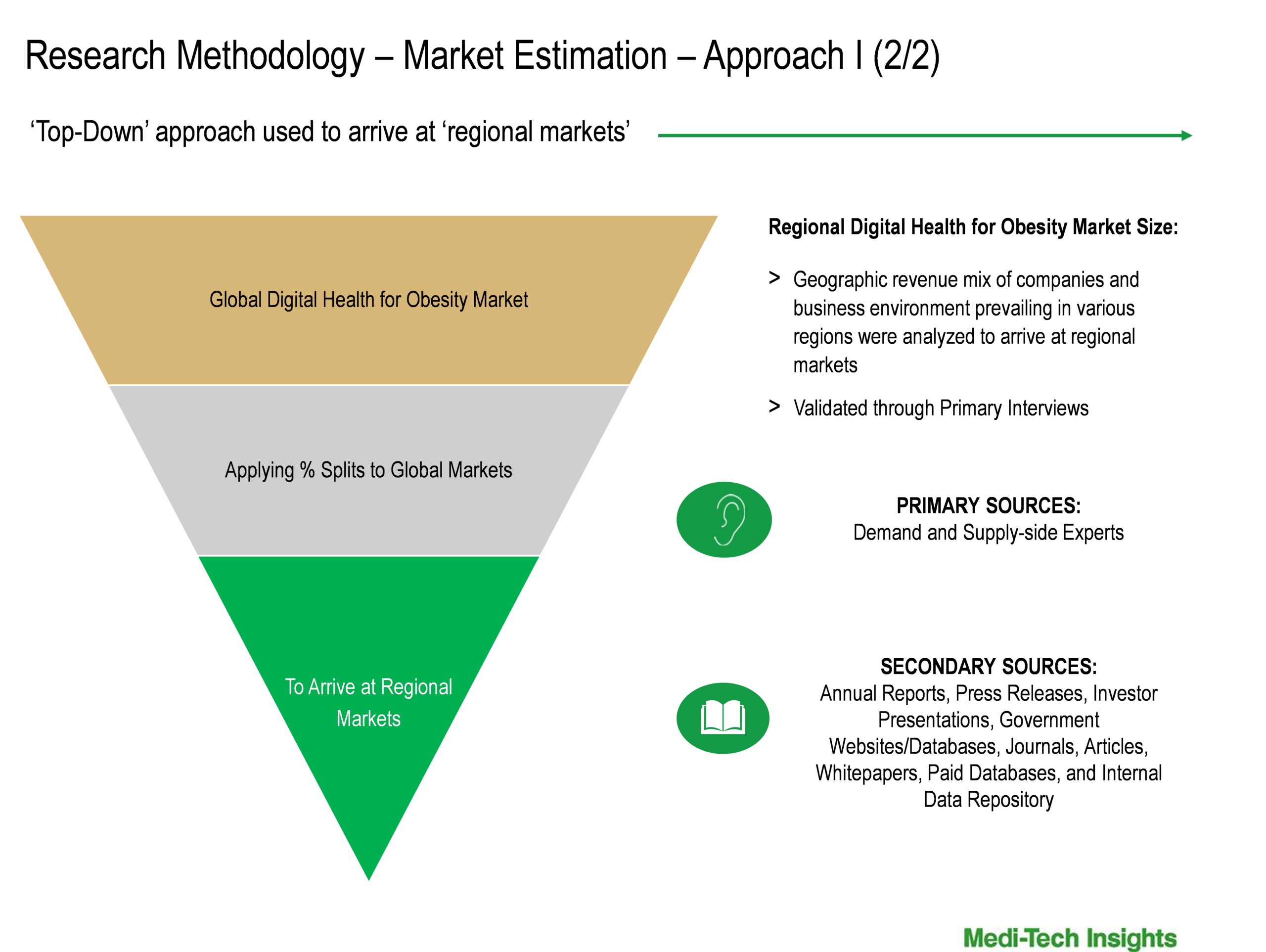
Both ‘Top-Down & Bottom-Up Approaches’ were used to derive market size estimates and forecasts
To learn more about this report, download the PDF brochure
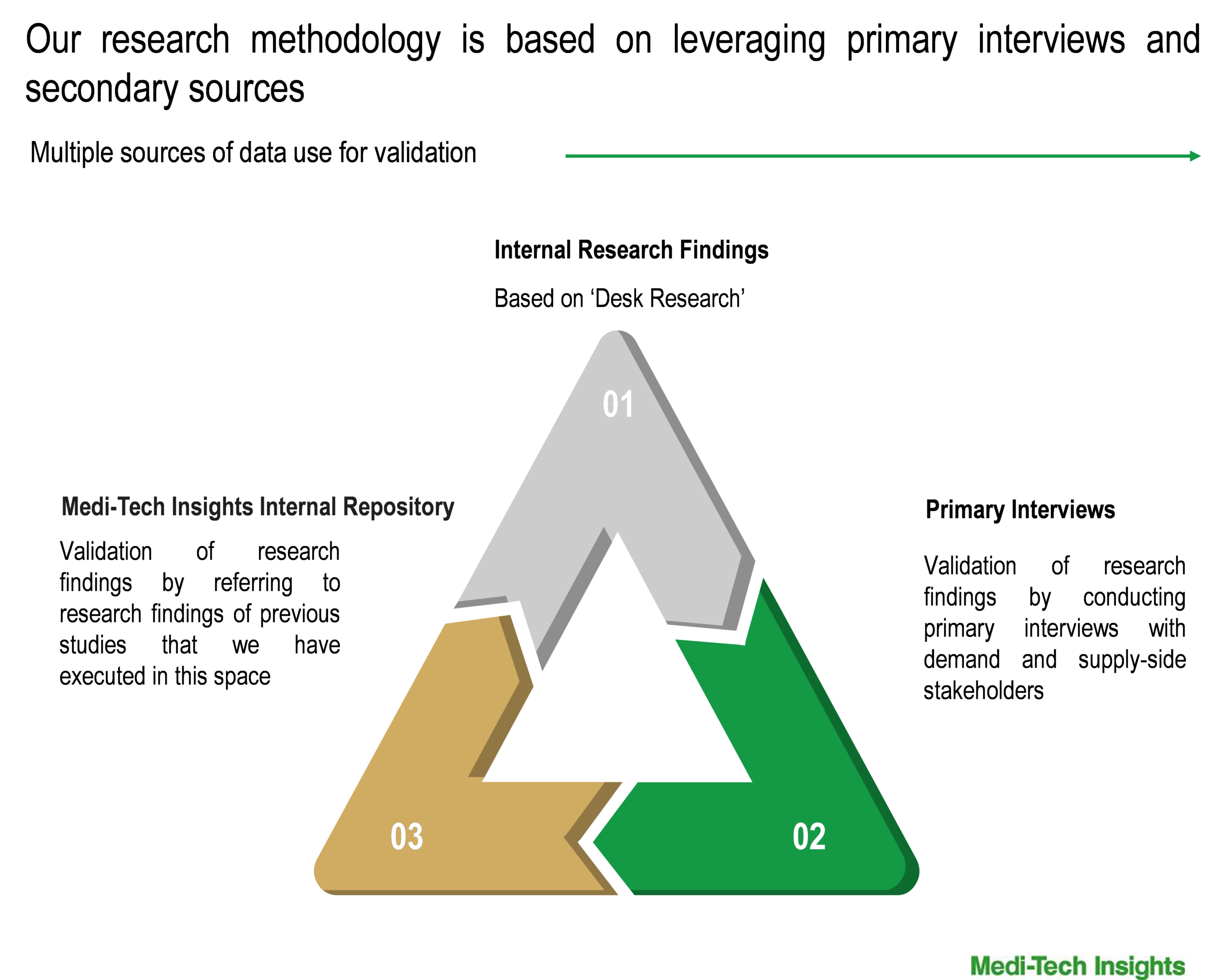
Data Triangulation
Research findings derived through secondary sources & internal analysis was validated with Primary Interviews, Internal Knowledge Repository and Company’s Sales Data
Features of the Report
- Comprehensive Market Coverage
- Market Size and Forecast
- Geographic & Segment Deep Dives
- Strategic Insights & Competitive Landscape
- Timely & Updated Data
- Growth Indicators & Future Outlook
- Quick Turnaround on Queries
- Analyst Support
- Report Customization Available
- Reports in PDF & Excel
