

Global Medical Device Connectivity Market Report Segmented by Solution (Connectivity Hubs, Middleware, Device Management Platforms), Technology (Wireless, Wired), Application (EHR Integration, Telehealth, Remote Monitoring) Forecast to 2031
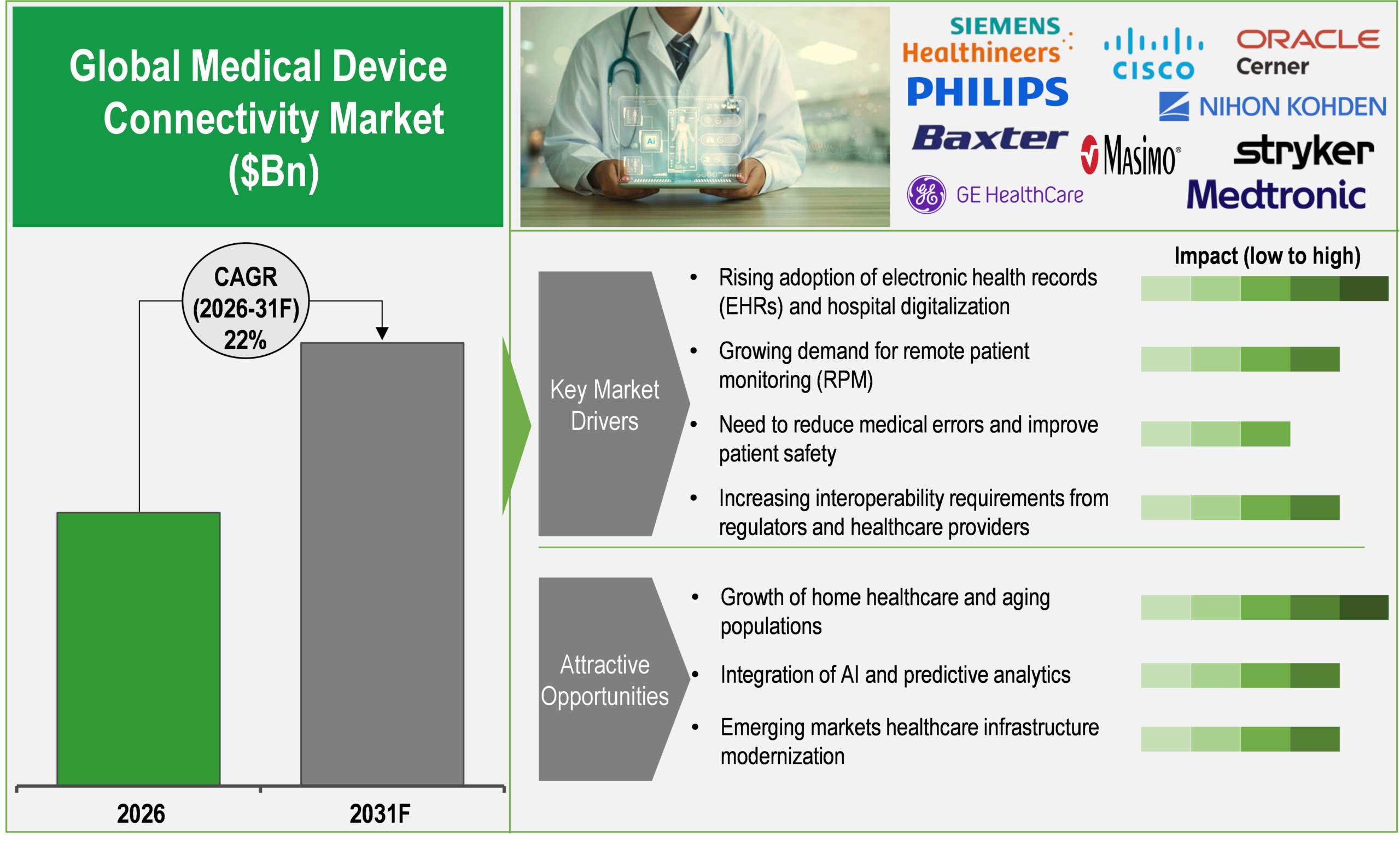
The global medical device connectivity market size is set to grow at 22% CAGR over the next 5 years. Rising adoption of electronic health records (EHRs) and hospital digitalization; growing demand for remote patient monitoring (RPM); need to reduce medical errors and improve patient safety; increasing interoperability requirements from regulators and healthcare providers; and expansion of connected care and IoMT ecosystems are some of the key factors driving the growth of the global market. However, cybersecurity and data privacy concerns, lack of standardized interoperability across vendors, and high implementation and integration costs are expected to impact the market’s growth. To learn more about the research report, download a sample report.
The medical device connectivity market comprises technologies, software platforms, middleware, gateways, and integration services that enable seamless communication between connected medical devices and healthcare IT systems. These solutions support real-time data exchange, interoperability, electronic health record (EHR) integration, and remote patient monitoring across hospitals, clinics, and home healthcare settings. By connecting patient monitors, infusion pumps, imaging systems, ventilators, and other medical devices with clinical information systems, medical device connectivity solutions help improve patient care, reduce manual data entry, enhance workflow efficiency, and support data-driven clinical decision-making.
Rising adoption of electronic health records (EHRs) and hospital digitalization to drive market growth
The rising adoption of electronic health records (EHRs) and ongoing hospital digitalization are becoming major growth drivers for the medical device connectivity market. Healthcare providers are increasingly replacing fragmented, paper-based processes with integrated digital platforms that enable patient data to be captured, shared, and accessed in real time. As hospitals expand their digital infrastructure, the need for seamless communication between connected medical devices and healthcare IT systems continues to grow.
Medical devices such as patient monitors, infusion pumps, ventilators, anesthesia systems, and imaging equipment can automatically transmit clinical information into EHR platforms, eliminating the need for manual data entry. This not only reduces documentation burden for healthcare professionals but also minimizes transcription errors and improves data accuracy. Real-time data availability allows clinicians to make faster and more informed decisions, particularly in critical care and emergency settings.
In addition, integrated connectivity supports better care coordination across departments, improves operational efficiency, and enhances patient safety through continuous monitoring and automated alerts. As healthcare organizations increasingly focus on interoperability, digital workflows, and data-driven clinical management, investments in medical device connectivity solutions are expected to accelerate, creating significant opportunities for vendors operating in the connected healthcare ecosystem.
To learn more about this report, download the PDF brochure
Growth of home healthcare and aging populations to offer growth opportunities for market players
The expansion of home healthcare services and the growing aging population are creating significant opportunities for the medical device connectivity market. Older adults often require continuous monitoring for chronic conditions such as cardiovascular disease, diabetes, and respiratory disorders, increasing the need for connected devices that can transmit health data remotely. Healthcare systems are also encouraging care delivery outside traditional hospital settings to reduce costs and improve patient convenience. As a result, demand is rising for connected patient monitors, wearable devices, infusion systems, and remote monitoring platforms that enable clinicians to track patient health from home and intervene quickly when necessary, supporting more efficient and personalized care
Rapid expansion of wireless connectivity technologies, a key market trend
The rapid expansion of wireless connectivity technologies is becoming a major trend in the medical device connectivity market. Healthcare providers are increasingly adopting Wi‑Fi, Bluetooth, and other wireless communication technologies to support flexible and mobile care delivery. Wireless connectivity allows patient monitors, infusion pumps, wearable devices, & remote monitoring systems to transmit data without relying on extensive wired infrastructure. This improves device mobility, simplifies installation, & enhances access to real-time patient information across different care settings. The trend is particularly important for intensive care units, ambulatory settings, and home healthcare environments, where seamless data transmission and continuous patient monitoring are essential for efficient clinical operations
To learn more about this report, download the PDF brochure
Solution Segment Outlook
The solution segment includes platforms and software designed to enable communication, interoperability, data integration, and device management across healthcare environments. These solutions connect medical devices with electronic health records, hospital information systems, and clinical workflow applications, allowing real-time exchange of patient data and improving operational efficiency. Integration solutions account for a significant share of the market as hospitals increasingly seek seamless connectivity between patient monitoring devices, imaging systems, infusion pumps, and EHR platforms.
The demand for middleware solutions is also growing, as they help bridge compatibility gaps between devices from different manufacturers and support standardized data exchange. In addition, device management platforms are gaining traction due to their ability to monitor device performance, manage software updates, and improve cybersecurity oversight across connected device networks. The expansion of digital hospitals, interoperability initiatives, and remote patient monitoring programs is expected to further drive adoption of advanced medical device connectivity solutions during the forecast period.
Regional Outlook: North America maintains its leading position in the medical device connectivity market due to widespread adoption of EHRs and strong demand for RPM
The medical device connectivity market demonstrates varying growth patterns across regions, influenced by differences in healthcare infrastructure, digital maturity, regulatory frameworks, and investment levels. North America currently represents a leading market due to widespread adoption of electronic health records, strong demand for remote patient monitoring, and continued investment in connected healthcare technologies. Healthcare providers in the region are increasingly focused on improving interoperability and reducing operational inefficiencies through integrated device networks
Asia Pacific is expected to register the fastest growth during the forecast period. Expanding healthcare infrastructure, rising prevalence of chronic diseases, growing telehealth adoption, and increasing government investment in healthcare digitization are driving demand for connected medical devices across countries such as China, India, Japan, and South Korea.
Competitive Landscape Analysis
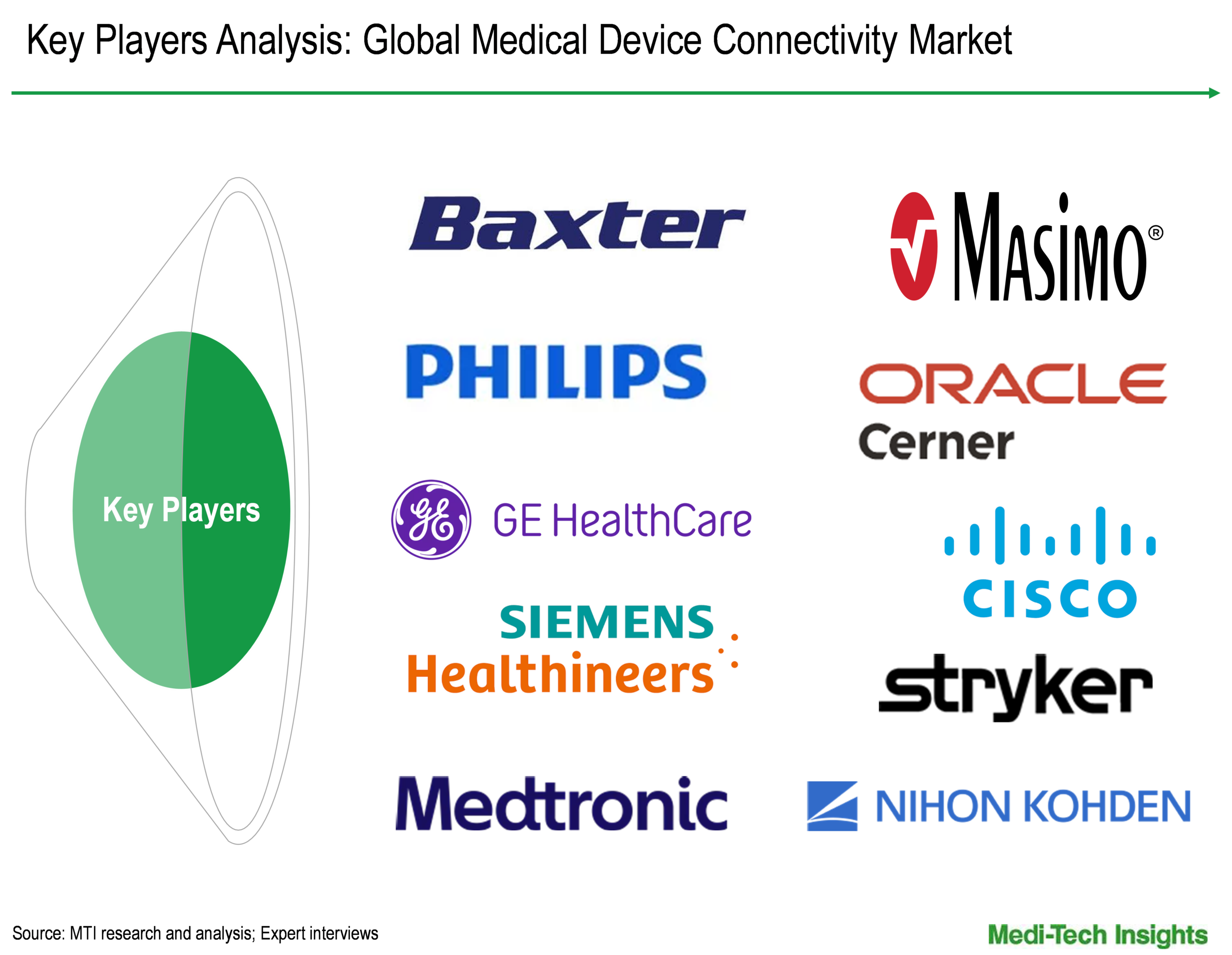
The global medical device connectivity market is marked by the presence of established and emerging market players such as-
- Philips
- GE HealthCare
- Siemens Healthineers
- Medtronic
- Baxter International
- Masimo
- Oracle Cerner
- Cisco Systems
- Stryker
- Nihon Kohden Corporation
Get a sample report for competitive landscape analysis
Growth strategies adopted by players to establish their foothold in the medical device connectivity market
Players operating in this market are adopting various growth strategies such as new product launch; acquisitions; expansions; and strategic partnerships, agreements, and collaborations, to garner market share. For instance,
- In May 2026, GE Healthcare introduced next-generation SIGNA MR technologies, including AI-powered workflow capabilities and helium-efficient imaging systems designed to improve efficiency, collaboration, and connected imaging operations
- In December 2025, Philips agreed to acquire SpectraWAVE to expand AI-enabled coronary intravascular imaging and physiological assessment capabilities, strengthening its image-guided therapy portfolio and enhancing integrated workflows for treating coronary artery disease
- In November 2025, GE Healthcare, Philips, and Panacea Medical Technologies expressed interest in establishing manufacturing units at Noida Medical Devices Park, supporting India's domestic medical device production and connected healthcare infrastructure expansion
Report Scope
|
Report Metric |
Details |
|
Base Year Considered |
2025 |
|
Historical Data |
2024 – 2025 |
|
Forecast Period |
2026 – 2031 |
|
Growth Rate |
22% |
|
Segment Scope |
Solution, Technology, Application, Device Type, and End User |
|
Regional Scope |
|
|
Market Drivers |
|
|
Attractive Opportunities |
|
|
Key Companies Mapped |
Philips; GE HealthCare; Siemens Healthineers; Medtronic; Baxter International; Masimo; Oracle Cerner; Cisco Systems; Stryker; and Nihon Kohden Corporation, among others |
|
Report Highlights |
Market Size & Forecast, Growth Drivers & Restraints, Trends, Competitive Analysis |
Global Medical Device Connectivity Market Segmentation
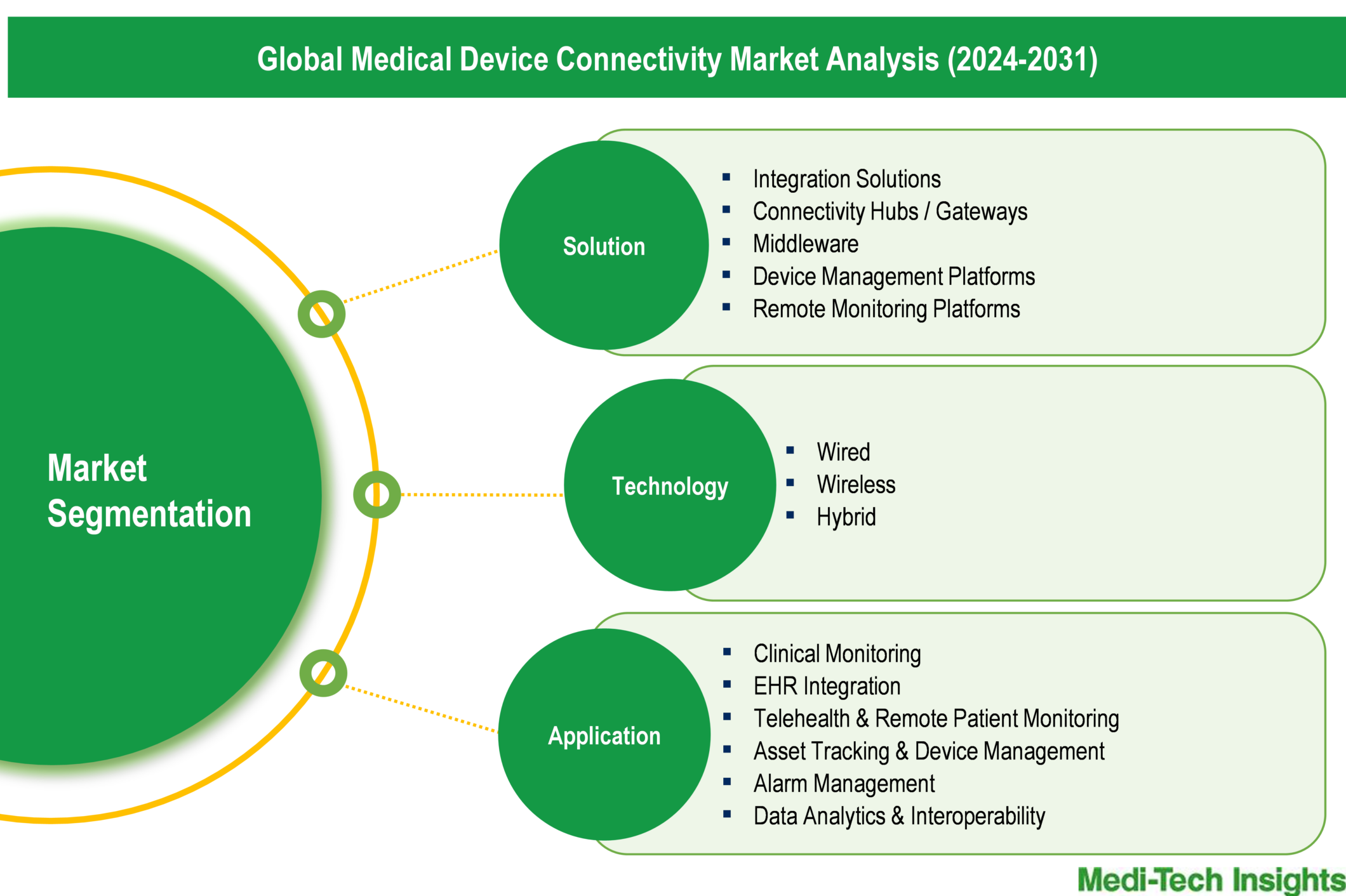
This report by Medi-Tech Insights provides the size of the global medical device connectivity market at the regional and country-level from 2024 to 2031. The report further segments the market by solution, technology, application, device type, and end user.
Market Size & Forecast (2024-2031), By Solution, USD Million
- Integration Solutions
- Connectivity Hubs / Gateways
- Middleware
- Device Management Platforms
- Remote Monitoring Platforms
Market Size & Forecast (2024-2031), By Technology, USD Million
- Wired
- Wireless
- Hybrid
Market Size & Forecast (2024-2031), By Application, USD Million
- Clinical Monitoring
- EHR Integration
- Telehealth & Remote Patient Monitoring
- Asset Tracking & Device Management
- Alarm Management
- Data Analytics & Interoperability
Market Size & Forecast (2024-2031), By Device Type, USD Million
- Patient Monitoring Devices
- Diagnostic & Imaging Devices
- Therapeutic Devices
- Infusion Pumps
- Ventilators & Respiratory Devices
- Others
Market Size & Forecast (2024-2031), By End User, USD Million
- Hospitals
- Ambulatory Surgical Centers
- Clinics
- Home Healthcare Settings
- Diagnostic Centers
Market Size & Forecast (2024-2031), By Region, USD Million
- North America
- US
- Canada
- Europe
- UK
- Germany
- France
- Italy
- Spain
- Rest of Europe
- Asia Pacific
- China
- India
- Japan
- Rest of Asia Pacific
- Latin America
- Middle East & Africa
- Introduction
- Introduction
- Market Scope
- Market Definition
- Segments Covered
- Regional Segmentation
- Research Timeframe
- Currency Considered
- Study Limitations
- Stakeholders
- List of Abbreviations
- Key Conferences and Events (2026-2027)
- Research Methodology
- Secondary Research
- Primary Research
- Market Estimation
- Bottom-Up Approach
- Top-Down Approach
- Market Forecasting
- Executive Summary
- Medical Device Connectivity Market Snapshot (2026-2031)
- Segment Overview
- Regional Snapshot
- Competitive Insights
- Market Overview
- Market Dynamics
- Drivers
- Rising adoption of electronic health records (EHRs) and hospital digitalization
- Growing demand for remote patient monitoring (RPM)
- Need to reduce medical errors and improve patient safety
- Increasing interoperability requirements from regulators and healthcare providers
- Expansion of connected care and IoMT ecosystems
- Restraints
- Cybersecurity and data privacy concerns
- Lack of standardized interoperability across vendors
- High implementation and integration costs
- Opportunities
- Growth of home healthcare and aging populations
- Integration of AI and predictive analytics
- Emerging markets healthcare infrastructure modernization
- Adoption of cloud-based device management platforms
- Key Market Trends
- Shift toward interoperable, vendor-neutral connectivity platforms
- Rapid expansion of wireless connectivity technologies
- Convergence of medical device connectivity with digital health ecosystems
- Unmet Market Needs
- Industry Speaks
- Drivers
- Market Dynamics
- Global Medical Device Connectivity Market Size & Forecast (2024-2031), By Solution, USD Billion
- Introduction
- Integration Solutions
- Connectivity Hubs / Gateways
- Middleware
- Device Management Platforms
- Remote Monitoring Platforms
- Global Medical Device Connectivity Market Size & Forecast (2024-2031), By Technology, USD Billion
- Introduction
- Wired
- Wireless
- Hybrid
- Global Medical Device Connectivity Market Size & Forecast (2024-2031), By Application, USD Billion
- Introduction
- Clinical Monitoring
- EHR Integration
- Telehealth & Remote Patient Monitoring
- Asset Tracking & Device Management
- Alarm Management
- Data Analytics & Interoperability
- Global Medical Device Connectivity Market Size & Forecast (2024-2031), By Device Type, USD Billion
- Introduction
- Patient Monitoring Devices
- Diagnostic & Imaging Devices
- Therapeutic Devices
- Infusion Pumps
- Ventilators & Respiratory Devices
- Others
- Global Medical Device Connectivity Market Size & Forecast (2024-2031), By End User, USD Billion
- Introduction
- Hospitals
- Ambulatory Surgical Centers
- Clinics
- Home Healthcare Settings
- Diagnostic Centers
- Global Medical Device Connectivity Market Size & Forecast (2024-2031), By Region, USD Billion
- Introduction
- North America Medical Device Connectivity Market Size & Forecast (2024-2031), By Country, USD Billion
- US
- Market Size & Forecast, By Solution (USD Billion)
- Market Size & Forecast, By Technology (USD Billion)
- Market Size & Forecast, By Application (USD Billion)
- Market Size & Forecast, By Device Type (USD Billion)
- Market Size & Forecast, By End User (USD Billion)
- Canada
- Market Size & Forecast, By Solution (USD Billion)
- Market Size & Forecast, By Technology (USD Billion)
- Market Size & Forecast, By Application (USD Billion)
- Market Size & Forecast, By Device Type (USD Billion)
- Market Size & Forecast, By End User (USD Billion)
- US
- Europe Medical Device Connectivity Market Size & Forecast (2024-2031), By Country, USD Billion
- UK
- Market Size & Forecast, By Solution (USD Billion)
- Market Size & Forecast, By Technology (USD Billion)
- Market Size & Forecast, By Application (USD Billion)
- Market Size & Forecast, By Device Type (USD Billion)
- Market Size & Forecast, By End User (USD Billion)
- Germany
- Market Size & Forecast, By Solution (USD Billion)
- Market Size & Forecast, By Technology (USD Billion)
- Market Size & Forecast, By Application (USD Billion)
- Market Size & Forecast, By Device Type (USD Billion)
- Market Size & Forecast, By End User (USD Billion)
- France
- Market Size & Forecast, By Solution (USD Billion)
- Market Size & Forecast, By Technology (USD Billion)
- Market Size & Forecast, By Application (USD Billion)
- Market Size & Forecast, By Device Type (USD Billion)
- Market Size & Forecast, By End User (USD Billion)
- Italy
- Market Size & Forecast, By Solution (USD Billion)
- Market Size & Forecast, By Technology (USD Billion)
- Market Size & Forecast, By Application (USD Billion)
- Market Size & Forecast, By Device Type (USD Billion)
- Market Size & Forecast, By End User (USD Billion)
- Spain
- Market Size & Forecast, By Solution (USD Billion)
- Market Size & Forecast, By Technology (USD Billion)
- Market Size & Forecast, By Application (USD Billion)
- Market Size & Forecast, By Device Type (USD Billion)
- Market Size & Forecast, By End User (USD Billion)
- Rest of Europe
- Market Size & Forecast, By Solution (USD Billion)
- Market Size & Forecast, By Technology (USD Billion)
- Market Size & Forecast, By Application (USD Billion)
- Market Size & Forecast, By Device Type (USD Billion)
- Market Size & Forecast, By End User (USD Billion)
- UK
- Asia Pacific (APAC) Medical Device Connectivity Market Size & Forecast (2024-2031), By Country, USD Billion
- China
- Market Size & Forecast, By Solution (USD Billion)
- Market Size & Forecast, By Technology (USD Billion)
- Market Size & Forecast, By Application (USD Billion)
- Market Size & Forecast, By Device Type (USD Billion)
- Market Size & Forecast, By End User (USD Billion)
- Japan
- Market Size & Forecast, By Solution (USD Billion)
- Market Size & Forecast, By Technology (USD Billion)
- Market Size & Forecast, By Application (USD Billion)
- Market Size & Forecast, By Device Type (USD Billion)
- Market Size & Forecast, By End User (USD Billion)
- India
- Market Size & Forecast, By Solution (USD Billion)
- Market Size & Forecast, By Technology (USD Billion)
- Market Size & Forecast, By Application (USD Billion)
- Market Size & Forecast, By Device Type (USD Billion)
- Market Size & Forecast, By End User (USD Billion)
- Rest of Asia Pacific
- Market Size & Forecast, By Solution (USD Billion)
- Market Size & Forecast, By Technology (USD Billion)
- Market Size & Forecast, By Application (USD Billion)
- Market Size & Forecast, By Device Type (USD Billion)
- Market Size & Forecast, By End User (USD Billion)
- China
- Latin America (LATAM) Medical Device Connectivity Market Size & Forecast (2024-2031), USD Billion
- Market Size & Forecast, By Solution (USD Billion)
- Market Size & Forecast, By Technology (USD Billion)
- Market Size & Forecast, By Application (USD Billion)
- Market Size & Forecast, By Device Type (USD Billion)
- Market Size & Forecast, By End User (USD Billion)
- Middle East & Africa (MEA) Medical Device Connectivity Market Size & Forecast (2024-2031), USD Billion
- Market Size & Forecast, By Solution (USD Billion)
- Market Size & Forecast, By Technology (USD Billion)
- Market Size & Forecast, By Application (USD Billion)
- Market Size & Forecast, By Device Type (USD Billion)
- Market Size & Forecast, By End User (USD Billion)
- Competitive Landscape
- Key Players and their Competitive Positioning
- Key Player Comparison
- Segment-wise Player Mapping
- Market Share Analysis (2025)
- Company Categorization Matrix
- Dominants/Leaders
- New Entrants
- Emerging Players
- Innovative Players
- Key Strategies Assessment, By Player (2023-2026)
- New Product Launch
- Partnerships, Agreements, & Collaborations
- Mergers & Acquisitions
- Geographic Expansion
- Key Players and their Competitive Positioning
- Company Profiles*
(Business Overview, Financial Performance**, Products Offered, Recent Developments)
- Philips
- GE HealthCare
- Siemens Healthineers
- Medtronic
- Baxter International
- Masimo
- Oracle Cerner
- Cisco Systems
- Stryker
- Nihon Kohden Corporation
- Other Prominent Players
Note: *Indicative list
**For listed companies
The study has been compiled based on extensive primary and secondary research.
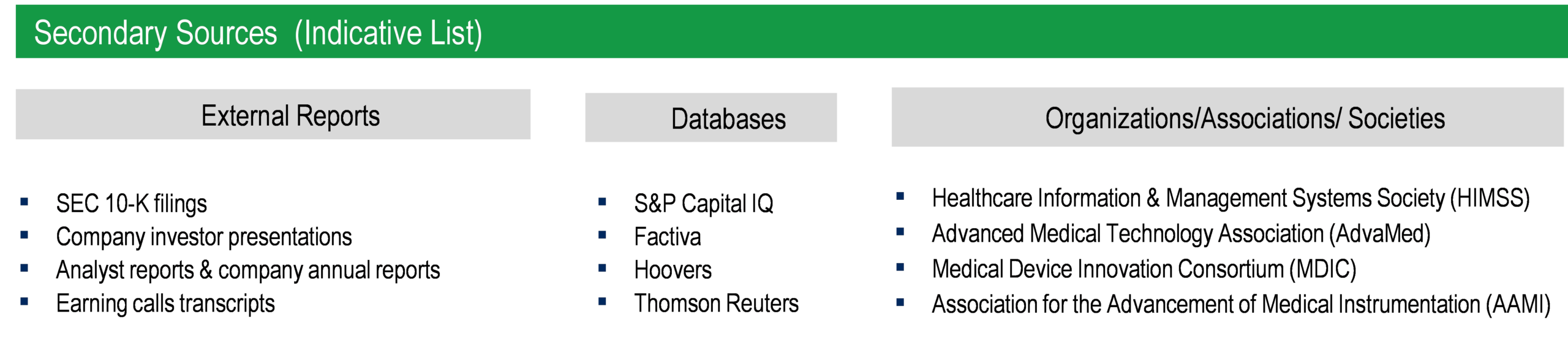
Secondary Research (Indicative List)
Primary Research
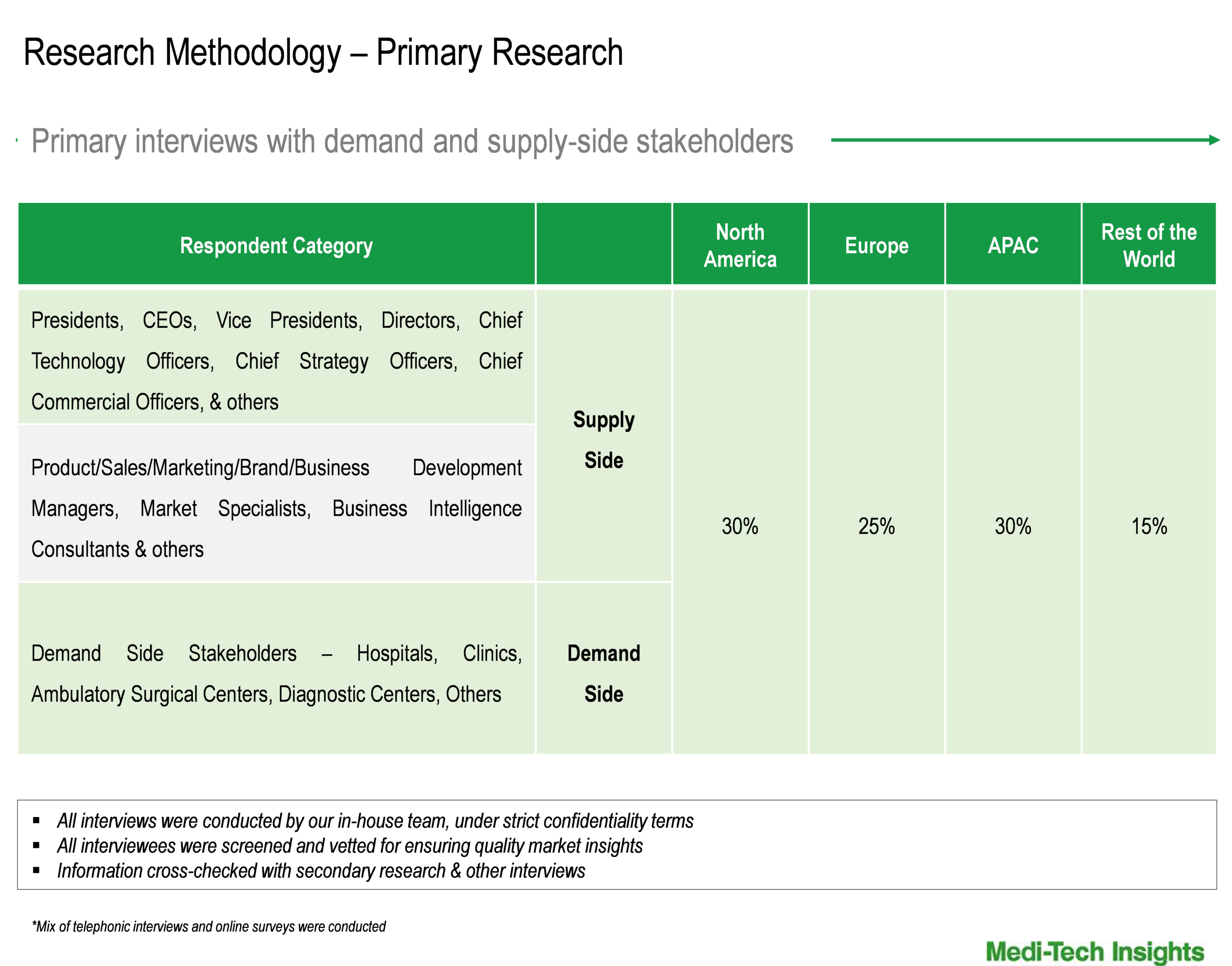
To validate research findings (market size & forecasts, market segmentation, market dynamics, competitive landscape, key industry trends, etc.), extensive primary interviews were conducted with both supply and demand-side stakeholders.
Supply Side Stakeholders:
- Senior Management Level: CEOs, Presidents, Vice-Presidents, Directors, Chief Technology Officers, Chief Commercial Officers
- Mid-Management Level: Product Managers, Sales Managers, Brand Managers, R&D Managers, Business Development Managers, Consultants
Demand Side Stakeholders:
- Hospitals, Clinics, Ambulatory Surgical Centers, Diagnostic Centers, Others
Breakdown of Primary Interviews
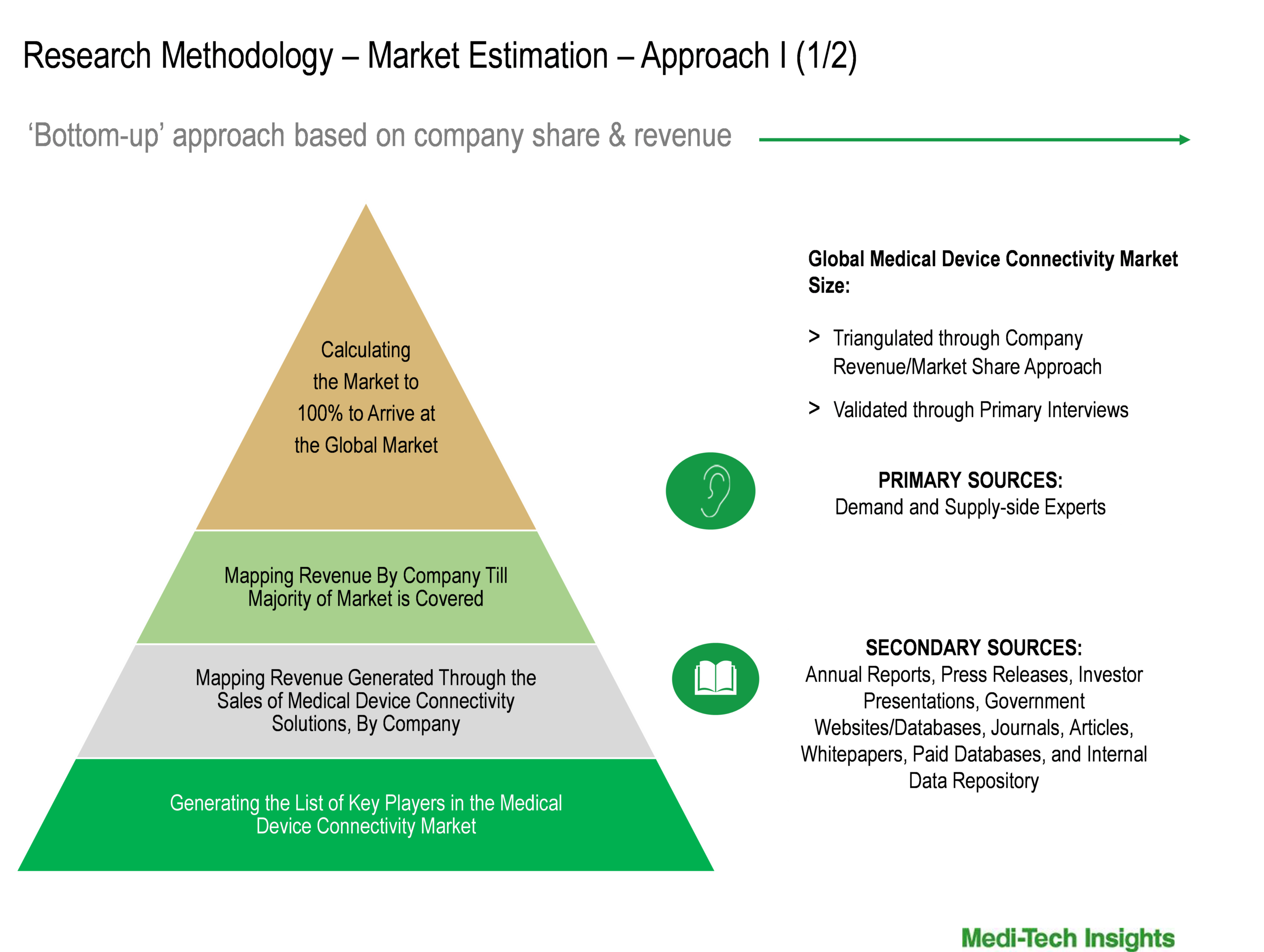
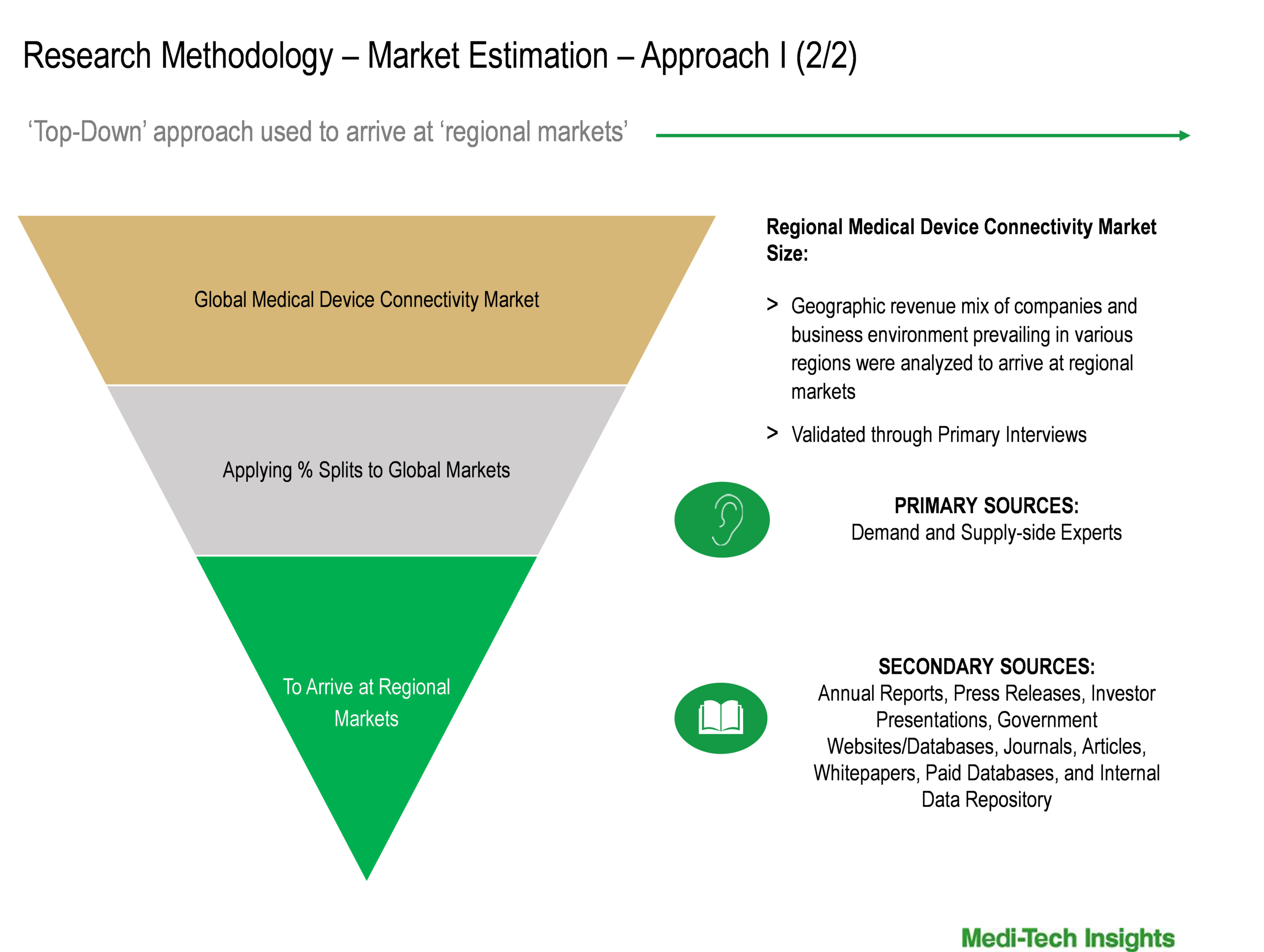
Market Size Estimation
Both ‘Top-Down & Bottom-Up Approaches’ were used to derive market size estimates and forecasts
To learn more about this report, download the PDF brochure
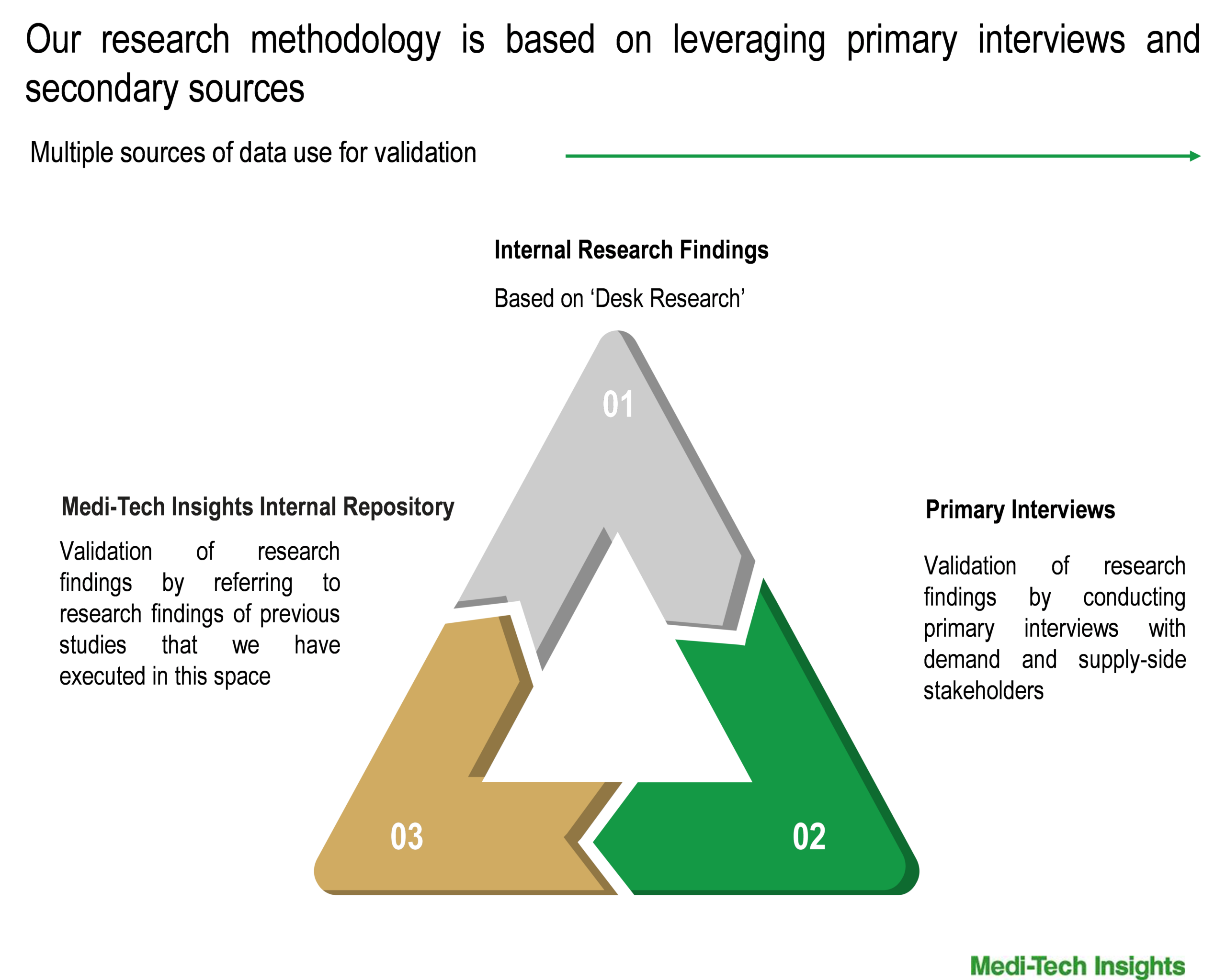
Data Triangulation
Research findings derived through secondary sources & internal analysis was validated with Primary Interviews, Internal Knowledge Repository and Company’s Sales Data
Frequently Asked Questions (FAQs)
Features of the Report
- Comprehensive Market Coverage
- Market Size and Forecast
- Geographic & Segment Deep Dives
- Strategic Insights & Competitive Landscape
- Timely & Updated Data
- Growth Indicators & Future Outlook
- Quick Turnaround on Queries
- Analyst Support
- Report Customization Available
- Reports in PDF & Excel
