

Global Polymer-based Drug Delivery Systems Market Size & Trends Report Segmented by Route of Administration (Oral, Injectable, Transdermal, Topical), Polymer Type (Natural, Synthetic), Drug Type (Small Molecules, Biologics), End User & Regional Forecast to 2031
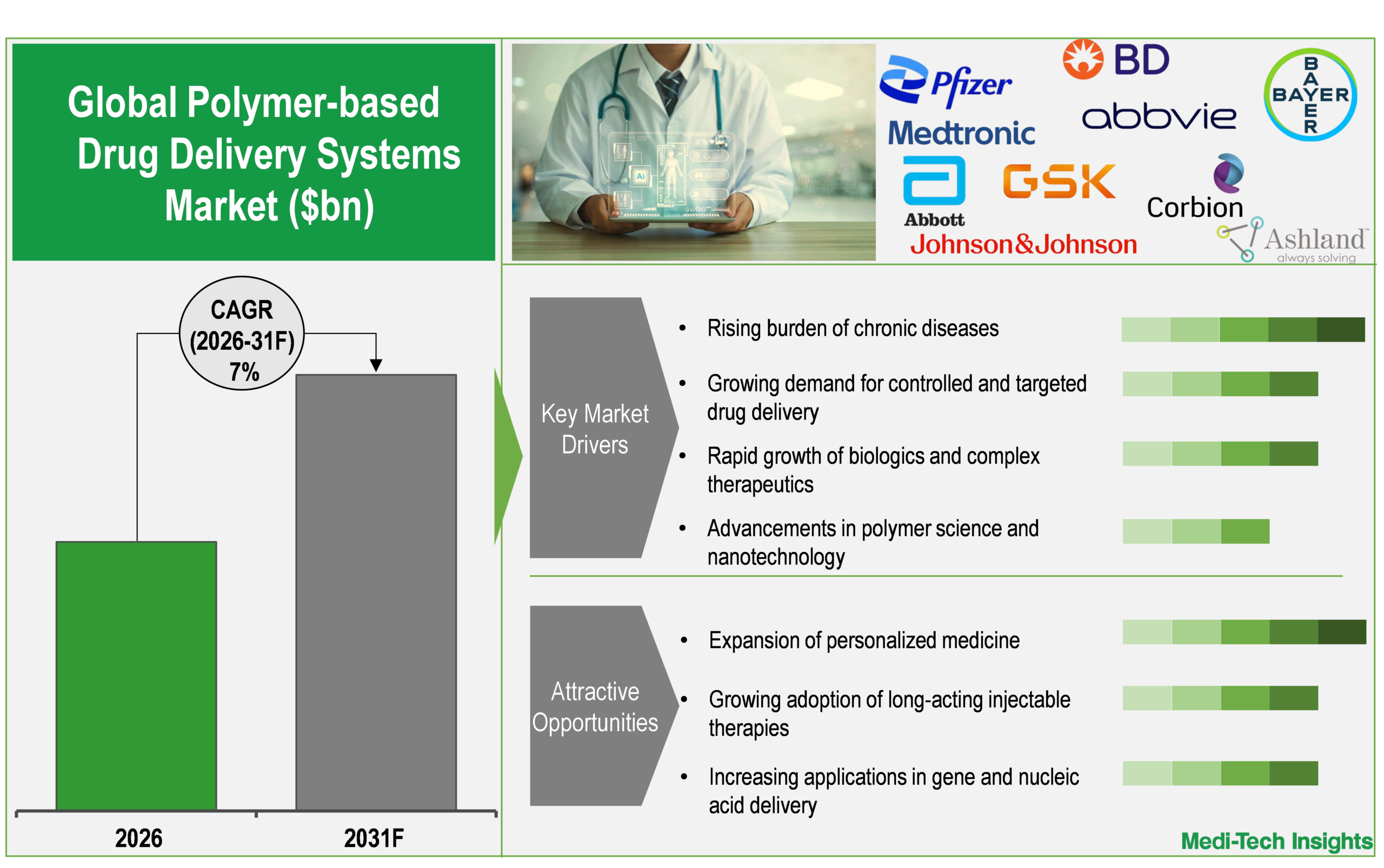
The global polymer-based drug delivery systems market size is set to grow at a CAGR of 7% over the next 5 years. Rising burden of chronic diseases, growing demand for controlled and targeted drug delivery, rapid growth of biologics and complex therapeutics, advancements in polymer science and nanotechnology, and expanding pharmaceutical R&D investments are some key factors driving the growth of the polymer-based drug delivery systems market. To learn more about the research report, download a sample report.
The polymer-based drug delivery systems market consists of technology, products and materials containing natural and synthetic polymers used for encapsulating, protecting, and delivering therapeutic agents through controlled, sustained, and targeted means. There are multiple ways in which polymer-based drug delivery systems improve drug stability, bioavailability, and therapeutic effectiveness, while reducing dose frequency and side effects. The polymer-based drug delivery system market is comprised of the different types of polymer-based drug formulations used for various types of drug delivery systems, including but not limited to oral, injectable, topical, ophthalmic, and other routes of administration. Key application of these systems includes the diseases like oncology, diabetes, cardiovascular, neurological, infectious, and auto-immune driven by the advances in materials science, biologicals, nanotechnology, and precision medicine.
Growing demand for controlled and targeted drug delivery to propel market demand
The increasing need for precise and controlled drug delivery is one of the main factors driving the polymer-based drug delivery systems market, as healthcare providers look for ways to provide drugs that are more effective while causing minimal adverse effects. Many traditional drug formulations release their active ingredients rapidly. This rapid release creates wide fluctuations in drug concentration and hence patients need to take medications multiple times each day which increases their risk of developing systemic toxicity. Polymer-based drug delivery systems can address many of these concerns by providing a method for delivering drugs that allows for sustained release at the site of action for a long period of time, thus maintaining therapeutic drug concentration over time. Biodegradable polymers, hydrogels, nanoparticles, and microspheres also help protect drug molecules from degradation prior to reaching their intended site of action and improve the bioavailability of the drug, particularly for biologics and poorly soluble drugs.
Additionally, these technologies also reduce the number of times patients receive medications, improve patient adherence to their medication regimen, and improve overall health in chronic diseases such as cancer, diabetes, and heart disease. Therefore, as pharmaceutical companies develop new precision-based therapies and long-action formulations, the demand for new polymer-based carriers will continue to increase, driving greater innovation, commercialization, and adoption of polymer-based drug delivery systems in many therapeutic areas.
To learn more about this report, download the PDF brochure
Rapid growth of biologics and complex therapeutics is fueling the demand for polymer-based drug delivery systems
The growth of biologics and other complex therapies is rapidly driving the polymer-based drug delivery systems market by increasing the need for advanced delivery technology capable of maintaining stability and efficacy of sensitive drug molecules. Biologics are not like traditional small-molecule drugs as they are more susceptible to enzymatic degradation, have lower bioavailability, and they have a limited circulation time. The use of polymeric carriers makes it possible to protect biologics from damage during delivery while also providing for a controlled release and delivery to the target site. This results in better pharmacokinetics, longer therapeutic lifetime, and improved patient adherence, and improve overall treatment outcomes for patients using polymeric carriers.
As pharmaceutical manufacturers continue to expand their pipelines to include biologic therapeutics, biosimilars, and nucleic acid-based medicines, the demand for new polymer formulations is increasing at a rapid rate. Advances in polymer chemistry have also allowed scientists to develop safer and more effective delivery systems capable of supporting the commercialization of cutting-edge therapies in the fields of oncology, immunology, rare diseases, and regenerative medicine.
To learn more about this report, download the PDF brochure
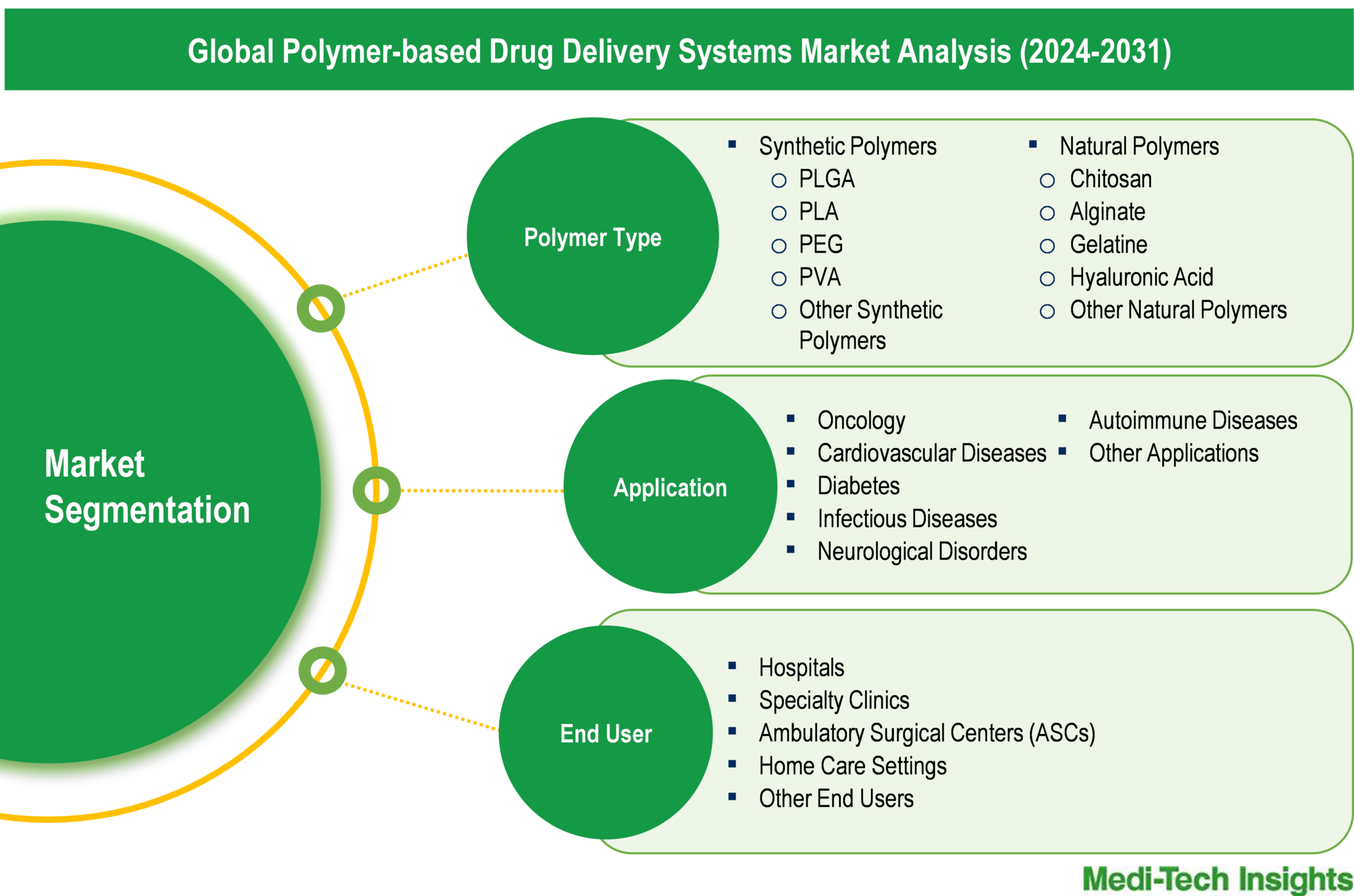
Polymer Type Segment Outlook
Owing to their high versatility, reproducibility and established usage, synthetic polymers currently hold the largest share of the polymer-based drug delivery systems market. Synthetic polymers allow for precise control over excellent control over drug release kinetics, biodegradability, mechanical strength, and scalability, making them suitable for nanoparticles, injectable depots, implants, and controlled-release formulations. Synthetic polymer-drug combinations also have widespread regulatory acceptance and compatibility with biologics and small-molecule drugs, which reinforces their position as the primary driver of the polymer-based drug delivery market.
Natural polymers are expected to register the highest growth over the forecast period, as demand for biodegradable, biocompatible and sustainable drug delivery materials continues to rise. The low toxicity and high bioactivity exhibited by natural polymers like chitosan, alginate, hyaluronic acid, gelatin, and cellulose derivatives among others make them attractive option for targeted drug delivery systems, tissue engineering and regenerative medicine. Growing interest in green biomaterials and advances in polymer modification processes are accelerating the development of delivery systems based on natural polymers.
Regional Outlook: Advanced healthcare infrastructure and strong pharmaceutical innovation drive North American market leadership
North America is expected to account for the largest share of the polymer-based drug delivery systems market due to its highly developed pharmaceutical and biotechnology industries, the presence of many leading pharmaceutical manufacturers, and significant investments in research and development. The region also has a high prevalence of chronic diseases and a strong adoption of innovative drug delivery technologies. Additional factors supporting market growth include favorable reimbursement policies for advanced therapeutics, robust regulatory support, and the continued commercialization of biologics and long-acting formulations.
Asia Pacific is expected to witness the highest growth over the forecast period. This growth is driven by expanding pharmaceutical manufacturing, rising healthcare expenditure, increasing biotechnology research, and the growing burden of chronic diseases. Countries such as China, India, Japan, and South Korea are making substantial investments in advanced drug delivery technologies and biologics development. Supportive government initiatives, improving healthcare infrastructure, and the expanding presence of contract development and manufacturing organizations (CDMOs) are further accelerating market growth across the region.
Competitive Landscape Analysis
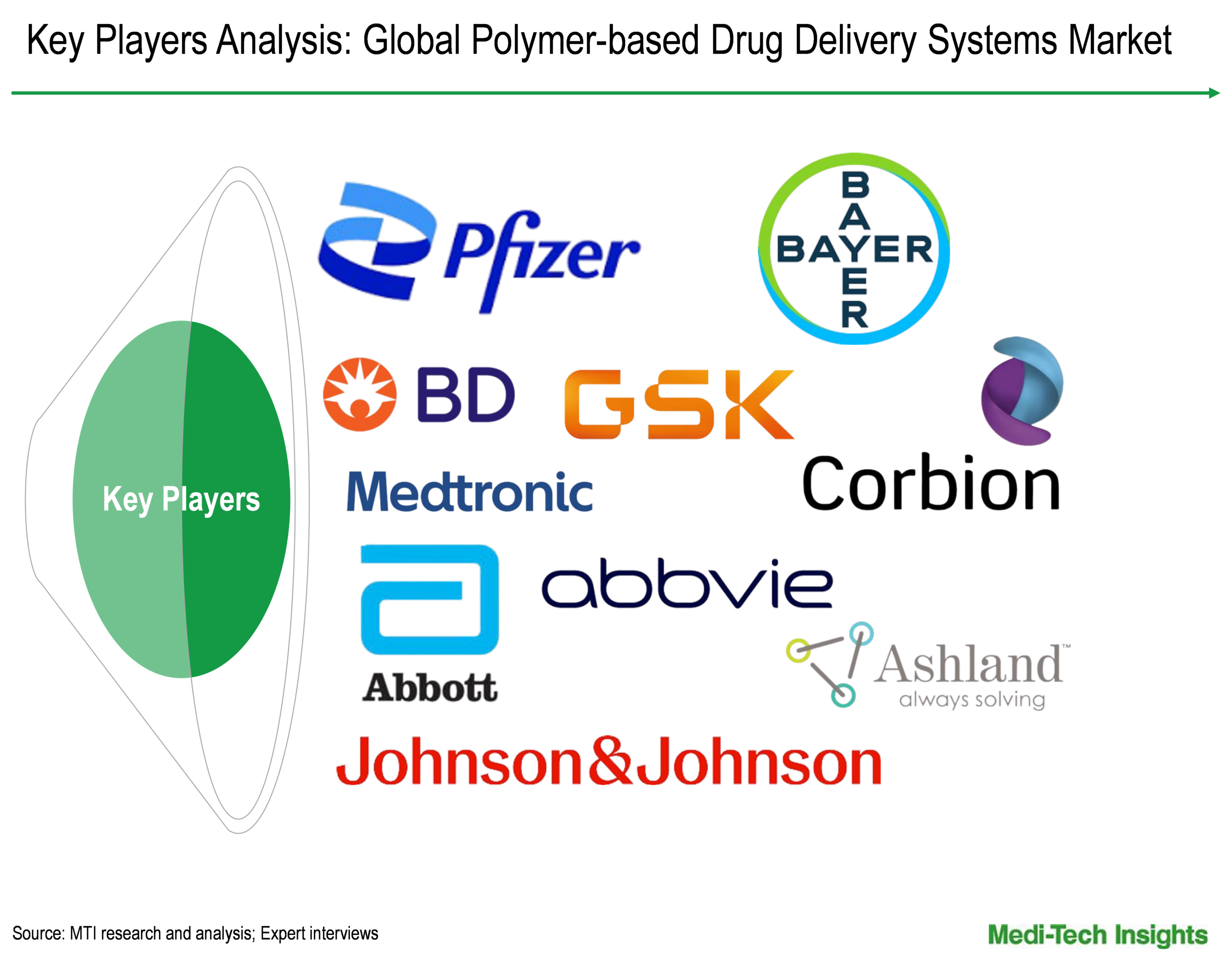
The global polymer-based drug delivery systems market is marked by the presence of established and emerging market players such as
- Becton, Dickinson and Company (US)
- AbbVie Inc. (US)
- Johnson & Johnson (US)
- Medtronic (Ireland)
- Pfizer Inc. (US)
- Abbott (US)
- GSK plc. (UK)
- Bayer AG (Germany)
- Ashland (US)
- Corbion (The Netherlands)
Get a sample report for competitive landscape analysis
Growth strategies adopted by players to establish their foothold in the polymer-based drug delivery systems market
Players operating in this market are adopting various growth strategies such as new product launches and approvals; acquisitions; expansions; and strategic partnerships, agreements, and collaborations, to garner market share. For instance,
- In November 2025, Lupin launched Risperidone for Extended-Release Injectable Suspension in the US with 180-day CGT exclusivity following FDA approval, marking the first commercial product developed using its proprietary PrecisionSphere long-acting injectable platform. The launch validated PrecisionSphere's polymer-based microsphere technology for sustained drug release and strengthens Lupin's position in advanced long-acting injectable drug delivery while supporting future lifecycle management collaborations
- In November 2025, Halozyme Therapeutics acquired Elektrofi to expand its drug delivery portfolio with the proprietary Hypercon ultra-high concentration microparticle formulation technology for biologics, in a deal valued at up to USD 900 million. The acquisition strengthened Halozyme's polymer-based biologic delivery capabilities by enabling highly concentrated injectable formulations, supporting at-home administration, and expanding its long-term royalty-driven drug delivery business
- In November 2025, Curapath entered a co-exclusive licensing agreement with Cristal Therapeutics to integrate the CliCr bioconjugation platform into its polymer and lipid-based drug delivery portfolio. The partnership enables Curapath to exclusively offer the technology as a CDMO for targeted nucleic acid delivery using polymer and lipid nanoparticles, advancing next-generation targeted drug delivery solutions
Report Scope
|
Report Metric |
Details |
|
Base Year Considered |
2025 |
|
Historical Data |
2024 – 2025 |
|
Forecast Period |
2026 – 2031 |
|
Growth Rate |
7% |
|
Segment Scope |
Route of Administration, Polymer Type, Drug Type, Application, and End User |
|
Regional Scope |
|
|
Market Drivers |
|
|
Attractive Opportunities |
|
|
Key Companies Mapped |
Becton, Dickinson and Company (US); AbbVie Inc. (US); Johnson & Johnson (US); Medtronic (Ireland); Pfizer Inc. (US); Abbott (US); GSK plc. (UK); Bayer AG (Germany); Ashland (US); and Corbion (The Netherlands), among others |
|
Report Highlights |
Market Size & Forecast, Growth Drivers & Restraints, Trends, Competitive Analysis |
Global Polymer-based Drug Delivery Systems Market Segmentation
This report by Medi-Tech Insights provides the size of the global polymer-based drug delivery systems market at the regional and country-level from 2024 to 2031. The report further segments the market by route of administration, polymer type, drug type, application, and end user.
Market Size & Forecast (2024-2031), By Route of Administration, USD Billion
- Oral
- Injectable
- Transdermal
- Topical
- Ophthalmic
- Nasal
- Pulmonary
- Other Routes of Administration
Market Size & Forecast (2024-2031), By Polymer Type, USD Billion
- Natural Polymers
- Chitosan
- Alginate
- Gelatine
- Hyaluronic Acid
- Other Natural Polymers
- Synthetic Polymers
- Poly Lactic-Co-Glycolic Acid (PLGA)
- Poly Lactic Acid (PLA)
- Polyethylene Glycol (PEG)
- Polyvinyl Alcohol (PVA)
- Other Synthetic Polymers
- Other Polymer Types
Market Size & Forecast (2024-2031), By Drug Type, USD Billion
- Small Molecules
- Biologics
- Vaccines
- Other Drug Types
Market Size & Forecast (2024-2031), By Application, USD Billion
- Oncology
- Cardiovascular Diseases
- Diabetes
- Infectious Diseases
- Neurological Disorders
- Autoimmune Diseases
Market Size & Forecast (2024-2031), By End User, USD Billion
- Hospitals
- Specialty Clinics
- Ambulatory Surgical Centers (ASCs)
- Home Care Settings
- Other End Users
Market Size & Forecast (2024-2031), By Region, USD Billion
- North America
- US
- Canada
- Europe
- UK
- Germany
- France
- Italy
- Spain
- Rest of Europe
- Asia Pacific
- China
- India
- Japan
- Rest of Asia Pacific
- Latin America
- Middle East & Africa
Related reports for reference-
- Introduction
- Introduction
- Market Scope
- Market Definition
- Segments Covered
- Regional Segmentation
- Research Timeframe
- Currency Considered
- Study Limitations
- Stakeholders
- List of Abbreviations
- Key Conferences and Events (2026-2027)
- Research Methodology
- Secondary Research
- Primary Research
- Market Estimation
- Bottom-Up Approach
- Top-Down Approach
- Market Forecasting
- Executive Summary
- Polymer-based Drug Delivery Systems Market Snapshot (2026-2031)
- Segment Overview
- Regional Snapshot
- Competitive Insights
- Market Overview
- Market Dynamics
- Drivers
- Rising burden of chronic diseases
- Growing demand for controlled and targeted drug delivery
- Rapid growth of biologics and complex therapeutics
- Advancements in polymer science and nanotechnology
- Expanding pharmaceutical R&D investments
- Restraints
- High development and manufacturing costs
- Stringent regulatory requirements
- Complex manufacturing and scale-up challenges
- Limited stability for certain polymer formulations
- Opportunities
- Expansion of personalized medicine
- Growing adoption of long-acting injectable therapies
- Increasing applications in gene and nucleic acid delivery
- Growth in implantable drug delivery systems
- AI-driven polymer design and digital formulation development
- Key Market Trends
- Increasing adoption of biodegradable and bioabsorbable polymers
- Growth of smart polymer systems
- Expansion of polymeric nanoparticle technologies
- Rising popularity of long-acting depot formulations
- Unmet Market Needs
- Industry Speaks
- Drivers
- Market Dynamics
- Global Polymer-based Drug Delivery Systems Market Size & Forecast (2024-2031), By Route of Administration, USD Billion
- Introduction
- Oral
- Injectable
- Transdermal
- Topical
- Ophthalmic
- Nasal
- Pulmonary
- Other Routes of Administration
- Global Polymer-based Drug Delivery Systems Market Size & Forecast (2024-2031), By Polymer Type, USD Billion
- Introduction
- Natural Polymers
- Chitosan
- Alginate
- Gelatine
- Hyaluronic Acid
- Other Natural Polymers
- Synthetic Polymers
- Poly(Lactic-Co-Glycolic Acid) (PLGA)
- Poly(Lactic Acid) (PLA)
- Polyethylene Glycol (PEG)
- Polyvinyl Alcohol (PVA)
- Other Synthetic Polymers
- Global Polymer-based Drug Delivery Systems Market Size & Forecast (2024-2031), By Drug Type, USD Billion
- Introduction
- Small Molecules
- Biologics
- Vaccines
- Other Drug Types
- Global Polymer-based Drug Delivery Systems Market Size & Forecast (2024-2031), By Application, USD Billion
- Introduction
- Oncology
- Cardiovascular Diseases
- Diabetes
- Infectious Diseases
- Neurological Disorders
- Autoimmune Diseases
- Other Applications
- Global Polymer-based Drug Delivery Systems Market Size & Forecast (2024-2031), By End User, USD Billion
- Introduction
- Hospitals
- Specialty Clinics
- Ambulatory Surgical Centers (ASCs)
- Home Care Settings
- Other End Users
- Global Polymer-based Drug Delivery Systems Market Size & Forecast (2024-2031), By Region, USD Billion
- Introduction
- North America Polymer-based Drug Delivery Systems Market Size & Forecast (2024-2031), By Country, USD Billion
- US
- Market Size & Forecast, By Route of Administration (USD Billion)
- Market Size & Forecast, By Polymer Type (USD Billion)
- Market Size & Forecast, By Drug Type (USD Billion)
- Market Size & Forecast, By Application (USD Billion)
- Market Size & Forecast, By End User (USD Billion)
- Canada
- Market Size & Forecast, By Route of Administration (USD Billion)
- Market Size & Forecast, By Polymer Type (USD Billion)
- Market Size & Forecast, By Drug Type (USD Billion)
- Market Size & Forecast, By Application (USD Billion)
- Market Size & Forecast, By End User (USD Billion)
- US
- Europe Polymer-based Drug Delivery Systems Market Size & Forecast (2024-2031), By Country, USD Billion
- UK
- Market Size & Forecast, By Route of Administration (USD Billion)
- Market Size & Forecast, By Polymer Type (USD Billion)
- Market Size & Forecast, By Drug Type (USD Billion)
- Market Size & Forecast, By Application (USD Billion)
- Market Size & Forecast, By End User (USD Billion)
- Germany
- Market Size & Forecast, By Route of Administration (USD Billion)
- Market Size & Forecast, By Polymer Type (USD Billion)
- Market Size & Forecast, By Drug Type (USD Billion)
- Market Size & Forecast, By Application (USD Billion)
- Market Size & Forecast, By End User (USD Billion)
- France
- Market Size & Forecast, By Route of Administration (USD Billion)
- Market Size & Forecast, By Polymer Type (USD Billion)
- Market Size & Forecast, By Drug Type (USD Billion)
- Market Size & Forecast, By Application (USD Billion)
- Market Size & Forecast, By End User (USD Billion)
- Italy
- Market Size & Forecast, By Route of Administration (USD Billion)
- Market Size & Forecast, By Polymer Type (USD Billion)
- Market Size & Forecast, By Drug Type (USD Billion)
- Market Size & Forecast, By Application (USD Billion)
- Market Size & Forecast, By End User (USD Billion)
- Spain
- Market Size & Forecast, By Route of Administration (USD Billion)
- Market Size & Forecast, By Polymer Type (USD Billion)
- Market Size & Forecast, By Drug Type (USD Billion)
- Market Size & Forecast, By Application (USD Billion)
- Market Size & Forecast, By End User (USD Billion)
- Rest of Europe
- Market Size & Forecast, By Route of Administration (USD Billion)
- Market Size & Forecast, By Polymer Type (USD Billion)
- Market Size & Forecast, By Drug Type (USD Billion)
- Market Size & Forecast, By Application (USD Billion)
- Market Size & Forecast, By End User (USD Billion)
- UK
- Asia Pacific (APAC) Polymer-based Drug Delivery Systems Market Size & Forecast (2024-2031), By Country, USD Billion
- China
- Market Size & Forecast, By Route of Administration (USD Billion)
- Market Size & Forecast, By Polymer Type (USD Billion)
- Market Size & Forecast, By Drug Type (USD Billion)
- Market Size & Forecast, By Application (USD Billion)
- Market Size & Forecast, By End User (USD Billion)
- Japan
- Market Size & Forecast, By Route of Administration (USD Billion)
- Market Size & Forecast, By Polymer Type (USD Billion)
- Market Size & Forecast, By Drug Type (USD Billion)
- Market Size & Forecast, By Application (USD Billion)
- Market Size & Forecast, By End User (USD Billion)
- India
- Market Size & Forecast, By Route of Administration (USD Billion)
- Market Size & Forecast, By Polymer Type (USD Billion)
- Market Size & Forecast, By Drug Type (USD Billion)
- Market Size & Forecast, By Application (USD Billion)
- Market Size & Forecast, By End User (USD Billion)
- Rest of Asia Pacific
- Market Size & Forecast, By Route of Administration (USD Billion)
- Market Size & Forecast, By Polymer Type (USD Billion)
- Market Size & Forecast, By Drug Type (USD Billion)
- Market Size & Forecast, By Application (USD Billion)
- Market Size & Forecast, By End User (USD Billion)
- China
- Latin America (LATAM) Polymer-based Drug Delivery Systems Market Size & Forecast (2024-2031), USD Billion
- Market Size & Forecast, By Route of Administration (USD Billion)
- Market Size & Forecast, By Polymer Type (USD Billion)
- Market Size & Forecast, By Drug Type (USD Billion)
- Market Size & Forecast, By Application (USD Billion)
- Market Size & Forecast, By End User (USD Billion)
- Middle East & Africa (MEA) Polymer-based Drug Delivery Systems Market Size & Forecast (2024-2031), USD Billion
- Market Size & Forecast, By Route of Administration (USD Billion)
- Market Size & Forecast, By Polymer Type (USD Billion)
- Market Size & Forecast, By Drug Type (USD Billion)
- Market Size & Forecast, By Application (USD Billion)
- Market Size & Forecast, By End User (USD Billion)
- Competitive Landscape
- Key Players and their Competitive Positioning
- Key Player Comparison
- Segment-wise Player Mapping
- Market Share Analysis (2025)
- Company Categorization Matrix
- Dominants/Leaders
- New Entrants
- Emerging Players
- Innovative Players
- Key Strategies Assessment, By Player (2023-2026)
- New Product Launch
- Partnerships, Agreements, & Collaborations
- Mergers & Acquisitions
- Geographic Expansion
- Key Players and their Competitive Positioning
- Company Profiles*
(Business Overview, Financial Performance**, Products Offered, Recent Developments)
- Becton, Dickinson and Company
- AbbVie Inc.
- Johnson & Johnson
- Medtronic
- Pfizer Inc.
- Abbott
- GSK plc.
- Bayer AG
- Ashland
- Corbion
- Other Prominent Players
The study has been compiled based on extensive primary and secondary research.
Secondary Research (Indicative List)

Primary Research
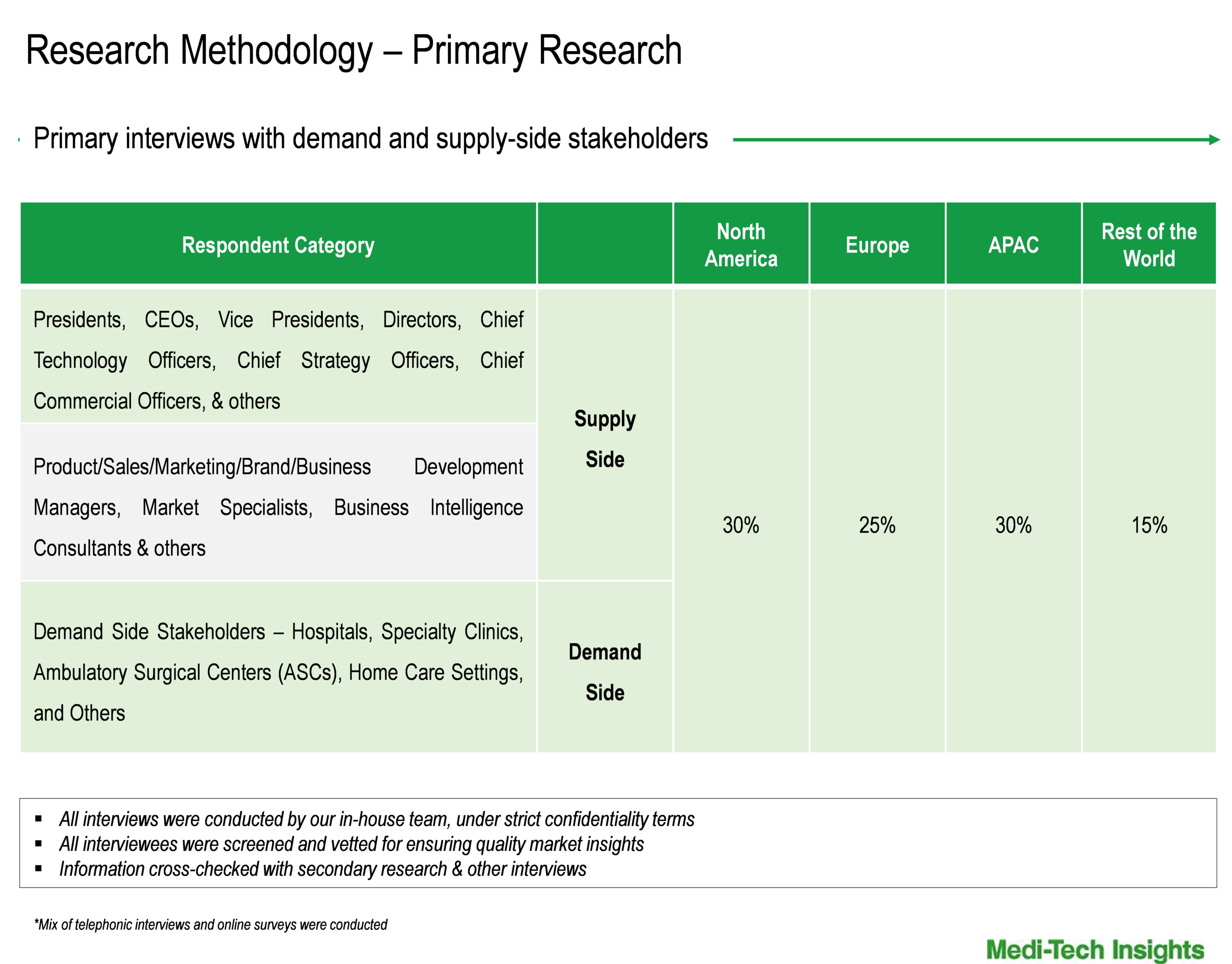
To validate research findings (market size & forecasts, market segmentation, market dynamics, competitive landscape, key industry trends, etc.), extensive primary interviews were conducted with both supply and demand-side stakeholders.
Supply Side Stakeholders:
- Senior Management Level: CEOs, Presidents, Vice-Presidents, Directors, Chief Technology Officers, Chief Commercial Officers
- Mid-Management Level: Product Managers, Sales Managers, Brand Managers, R&D Managers, Business Development Managers, Consultants
Demand Side Stakeholders:
- Hospitals, Specialty Clinics, Ambulatory Surgical Centers (ASCs), Home Care Settings, and Others
Breakdown of Primary Interviews
Market Size Estimation
Both ‘Top-Down & Bottom-Up Approaches’ were used to derive market size estimates and forecasts
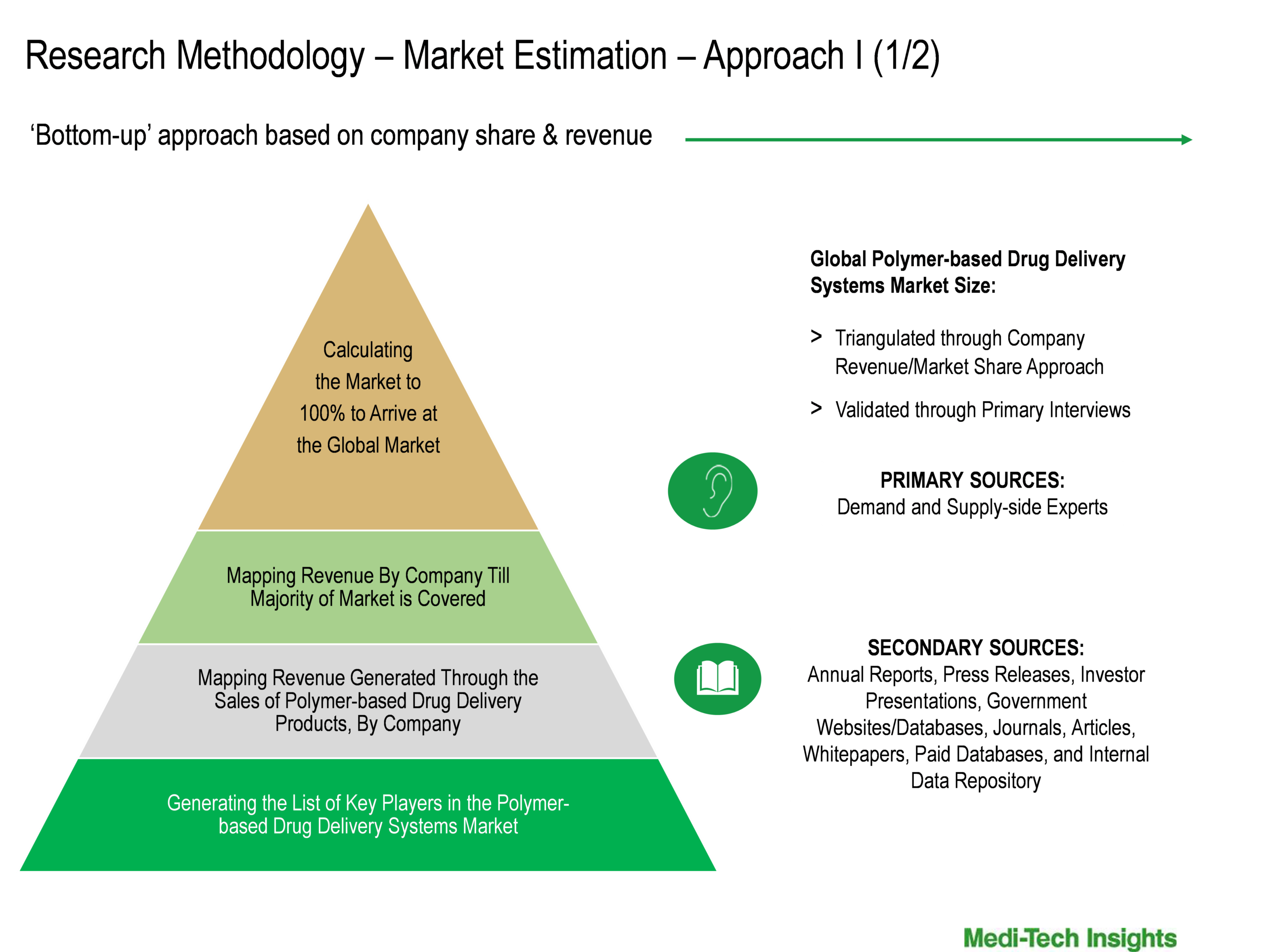
To learn more about this report, download the PDF brochure
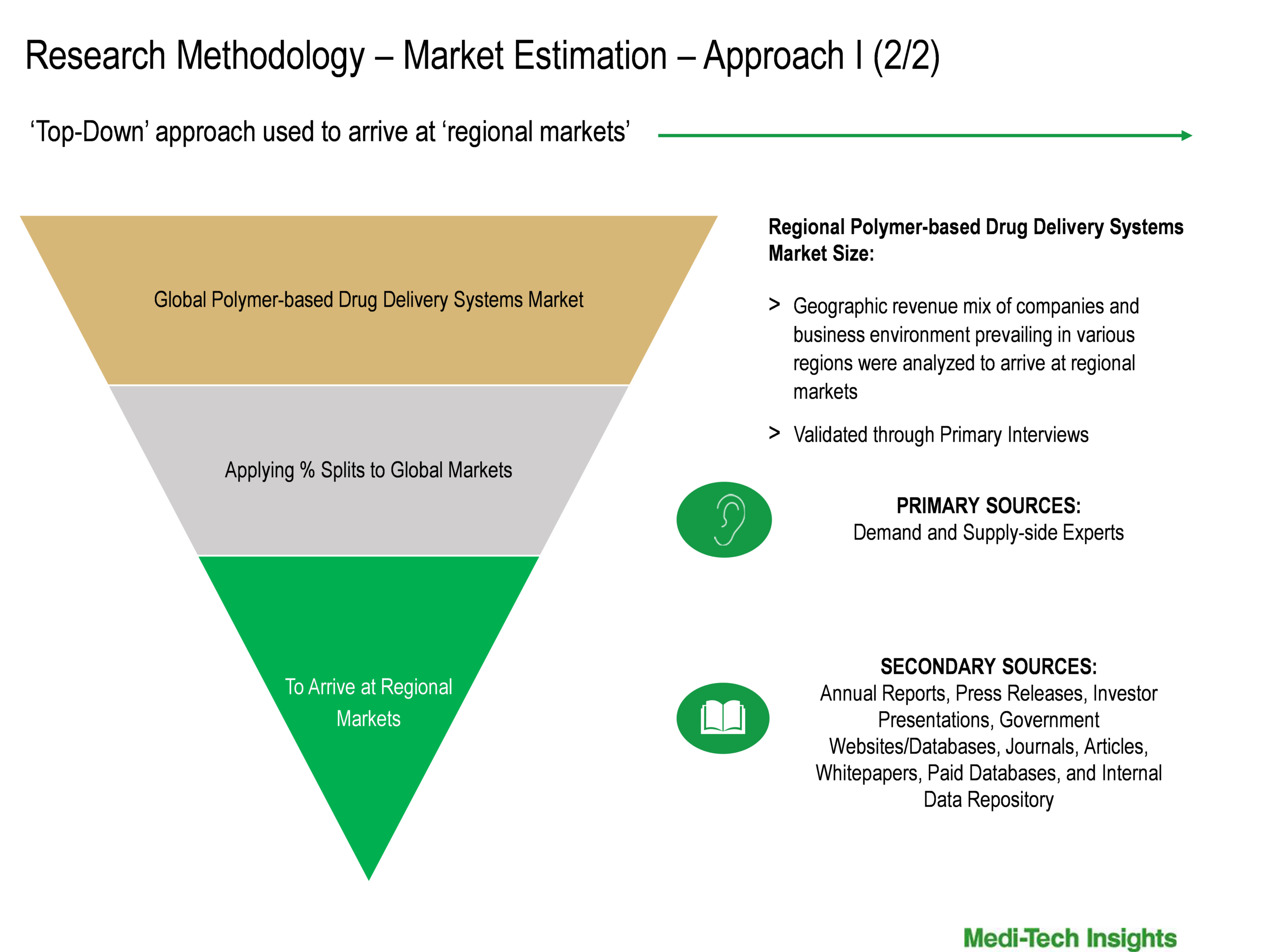
Data Triangulation
Research findings derived through secondary sources & internal analysis was validated with Primary Interviews, Internal Knowledge Repository and Company’s Sales Data
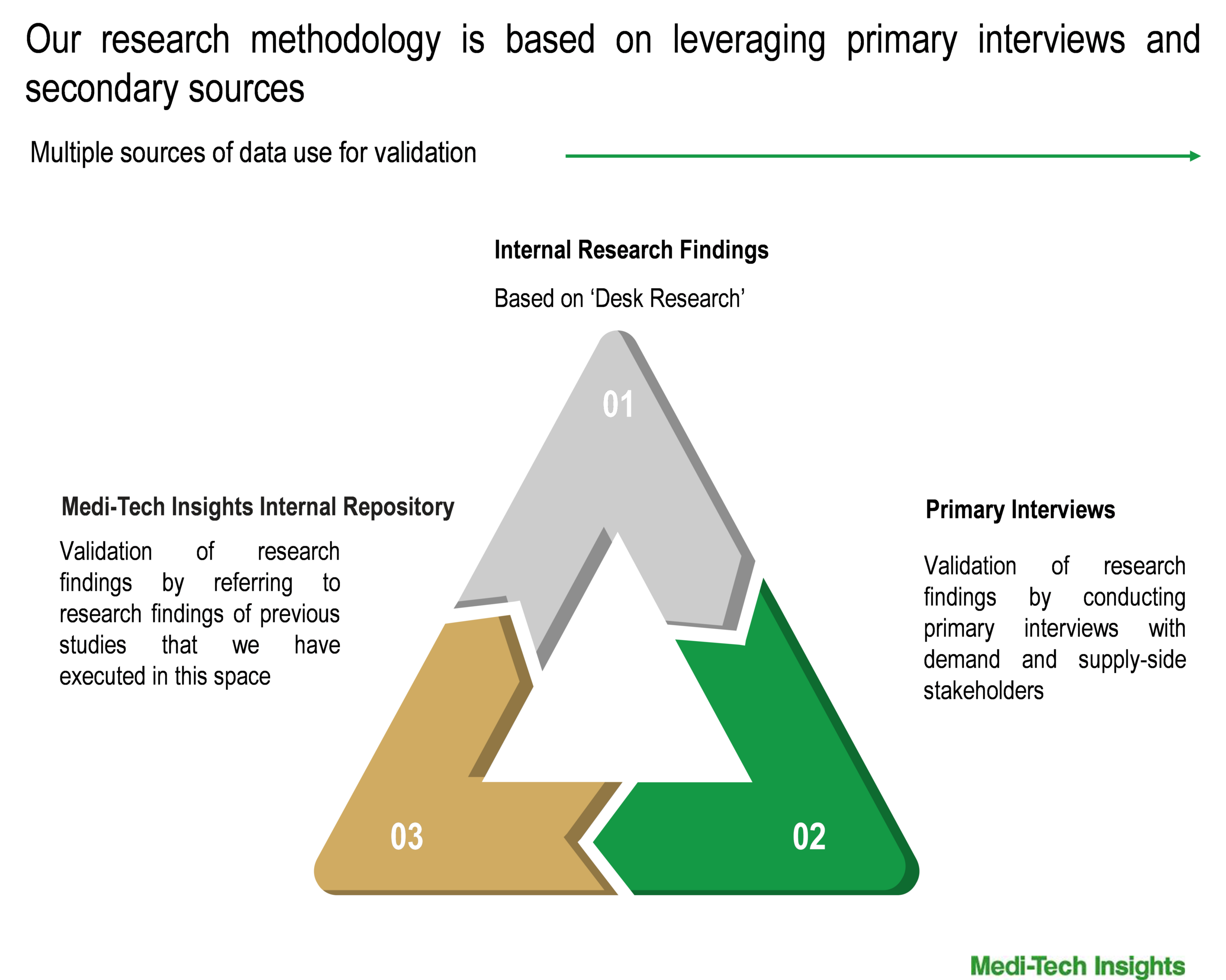
Frequently Asked Questions (FAQs)
Features of the Report
- Comprehensive Market Coverage
- Market Size and Forecast
- Geographic & Segment Deep Dives
- Strategic Insights & Competitive Landscape
- Timely & Updated Data
- Growth Indicators & Future Outlook
- Quick Turnaround on Queries
- Analyst Support
- Report Customization Available
- Reports in PDF & Excel
