

Global Prenatal and Newborn Genetic Testing Market Size Report Segmented by Offering (Instruments, Consumables, Services), Testing Stage (Prenatal, Newborn), Application (Trisomies, Carrier Screening, Microdeletions) End-user (Hospitals, Maternity/Specialty Clinics) & Regional Forecast to 2031
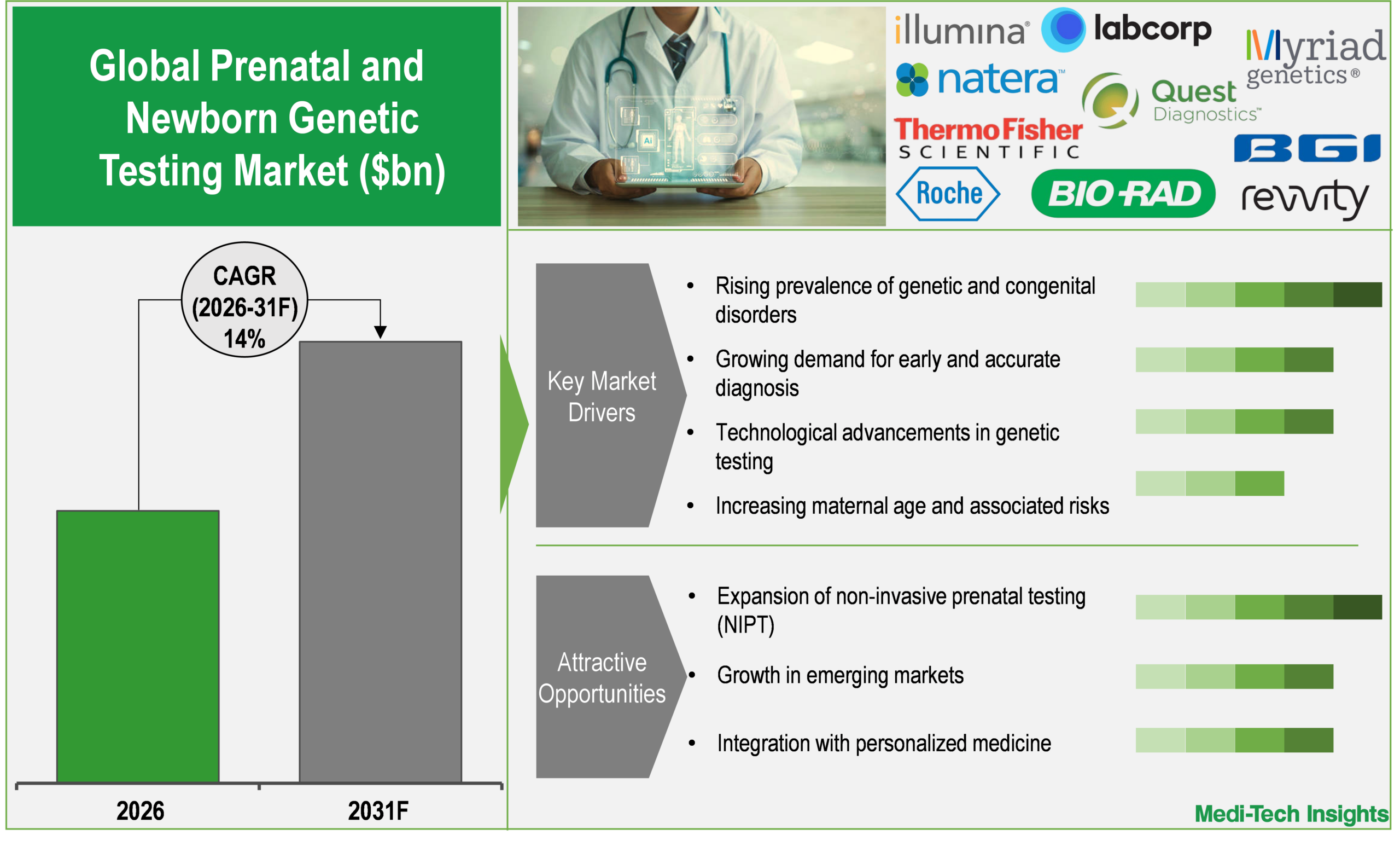
The global prenatal and newborn genetic testing market size is set to witness a growth rate of 14% in the next 5 years. Rising prevalence of genetic and congenital disorders, growing demand for early and accurate diagnosis, technological advancements in genetic testing, increasing maternal age and associated risks, rising awareness and education, and favorable government initiatives and policies are some of the key factors driving the prenatal and newborn genetic testing market. To learn more about the research report, download a sample report.
Prenatal & newborn testing is the screening & diagnostic methods used to detect genetic, chromosomal, and metabolic disorders before birth or shortly after delivery. Some common examples of prenatal testing include non-invasive testing to determine if a fetus may have genetic conditions like Down Syndrome or other abnormalities. Newborn DNA testing is typically done by using blood tests to screen for inherited metabolic or genetic disorders. Both prenatal and newborn testing enable the ability to intervene medically, make informed clinical decisions and improve health of the fetus/newborn. Advances in genomics & sequencing technology have allowed both prenatal and newborn testing to become more accurate, more widely available and improve their overall accuracy.
Rising prevalence of genetic and congenital disorders to propel market demand
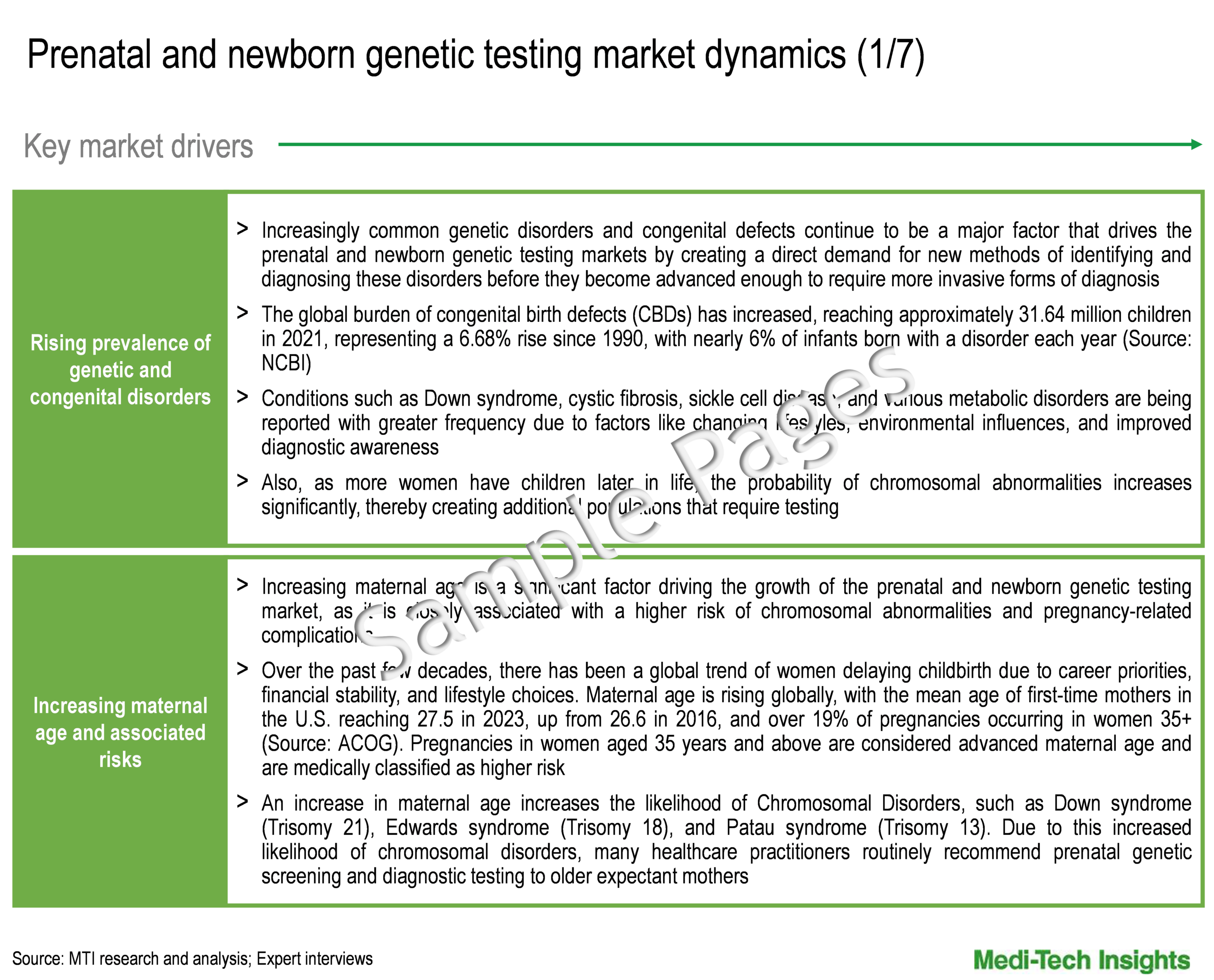
Increasingly common genetic disorders and congenital defects continue to be a major factor that drives the prenatal and newborn genetic testing markets by creating a direct demand for new methods of identifying and diagnosing these disorders before they become advanced enough to require more invasive forms of diagnosis. The global burden of congenital birth defects (CBDs) has increased, reaching approximately 31.64 million children in 2021, representing a 6.68% rise since 1990, with nearly 6% of infants born with a disorder each year (Source: NCBI). Conditions such as Down syndrome, cystic fibrosis, sickle cell disease, and various metabolic disorders are being reported with greater frequency due to factors like changing lifestyles, environmental influences, and improved diagnostic awareness. Also, as more women have children later in life, the probability of chromosomal abnormalities increases significantly, thereby creating additional populations that require testing.
Healthcare systems and/or healthcare providers are placing greater emphasis on early diagnosis to mitigate the long-term burden of disease on society, to improve survival rates, and to reduce the costs associated with healthcare over an extended period. Prenatal genetic testing enables the identification of abnormalities that can impact the course of pregnancy, thereby affording an opportunity for the parents to make informed decisions, prepare medically for possible interventions required, and develop a treatment plan if required before the child is born. Likewise, newborn disease screening programs enable the timely identification of serious but treatable medical conditions in newborns that would otherwise remain undiagnosed until after the irreversible damage has occurred, leading to issues such as developmental delays, potential organ failure, and ultimately death. With the rise in the number of rare genetic diseases, there is an increasing need for more comprehensive and advanced testing options, including expanded panels and newer methods of sequencing tests, as well as greater awareness by parents and providers about routine screening even in low-risk pregnancies. In addition, governments and public health agencies continue to support widespread testing through national newborn screening programs and policy initiatives focused on decreasing infant mortality and morbidity.
In addition, the financial burden of untreated disorders caused by genetics, including lifelong care, hospitalization, and loss of productivity has resulted in healthcare systems investing in early detection technology. This transition to preventive and precision medicine has further established the need for genetic testing as a significant resource in today’s healthcare environment. In conclusion, the growth in demand for genetic and congenital disorder patients has led to increased adoption of sophisticated diagnostic technology, with a significant increase in the market for such technologies.
To learn more about this report, download the PDF brochure
Increasing maternal age and associated risks is driving the market growth
Increasing maternal age is a significant factor driving the growth of the prenatal and newborn genetic testing market, as it is closely associated with a higher risk of chromosomal abnormalities and pregnancy-related complications. Over the past few decades, there has been a global trend of women delaying childbirth due to career priorities, financial stability, and lifestyle choices. Maternal age is rising globally, with the mean age of first-time mothers in the US reaching 27.5 in 2023, up from 26.6 in 2016, and over 19% of pregnancies occurring in women 35+ (Source: ACOG). Pregnancies in women aged 35 years and above are considered advanced maternal age and are medically classified as higher risk.
An increase in maternal age increases the likelihood of Chromosomal Disorders, such as Down syndrome (Trisomy 21), Edwards syndrome (Trisomy 18), and Patau syndrome (Trisomy 13). Due to this increased likelihood of chromosomal disorders, many healthcare practitioners routinely recommend prenatal genetic screening and diagnostic testing to older expectant mothers; therefore, there is a tendency for older expectant mothers to prefer using non-invasive genetic testing methods that provide a safe and accurate way for healthcare providers to determine if an unborn child has a chromosomal abnormality. Besides chromosomal abnormality, advanced maternal age is linked to a higher risk for pregnancy complications such as gestational diabetes, pre-eclampsia, and preterm delivery and those risks combined require increased amounts of prenatal monitoring and screening, generally involving some form of genetic testing which has become a standard practice in obstetrical care. As such, the integration of genetic testing into obstetric care systems is becoming more common in high-risk medical situations.
The rising awareness among women about the reproductive risks associated with their ages is also leading to an increased demand for early and accurate testing options from women. Many women who are about to become mothers want some reassurance when making decisions regarding their pregnancies and the growing number of women who use assisted reproductive technologies (ART), such as preimplantation and prenatal genetic testing, is also driving this growth trend.
Overall, the rise in maternal age globally has created growth in the number of high-risk pregnancies, which in turn has created increased demand for non-invasive, accurate, and early-stage prenatal genetic testing options, thereby driving the growth rate of the global prenatal and newborn genetic testing market.
To learn more about this report, download the PDF brochure
Testing Stage Segment Outlook
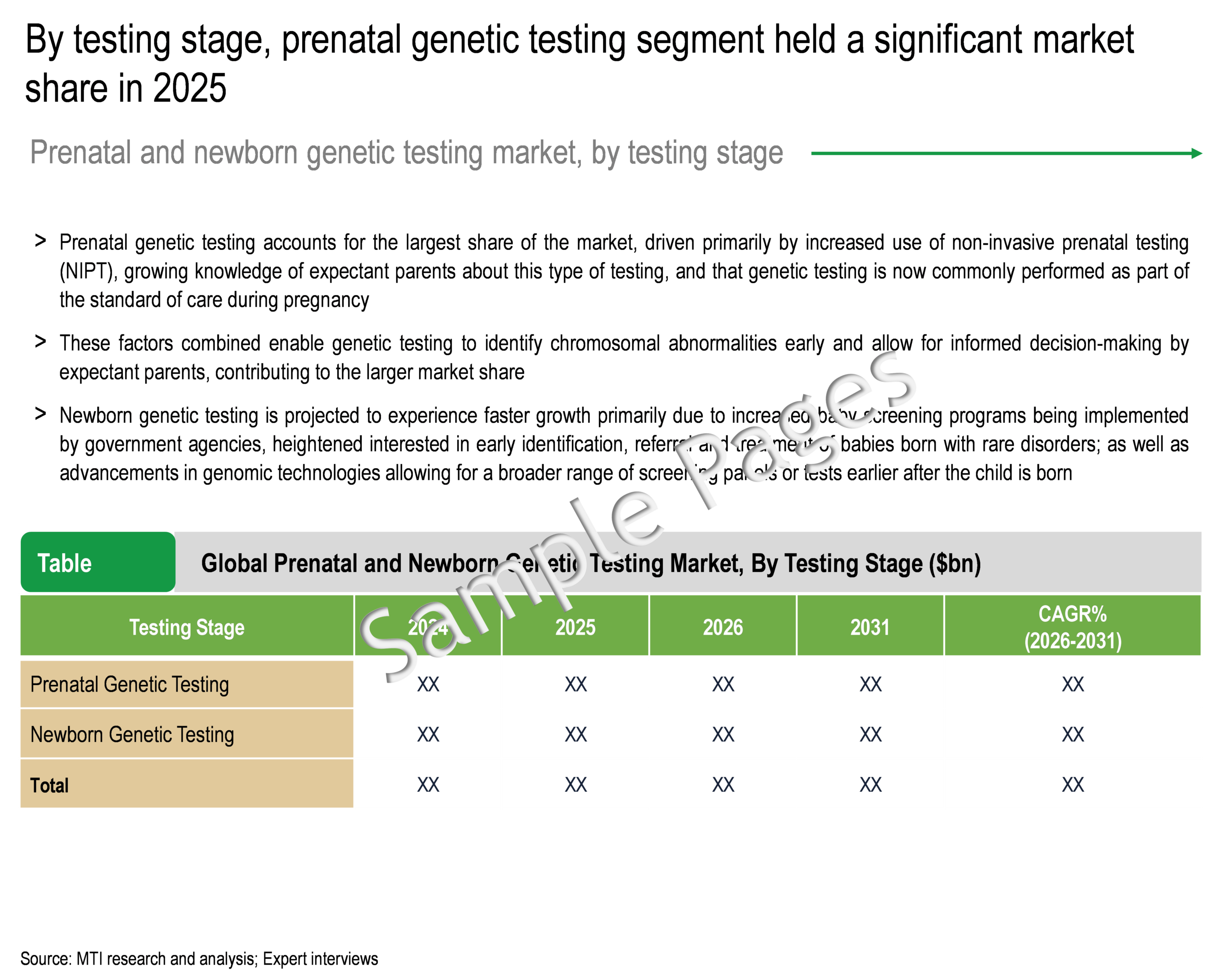
Prenatal genetic testing accounts for the largest share of the market, driven primarily by increased use of non-invasive prenatal testing (NIPT), growing knowledge of expectant parents about this type of testing, and that genetic testing is now commonly performed as part of the standard of care during pregnancy. These factors combined enable genetic testing to identify chromosomal abnormalities early and allow for informed decision-making by expectant parents, contributing to the larger market share. Newborn genetic testing is projected to experience faster growth primarily due to increased baby screening programs being implemented by government agencies, heightened interested in early identification, referral and treatment of babies born with rare disorders; as well as advancements in genomic technologies allowing for a broader range of screening panels or tests earlier after the child is born.
Regional Outlook: High NIPT adoption sustains North America’s lead while expanding screening programs fuel growth in APAC
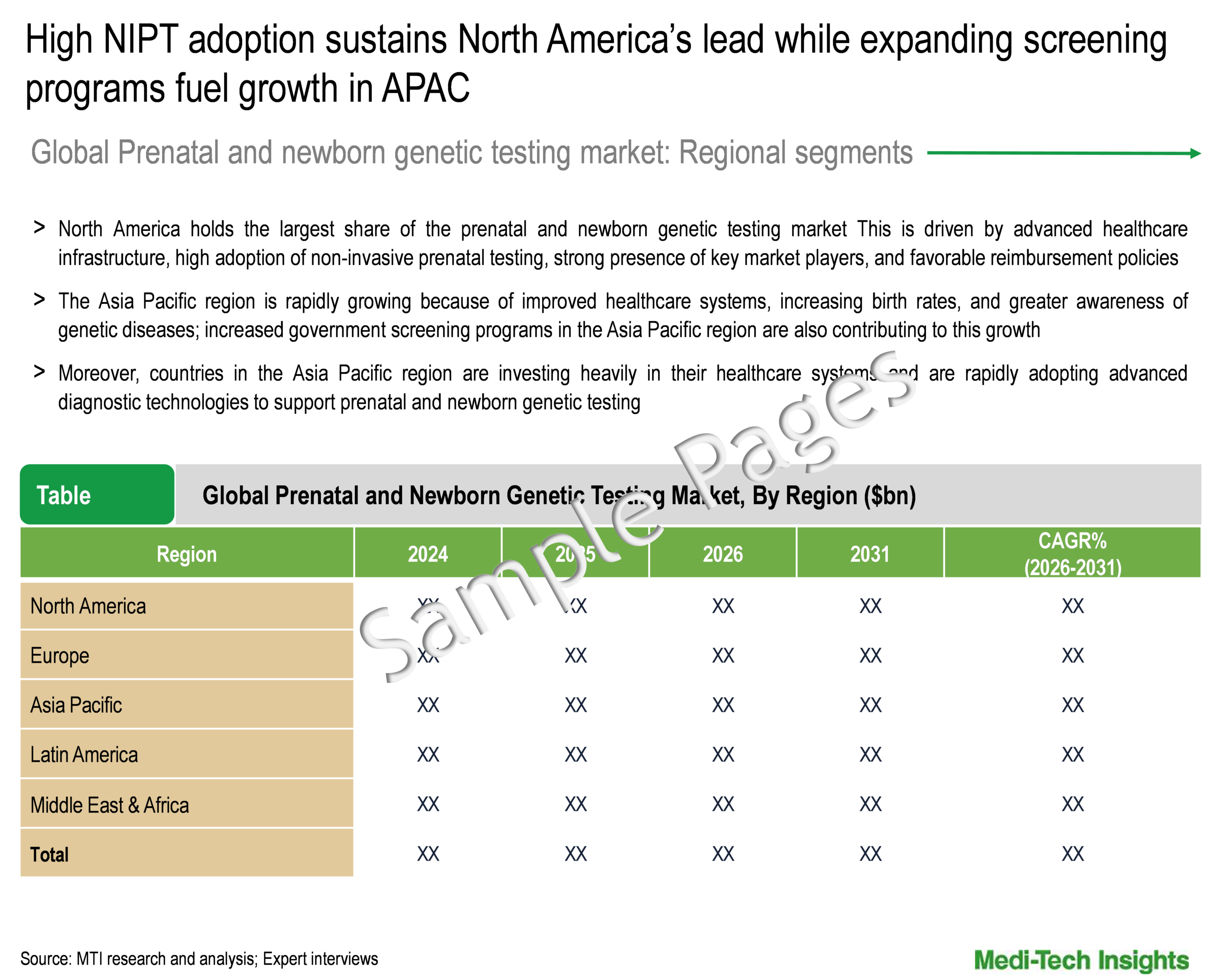
North America holds the largest share of the prenatal and newborn genetic testing market in 2025. This is driven by advanced healthcare infrastructure, high adoption of non-invasive prenatal testing, strong presence of key market players, and favorable reimbursement policies. The Asia Pacific region is rapidly growing due to the improved healthcare systems, increasing birth rates, and greater awareness of genetic diseases as well as increased government screening programs. Moreover, countries in the Asia Pacific region are investing heavily in their healthcare systems and are rapidly adopting advanced diagnostic technologies to support prenatal and newborn genetic testing.
Competitive Landscape Analysis
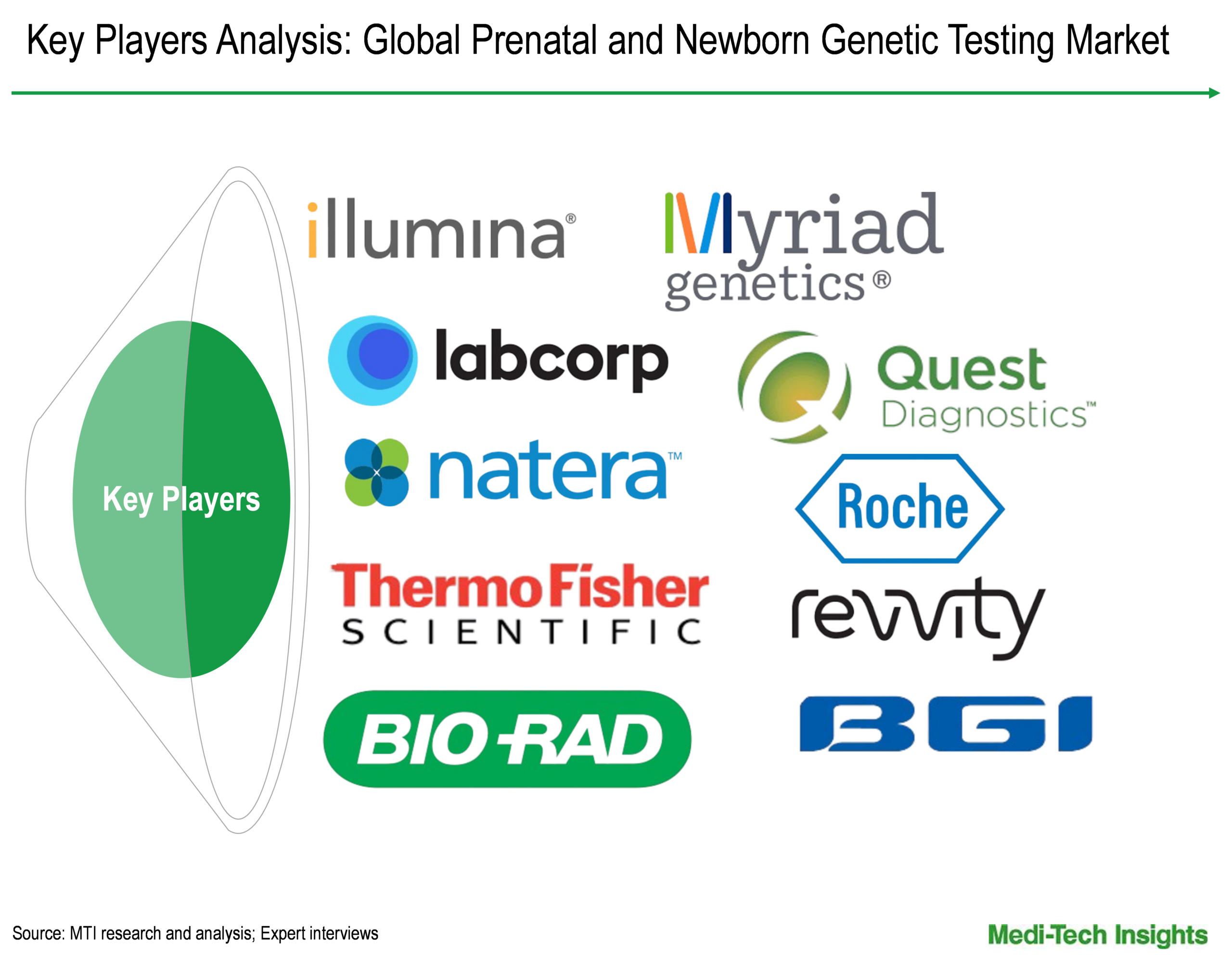
The global prenatal and newborn genetic testing market is marked by the presence of established and emerging market players such as Illumina, Inc. (US); Natera, Inc. (US); Thermo Fisher Scientific Inc. (US); F. Hoffmann-La Roche Ltd (Switzerland); Laboratory Corporation of America Holdings (US); Quest Diagnostics Incorporated (US); Bio-Rad Laboratories, Inc. (US); Revvity (US); BGI (China); and Myriad Genetics, Inc. (US), among others.
Get a sample report for competitive landscape analysis
Growth strategies adopted by players to establish their foothold in the market
Players operating in this market are adopting various growth strategies such as new product and service launches; acquisitions; expansions; and strategic partnerships, agreements, and collaborations, to garner market share. For instance,
- In January 2026, Natera, Inc. launched its expanded 21-gene Fetal Focus single-gene NIPT, powered by LinkedSNP technology to detect a broader range of inherited conditions using maternal blood. The test demonstrated high accuracy in the EXPAND clinical trial, achieving 96% sensitivity and 98% specificity, supporting its use for detecting rare genetic disorders, especially when partner testing is unavailable
- In June 2025, BGI Genomics Co., Ltd. partnered with Prom-Test Laboratories to launch Armenia’s first localized NIPT project, enabling broader access to advanced prenatal screening through local infrastructure. The initiative introduced the NIFTY test with over 99% accuracy for detecting chromosomal abnormalities, aiming to improve early diagnosis, reduce invasive procedures, and strengthen national prenatal healthcare capabilities
- In June 2025, Myriad Genetics, Inc. announced early access to its FirstGene Multiple Prenatal Screen through a large clinical study to validate its clinical utility and expand prenatal testing capabilities. The test combines multiple screening modalities into a single blood test, enabling comprehensive fetal and maternal genetic risk assessment without paternal samples, with high accuracy exceeding 98% sensitivity and 99% specificity
- In July 2023, MedGenome acquired the NovaSeq X Plus from Illumina, Inc. and launched KaryoSeq, a whole genome sequencing test for prenatal and newborn genetic conditions in South Asia. The platform enhances detection of chromosomal abnormalities with higher accuracy and faster turnaround, while reducing sequencing costs and improving accessibility of advanced genetic diagnostics in the region
Report Scope
|
Report Metric |
Details |
|
Base Year Considered |
2025 |
|
Historical Data |
2024 – 2025 |
|
Forecast Period |
2026 – 2031 |
|
Growth Rate |
14% |
|
Segment Scope |
Offering, Testing Stage, Testing Method, Application, End User |
|
Regional Scope |
|
|
Market Drivers |
|
|
Attractive Opportunities |
|
|
Key Companies Mapped |
Illumina, Inc. (US); Natera, Inc. (US); Thermo Fisher Scientific Inc. (US); F. Hoffmann-La Roche Ltd (Switzerland); Laboratory Corporation of America Holdings (US); Quest Diagnostics Incorporated (US); Bio-Rad Laboratories, Inc. (US); Revvity (US); BGI (China); and Myriad Genetics, Inc. (US); among others |
|
Report Highlights |
Market Size & Forecast, Growth Drivers & Restraints, Trends, Competitive Analysis |
Global Prenatal and Newborn Genetic Testing Market Segmentation
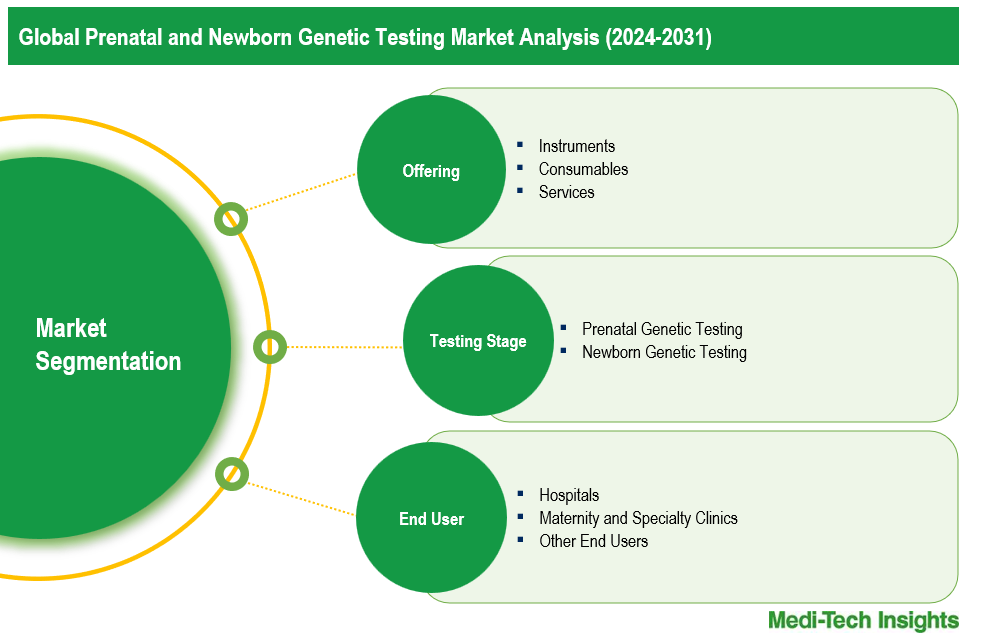
This report by Medi-Tech Insights provides the size of the global prenatal and newborn genetic testing market at the regional- and country-level from 2024 to 2031. The report further segments the market based on offering, testing stage, testing method, application, and end user.
Market Size & Forecast (2024-2031), By Offering, USD Billion
- Instruments
- Consumables
- Services
Market Size & Forecast (2024-2031), By Testing Stage, USD Billion
- Prenatal Genetic Testing
- Newborn Genetic Testing
Market Size & Forecast (2024-2031), By Testing Method, USD Billion
- Prenatal Testing Methods
- Non-Invasive Prenatal Testing (NIPT)
- Invasive Diagnostic Testing Methods
- Amniocentesis
- Chorionic Villus Sampling
- Other Invasive Diagnostic Testing Methods
- Newborn Testing Methods
- Dried Blood Spot (DBS)
- Molecular Newborn Screening
- Other Newborn Testing Methods
Market Size & Forecast (2024-2031), By Application, USD Billion
- Prenatal Application
- Trisomies
- Down Syndrome (Trisomy 21)
- Edwards Syndrome (Trisomy 18)
- Patau Syndrome (Trisomy 13)
- Sex Chromosome Abnormalities
- Prenatal Carrier Screening
- Microdeletions
- Other Prenatal Applications
- Trisomies
- Newborn Applications
- Metabolic Disorders
- Endocrine Disorders
- Genetic Syndromes
- Other Newborn Applications
Market Size & Forecast (2024-2031), By End User, USD Billion
- Hospitals
- Maternity and Specialty Clinics
- Other End Users
Market Size & Forecast (2024-2031), By Region, USD Billion
- North America
- US
- Canada
- Europe
- UK
- Germany
- France
- Italy
- Spain
- Rest of Europe
- Asia Pacific
- China
- India
- Japan
- Rest of Asia Pacific
- Latin America
- Middle East & Africa
- Introduction
- Introduction
- Market Scope
- Market Definition
- Segments Covered
- Regional Segmentation
- Research Timeframe
- Currency Considered
- Study Limitations
- Stakeholders
- List of Abbreviations
- Key Conferences and Events (2026-2027)
- Research Methodology
- Secondary Research
- Primary Research
- Market Estimation
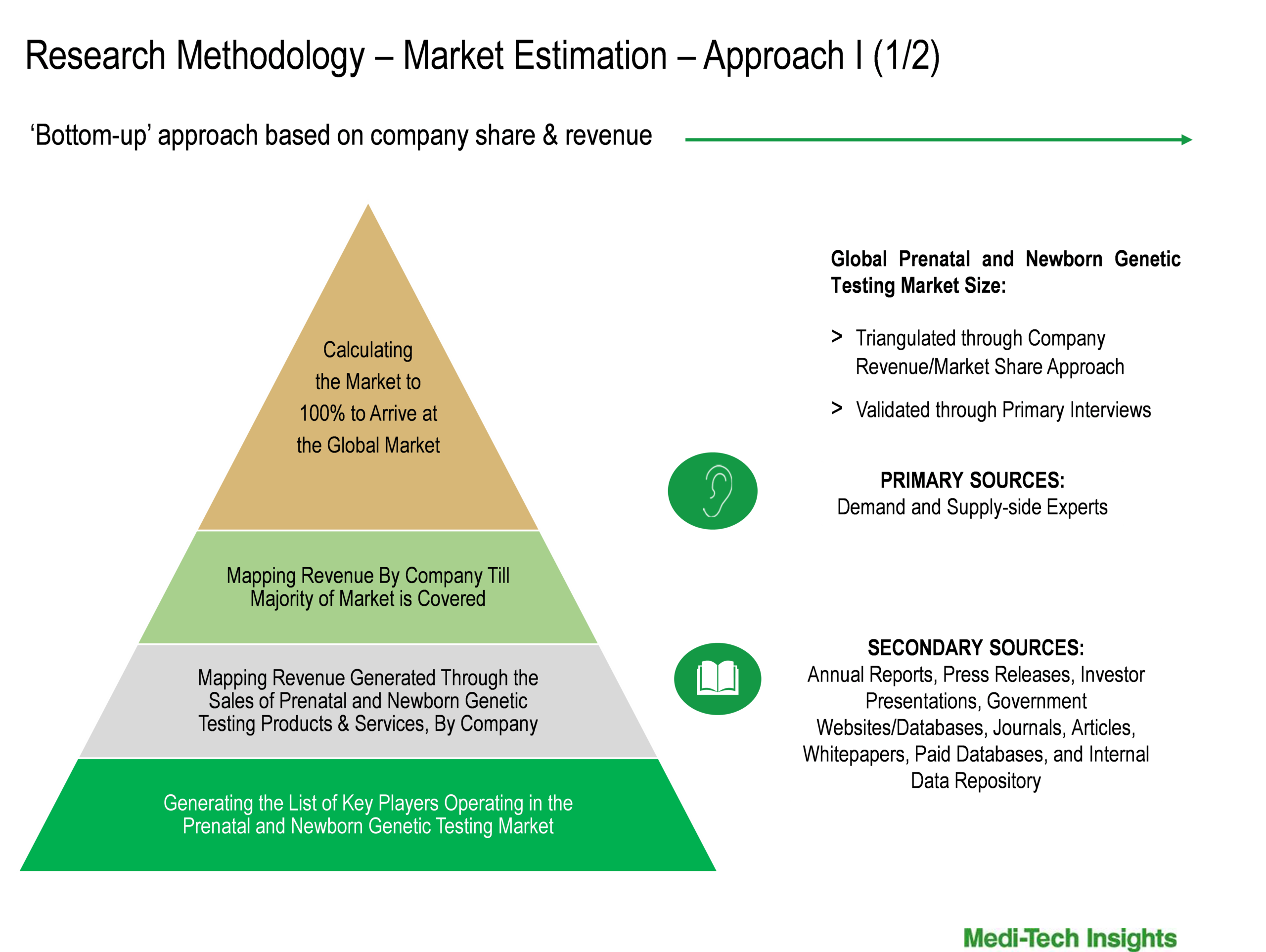
- Bottom-Up Approach
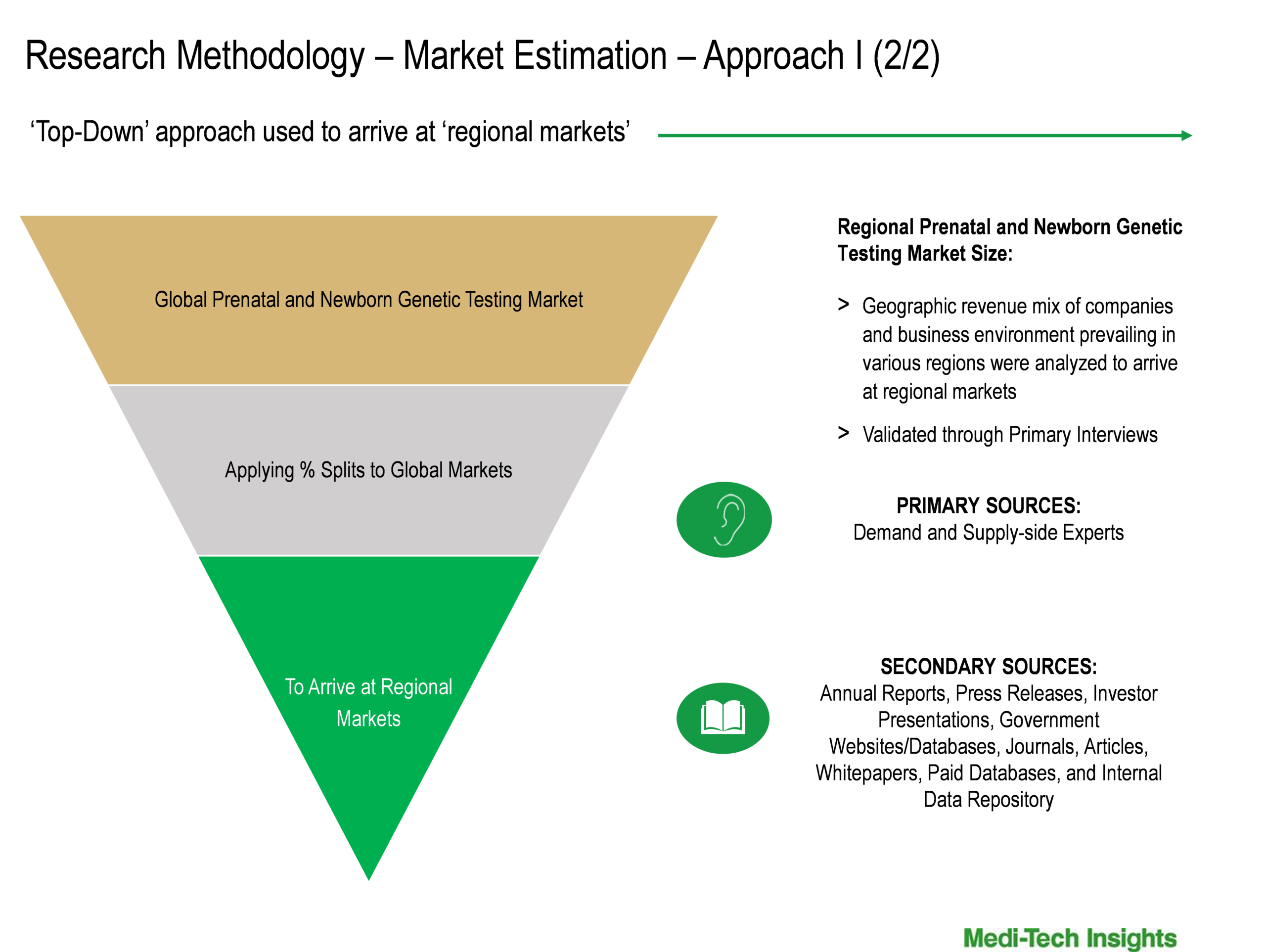
- Top-Down Approach
- Market Forecasting
- Executive Summary
- Prenatal and Newborn Genetic Testing Market Snapshot (2026-2031)
- Segment Overview
- Regional Snapshot
- Competitive Insights
- Market Overview
- Market Dynamics
- Drivers
- Rising prevalence of genetic and congenital disorders
- Growing demand for early and accurate diagnosis
- Technological advancements in genetic testing
- Increasing maternal age and associated risks
- Rising awareness and education
- Favorable government initiatives and policies
- Restraints
- High cost of advanced genetic tests
- Limited reimbursement coverage
- Lack of infrastructure in emerging markets
- Ethical and social concerns
- Opportunities
- Expansion of non-invasive prenatal testing (NIPT)
- Growth in emerging markets
- Integration with personalized medicine
- Advancements in genomics and AI
- Expansion of newborn screening programs
- Key Market Trends
- Increasing adoption of next-generation sequencing
- Integration into routine prenatal and neonatal care
- Expansion of test panels
- Growth of service-based models
- Unmet Market Needs
- Industry Speaks
- Drivers
- Market Dynamics
- Global Prenatal and Newborn Genetic Testing Market Size & Forecast (2024-2031), By Offering, USD Billion
- Introduction
- Instruments
- Consumables
- Services
- Global Prenatal and Newborn Genetic Testing Market Size & Forecast (2024-2031), By Testing Stage, USD Billion
- Introduction
- Prenatal Genetic Testing
- Newborn Genetic Testing
- Global Prenatal and Newborn Genetic Testing Market Size & Forecast (2024-2031), By Testing Method, USD Billion
- Introduction
- Prenatal Testing Methods
- Non-Invasive Prenatal Testing (NIPT)
- Invasive Diagnostic Testing Methods
- Amniocentesis
- Chorionic Villus Sampling
- Other Invasive Diagnostic Testing Methods
- Newborn Testing Methods
- Dried Blood Spot (DBS)
- Molecular Newborn Screening
- Other Newborn Testing Methods
- Global Prenatal and Newborn Genetic Testing Market Size & Forecast (2024-2031), By Application, USD Billion
- Introduction
- Prenatal Applications
- Trisomies
- Down Syndrome (Trisomy 21)
- Edwards Syndrome (Trisomy 18)
- Patau Syndrome (Trisomy 13)
- Sex Chromosome Abnormalities
- Prenatal Carrier Screening
- Microdeletions
- Other Prenatal Applications
- Trisomies
- Newborn Applications
- Metabolic Disorders
- Endocrine Disorders
- Genetic Syndromes
- Other Newborn Applications
- Global Prenatal and Newborn Genetic Testing Market Size & Forecast (2024-2031), By End User, USD Billion
- Introduction
- Hospitals
- Maternity and Specialty Clinics
- Other End Users
- Global Prenatal and Newborn Genetic Testing Market Size & Forecast (2024-2031), By Region, USD Billion
- Introduction
- North America Prenatal and Newborn Genetic Testing Market Size & Forecast (2024-2031), By Country, USD Billion
- US
- Market Size & Forecast, By Offering, (USD Billion)
- Market Size & Forecast, By Testing Stage, (USD Billion)
- Market Size & Forecast, By Testing Method, (USD Billion)
- Market Size & Forecast, By Application, (USD Billion)
- Market Size & Forecast, By End User, (USD Billion)
- Canada
- Market Size & Forecast, By Offering, (USD Billion)
- Market Size & Forecast, By Testing Stage, (USD Billion)
- Market Size & Forecast, By Testing Method, (USD Billion)
- Market Size & Forecast, By Application, (USD Billion)
- Market Size & Forecast, By End User, (USD Billion))
- US
- Europe Prenatal and Newborn Genetic Testing Market Size & Forecast (2024-2031), By Country, USD Billion
- UK
- Market Size & Forecast, By Offering, (USD Billion)
- Market Size & Forecast, By Testing Stage, (USD Billion)
- Market Size & Forecast, By Testing Method, (USD Billion)
- Market Size & Forecast, By Application, (USD Billion)
- Market Size & Forecast, By End User, (USD Billion)
- Germany
- Market Size & Forecast, By Offering, (USD Billion)
- Market Size & Forecast, By Testing Stage, (USD Billion)
- Market Size & Forecast, By Testing Method, (USD Billion)
- Market Size & Forecast, By Application, (USD Billion)
- Market Size & Forecast, By End User, (USD Billion)
- France
- Market Size & Forecast, By Offering, (USD Billion)
- Market Size & Forecast, By Testing Stage, (USD Billion)
- Market Size & Forecast, By Testing Method, (USD Billion)
- Market Size & Forecast, By Application, (USD Billion)
- Market Size & Forecast, By End User, (USD Billion)
- Italy
- Market Size & Forecast, By Offering, (USD Billion)
- Market Size & Forecast, By Testing Stage, (USD Billion)
- Market Size & Forecast, By Testing Method, (USD Billion)
- Market Size & Forecast, By Application, (USD Billion)
- Market Size & Forecast, By End User, (USD Billion)
- Spain
- Market Size & Forecast, By Offering, (USD Billion)
- Market Size & Forecast, By Testing Stage, (USD Billion)
- Market Size & Forecast, By Testing Method, (USD Billion)
- Market Size & Forecast, By Application, (USD Billion)
- Market Size & Forecast, By End User, (USD Billion)
- Rest of Europe
- Market Size & Forecast, By Offering, (USD Billion)
- Market Size & Forecast, By Testing Stage, (USD Billion)
- Market Size & Forecast, By Testing Method, (USD Billion)
- Market Size & Forecast, By Application, (USD Billion)
- Market Size & Forecast, By End User, (USD Billion)
- UK
- Asia Pacific (APAC) Prenatal and Newborn Genetic Testing Market Size & Forecast (2024-2031), By Country, USD Billion
- China
- Market Size & Forecast, By Offering, (USD Billion)
- Market Size & Forecast, By Testing Stage, (USD Billion)
- Market Size & Forecast, By Testing Method, (USD Billion)
- Market Size & Forecast, By Application, (USD Billion)
- Market Size & Forecast, By End User, (USD Billion)
- Japan
- Market Size & Forecast, By Offering, (USD Billion)
- Market Size & Forecast, By Testing Stage, (USD Billion)
- Market Size & Forecast, By Testing Method, (USD Billion)
- Market Size & Forecast, By Application, (USD Billion)
- Market Size & Forecast, By End User, (USD Billion)
- India
- Market Size & Forecast, By Offering, (USD Billion)
- Market Size & Forecast, By Testing Stage, (USD Billion)
- Market Size & Forecast, By Testing Method, (USD Billion)
- Market Size & Forecast, By Application, (USD Billion)
- Market Size & Forecast, By End User, (USD Billion)
- Rest of Asia Pacific
- Market Size & Forecast, By Offering, (USD Billion)
- Market Size & Forecast, By Testing Stage, (USD Billion)
- Market Size & Forecast, By Testing Method, (USD Billion)
- Market Size & Forecast, By Application, (USD Billion)
- Market Size & Forecast, By End User, (USD Billion)
- China
- Latin America (LATAM) Prenatal and Newborn Genetic Testing Market Size & Forecast (2024-2031), USD Billion
- Market Size & Forecast, By Offering, (USD Billion)
- Market Size & Forecast, By Testing Stage, (USD Billion)
- Market Size & Forecast, By Testing Method, (USD Billion)
- Market Size & Forecast, By Application, (USD Billion)
- Market Size & Forecast, By End User, (USD Billion)
- Middle East & Africa (MEA) Prenatal and Newborn Genetic Testing Market Size & Forecast (2024-2031), USD Billion
- Market Size & Forecast, By Offering, (USD Billion)
- Market Size & Forecast, By Testing Stage, (USD Billion)
- Market Size & Forecast, By Testing Method, (USD Billion)
- Market Size & Forecast, By Application, (USD Billion)
- Market Size & Forecast, By End User, (USD Billion)
- Competitive Landscape
- Key Players and their Competitive Positioning
- Key Player Comparison
- Segment-wise Player Mapping
- Market Share Analysis (2025)
- Company Categorization Matrix
- Dominants/Leaders
- New Entrants
- Emerging Players
- Innovative Players
- Key Strategies Assessment, By Player (2023-2026)
- New Product and Service Launches
- Partnerships, Agreements, & Collaborations
- Mergers & Acquisitions
- Geographic Expansion
- Key Players and their Competitive Positioning
- Company Profiles*
(Business Overview, Financial Performance**, Products Offered, Recent Developments)
- Illumina, Inc.
- Natera, Inc.
- Thermo Fisher Scientific Inc.
- Hoffmann-La Roche Ltd
- Laboratory Corporation of America Holdings
- Quest Diagnostics Incorporated
- Bio-Rad Laboratories, Inc.
- Revvity
- BGI
- Myriad Genetics, Inc.
- Other Prominent Players
Note: *Indicative list
**For listed companies
The study has been compiled based on extensive primary and secondary research.
Secondary Research (Indicative List)

Primary Research
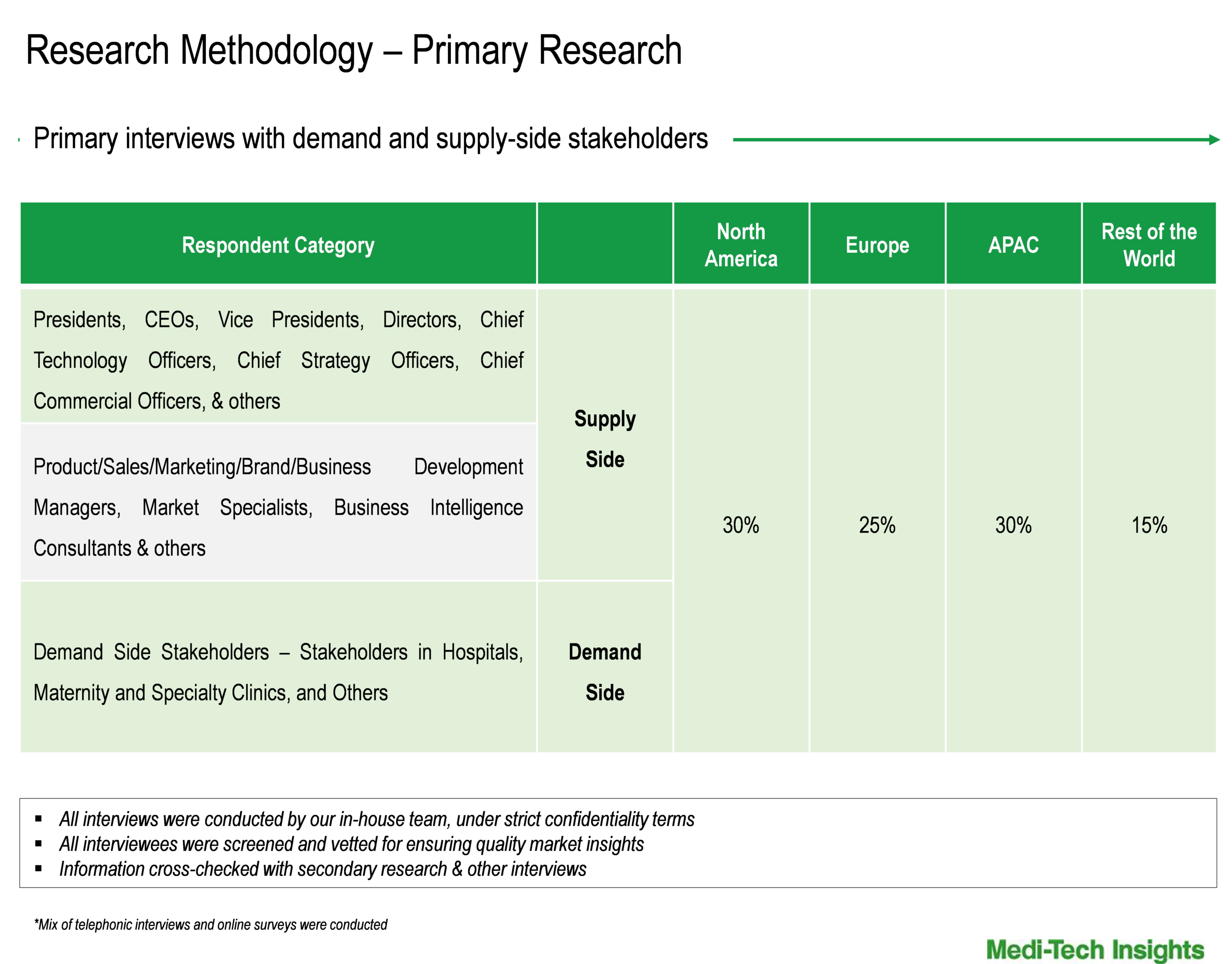
To validate research findings (market size & forecasts, market segmentation, market dynamics, competitive landscape, key industry trends, etc.), extensive primary interviews were conducted with both supply and demand-side stakeholders.
Supply Side Stakeholders:
- Senior Management Level: CEOs, Presidents, Vice-Presidents, Directors, Chief Technology Officers, Chief Commercial Officers
- Mid-Management Level: Product Managers, Sales Managers, Brand Managers, R&D Managers, Business Development Managers, Consultants
Demand Side Stakeholders:
- Hospitals, Maternity and Specialty Clinics, and Others
Breakdown of Primary Interviews
Market Size Estimation
Both ‘Top-Down & Bottom-Up Approaches’ were used to derive market size estimates and forecasts
To learn more about this report, download the PDF brochure
Data Triangulation
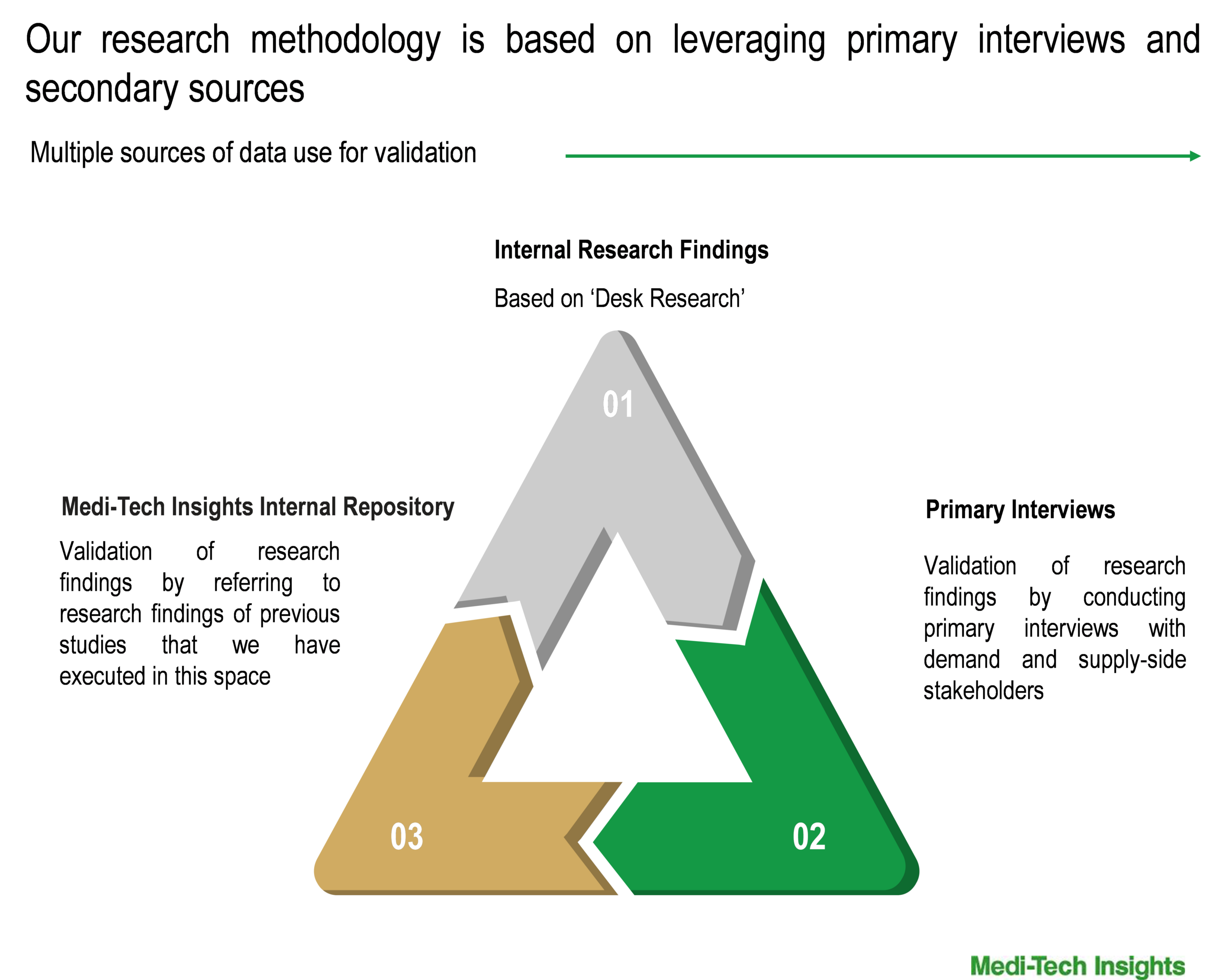
Research findings derived through secondary sources & internal analysis was validated with Primary Interviews, Internal Knowledge Repository and Company’s Sales Data
Frequently Asked Questions (FAQs)
Features of the Report
- Comprehensive Market Coverage
- Market Size and Forecast
- Geographic & Segment Deep Dives
- Strategic Insights & Competitive Landscape
- Timely & Updated Data
- Growth Indicators & Future Outlook
- Quick Turnaround on Queries
- Analyst Support
- Report Customization Available
- Reports in PDF & Excel
